Loading…
← All schools
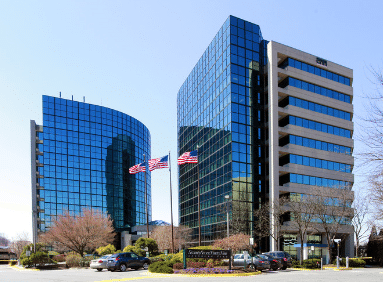
University of the Potomac-VA Campus
FALLS CHURCH, VAprivate forprofitwww.potomac.edu/
Earnings (10 yr)
$34,961
Graduation rate
50%
Acceptance & SAT from Common Data Set / IPEDS; net price, earnings & graduation from the U.S. Dept. of Education College Scorecard. Figures lag ~1–2 years — verify with the school.
The University of the Potomac-VA Campus operates as a pragmatic, career-focused institution in the Northern Virginia suburbs, built for working adults and career-changers seeking direct pathways into fields like business and cybersecurity. With an open admissions policy and a curriculum tightly linked to employability, it functions less as a traditional residential college and more as an accelerated professional training ground. Its identity is defined by accessibility, flexibility, and a starkly practical orientation toward immediate post-graduation outcomes.
More details
- Undergrad enrollment
- 157
- In-state tuition
- $6,660
- Out-of-state tuition
- $6,660
- Academic Focus
- Career-oriented (Business, CS, Cybersecurity)
- Graduation Rate
- 50%
- Student Body Likely
- Non-traditional/Working Adults
- Median Earnings (10yr)
- $34,961
- Financial Aid Recipients
- 41.66%
Outcomes & value
Outcomes & value
- Median earnings (10 yr)
- $34,961
- Median debt at graduation
- $8,769
- Graduation rate
- 50%
- First-year retention
- 67%
- Reducing loan balance (3 yr)
- 33%
- Pell (lower-income) share
- —
- First-gen share (among federal-aid recipients)
- 48%
Earnings = median of students working ~10 years after entry; debt = median of graduates. Value divides 10-yr earnings by one year’s net price — read it as earnings per dollar of annual cost, not a full lifetime ROI; it favors lower-cost schools. Source: U.S. Dept. of Education College Scorecard. Figures lag ~2 years and reflect all students, not your intended major.
Campus & location
Campus safety
- On-campus violent crimes (2024)
- 0
- Per 1,000 students
- 0.00
On-campus criminal offenses classed as violent (murder/non-negligent manslaughter, rape, robbery, aggravated assault) for the most recent reported year. Source: U.S. Dept. of Education Campus Safety and Security (Clery Act). Counts reflect what’s reported to the school, and urban campuses often report more partly due to non-student incidents nearby — read alongside campus size and setting, not as a standalone safety verdict.
Climate
- Pleasant days / yr
- 88
- Summer high
- 86°F
- Winter low
- 32°F
- Annual rain
- 55.8"
- Annual snow
- 11.6"
- Natural-hazard risk
- Relatively High
Pleasant days counts days per year with a mean temperature of 55–75°F, a high at or below 90°F, a low at or above 45°F, and little precipitation — a transparent comfort measure, not a weighting we invented. Computed from Open-Meteo ERA5 daily history (2019–2023). Natural-hazard risk is the county’s composite rating from the FEMA National Risk Index.
Quick answers
- How many undergraduates attend University of the Potomac-VA Campus?
- University of the Potomac-VA Campus enrolls approximately 157 undergraduate students.
- Where is University of the Potomac-VA Campus located?
- University of the Potomac-VA Campus is located in FALLS CHURCH, VA.
Admissions
Admissions at the University of the Potomac-VA Campus are characterized by an open-access model, a stark contrast to the selective processes of traditional four-year colleges. Multiple sources report a 100% , indicating that the institution's primary gatekeeping function is a student's ability to enroll, not a competitive review of credentials. The school employs a rolling admissions policy, meaning applications are reviewed as they are received and decisions are returned within a few weeks, offering flexibility for non-traditional students. Notably, sources show significant discrepancies in reported acceptance rates elsewhere—from 0.0% to 60.4%—highlighting the challenge of finding consistent, authoritative data for this institution. The absence of reported SAT or ACT score ranges in the provided sources further underscores its or test-blind stance, aligning with a mission to remove barriers to entry. The admissions process appears designed for maximum accessibility, prioritizing speed and openness over selectivity.
Academics
The academic profile is intensely career-oriented, built around bachelor's degrees in a handful of practical fields. The university offers programs in subject areas including Accounting, Business, Computer Science, Cybersecurity, and Data Science. This narrow focus suggests a curriculum designed for specific vocational outcomes rather than broad liberal arts exploration. The institution's own messaging emphasizes providing "better career prospects" and "valuable employability skills," framing education as a direct investment in professional advancement. One source notes a 75% freshman retention rate, a figure that, while not contextually compared, offers a glimpse into first-year student persistence. The academic model appears tailored for adult learners and career-changers in the D.C. metro area, with an emphasis on applicable knowledge and skills that translate directly to the regional job market in technology, business, and government contracting.
Compare University of the Potomac-VA Campus
vs University of Science and Arts of Oklahomavs Dillard Universityvs Livingstone Collegevs Oakwood University
See colleges similar to University of the Potomac-VA Campus →Sources
- Common Data Set Initiative - Institutional Research & Analytics
- Common Data Set: Home
- Common Data Set - Analytics & Institutional Effectiveness
- Common Data Set analysis : r/ApplyingToCollege - Reddit
- The Common Data Set: What It Is & How to Use It In College ...
- [PDF] Common Data Set 2024-2025 - West Virginia University
- University of the Potomac-VA Campus - Sallie
- University of the Potomac - Vienna - Niche
- University of the Potomac-VA Campus: 2026 Requirements, Scores ...
- University of the Potomac-Washington DC Campus - Peterson's