Admit rate has ranged 36%–75% over the last 5 years — notably volatile. Source: IPEDS via Urban Institute.
Acceptance & SAT from Common Data Set / IPEDS; net price, earnings & graduation from the U.S. Dept. of Education College Scorecard. Figures lag ~1–2 years — verify with the school.
The University of Tulsa is a private research university that operates like a high-powered, intimate academy grafted onto a mid-sized city. Its identity is a potent blend: a nationally recognized engineering and energy powerhouse, a surprisingly robust liberal arts college, and a campus that feels both self-contained and deeply integrated into the civic revival of Tulsa. With a student-faculty ratio of 11:1 and a 95% placement rate for graduates, it delivers a high-touch, outcomes-focused education that punches well above its weight in the region.
Admission requirements
Test-optional — scores considered if submitted
Required
High school transcript
Grade point average
TOEFL (non-native English)
Considered (not required)
Class rank
Letters of recommendation
Test scores (SAT/ACT)
College-prep program
Demonstrated competencies
Source: IPEDS Admissions survey (2022) via Urban Institute. Covers formal factors only — it does not reflect essays, extracurriculars, or other holistic criteria.
More details
Undergrad enrollment
2,813
In-state tuition
$50,061
Out-of-state tuition
$50,061
Graduation Rate
72%
Student-Faculty Ratio
11:1
Median Earnings (10yr)
$61,408
First-Year Retention Rate
99%
Placement Rate (2025 Grads)
95%
First-Years Receiving Financial Aid
100%
Outcomes & value
Outcomes & value
Median earnings (10 yr)
$61,408
Value (earnings ÷ net price)
4.1×
Median debt at graduation
$21,500
Graduation rate
72%
First-year retention
92%
Reducing loan balance (3 yr)
79%
Pell (lower-income) share
27%
First-gen share (among federal-aid recipients)
23%
Top-earning majors
Median earnings by field of study (highest credential), ~2 years after completion.
Petroleum Engineering$80,022
Energy Systems Technologies/Technicians$69,338
Mechanical Engineering$67,812
Chemical Engineering$67,660
Computer Science$66,171
Registered Nursing, Nursing Administration, Nursing Research and Clinical Nursing$61,020
Campus & location
Campus safety
On-campus violent crimes (2024)
4
Per 1,000 students
1.03
On-campus criminal offenses classed as violent (murder/non-negligent manslaughter, rape, robbery, aggravated assault) for the most recent reported year. Source: U.S. Dept. of Education Campus Safety and Security (Clery Act). Counts reflect what’s reported to the school, and urban campuses often report more partly due to non-student incidents nearby — read alongside campus size and setting, not as a standalone safety verdict.
Climate
Pleasant days / yr
72
Summer high
91°F
Winter low
32°F
Annual rain
48.3"
Annual snow
6.5"
Natural-hazard risk
Relatively High
Pleasant days counts days per year with a mean temperature of 55–75°F, a high at or below 90°F, a low at or above 45°F, and little precipitation — a transparent comfort measure, not a weighting we invented. Computed from Open-Meteo ERA5 daily history (2019–2023). Natural-hazard risk is the county’s composite rating from the FEMA National Risk Index.
Deep dive — research, future-scholar output & economic mobility▾
Research output
Institutional h-index
266
Scholarly works
18,717
Institutional research volume and impact from OpenAlex. The h-index reflects large research universities and will be low for teaching-focused liberal-arts colleges — not a measure of undergraduate quality.
Economic mobility
Mobility rate
1.2%
Bottom → top quintile
23%
From bottom quintile
5%
Mobility rate = the share of students who both start in the bottom household-income quintile and reach the top quintile; bottom → top is that chance conditional on starting at the bottom. Source: Opportunity Insights Mobility Report Cards (Chetty, Friedman, Saez, Turner & Yagan). Reflects 1980–82 birth cohorts, so it’s directional, not current.
Quick answers
What is the acceptance rate at University of Tulsa?
University of Tulsa's acceptance rate is approximately 62% (Tulsa, OK), based on the most recent figures we compiled from public and primary sources.
What SAT score do you need for University of Tulsa?
Admitted students at University of Tulsa typically score 1223–1530 on the SAT (the middle-50% range). Scores outside this band are still admitted, especially with strong applications.
How much does University of Tulsa cost?
At University of Tulsa, the average net price (after aid) is about $15,000 per year. Actual cost varies with financial aid and residency.
How many undergraduates attend University of Tulsa?
University of Tulsa enrolls approximately 2,813 undergraduate students.
Where is University of Tulsa located?
University of Tulsa is located in Tulsa, OK.
Admissions
The University of Tulsa maintains a moderately selective admissions process, offering multiple pathways for applicants. The institution admits a majority of its applicants, with an of 62%. For the class that enrolled, the middle 50% SAT range was 1160–1473, with an average score of 1310, and the middle 50% ACT range was 25–32. Admitted students typically present strong academic records, with an average weighted GPA of 4.0 and an average unweighted GPA of 3.56. The university states there is no minimum test score required for admission, and no score guarantees acceptance. While the outlines factors considered in admissions, the university's specific weighting of demonstrated interest is not detailed in the provided sources. An early decision plan is available with a November deadline.
TU’s academic environment is defined by close faculty mentorship and a strong emphasis on practical, hands-on learning. The bedrock is an 11:1 student-faculty ratio, which facilitates a high level of individual attention. The curriculum is built around engaged learning experiences: 86% of students participate in first-year experiences, 65% undertake undergraduate research or creative projects, and 60% complete writing-intensive courses across the disciplines. The university offers a wide array of programs, including accelerated combined bachelor's/master's degree options. Its College of Arts & Sciences, offering 37 undergraduate degrees, reports exceptional outcomes for pre-professional tracks, with over 94% of its graduates who apply being admitted to law school or medical school. This culture of high achievement is reflected in the student body, which includes one of the highest numbers of National Merit scholars per capita among private universities.
Earnings = median of students working ~10 years after entry; debt = median of graduates. Value divides 10-yr earnings by one year’s net price — read it as earnings per dollar of annual cost, not a full lifetime ROI; it favors lower-cost schools. Source: U.S. Dept. of Education College Scorecard. Figures lag ~2 years and reflect all students, not your intended major.
Finance and Financial Management Services$44,971
Business Administration, Management and Operations$38,289
Source: U.S. Dept. of Education College Scorecard (field-of-study earnings). Figures cover graduates who received federal aid and lag ~2 years; not all programs report data.
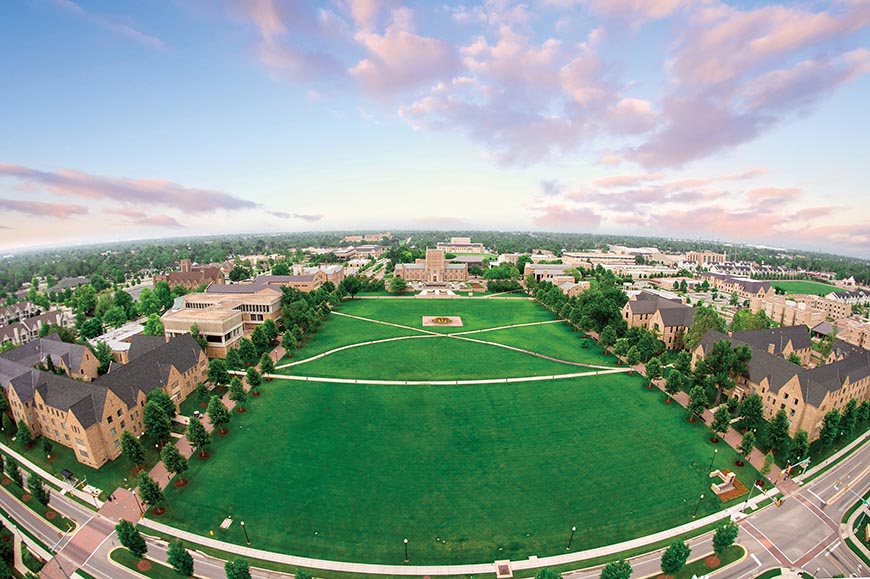
Life at TU unfolds on a beautiful, focused 209-acre campus where a strong majority of students—65%—live in college-owned, -operated, or -affiliated housing. This creates a residential, community-oriented atmosphere. The campus is described as extremely safe, with 91% of students reporting they feel extremely secure. Student life is organized through over 150 student clubs and organizations, managed by the Office of Student Engagement, which oversees campus living, sorority and fraternity life, and student activities. The balance is key: the environment promotes focus and friendship, integrating academics, dining, fitness, and a full calendar of student events. The university actively cultivates curiosity through programs like the Honors College and the Tulsa Undergraduate Research Challenge, connecting campus life directly to its academic mission.
The University of Tulsa measures its success by the tangible achievements of its graduates. The most striking figure is a 95% placement rate for graduates, indicating nearly all alumni secure employment, continue their education, or enter service soon after graduation. The institution also boasts exceptionally strong retention, having achieved a record 99% first-year retention rate for two consecutive years. Graduation rates are a point of strength, with an overall rate of 72%. This success extends to key student populations; for instance, graduation rates for Pell Grant recipients saw a significant 19-percentage-point increase in one year. These outcomes translate into financial success for alumni, with the university noting that its recent graduates have the highest median earnings in Oklahoma.
TU is a private institution that actively uses institutional aid to make attendance feasible. The university reports that 100% of first-year students receive financial assistance. While the provided sources confirm the university offers loans as part of financial aid packages and has standard satisfactory academic progress requirements for federal aid eligibility, they do not specify a university-wide policy of meeting 100% of demonstrated financial need without loans. Students are encouraged to use the university's official Calculator to get a personalized estimate of costs after scholarships and grants. The financial aid process includes completing applications for federal aid and institutional scholarships.
The University of Tulsa carves out a distinctive niche by refusing to be just one type of school. It's a rare hybrid: a private research university with the granular attention of a liberal arts college, all set within a city undergoing a dynamic renaissance. Its 11:1 student-faculty ratio isn't a brochure statistic—it's the engine for the 65% undergraduate research participation rate and the over 94% admission rate to top law and medical schools from its arts and sciences programs. This is not a sprawling state system; it's a tight-knit community where a record 99% of freshmen choose to return, and 95% of graduates land firmly on their feet. TU leverages its historic strength in energy and engineering to fuel a broader, interdisciplinary education that produces graduates with the highest median earnings in Oklahoma. It offers the curated, high-impact experience of a much more selective private college, but with an accessible admissions profile and a deep connection to the civic and economic life of its city.
University of Tulsa seal · sourceAbout The University of Tulsa - The University of Tulsa · sourceCampus Map - The University of Tulsa · sourceEvent Planning - The University of Tulsa · source