Admit rate has ranged 59%–94% over the last 5 years — notably volatile, though the latest figure above (29%) falls outside that window. Source: IPEDS via Urban Institute.
Acceptance & SAT from Common Data Set / IPEDS; net price, earnings & graduation from the U.S. Dept. of Education College Scorecard. Figures lag ~1–2 years — verify with the school.
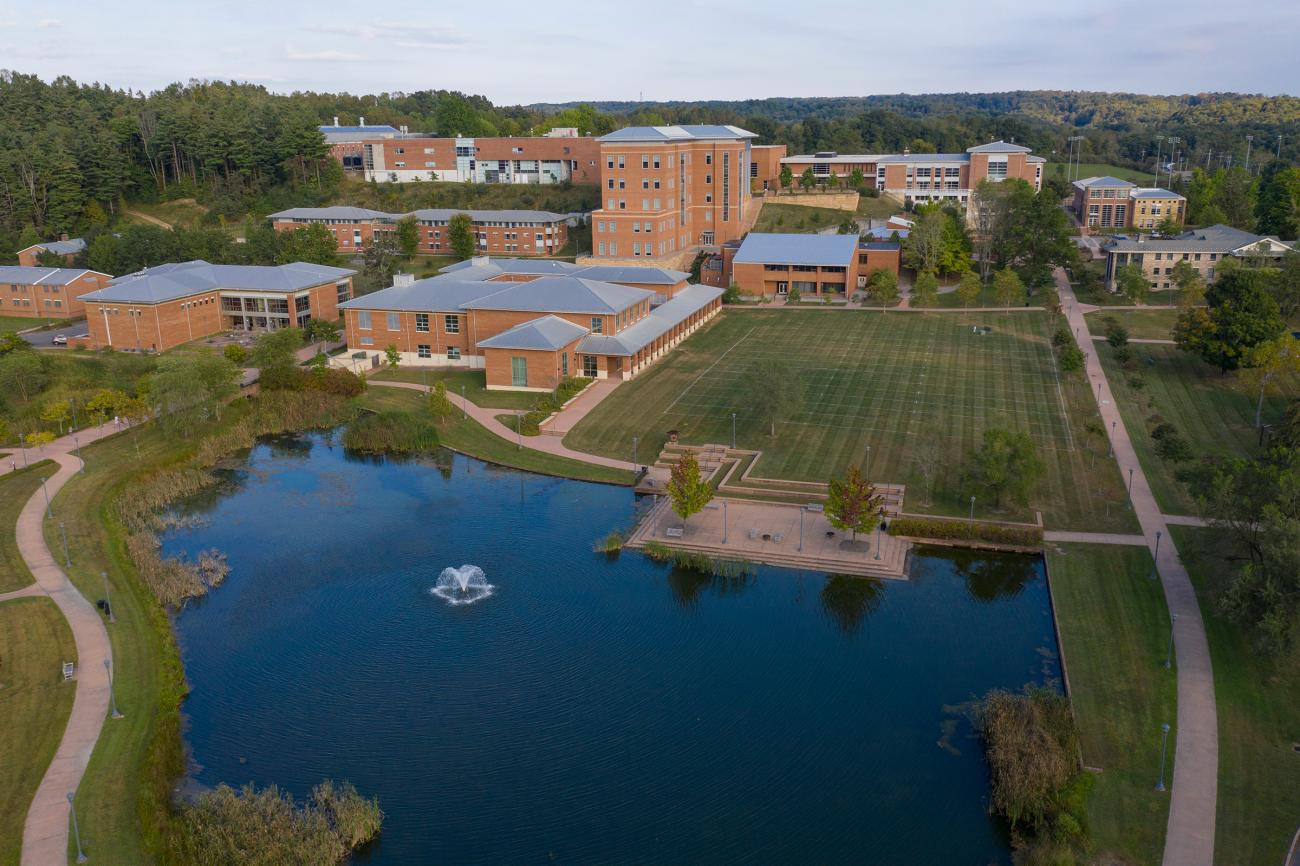
The University of Virginia's College at Wise is a public liberal arts college in the Appalachian highlands that offers a distinctive, intimate, and affordable alternative to the flagship Charlottesville campus. It trades the prestige and pressure of its parent university for a tight-knit community where professors know students by name, class sizes are small, and a significant financial aid promise makes a four-year degree accessible to Virginians from modest backgrounds. This is a school defined by its regional mission, its connection to the UVA system, and its focus on providing a personalized, hands-on education in a stunning but remote mountain setting.
Admission requirements
Test-optional — scores considered if submitted
Required
High school transcript
Grade point average
College-prep program
Considered (not required)
Class rank
Letters of recommendation
Test scores (SAT/ACT)
Source: IPEDS Admissions survey (2022) via Urban Institute. Covers formal factors only — it does not reflect essays, extracurriculars, or other holistic criteria.
More details
Undergrad enrollment
1,101
In-state tuition
$11,780
Out-of-state tuition
$28,010
Graduation Rate
47%
On-Campus Housing
58% of students
Student-Faculty Ratio
14:1
Median Earnings (10yr)
$45,325
First-Year Retention Rate
72%
Outcomes & value
Outcomes & value
Median earnings (10 yr)
$45,325
Value (earnings ÷ net price)
4.9×
Median debt at graduation
$16,750
Graduation rate
47%
First-year retention
72%
Reducing loan balance (3 yr)
56%
Pell (lower-income) share
40%
First-gen share (among federal-aid recipients)
37%
Top-earning majors
Median earnings by field of study (highest credential), ~2 years after completion.
Registered Nursing, Nursing Administration, Nursing Research and Clinical Nursing$55,512
Education, General$35,060
Criminal Justice and Corrections$34,171
Business Administration, Management and Operations$30,616
Accounting and Related Services$30,409
Sports, Kinesiology, and Physical Education/Fitness
Campus & location
Campus safety
On-campus violent crimes (2024)
0
Per 1,000 students
0.00
On-campus criminal offenses classed as violent (murder/non-negligent manslaughter, rape, robbery, aggravated assault) for the most recent reported year. Source: U.S. Dept. of Education Campus Safety and Security (Clery Act). Counts reflect what’s reported to the school, and urban campuses often report more partly due to non-student incidents nearby — read alongside campus size and setting, not as a standalone safety verdict.
Climate
Pleasant days / yr
118
Summer high
79°F
Winter low
30°F
Annual rain
47.4"
Annual snow
14"
Natural-hazard risk
Relatively Low
Pleasant days counts days per year with a mean temperature of 55–75°F, a high at or below 90°F, a low at or above 45°F, and little precipitation — a transparent comfort measure, not a weighting we invented. Computed from Open-Meteo ERA5 daily history (2019–2023). Natural-hazard risk is the county’s composite rating from the FEMA National Risk Index.
Deep dive — research, future-scholar output & economic mobility▾
Research output
Institutional h-index
42
Scholarly works
944
Institutional research volume and impact from OpenAlex. The h-index reflects large research universities and will be low for teaching-focused liberal-arts colleges — not a measure of undergraduate quality.
Economic mobility
Mobility rate
2.5%
Bottom → top quintile
19%
From bottom quintile
13%
Mobility rate = the share of students who both start in the bottom household-income quintile and reach the top quintile; bottom → top is that chance conditional on starting at the bottom. Source: Opportunity Insights Mobility Report Cards (Chetty, Friedman, Saez, Turner & Yagan). Reflects 1980–82 birth cohorts, so it’s directional, not current.
Quick answers
What is the acceptance rate at University of Virginia's College at Wise?
University of Virginia's College at Wise's acceptance rate is approximately 29% (Wise, VA), based on the most recent figures we compiled from public and primary sources.
What SAT score do you need for University of Virginia's College at Wise?
Admitted students at University of Virginia's College at Wise typically score 945–1120 on the SAT (the middle-50% range). Scores outside this band are still admitted, especially with strong applications.
How much does University of Virginia's College at Wise cost?
At University of Virginia's College at Wise, the average net price (after aid) is about $9,210 per year. Actual cost varies with financial aid and residency.
How many undergraduates attend University of Virginia's College at Wise?
University of Virginia's College at Wise enrolls approximately 1,101 undergraduate students.
Where is University of Virginia's College at Wise located?
University of Virginia's College at Wise is located in Wise, VA.
Admissions
UVA Wise presents a dual identity in admissions: it is a selective public liberal arts college with a reported around 29%, yet it also actively promotes pathways to make admission straightforward and affordable for in-state students. The middle 50% SAT range for admitted students is 945–1120. The college offers an Early Action plan, allowing students to apply and receive a decision earlier without a binding commitment. Notably, the institution has implemented initiatives to simplify the process, including a no-cost application option and a guaranteed admission pathway for Virginia students who are in the top 50% of their class with at least a 2.0 GPA, or who have a 3.0 GPA. This reflects a mission-driven approach to accessibility within a selective framework. Sources conflict on the precise historical acceptance rate, with some older reports suggesting rates as high as 94%, but recent official profiles consistently cite a rate in the high 20s to low 30s, indicating a trend toward greater selectivity.
Earnings = median of students working ~10 years after entry; debt = median of graduates. Value divides 10-yr earnings by one year’s net price — read it as earnings per dollar of annual cost, not a full lifetime ROI; it favors lower-cost schools. Source: U.S. Dept. of Education College Scorecard. Figures lag ~2 years and reflect all students, not your intended major.
$30,228
Communication and Media Studies$26,896
Psychology, General$22,087
Source: U.S. Dept. of Education College Scorecard (field-of-study earnings). Figures cover graduates who received federal aid and lag ~2 years; not all programs report data.
Academics at UVA Wise are defined by scale and personal attention. The college offers a focused selection of 11 undergraduate majors through a liberal arts core, with popular fields including Business, Management, Marketing, Psychology, and Health Professions. Specific majors range from Accounting and Biochemistry to Communication Studies and Computer Science. The student-to-faculty ratio is 14:1, which the college leverages to create an environment where, as noted in student reviews, professors know students by name and are genuinely invested in their success. This intimate setting facilitates hands-on learning and personalized attention. The college also serves a unique role within the broader University of Virginia system, occasionally acting as a transfer pathway for students initially waitlisted at the main Charlottesville campus.
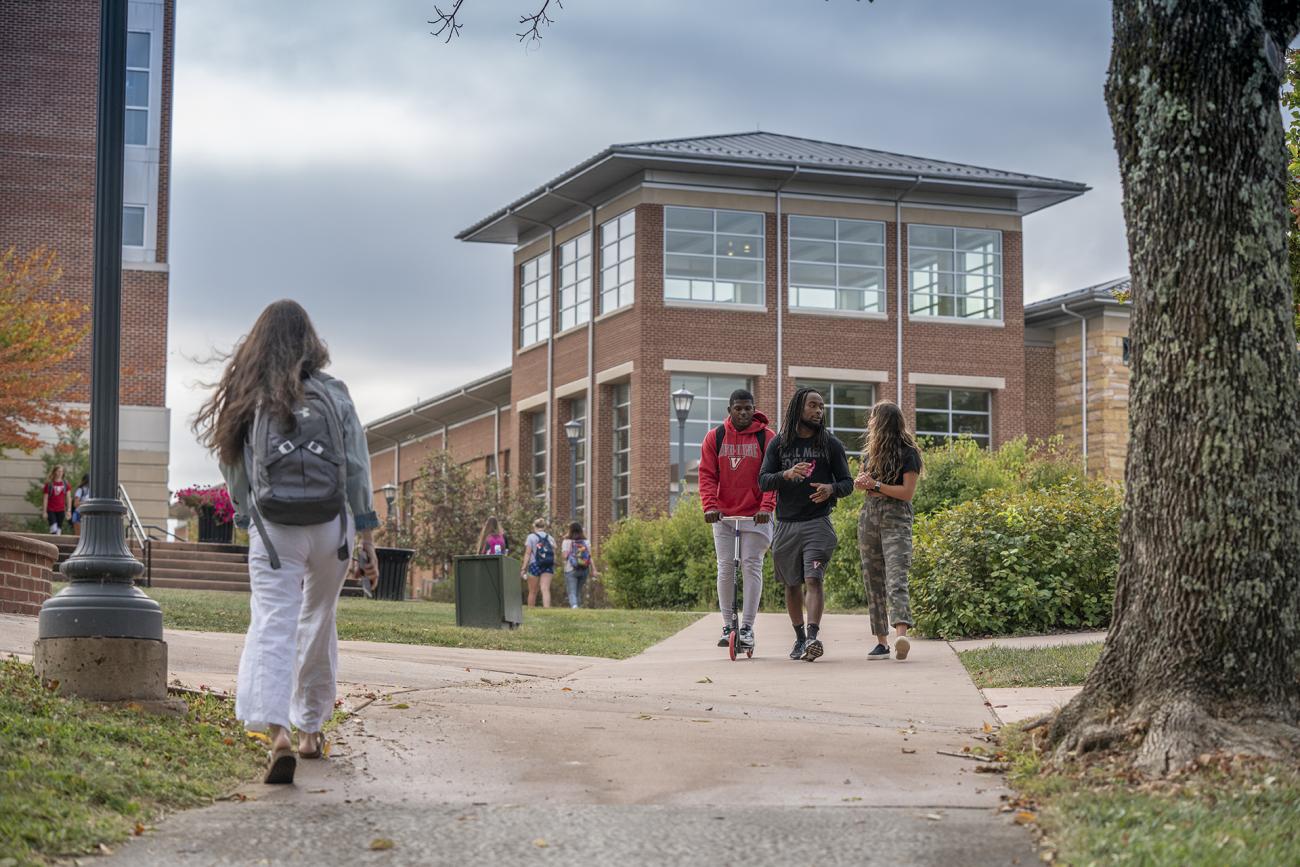
Life at UVA Wise is a classic residential college experience set against the backdrop of the Appalachian Mountains. A majority of students (58%) live on campus in college-owned housing, creating a close-knit, immersive community. The college describes itself as "a community of learners" that seeks to appreciate and respect diverse cultures, backgrounds, and identities. Campus life is active, with the college celebrating its many cultures and promoting a sense of belonging. The official Instagram account frames the ethos as one where the community "dream[s] up possibilities" and works to achieve them. Athletics are part of the campus fabric, and the college boasts state-of-the-art facilities and welcoming residence halls. The setting in Wise, Virginia, is beautiful but remote, meaning campus life is largely self-contained and central to the student experience.
Outcomes for UVA Wise graduates reflect its role as a regional, access-oriented institution. The four-year graduation rate is 32%, and the six-year rate is 44%. A significant metric for return on investment is the median earnings for graduates ten years after entry, which is $45,325. Longer-term data from the State Council of Higher Education for Virginia (SCHEV) shows median wages of $55,976 for graduates 15 years out and $58,323 for those 20 years out. The first-year retention rate—a key indicator of student satisfaction—is 72%. These figures paint a picture of a college that successfully propels its graduates into the workforce with solid earning potential, particularly when considering the low many students pay.
Affordability is a cornerstone of the UVA Wise value proposition, especially for Virginia residents. The average after aid is $9,210. The college has a notable and clear financial aid promise for in-state students: any admitted Virginian with a family income of $80,000 or less will receive scholarships that cover 100% of tuition and mandatory fees. This is a significant commitment that removes the cost barrier for a large segment of the state's population. While not explicitly labeled a "no-loan" policy in the provided sources, this guarantee functions as a powerful tuition-free promise for qualifying low- and middle-income families. The college provides a net price calculator to help families estimate their individual costs, and the average total aid awarded is $12,262 per year.
UVA Wise stands out for executing a specific, morally clear mission with remarkable consistency. It is not trying to be UVA-Charlottesville; it is providing a genuine, small-scale liberal arts education—with all the personal attention that implies—to students from Virginia, particularly those in the Appalachian region. Its defining features are in direct tension yet perfectly aligned: it is selective yet deeply accessible due to its income-based tuition guarantee. It offers the academic pedigree and system affiliation of the University of Virginia but delivers it through a 14:1 student-faculty ratio where professors know their students. It produces graduates with strong median earnings a decade out, all while charging an average under $10,000. In an era of bloated tuition and impersonal mega-universities, UVA Wise is a compelling argument for the value of a focused, public-serving, intimate college experience.
University of Virginia's College at Wise seal · sourceVisit | UVA Wise · sourceUniversity of Virginia's College at Wise - Profile, Rankings and Data | US News Best Colleges · sourceCampus | UVA Wise · source