Loading…
← All schools
University of Washington-Tacoma Campus
Tacoma, WApublictacoma.uw.edu
Acceptance
83%
Avg net price
$10,163
Earnings (10 yr)
$78,466
Graduation rate
63%
Admit rate has ranged 83%–88% over the last 5 years. Source: IPEDS via Urban Institute.
Acceptance & SAT from Common Data Set / IPEDS; net price, earnings & graduation from the U.S. Dept. of Education College Scorecard. Figures lag ~1–2 years — verify with the school.
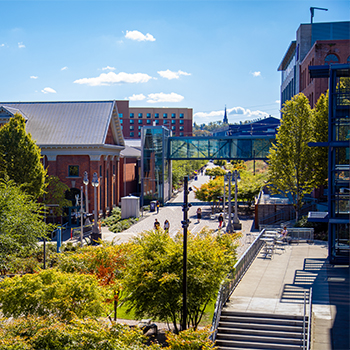
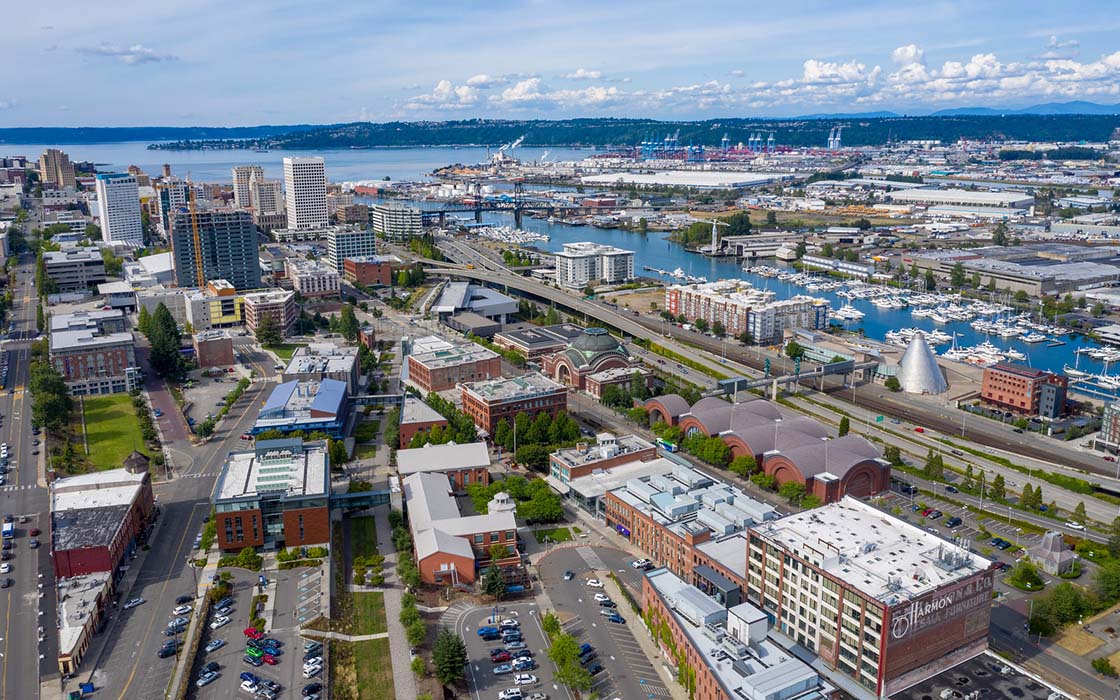
The University of Washington Tacoma is a public, urban-serving campus that operates less as a traditional four-year college and more as a finishing school for transfer students and career-changers. It’s a place where the gritty, historic architecture of downtown Tacoma meets a pragmatic, career-focused curriculum, attracting a student body that is notably older, more diverse, and often first-generation compared to its flagship sibling in Seattle. With an admissions policy that is markedly more accessible, UWT prioritizes serving the South Sound region, offering pathways into high-demand fields like nursing, information technology, and business, and delivering a solid return on investment for graduates who stick with it.
Admission requirements
Test-blind — scores not considered
Required
- High school transcript
- Grade point average
- College-prep program
- TOEFL (non-native English)
Source: IPEDS Admissions survey (2022) via Urban Institute. Covers formal factors only — it does not reflect essays, extracurriculars, or other holistic criteria.
More details
- Undergrad enrollment
- 4,185
- In-state tuition
- $13,168
- Out-of-state tuition
- $43,404
- Top Majors
- Information Science, Psychology, Nursing
- Graduation Rate
- 63%
- Regular App Deadline
- June 30
- Test Submission Rate
- ~5%
- Median Earnings (10yr)
- $78,466
- Average Starting Salary
- $58,300
- Students Receiving Financial Aid
- 65.59%
Outcomes & value
Outcomes & value
- Median earnings (10 yr)
- $78,466
- Value (earnings ÷ net price)
- 7.7×
- Median debt at graduation
- $14,615
- Graduation rate
- 63%
- First-year retention
- 80%
- Reducing loan balance (3 yr)
- 79%
- Pell (lower-income) share
- 40%
- First-gen share (among federal-aid recipients)
- 33%
Top-earning majors
Median earnings by field of study (highest credential), ~2 years after completion.
- Computer Engineering$120,252
- Registered Nursing, Nursing Administration, Nursing Research and Clinical Nursing$72,152
- Computer and Information Sciences, General$71,575
- Electrical, Electronics, and Communications Engineering$70,961
- Civil Engineering$66,342
- Finance and Financial Management Services
Campus & location
Campus safety
- On-campus violent crimes (2024)
- 0
- Per 1,000 students
- 0.00
On-campus criminal offenses classed as violent (murder/non-negligent manslaughter, rape, robbery, aggravated assault) for the most recent reported year. Source: U.S. Dept. of Education Campus Safety and Security (Clery Act). Counts reflect what’s reported to the school, and urban campuses often report more partly due to non-student incidents nearby — read alongside campus size and setting, not as a standalone safety verdict.
Climate
- Pleasant days / yr
- 117
- Summer high
- 76°F
- Winter low
- 35°F
- Annual rain
- 48.5"
- Annual snow
- 14.5"
- Natural-hazard risk
- Relatively High
Pleasant days counts days per year with a mean temperature of 55–75°F, a high at or below 90°F, a low at or above 45°F, and little precipitation — a transparent comfort measure, not a weighting we invented. Computed from Open-Meteo ERA5 daily history (2019–2023). Natural-hazard risk is the county’s composite rating from the FEMA National Risk Index.
Quick answers
- What is the acceptance rate at University of Washington-Tacoma Campus?
- University of Washington-Tacoma Campus's acceptance rate is approximately 83% (Tacoma, WA), based on the most recent figures we compiled from public and primary sources.
- How much does University of Washington-Tacoma Campus cost?
- At University of Washington-Tacoma Campus, the average net price (after aid) is about $10,163 per year. Actual cost varies with financial aid and residency.
- How many undergraduates attend University of Washington-Tacoma Campus?
- University of Washington-Tacoma Campus enrolls approximately 4,185 undergraduate students.
- Where is University of Washington-Tacoma Campus located?
- University of Washington-Tacoma Campus is located in Tacoma, WA.
Admissions
UW Tacoma’s admissions process is defined by its accessibility and regional mission. With an of 83%, it stands in stark contrast to the more selective University of Washington Seattle campus, which has an acceptance rate of 39.14%. This high acceptance rate reflects its role as an open door for many Washington residents, particularly transfer students and those completing community college pathways. The middle 50% SAT range for admitted students is 950–1200, and the ACT range is 23–29. GPA is a significant factor; data shows that 27% of admitted students have a GPA of 3.75 or higher, 24% fall between 3.50–3.74, and another 24% are in the 3.25–3.49 range. Notably, only about 5% of applicants submitted SAT/ACT scores in recent cycles, indicating a or test-blind environment. The university operates on rolling admissions with a final deadline of June 30 for regular applications, and transfer applications are accepted on an ongoing basis. There is no mention of an Early Decision plan in the provided sources for UW Tacoma, distinguishing it from many private institutions.
Compare University of Washington-Tacoma Campus
vs Missouri University of Science and Technologyvs Rutgers University-Camdenvs Rutgers University-Newarkvs CUNY Graduate School and University Center
See colleges similar to University of Washington-Tacoma Campus →Sources
- Common Data Set – Planning & Budgeting - University of Washington
- Institutional Data | University of Washington Tacoma
- Common Data Set: Home
- External Reporting – Planning & Budgeting - University of Washington
- University of Washington 2026 Common Data Set - GradGPT
- 2025-26 CDS - AWS
- University of Washington Tacoma Admissions - BigFuture
- University of Washington Tacoma SAT Scores and GPA
- University of Washington Tacoma Admissions
- First-year students by the numbers - Office of Admissions