Admit rate has ranged 35%–93% over the last 5 years — notably volatile. Source: IPEDS via Urban Institute.
Acceptance & SAT from Common Data Set / IPEDS; net price, earnings & graduation from the U.S. Dept. of Education College Scorecard. Figures lag ~1–2 years — verify with the school.
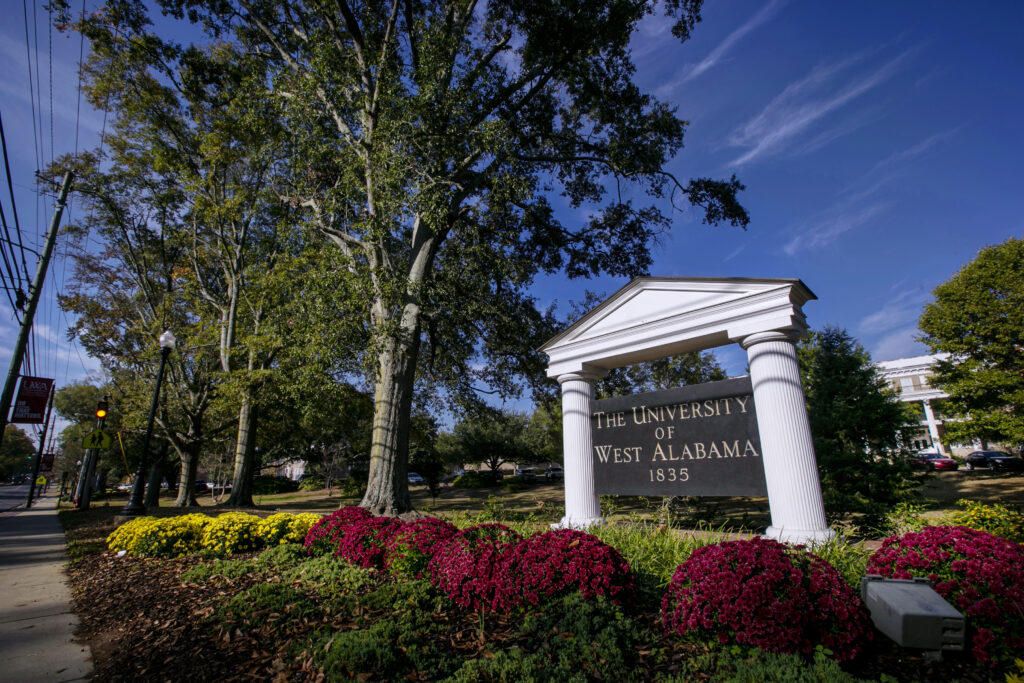
The University of West Alabama is a regional public university in Livingston that operates with the unpretentious, practical ethos of a place built to serve its community. Founded in 1835, it offers a sprawling menu of over 90 programs on a sprawling 600-acre campus, where a 17:1 student-faculty ratio and a 43% acceptance rate signal an accessible, teaching-focused environment. This is a school for first-generation students, future educators, and local strivers—its character is defined by small-town hospitality, a compact and safe campus, and a straightforward mission to boost economic mobility in western Alabama.
Admission requirements
Test scores required
Required
High school transcript
Grade point average
Test scores (SAT/ACT)
TOEFL (non-native English)
Considered (not required)
College-prep program
Source: IPEDS Admissions survey (2022) via Urban Institute. Covers formal factors only — it does not reflect essays, extracurriculars, or other holistic criteria.
More details
Undergrad enrollment
2,974
In-state tuition
$10,990
Out-of-state tuition
$20,090
Campus Size
600 acres
Graduation Rate
35%
Programs Offered
90+
Student-Faculty Ratio
17:1
Median Earnings (10yr)
$44,232
First-Year Retention Rate
64%
Outcomes & value
Outcomes & value
Median earnings (10 yr)
$44,232
Value (earnings ÷ net price)
3.5×
Median debt at graduation
$24,944
Graduation rate
35%
First-year retention
65%
Reducing loan balance (3 yr)
37%
Pell (lower-income) share
58%
First-gen share (among federal-aid recipients)
40%
Top-earning majors
Median earnings by field of study (highest credential), ~2 years after completion.
Teacher Education and Professional Development, Specific Subject Areas$37,054
Business Administration, Management and Operations$34,847
Teacher Education and Professional Development, Specific Levels and Methods$32,711
Psychology, General$26,739
Multi/Interdisciplinary Studies, Other$25,194
Source: U.S. Dept. of Education College Scorecard (field-of-study earnings). Figures cover graduates who received federal aid and lag ~2 years; not all programs report data.
Campus & location
Campus safety
On-campus violent crimes (2024)
3
Per 1,000 students
0.44
On-campus criminal offenses classed as violent (murder/non-negligent manslaughter, rape, robbery, aggravated assault) for the most recent reported year. Source: U.S. Dept. of Education Campus Safety and Security (Clery Act). Counts reflect what’s reported to the school, and urban campuses often report more partly due to non-student incidents nearby — read alongside campus size and setting, not as a standalone safety verdict.
Climate
Pleasant days / yr
92
Summer high
92°F
Winter low
42°F
Annual rain
54.7"
Natural-hazard risk
Relatively Low
Pleasant days counts days per year with a mean temperature of 55–75°F, a high at or below 90°F, a low at or above 45°F, and little precipitation — a transparent comfort measure, not a weighting we invented. Computed from Open-Meteo ERA5 daily history (2019–2023). Natural-hazard risk is the county’s composite rating from the FEMA National Risk Index.
Deep dive — research, future-scholar output & economic mobility▾
Research output
Institutional h-index
50
Scholarly works
641
Institutional research volume and impact from OpenAlex. The h-index reflects large research universities and will be low for teaching-focused liberal-arts colleges — not a measure of undergraduate quality.
Economic mobility
Mobility rate
2.5%
Bottom → top quintile
14%
From bottom quintile
18%
Mobility rate = the share of students who both start in the bottom household-income quintile and reach the top quintile; bottom → top is that chance conditional on starting at the bottom. Source: Opportunity Insights Mobility Report Cards (Chetty, Friedman, Saez, Turner & Yagan). Reflects 1980–82 birth cohorts, so it’s directional, not current.
Quick answers
What is the acceptance rate at University of West Alabama?
University of West Alabama's acceptance rate is approximately 43% (Livingston, AL), based on the most recent figures we compiled from public and primary sources.
What SAT score do you need for University of West Alabama?
Admitted students at University of West Alabama typically score 860–1120 on the SAT (the middle-50% range). Scores outside this band are still admitted, especially with strong applications.
How much does University of West Alabama cost?
At University of West Alabama, the average net price (after aid) is about $12,684 per year. Actual cost varies with financial aid and residency.
How many undergraduates attend University of West Alabama?
University of West Alabama enrolls approximately 2,974 undergraduate students.
Where is University of West Alabama located?
University of West Alabama is located in Livingston, AL.
Admissions
UWA's admissions process is best described as accessible and moderately selective. With an of 43%, it is not a highly competitive gatekeeper but rather a regional institution focused on providing opportunity. The middle 50% SAT range for admitted students is 860–1120, with a corresponding ACT range of 16–21. The university considers admission test scores during the application process, and while specific high school GPA data isn't uniformly reported, one source notes an average GPA of 3.03 for admitted students. The process appears to be largely traditional and formulaic; there is no available specifically for UWA in the provided sources to detail the relative importance of factors like essays, recommendations, or demonstrated interest. For context, other Alabama schools recommend students with an ACT of 21 or better (SAT 1060+) submit scores, suggesting UWA's ranges accommodate a broad academic profile. The admissions office is the primary point of contact for data requests and specific inquiries.
Earnings = median of students working ~10 years after entry; debt = median of graduates. Value divides 10-yr earnings by one year’s net price — read it as earnings per dollar of annual cost, not a full lifetime ROI; it favors lower-cost schools. Source: U.S. Dept. of Education College Scorecard. Figures lag ~2 years and reflect all students, not your intended major.
Academic life at UWA is defined by breadth, accessibility, and a focus on teaching. Students can choose from more than 90 fields of study spanning business, education, liberal arts, natural sciences and mathematics, and engineering and technology. This expansive catalog is delivered with a student-faculty ratio of 17:1, fostering a classroom environment that is likely more personal than at many larger public institutions. A significant 67% of faculty hold the highest-level degrees in their disciplines. The most popular majors, per student completions, are Education, Liberal Arts and Humanities, Nursing, Business, and Psychology, reflecting the university's strong role in training local professionals, particularly teachers. The intellectual culture is pragmatic and career-oriented, with the university stating its programs are designed to support students' economic mobility, employment opportunities, and long-term career success. The average freshman retention rate, a basic indicator of student satisfaction, is 64%.
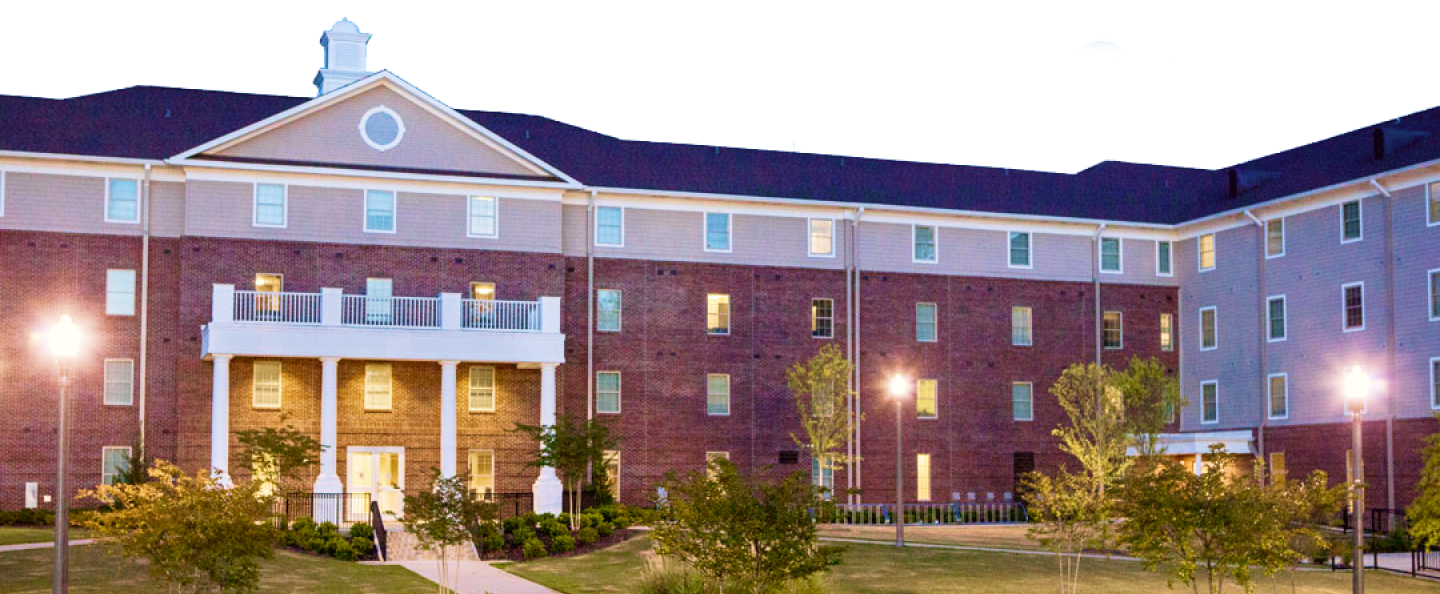
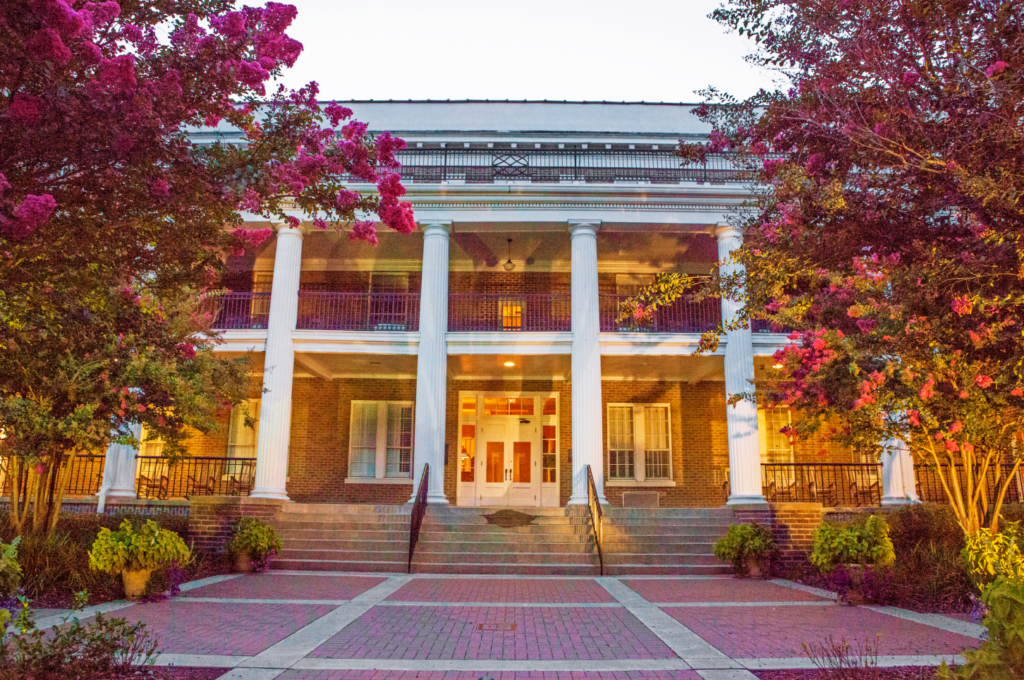
Life on UWA's 600-acre campus in Livingston is characterized by its small-scale, communal atmosphere. Students consistently describe the environment as friendly, safe, and compact, allowing for easy walking access to everything. The Office of Student Life provides the framework for engagement, offering programs and services that range from group fitness classes and outdoor adventures to intramural sports and aquatics. It's a typical regional public university scene—not a high-intensity, big-city college experience, but one built around shared activities within the campus community. The university, founded in 1835, promotes an identity of "small-town hospitality." While specific details on Greek life or club counts aren't provided in the sources, the emphasis is on creating meaningful experiences through campus recreation and events for its undergraduate student body.
Outcomes at UWA tell a story of a university serving a population with significant academic and financial needs, with success rates that vary notably by gender. The overall six-year graduation rate is reported at 35%, though other sources cite figures of 36% and 38%. This places the institution in the lower tier nationally for completion. A deeper look reveals a pronounced gender gap: for the 2014 cohort, UWA's six-year completion rate for women was 72.20%, actually exceeding the Alabama state benchmark of 71.52% for females. Data for men's graduation is reported separately at 33%. For those who do graduate, the median earnings ten years after entry are $44,232. The university itself frames its mission around economic mobility and long-term career success, indicating these outcomes are central to its institutional purpose.
UWA positions itself as an affordable option, particularly for in-state students. The average after aid is $12,684. In-state tuition and fees are listed at $10,990, while out-of-state tuition and fees are $20,090. A high percentage of students—79.03%—receive financial aid, with an average aid package of $9,037 to $9,789. The university offers a full range of loans, scholarships, grants, and part-time employment opportunities. Scholarship funding has specific limits, available for up to 8 classes or 26 credit hours (whichever comes first). Additional fees include course materials at a rate of $25.50 per credit hour. The university provides a Net Price Calculator to help families estimate costs and encourages engagement with the FAFSA and other aid applications, staying current with federal financial aid updates.
The University of West Alabama stands out as a quintessential regional access institution. Its identity is not built on national rankings or research prestige, but on a concrete, community-focused mission executed over a 600-acre campus. Three features define its distinct character:
A Mission of Local Mobility: UWA unabashedly focuses on supporting "students' economic mobility, employment opportunities, and long-term career success" in western Alabama. Its popular majors in Education, Nursing, and Business directly feed the region's workforce.
The Scale of a Small College with the Catalog of a University: With a 17:1 student-faculty ratio and a compact, walkable campus, it offers a personalized environment. Yet, it delivers this with a surprisingly vast academic menu of over 90 programs, providing unexpected breadth for a school of its size and type.
A Story of Gendered Success: The outcomes data reveals a stark and telling contrast. While the overall graduation rate is low, UWA successfully graduates women at a rate that surpasses the Alabama state benchmark—a significant achievement that highlights its role as an engine of opportunity for a key demographic in its service area. It is a university whose impact is best measured not by selectivity, but by its specific, grounded service to the students and region it calls home.
University of West Alabama seal · sourceUniversity of West Alabama | There's Something About This Place · sourceVisit UWA | University of West Alabama · sourceHoliday Break Contacts | University of West Alabama · source