Admit rate has ranged 77%–86% over the last 5 years — notably volatile. Source: IPEDS via Urban Institute.
Acceptance & SAT from Common Data Set / IPEDS; net price, earnings & graduation from the U.S. Dept. of Education College Scorecard. Figures lag ~1–2 years — verify with the school.
The University of Wisconsin-River Falls is a public, regional university that operates as a practical, hands-on gateway to the upper Midwest. Its identity is defined by a strong cross-border draw from Wisconsin and Minnesota, a focus on career-ready programs in agriculture and business, and a deliberately accessible, supportive campus culture. This is a school for students who want a traditional college experience with small classes, clear pathways to a degree, and a focus on applied learning without the cutthroat competition of larger flagships.
Admission requirements
Test-optional — scores considered if submitted
Required
High school transcript
Grade point average
TOEFL (non-native English)
Considered (not required)
Class rank
Letters of recommendation
Test scores (SAT/ACT)
College-prep program
Source: IPEDS Admissions survey (2022) via Urban Institute. Covers formal factors only — it does not reflect essays, extracurriculars, or other holistic criteria.
More details
Undergrad enrollment
4,205
In-state tuition
$9,008
Out-of-state tuition
$17,470
Graduation Rate
57%
Student-Faculty Ratio
17:1 / 19:1
Median Earnings (10yr)
$54,458
First-Year Retention Rate
73%
Student Body (WI/MN/Int'l)
55% / 41% / 1%
Outcomes & value
Outcomes & value
Median earnings (10 yr)
$54,458
Value (earnings ÷ net price)
3.9×
Median debt at graduation
$20,500
Graduation rate
57%
First-year retention
76%
Reducing loan balance (3 yr)
76%
Pell (lower-income) share
21%
First-gen share (among federal-aid recipients)
26%
Top-earning majors
Median earnings by field of study (highest credential), ~2 years after completion.
Computer Systems Analysis$53,358
Agricultural Engineering$49,269
Accounting and Related Services$49,019
Business Administration, Management and Operations$46,321
Economics$44,384
Agricultural Business and Management$43,798
Campus & location
Campus safety
On-campus violent crimes (2024)
14
Per 1,000 students
3.06
On-campus criminal offenses classed as violent (murder/non-negligent manslaughter, rape, robbery, aggravated assault) for the most recent reported year. Source: U.S. Dept. of Education Campus Safety and Security (Clery Act). Counts reflect what’s reported to the school, and urban campuses often report more partly due to non-student incidents nearby — read alongside campus size and setting, not as a standalone safety verdict.
Climate
Pleasant days / yr
94
Summer high
81°F
Winter low
10°F
Annual rain
37.1"
Annual snow
45.1"
Natural-hazard risk
Very Low
Pleasant days counts days per year with a mean temperature of 55–75°F, a high at or below 90°F, a low at or above 45°F, and little precipitation — a transparent comfort measure, not a weighting we invented. Computed from Open-Meteo ERA5 daily history (2019–2023). Natural-hazard risk is the county’s composite rating from the FEMA National Risk Index.
Deep dive — research, future-scholar output & economic mobility▾
Research output
Institutional h-index
166
Scholarly works
2,202
Institutional research volume and impact from OpenAlex. The h-index reflects large research universities and will be low for teaching-focused liberal-arts colleges — not a measure of undergraduate quality.
Quick answers
What is the acceptance rate at University of Wisconsin-River Falls?
University of Wisconsin-River Falls's acceptance rate is approximately 82% (River Falls, WI), based on the most recent figures we compiled from public and primary sources.
How much does University of Wisconsin-River Falls cost?
At University of Wisconsin-River Falls, the average net price (after aid) is about $14,054 per year. Actual cost varies with financial aid and residency.
How many undergraduates attend University of Wisconsin-River Falls?
University of Wisconsin-River Falls enrolls approximately 4,205 undergraduate students.
Where is University of Wisconsin-River Falls located?
University of Wisconsin-River Falls is located in River Falls, WI.
Admissions
UW-River Falls is an accessible public university with an admissions process designed to be straightforward for students from its core regional markets. The university is less selective, with an of 82%. The process is test-optional; applicants have the choice to submit ACT or SAT scores. For those who do submit, the middle 50% ACT range for admitted students is between 19 and 26. The admitted student profile shows a strong academic focus, with 28% of admitted students having a GPA of 3.75 or higher and another 18% in the 3.50–3.74 range. The university draws overwhelmingly from the upper Midwest: 55% of its student body is from Wisconsin, 41% from Minnesota, and 1% are international students from 17 countries. While sources discuss the as a tool for understanding admission factors generally, no specific UW-River Falls CDS document is provided in the sources to detail the relative importance of factors like essays, recommendations, or demonstrated interest for this specific institution.
Earnings = median of students working ~10 years after entry; debt = median of graduates. Value divides 10-yr earnings by one year’s net price — read it as earnings per dollar of annual cost, not a full lifetime ROI; it favors lower-cost schools. Source: U.S. Dept. of Education College Scorecard. Figures lag ~2 years and reflect all students, not your intended major.
Plant Sciences$43,128
Chemistry$40,768
Source: U.S. Dept. of Education College Scorecard (field-of-study earnings). Figures cover graduates who received federal aid and lag ~2 years; not all programs report data.
Academics at UWRF are defined by breadth of choice within a manageable, teaching-focused environment. The university offers over 70 undergraduate areas of study, including majors in the arts, business, agriculture, science, and education. This breadth allows for exploration, but the culture is geared toward practical, hands-on learning. The student-to-faculty ratio is reported as both 17:1 and 19:1 across different sources, underscoring the accessible class sizes that students highlight. Reviews note "small class sizes" and give high marks to the "amazing" business and agriculture schools. The university also supports an Honors Program and offers more than 20 graduate degree, certificate, and licensure programs. The average freshman retention rate, a key indicator of student satisfaction, is 73%.
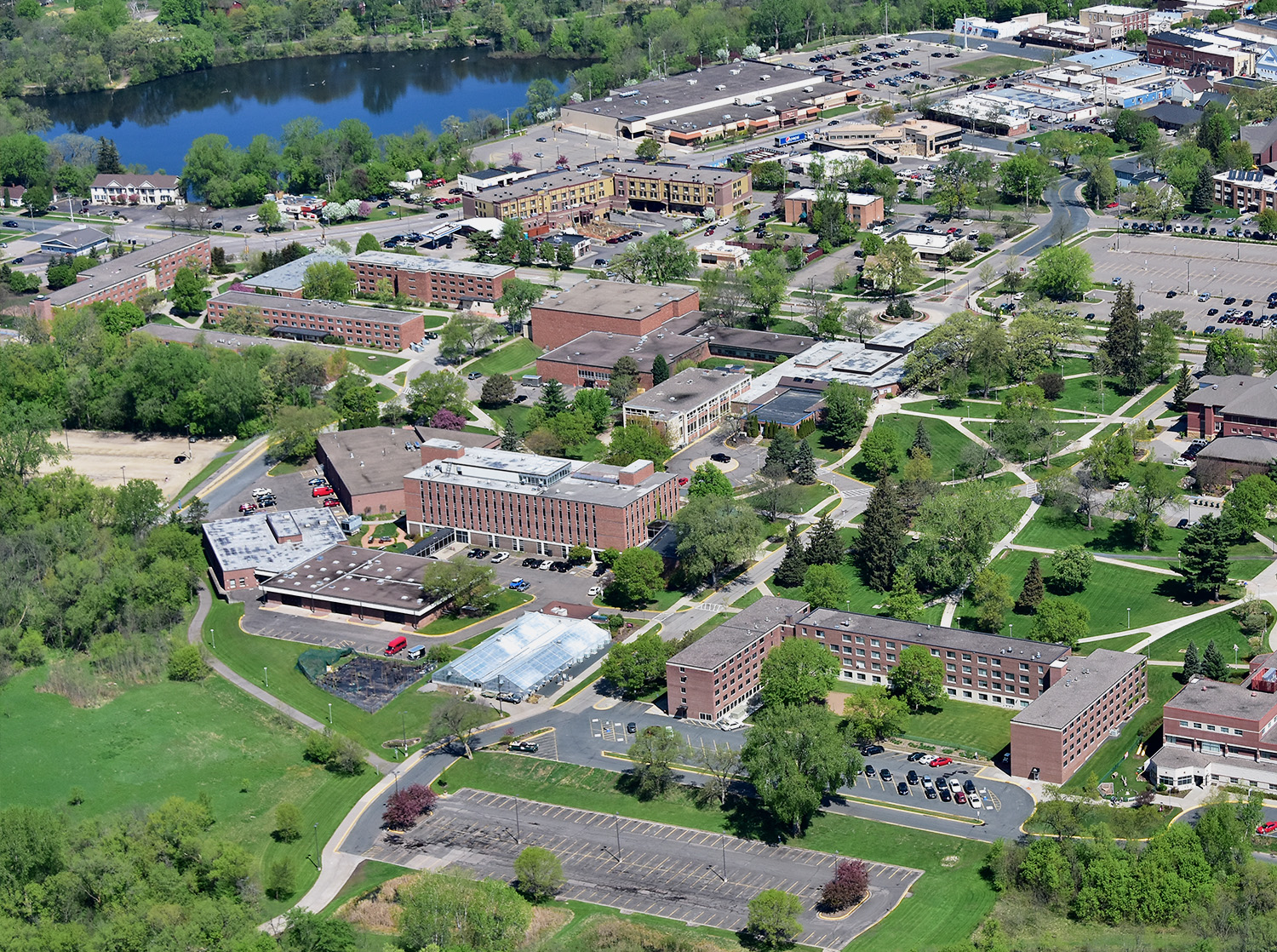
Life on the River Falls campus is built around a traditional, residential, and intentionally supportive community. The university promotes a "welcoming, inclusive campus community" that fosters personal and academic growth. Students can choose from over 150 student organizations, including identity-based groups where students can connect over shared experiences. Residential life is a cornerstone, with 11 residence halls that aim to cultivate "personal growth, collaboration and a sense of belonging for all." The overall vibe, as described by students and promotional materials, is one of approachability—professors are noted as being "approachable and genuinely invested in" student success—and ample opportunity to personalize the college experience within a supportive framework.
Outcomes at UW-River Falls reflect its mission as a regional public university focused on accessibility and career preparation. The four-year graduation rate is 43%, while the overall six-year graduation rate is reported as 57% (per canonical figures) and also cited as 61% in another source. There is a notable gap in outcomes based on socioeconomic status; data shows Pell Grant recipients graduate at a rate 12.4 percentage points lower than non-Pell recipients. For those who graduate, median earnings six years after entry are reported as $46,524. A different source cites average earnings for graduates around $54,144 to $55,752. The university's rate—the percentage of admitted students who enroll—has been noted to hover around 25.1%.
As a public institution, UW-River Falls positions itself as an affordable option, particularly for students from Wisconsin and Minnesota. The average net price after aid is $14,054. A significant majority—81% of full-time beginning undergraduates—receive grant or scholarship aid. The university offers automatic scholarships for non-resident students, which can include an automatic $3,000 scholarship and other awards that may increase to $5,120. The financial aid office provides resources on loans and other options, and a Calculator is available for personalized estimates. While one source mentions a "Falcon Tuition Promise" aimed at ensuring cost is not a barrier, and another alludes to a "Badger Promise" for transfer students, the provided sources do not detail a comprehensive, university-wide no-loan policy or a commitment to meet 100% of demonstrated financial need for all admitted students through grants alone.
UW-River Falls stands out for its unwavering commitment to being a specific kind of institution: a hands-on, accessible, and community-oriented public university for the upper Midwest. Its defining characteristic is its demographic footprint, seamlessly blending the populations of Wisconsin and Minnesota to create a distinct cross-border culture. It avoids the anonymity of a mega-university through a favorable student-faculty ratio and small class sizes, which students consistently praise. Its academic reputation is anchored in strong, applied programs like business and agriculture, where its "amazing" schools deliver clear career pathways. Unlike schools where students are left to fend for themselves, UWRF cultivates a deliberately supportive and inclusive campus environment, with a robust residential life system and over 150 student organizations designed to foster belonging. It’s a university that knows its role—providing a solid, traditional undergraduate education with a practical edge—and executes it with a clear sense of place and purpose.
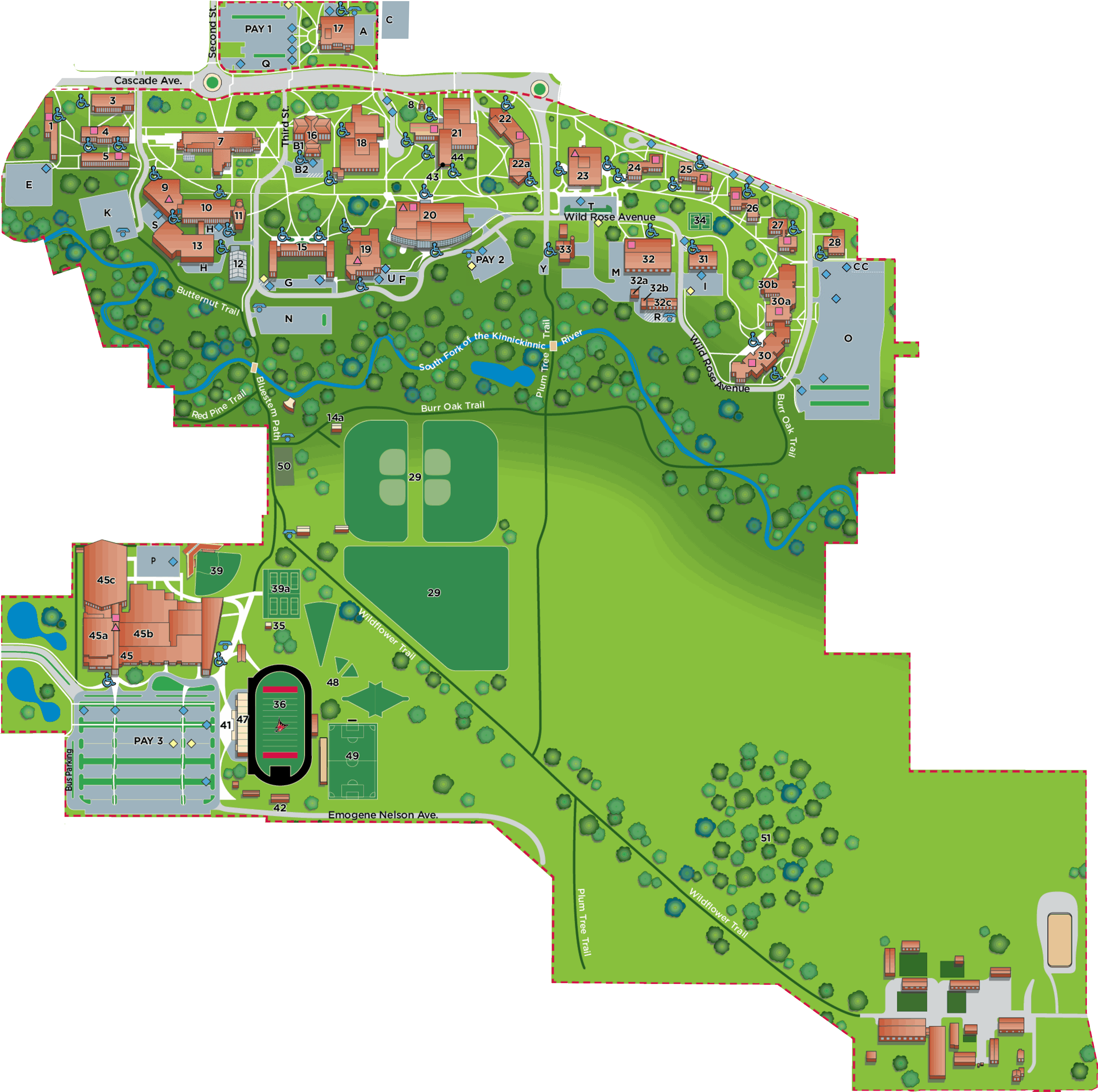
University of Wisconsin-River Falls seal · sourceUniversity of Wisconsin-River Falls | University of Wisconsin - River Falls · sourceCampus Map | University of Wisconsin - River Falls · sourceResidence Halls | University of Wisconsin - River Falls · source