Loading…
← All schools
UPMC Mercy School of Nursing
Pittsburgh, PAprivate nonprofitupmc.com
Acceptance
88%
Avg net price
$33,159
Earnings (10 yr)
$68,337
Admit rate has ranged 25%–100% over the last 5 years — notably volatile. Source: IPEDS via Urban Institute.
Acceptance & SAT from Common Data Set / IPEDS; net price, earnings & graduation from the U.S. Dept. of Education College Scorecard. Figures lag ~1–2 years — verify with the school.
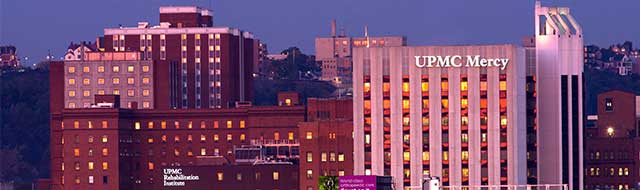
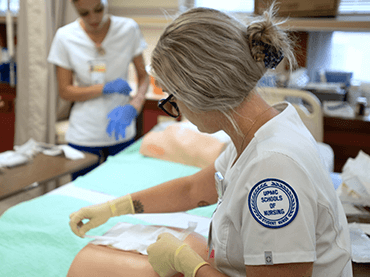
UPMC Mercy School of Nursing isn't a traditional college campus; it's a direct pipeline into a major hospital system, built for speed and practicality. Students dive into clinical rotations from the start, training within the very hospital where many will launch their careers. The vibe is intensely focused and professional, with outcomes—like near-perfect job placement and strong NCLEX pass rates—taking clear precedence over collegiate frills. It's a high-stakes, high-reward proposition for those who know exactly what they want: an RN license and a job at UPMC, fast.
Admission requirements
Test-blind — scores not considered
Required
- High school transcript
Source: IPEDS Admissions survey (2022) via Urban Institute. Covers formal factors only — it does not reflect essays, extracurriculars, or other holistic criteria.
More details
- Undergrad enrollment
- 308
- In-state tuition
- $16,190
- Out-of-state tuition
- $16,190
- Program Type
- Hospital-based Diploma
- Graduation Rate
- 50%
- Accelerated Option
- 16-month program (Altoona, Fall 2026)
- Financial Aid Access
- 73% receive grants/scholarships
- Median Earnings (10yr)
- $68,337
- Job Placement Rate (2025)
- 100%
- NCLEX Pass Rate (2023-24)
- 96.08%
Outcomes & value
Outcomes & value
- Median earnings (10 yr)
- $68,337
- Value (earnings ÷ net price)
- 2.1×
- Median debt at graduation
- $14,750
- Reducing loan balance (3 yr)
- 64%
- Pell (lower-income) share
- 41%
- First-gen share (among federal-aid recipients)
- 32%
Earnings = median of students working ~10 years after entry; debt = median of graduates. Value divides 10-yr earnings by one year’s net price — read it as earnings per dollar of annual cost, not a full lifetime ROI; it favors lower-cost schools. Source: U.S. Dept. of Education College Scorecard. Figures lag ~2 years and reflect all students, not your intended major.
Financial health
1.9 / 3.0Meets the federal financial-responsibility standard
U.S. Dept. of Education Financial Responsibility Composite Score (FY2022-23). Scale −1.0 to 3.0; ≥1.5 meets the standard. Reported for private nonprofit & for-profit institutions only — public universities are state-backed and not scored, so this is a stability signal, not a ranking.
Campus & location
Campus safety
- On-campus violent crimes (2024)
- 47
On-campus criminal offenses classed as violent (murder/non-negligent manslaughter, rape, robbery, aggravated assault) for the most recent reported year. Source: U.S. Dept. of Education Campus Safety and Security (Clery Act). Counts reflect what’s reported to the school, and urban campuses often report more partly due to non-student incidents nearby — read alongside campus size and setting, not as a standalone safety verdict.
Climate
- Pleasant days / yr
- 92
- Summer high
- 82°F
- Winter low
- 27°F
- Annual rain
- 49.1"
- Annual snow
- 21.1"
- Natural-hazard risk
- Relatively High
Pleasant days counts days per year with a mean temperature of 55–75°F, a high at or below 90°F, a low at or above 45°F, and little precipitation — a transparent comfort measure, not a weighting we invented. Computed from Open-Meteo ERA5 daily history (2019–2023). Natural-hazard risk is the county’s composite rating from the FEMA National Risk Index.
Quick answers
- What is the acceptance rate at UPMC Mercy School of Nursing?
- UPMC Mercy School of Nursing's acceptance rate is approximately 88% (Pittsburgh, PA), based on the most recent figures we compiled from public and primary sources.
- How much does UPMC Mercy School of Nursing cost?
- At UPMC Mercy School of Nursing, the average net price (after aid) is about $33,159 per year. Actual cost varies with financial aid and residency.
- How many undergraduates attend UPMC Mercy School of Nursing?
- UPMC Mercy School of Nursing enrolls approximately 308 undergraduate students.
- Where is UPMC Mercy School of Nursing located?
- UPMC Mercy School of Nursing is located in Pittsburgh, PA.
Admissions
The admissions process at UPMC Mercy is defined by its rolling policy and high , reflecting its mission to train nurses for the UPMC system efficiently. With an acceptance rate of 88%, the school is significantly more accessible than the national average, though application volume has seen dramatic growth. The process is straightforward: there are no Early Decision rounds, just a continuous review of applications. While standardized test scores (SAT range of 960–1050 or ACT 18–20) are considered, the school's primary focus appears to be on readiness for an accelerated nursing curriculum rather than ultra-selective academic metrics. The lack of a mention of demonstrated interest as a formal factor suggests a more transactional, capacity-driven admissions approach common among direct-career programs.
Academics
Academics are singularly focused on producing competent, faith-based registered nurses through a rigorous, hands-on curriculum. The school offers a diploma program in Registered Nursing, Nursing Administration, Nursing Research, and Clinical Nursing. The defining feature is immediate clinical immersion; students begin interacting with patients during their first semester, accruing extensive practical hours within the UPMC hospital network. This clinical-heavy model is designed for efficiency, with a new 16-month accelerated diploma program launching at the UPMC Altoona campus in Fall 2026. The program's quality is benchmarked by its consistently high NCLEX-RN pass rates, which have recently reached as high as 96.08%. The curriculum is also explicitly faith-based, integrating those principles into nursing practice, which sets it apart from purely secular nursing schools. Discussions among prospective students often weigh its hospital-based, focused training against the broader general education offered by community college associate degree programs.
Compare UPMC Mercy School of Nursing
See colleges similar to UPMC Mercy School of Nursing →Sources
- Common Data Set | Office of Institutional Research - Brown University
- Common Data Set - University Decision Support
- [PDF] common-data-set-current-year.pdf - Saint Vincent College
- How To Use a Common Data Set - The College Solution
- Common Data Set - Institutional Research and Analytics
- Decoding the Common Data Set What You Need to Know for Your ...
- UPMC Mercy School of Nursing Acceptance Rate - College Raptor
- UPMC Mercy School of Nursing - Niche
- UPMC Mercy School of Nursing - Data USA
- UPMC Mercy School of Nursing Acceptance Rate and SAT/ACT ...