Loading…
← All schools
Vanguard University of Southern California
Costa Mesa, CAprivate nonprofitvanguard.edu
Acceptance
62%
Avg net price
$21,241
Earnings (10 yr)
$59,541
Graduation rate
57%
Admit rate has ranged 49%–75% over the last 5 years — notably volatile. Source: IPEDS via Urban Institute.
Acceptance & SAT from Common Data Set / IPEDS; net price, earnings & graduation from the U.S. Dept. of Education College Scorecard. Figures lag ~1–2 years — verify with the school.
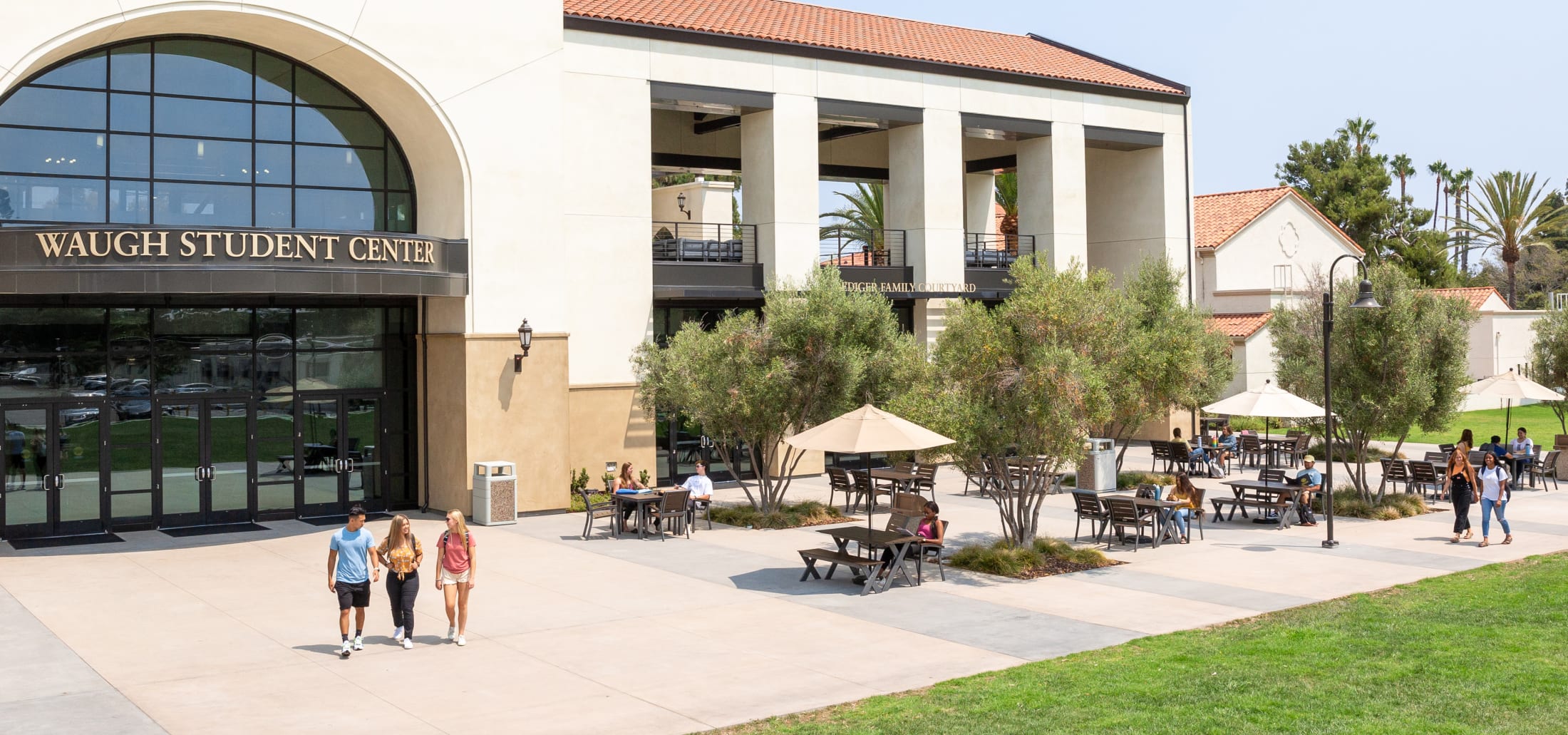
Vanguard University of Southern California is a Christ-centered liberal arts university in Costa Mesa that operates with a clear, unapologetic mission: to fuse rigorous academics with spiritual formation. It's a place where psychology lectures and business seminars are intentionally framed within a Christian worldview, and where a 16:1 student-faculty ratio fosters close mentorship. With an acceptance rate around 62%, Vanguard is accessible but selective, drawing students who are seeking both a degree and a defined faith-based community just miles from the Pacific Ocean.
Admission requirements
Test-optional — scores considered if submitted
Required
- High school transcript
- Grade point average
- TOEFL (non-native English)
Considered (not required)
- Class rank
- Test scores (SAT/ACT)
Source: IPEDS Admissions survey (2022) via Urban Institute. Covers formal factors only — it does not reflect essays, extracurriculars, or other holistic criteria.
More details
- Undergrad enrollment
- 1,933
- In-state tuition
- $41,700
- Out-of-state tuition
- $41,700
- Application Fee
- $45
- Graduation Rate
- 57%
- Student-Faculty Ratio
- 16:1
- Median Earnings (10yr)
- $59,541
- First-Year Retention Rate
- 70%
Outcomes & value
Outcomes & value
- Median earnings (10 yr)
- $59,541
- Value (earnings ÷ net price)
- 2.8×
- Median debt at graduation
- $22,000
- Graduation rate
- 57%
- First-year retention
- 70%
- Reducing loan balance (3 yr)
- 66%
- Pell (lower-income) share
- 44%
- First-gen share (among federal-aid recipients)
- 36%
Financial health
2.2 / 3.0Meets the federal financial-responsibility standard
U.S. Dept. of Education Financial Responsibility Composite Score (FY2022-23). Scale −1.0 to 3.0; ≥1.5 meets the standard. Reported for private nonprofit & for-profit institutions only — public universities are state-backed and not scored, so this is a stability signal, not a ranking.
Top-earning majors
Median earnings by field of study (highest credential), ~2 years after completion.
- Registered Nursing, Nursing Administration, Nursing Research and Clinical Nursing$91,300
- Business Administration, Management and Operations$40,697
- Marketing$34,348
- Communication and Media Studies$33,043
- Pastoral Counseling and Specialized Ministries$29,685
- Psychology, General
Campus & location
Campus safety
- On-campus violent crimes (2024)
- 0
- Per 1,000 students
- 0.00
On-campus criminal offenses classed as violent (murder/non-negligent manslaughter, rape, robbery, aggravated assault) for the most recent reported year. Source: U.S. Dept. of Education Campus Safety and Security (Clery Act). Counts reflect what’s reported to the school, and urban campuses often report more partly due to non-student incidents nearby — read alongside campus size and setting, not as a standalone safety verdict.
Climate
- Pleasant days / yr
- 287
- Summer high
- 73°F
- Winter low
- 49°F
- Annual rain
- 18.2"
- Natural-hazard risk
- Very High
Pleasant days counts days per year with a mean temperature of 55–75°F, a high at or below 90°F, a low at or above 45°F, and little precipitation — a transparent comfort measure, not a weighting we invented. Computed from Open-Meteo ERA5 daily history (2019–2023). Natural-hazard risk is the county’s composite rating from the FEMA National Risk Index.
Deep dive — research, future-scholar output & economic mobility
Economic mobility
- Mobility rate
- 1.1%
- Bottom → top quintile
- 18%
- From bottom quintile
- 6%
Mobility rate = the share of students who both start in the bottom household-income quintile and reach the top quintile; bottom → top is that chance conditional on starting at the bottom. Source: Opportunity Insights Mobility Report Cards (Chetty, Friedman, Saez, Turner & Yagan). Reflects 1980–82 birth cohorts, so it’s directional, not current.
Quick answers
- What is the acceptance rate at Vanguard University of Southern California?
- Vanguard University of Southern California's acceptance rate is approximately 62% (Costa Mesa, CA), based on the most recent figures we compiled from public and primary sources.
- How much does Vanguard University of Southern California cost?
- At Vanguard University of Southern California, the average net price (after aid) is about $21,241 per year. Actual cost varies with financial aid and residency.
- How many undergraduates attend Vanguard University of Southern California?
- Vanguard University of Southern California enrolls approximately 1,933 undergraduate students.
- Where is Vanguard University of Southern California located?
- Vanguard University of Southern California is located in Costa Mesa, CA.
Admissions
Vanguard's admissions process is moderately selective, with an of 62% and an early acceptance rate reported at 72.4%. The university requires a high school diploma (accepting a GED) and considers a range of academic credentials. For admitted students who submitted scores, the middle 50% SAT range is typically between 910–1170, and the ACT range is 22–31. The rate—the percentage of admitted students who enroll—is 19.68%. The application fee is $45. The admissions office can be reached toll-free at (800) 722-6279, and prospective students are directed to the admissions website for more information.
Academics
Academic life at Vanguard is explicitly "Christ-centered," designed to foster knowledge, cultivate character, and deepen faith within a liberal arts framework. The university organizes its wide variety of programs across three schools and one college. The student-faculty ratio is 16:1, supporting the close mentorship model the university promotes. The most popular majors reflect a blend of human sciences, business, and wellness: for the 2024 graduating class, Psychology led at 16%, followed by Parks, Recreation, Leisure, Fitness, and Kinesiology at 12%, and Business, Management, Marketing, and Related Support Services also featuring prominently. Students describe the academic experience as "challenging but manageable."
Compare Vanguard University of Southern California
vs Concordia University-Irvinevs Mount Saint Mary's Universityvs Concordia College at Moorheadvs Westmont College
See colleges similar to Vanguard University of Southern California →Sources
- [PDF] CDS_2023_2024 MAIN.xlsx - Vanguard University
- Disclosures and Consumer Information - Vanguard University
- Common Data Set 2024-2025 - Office of Institutional Research
- Vanguard University of Southern California - IPEDS
- Common Data Set: Home
- Vanguard University of Southern California Common Data Set (CDS ...
- Vanguard University of Southern California Admissions
- Vanguard University of Southern California SAT Scores and GPA
- Vanguard University of Southern California Admissions - BigFuture
- Vanguard University of Southern California - College Raptor