Admit rate has ranged 77%–85% over the last 5 years, though the latest figure above (71%) falls outside that window. Source: IPEDS via Urban Institute.
Acceptance & SAT from Common Data Set / IPEDS; net price, earnings & graduation from the U.S. Dept. of Education College Scorecard. Figures lag ~1–2 years — verify with the school.
Warren Wilson College is a small, work-driven liberal arts college in the Blue Ridge Mountains where students split time between academics, manual labor, and community engagement. With a 71% acceptance rate and a fiercely hands-on curriculum, it attracts rugged individualists who want to 'learn by doing'—whether that's farming campus land, building trails, or tackling environmental research.
Admission requirements
Test-optional — scores considered if submitted
Required
High school transcript
Grade point average
TOEFL (non-native English)
Considered (not required)
Class rank
Letters of recommendation
Test scores (SAT/ACT)
College-prep program
Demonstrated competencies
Source: IPEDS Admissions survey (2022) via Urban Institute. Covers formal factors only — it does not reflect essays, extracurriculars, or other holistic criteria.
More details
Undergrad enrollment
707
In-state tuition
$41,500
Out-of-state tuition
$41,500
On-Campus Residents
90%
Student-Faculty Ratio
11:1
6-Year Graduation Rate
52%
Required Work Hours/Week
15
First-Year Aid Recipients
99%
Median Early-Career Salary
$27,723
Outcomes & value
Outcomes & value
Median earnings (10 yr)
$36,260
Value (earnings ÷ net price)
1.7×
Median debt at graduation
$25,000
Graduation rate
42%
First-year retention
71%
Reducing loan balance (3 yr)
66%
Pell (lower-income) share
40%
First-gen share (among federal-aid recipients)
20%
Financial health
2.2 / 3.0Meets the federal financial-responsibility standard
U.S. Dept. of Education Financial Responsibility Composite Score (FY2022-23). Scale −1.0 to 3.0; ≥1.5 meets the standard. Reported for private nonprofit & for-profit institutions only — public universities are state-backed and not scored, so this is a stability signal, not a ranking.
Top-earning majors
Median earnings by field of study (highest credential), ~2 years after completion.
Business Administration, Management and Operations$28,598
History$26,739
Natural Resources Conservation and Research$20,530
Social Work$18,401
Psychology, General$17,624
Fine and Studio Arts$12,356
Source: U.S. Dept. of Education College Scorecard (field-of-study earnings). Figures cover graduates who received federal aid and lag ~2 years; not all programs report data.
Campus & location
Campus safety
On-campus violent crimes (2024)
0
Per 1,000 students
0.00
On-campus criminal offenses classed as violent (murder/non-negligent manslaughter, rape, robbery, aggravated assault) for the most recent reported year. Source: U.S. Dept. of Education Campus Safety and Security (Clery Act). Counts reflect what’s reported to the school, and urban campuses often report more partly due to non-student incidents nearby — read alongside campus size and setting, not as a standalone safety verdict.
Climate
Pleasant days / yr
127
Summer high
82°F
Winter low
34°F
Annual rain
41.5"
Annual snow
9.6"
Natural-hazard risk
Relatively Moderate
Pleasant days counts days per year with a mean temperature of 55–75°F, a high at or below 90°F, a low at or above 45°F, and little precipitation — a transparent comfort measure, not a weighting we invented. Computed from Open-Meteo ERA5 daily history (2019–2023). Natural-hazard risk is the county’s composite rating from the FEMA National Risk Index.
Deep dive — research, future-scholar output & economic mobility▾
Research output
Institutional h-index
52
Scholarly works
551
Institutional research volume and impact from OpenAlex. The h-index reflects large research universities and will be low for teaching-focused liberal-arts colleges — not a measure of undergraduate quality.
Economic mobility
Mobility rate
0.6%
Bottom → top quintile
10%
From bottom quintile
7%
Mobility rate = the share of students who both start in the bottom household-income quintile and reach the top quintile; bottom → top is that chance conditional on starting at the bottom. Source: Opportunity Insights Mobility Report Cards (Chetty, Friedman, Saez, Turner & Yagan). Reflects 1980–82 birth cohorts, so it’s directional, not current.
Quick answers
What is the acceptance rate at Warren Wilson College?
Warren Wilson College's acceptance rate is approximately 71% (Swannanoa, NC), based on the most recent figures we compiled from public and primary sources.
How much does Warren Wilson College cost?
At Warren Wilson College, the average net price (after aid) is about $21,249 per year. Actual cost varies with financial aid and residency.
How many undergraduates attend Warren Wilson College?
Warren Wilson College enrolls approximately 707 undergraduate students.
Where is Warren Wilson College located?
Warren Wilson College is located in Swannanoa, NC.
Admissions
Warren Wilson is moderately selective, admitting 71% of applicants (based on multiple sources reporting consistent figures). The middle 50% of admitted students who submit test scores have ACT scores between 25-29 or SAT scores between 1120-1280. Notably, the college emphasizes over metrics: its catalog states admissions evaluates 'critical thinking, research design, and data analysis' skills alongside traditional academic records. International students need minimum ACT Reading scores of 18 or equivalent SAT Evidence-Based Reading and Writing scores.
Earnings = median of students working ~10 years after entry; debt = median of graduates. Value divides 10-yr earnings by one year’s net price — read it as earnings per dollar of annual cost, not a full lifetime ROI; it favors lower-cost schools. Source: U.S. Dept. of Education College Scorecard. Figures lag ~2 years and reflect all students, not your intended major.
The college’s curriculum is built around three pillars: academics, work (15 hours/week required), and community service. With a 11:1 student-faculty ratio, it offers 22 majors, including standouts in Environmental Studies (Natural Resources Conservation is a top program), Psychology, and English. Every major integrates hands-on learning—the college boasts it’s the only school guaranteeing 'community-engaged courses, research, and internships for every student in every major.' A history major notes students still carry full academic loads despite the work component: 'We take as many credits as other college students and we work 8-16 hours a week.'
This is a 90% residential campus where nearly everyone lives in one of 16 quirky residence halls (think: themed housing, rustic vibes). Social life is low-key and Greek-free, revolving around 'doing'—farm work, trail maintenance, or activism. The college leans progressive and outdoorsy, with Asheville’s music and arts scene just 10 minutes away. As one student puts it: 'You won’t just learn it. You’ll do it.' The required work program creates tight bonds; students might spend mornings in biology lab and afternoons splitting firewood with professors.
90% of grads land their first paid job within six months, though early-career salaries lag peers at $27,723 median (below the national average for liberal arts colleges). The six-year graduation rate is 52%, reflecting the college’s non-traditional student body. Alumni often enter environmental work, education, or nonprofits—74% say their job aligns with their values. Retention is solid for such a quirky school: 71% of freshmen return for sophomore year.
After a 40% tuition cut, the sticker price is $27,913 (with average aid bringing net cost down further). 99% of first-years receive aid, averaging $31,098 in grants/scholarships. The college meets 71% of demonstrated need, though loans are common (61% of students borrow). The 'Fiske Guide' praises its affordability for a private college, and the work program offsets costs—students earn $2,000-$3,000 annually through campus jobs.
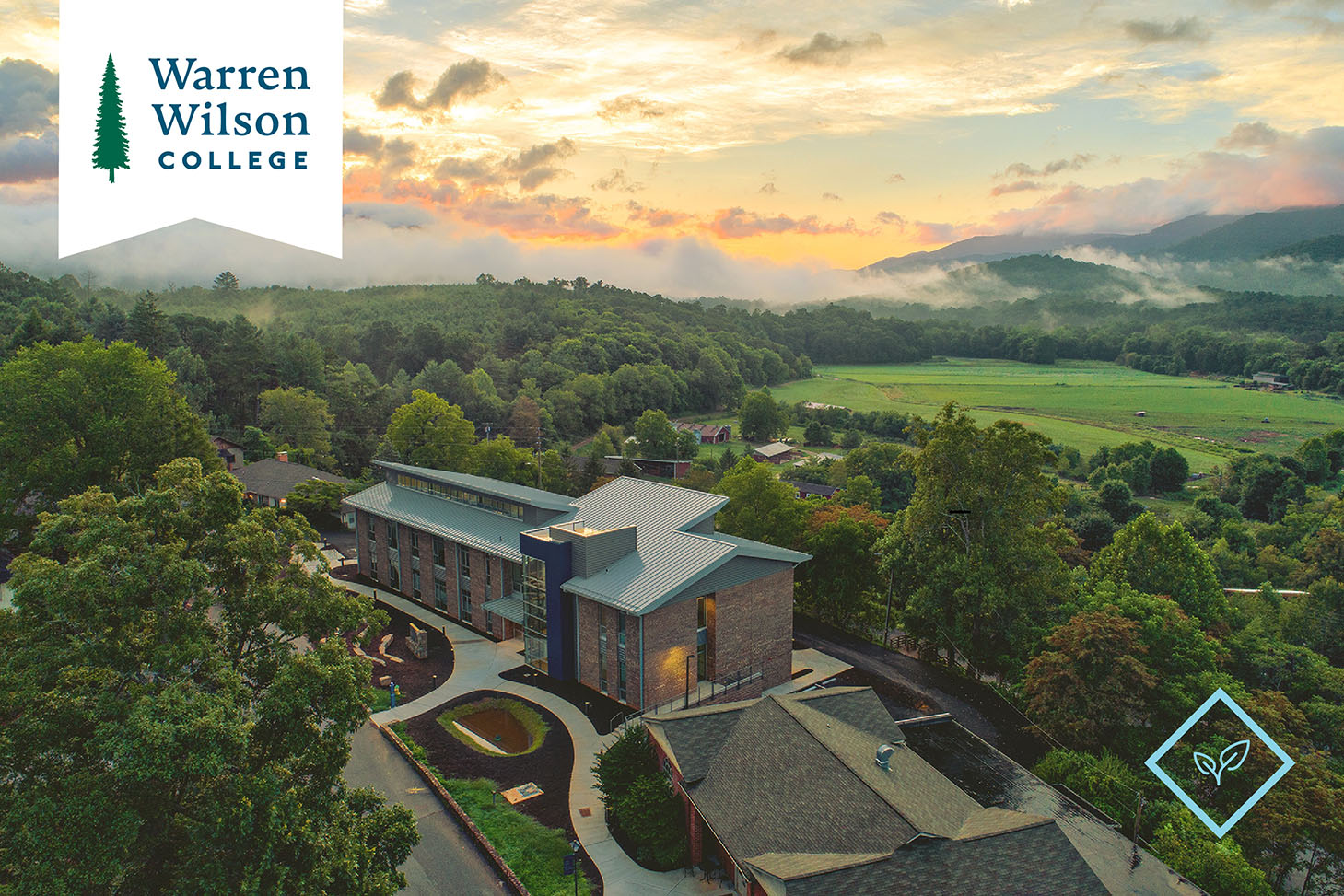
Warren Wilson is the only college that mandates work, service, and academics for every student—a model that produces grads who can fix a tractor, analyze soil samples, and lead a meeting before lunch. Its 1,200-acre campus functions as a living lab: forests, farms, and a river sustain both coursework and student labor. This isn’t for everyone (see: the 52% grad rate), but for those who thrive here, it’s transformative. As one alum says: 'You develop the strength of self to say, I can do this confidently, and I can lead when I do this.'
Warren Wilson College logo · sourceWarren Wilson College - Campus Tours · sourceWarren Wilson College - Profile, Rankings and Data | US News Best Colleges · sourceWarren Wilson College | Swannanoa NC · source