Admit rate has ranged 45%–94% over the last 5 years — notably volatile. Source: IPEDS via Urban Institute.
Acceptance & SAT from Common Data Set / IPEDS; net price, earnings & graduation from the U.S. Dept. of Education College Scorecard. Figures lag ~1–2 years — verify with the school.
Washington Adventist University is a small, faith-based campus where service and community are the curriculum, attracting a globally diverse student body with a 46% acceptance rate. Nursing and business are the standout programs, but campus life is notably quiet—this isn't a place for raucous social scenes. The median graduate earns about $64,000 a decade out, though the 29% graduation rate suggests the intimate environment isn't the right fit for everyone.
Admission requirements
Test-optional — scores considered if submitted
Required
High school transcript
Grade point average
Letters of recommendation
TOEFL (non-native English)
Considered (not required)
Test scores (SAT/ACT)
Source: IPEDS Admissions survey (2022) via Urban Institute. Covers formal factors only — it does not reflect essays, extracurriculars, or other holistic criteria.
More details
Undergrad enrollment
452
In-state tuition
$26,604
Out-of-state tuition
$26,604
Location
Takoma Park, MD
Most Popular Majors
Nursing, Business Administration, Psychology
Countries Represented
55
Student-to-Faculty Ratio
14:1
Graduation Rate (Non-Pell)
24%
Graduation Rate (Pell Recipients)
32%
Outcomes & value
Outcomes & value
Median earnings (10 yr)
$64,249
Value (earnings ÷ net price)
3.5×
Median debt at graduation
$30,500
Graduation rate
29%
First-year retention
64%
Reducing loan balance (3 yr)
44%
Pell (lower-income) share
37%
First-gen share (among federal-aid recipients)
35%
Campus & location
Campus safety
On-campus violent crimes (2024)
0
Per 1,000 students
0.00
On-campus criminal offenses classed as violent (murder/non-negligent manslaughter, rape, robbery, aggravated assault) for the most recent reported year. Source: U.S. Dept. of Education Campus Safety and Security (Clery Act). Counts reflect what’s reported to the school, and urban campuses often report more partly due to non-student incidents nearby — read alongside campus size and setting, not as a standalone safety verdict.
Climate
Pleasant days / yr
88
Summer high
86°F
Winter low
31°F
Annual rain
56.1"
Annual snow
11.6"
Natural-hazard risk
Relatively Moderate
Pleasant days counts days per year with a mean temperature of 55–75°F, a high at or below 90°F, a low at or above 45°F, and little precipitation — a transparent comfort measure, not a weighting we invented. Computed from Open-Meteo ERA5 daily history (2019–2023). Natural-hazard risk is the county’s composite rating from the FEMA National Risk Index.
Deep dive — research, future-scholar output & economic mobility▾
Research output
Institutional h-index
15
Scholarly works
125
Institutional research volume and impact from OpenAlex. The h-index reflects large research universities and will be low for teaching-focused liberal-arts colleges — not a measure of undergraduate quality.
Economic mobility
Mobility rate
1.6%
Bottom → top quintile
19%
From bottom quintile
8%
Mobility rate = the share of students who both start in the bottom household-income quintile and reach the top quintile; bottom → top is that chance conditional on starting at the bottom. Source: Opportunity Insights Mobility Report Cards (Chetty, Friedman, Saez, Turner & Yagan). Reflects 1980–82 birth cohorts, so it’s directional, not current.
Quick answers
What is the acceptance rate at Washington Adventist University?
Washington Adventist University's acceptance rate is approximately 46% (Takoma Park, MD), based on the most recent figures we compiled from public and primary sources.
What SAT score do you need for Washington Adventist University?
Admitted students at Washington Adventist University typically score 860–1130 on the SAT (the middle-50% range). Scores outside this band are still admitted, especially with strong applications.
How much does Washington Adventist University cost?
At Washington Adventist University, the average net price (after aid) is about $18,526 per year. Actual cost varies with financial aid and residency.
How many undergraduates attend Washington Adventist University?
Washington Adventist University enrolls approximately 452 undergraduate students.
Where is Washington Adventist University located?
Washington Adventist University is located in Takoma Park, MD.
Admissions
WAU has a moderately selective admissions process, with an ranging from 45.4% to 48% according to recent data. The university is but recommends a minimum ACT score of 17 or SAT composite of 800 for applicants who submit scores. Applications are accepted on a rolling basis, with deadlines for Fall (August 1) and Spring (December 1) semesters. Female applicants make up a significant portion of the pool, with a 49% acceptance rate for women.
WAU offers over 40 majors across 16 departments, with nursing, business administration, and psychology being the most popular. The student-to-faculty ratio is 14:1, fostering close interactions between students and professors. The university emphasizes practical skills and intellectual growth, with programs in health care administration, computer science, and forensic psychology standing out. Honors programs and language studies in French and German are also available.
Earnings = median of students working ~10 years after entry; debt = median of graduates. Value divides 10-yr earnings by one year’s net price — read it as earnings per dollar of annual cost, not a full lifetime ROI; it favors lower-cost schools. Source: U.S. Dept. of Education College Scorecard. Figures lag ~2 years and reflect all students, not your intended major.
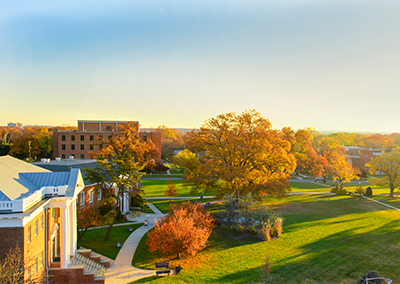
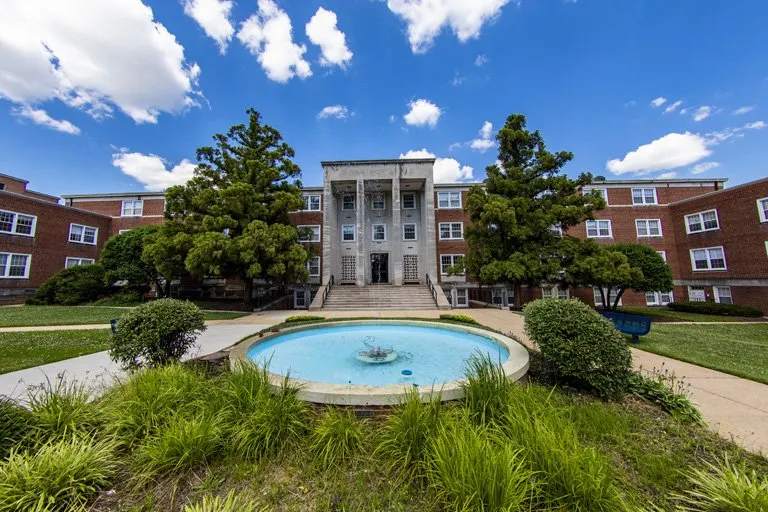
Life at WAU is characterized by its close-knit, spiritually focused community. Students come from 55 countries, creating a culturally diverse environment. However, social activities are limited, with some students describing campus life as quiet. The Center for Student Life organizes cultural, spiritual, and recreational programs, but clubs and entertainment options are sparse. The university emphasizes service and global immersion experiences.
WAU has made strides in improving graduation rates, boasting a 67% increase in its five-year graduation rate recently. However, disparities exist: Pell Grant recipients graduate at a 32% rate, compared to 24% for non-recipients. The university ranks well among Adventist institutions for student outcomes and service, though broader national rankings are less prominent. Earnings data for graduates is not extensively publicized.
Tuition and fees at WAU total $26,604, but the average after aid drops to $16,732. The university offers a mix of merit and , including state grants for Maryland residents. Financial aid packages average $13,649, though costs can vary yearly. The net price calculator helps families estimate their out-of-pocket expenses, but the overall average net price of $23,874 is above the national average.
WAU distinguishes itself through its Seventh-day Adventist mission, global diversity (students from 55 countries), and strong nursing and business programs. Its small size (1,100 undergraduates) fosters close faculty-student relationships, though the quiet campus may not suit those seeking a vibrant social scene. The university’s recent improvements in graduation rates and emphasis on service learning reflect its commitment to student success and community impact.
Washington Adventist University logo · sourceCampus Tours Program - Washington Adventist University · sourceWashington Adventist University - Adventist Colleges and Universities · sourceHousing & Dining - Washington Adventist University · source
_(cropped).jpg?width=1600)