Admit rate has ranged 82%–90% over the last 5 years — notably volatile, though the latest figure above (81%) falls outside that window. Source: IPEDS via Urban Institute.
Acceptance & SAT from Common Data Set / IPEDS; net price, earnings & graduation from the U.S. Dept. of Education College Scorecard. Figures lag ~1–2 years — verify with the school.
Washington & Jefferson College is a small, historic liberal arts college in western Pennsylvania that operates with a refreshingly pragmatic, student-centered ethos. It's a place where the admissions process is test-blind and relatively accessible, the academic menu is broad and adaptive, and the focus is squarely on delivering tangible, career-ready outcomes for a predominantly first-generation and Pell-eligible student body. Think of it less as an ivory tower and more as a highly effective launchpad.
Admission requirements
Test-optional — scores considered if submitted
Required
Grade point average
TOEFL (non-native English)
Considered (not required)
High school transcript
Class rank
Letters of recommendation
Test scores (SAT/ACT)
College-prep program
Source: IPEDS Admissions survey (2022) via Urban Institute. Covers formal factors only — it does not reflect essays, extracurriculars, or other holistic criteria.
More details
Undergrad enrollment
1,295
In-state tuition
$29,392
Out-of-state tuition
$29,392
Areas of Study
33 majors, 52 minors
Graduation Rate
70%
Meets Full Need
Yes, for eligible PA students with 3.4+ GPA
Career Outcomes Rate
97%
Median Earnings (10yr)
$67,918
Early Decision Deadline
December 15 (Binding)
First-Year Aid Recipients
100% receive grant/scholarship aid
Outcomes & value
Outcomes & value
Median earnings (10 yr)
$67,918
Value (earnings ÷ net price)
2.7×
Median debt at graduation
$27,000
Graduation rate
70%
First-year retention
81%
Reducing loan balance (3 yr)
78%
Pell (lower-income) share
31%
First-gen share (among federal-aid recipients)
22%
Financial health
2.6 / 3.0Meets the federal financial-responsibility standard
U.S. Dept. of Education Financial Responsibility Composite Score (FY2022-23). Scale −1.0 to 3.0; ≥1.5 meets the standard. Reported for private nonprofit & for-profit institutions only — public universities are state-backed and not scored, so this is a stability signal, not a ranking.
Top-earning majors
Median earnings by field of study (highest credential), ~2 years after completion.
Accounting and Related Services$51,392
Computer and Information Sciences, General$51,273
Economics$46,087
Business/Commerce, General$41,286
History$38,289
Psychology, General$35,954
English Language and Literature, General
Campus & location
Campus safety
On-campus violent crimes (2024)
2
Per 1,000 students
1.54
On-campus criminal offenses classed as violent (murder/non-negligent manslaughter, rape, robbery, aggravated assault) for the most recent reported year. Source: U.S. Dept. of Education Campus Safety and Security (Clery Act). Counts reflect what’s reported to the school, and urban campuses often report more partly due to non-student incidents nearby — read alongside campus size and setting, not as a standalone safety verdict.
Climate
Pleasant days / yr
94
Summer high
82°F
Winter low
27°F
Annual rain
47.3"
Annual snow
21.7"
Natural-hazard risk
Relatively Moderate
Pleasant days counts days per year with a mean temperature of 55–75°F, a high at or below 90°F, a low at or above 45°F, and little precipitation — a transparent comfort measure, not a weighting we invented. Computed from Open-Meteo ERA5 daily history (2019–2023). Natural-hazard risk is the county’s composite rating from the FEMA National Risk Index.
Deep dive — research, future-scholar output & economic mobility▾
Research output
Institutional h-index
80
Scholarly works
879
Institutional research volume and impact from OpenAlex. The h-index reflects large research universities and will be low for teaching-focused liberal-arts colleges — not a measure of undergraduate quality.
Economic mobility
Mobility rate
1.4%
Bottom → top quintile
32%
From bottom quintile
4%
Mobility rate = the share of students who both start in the bottom household-income quintile and reach the top quintile; bottom → top is that chance conditional on starting at the bottom. Source: Opportunity Insights Mobility Report Cards (Chetty, Friedman, Saez, Turner & Yagan). Reflects 1980–82 birth cohorts, so it’s directional, not current.
Quick answers
What is the acceptance rate at Washington & Jefferson College?
Washington & Jefferson College's acceptance rate is approximately 81% (Washington, PA), based on the most recent figures we compiled from public and primary sources.
How much does Washington & Jefferson College cost?
At Washington & Jefferson College, the average net price (after aid) is about $25,002 per year. Actual cost varies with financial aid and residency.
How many undergraduates attend Washington & Jefferson College?
Washington & Jefferson College enrolls approximately 1,295 undergraduate students.
Where is Washington & Jefferson College located?
Washington & Jefferson College is located in Washington, PA.
Admissions
W&J's admissions approach is defined by accessibility and a deliberate shift away from standardized testing. The college is officially test-blind, meaning it does not consider SAT or ACT scores in admission decisions, even if submitted. This policy reflects a focus on a student's overall academic record and potential beyond a single exam. The process is moderately selective, with a published of 81%. Applicants have multiple decision pathways: a binding Early Decision option with a December 15 deadline and a Regular Decision priority deadline. While the is the definitive source for factor importance, the college's public test-blind stance is a clear signal of its priorities. Demonstrated interest, while a common factor at many colleges, is not explicitly detailed in the provided sources for W&J. The admissions office encourages all prospective students to use the Calculator early in the process to understand financial fit.
Earnings = median of students working ~10 years after entry; debt = median of graduates. Value divides 10-yr earnings by one year’s net price — read it as earnings per dollar of annual cost, not a full lifetime ROI; it favors lower-cost schools. Source: U.S. Dept. of Education College Scorecard. Figures lag ~2 years and reflect all students, not your intended major.
$32,925
Communication and Media Studies$28,055
Source: U.S. Dept. of Education College Scorecard (field-of-study earnings). Figures cover graduates who received federal aid and lag ~2 years; not all programs report data.
The academic experience at W&J is built on a classic liberal arts foundation but is explicitly geared toward "professional preparation" and creating "adaptive thinkers." Students choose from a robust selection of 33 majors and 52 minors, ranging from traditional disciplines like Business, Chemistry, English, and Political Science to newer, interdisciplinary programs such as Biomedical Science, Creative Writing, Health and Society, and Interfaith Leadership. The college frequently adds programs in response to student interest and market trends, with recent additions including African American Studies and Cell and Molecular Biology. This curriculum is designed to be integrative, encouraging students to make connections across fields. While the most popular majors include Communication, Political Science, History, and Biochemistry, the breadth of options ensures students can tailor their education. The overarching objective across all programs is to combine intellectual growth with passionate focus, aiming to prepare graduates who are both broadly educated and specifically skilled.
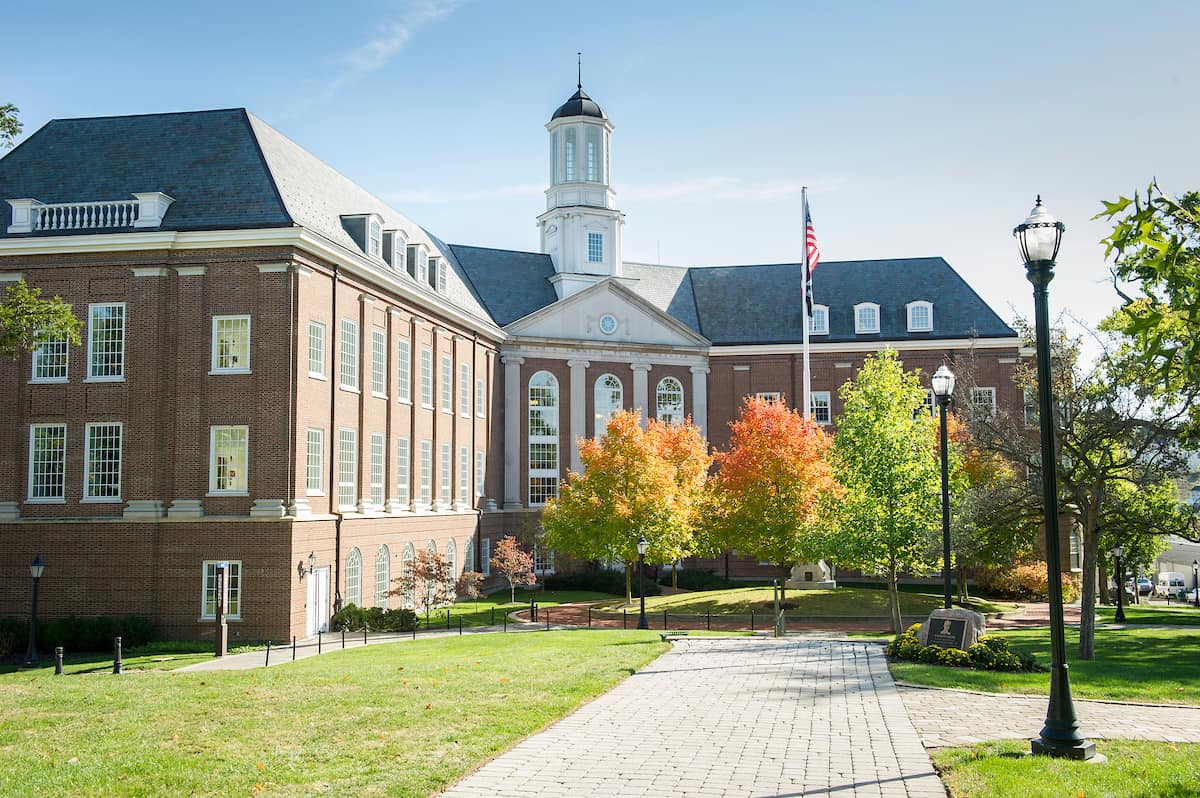
Life on W&J's historic, walkable campus in Washington, Pennsylvania, is described as dynamic and abundant with opportunity. The college actively promotes a vibrant slate of social, extracurricular, and cultural activities through its Office of Student Life. Students can engage with a diverse array of clubs, intramural sports, and campus events. The college also emphasizes support for athletics, diversity initiatives, leadership development, community involvement, and career exploration as key components of the student experience. The campus itself hosts an art gallery, performance venues, and frequent events that aim to shape conversations reaching beyond the campus borders. The residential nature of the campus fosters a close-knit community where involvement is encouraged and accessible. Reviews and descriptions point to a typical small-college atmosphere where it's easy to find your niche and get involved.
Outcomes are where W&J's pragmatic mission comes into sharp focus. The college consistently reports a very high career outcomes rate for its graduates, with recent data showing 97% of graduates employed or in graduate school within a short period after commencement. Of those, approximately two-thirds accept employment offers, while about one-third continue their education. The four-year graduation rate is a solid 70%, indicating a strong track record of students completing their degrees on time. In terms of earnings, the median salary for graduates six years after entry is reported as $52,082. The college has earned national rankings for value and student outcomes, with methodologies that weigh salary impact, time to pay off , graduation rates, and career preparation. This data-driven focus on post-graduate success is a cornerstone of the W&J value proposition.
W&J is proactive in trying to make its private liberal arts education affordable. The average net price after grants and scholarships is approximately $25,000, a significant discount from the sticker price. The college states that 100% of full-time beginning undergraduates receive grant or scholarship aid. Financial assistance comes in two primary forms: and merit scholarships. Merit awards can start at $17,000 per year. Crucially, W&J has made a public commitment to expand support for low-income students. The college pledges to meet the full demonstrated financial need for all students who are eligible for Pennsylvania Higher Education Assistance Agency (PHEA) grants and who maintain a GPA of 3.4 or higher. This is a targeted "no-loan" or low-loan initiative for a specific, high-achieving, in-state, low-income cohort. For all other students, federal loan options are available, with annual maximums ranging from $5,500 for freshmen to $7,500 for juniors and seniors. Families are strongly encouraged to use the Calculator for a personalized estimate.
Washington & Jefferson stands out for its unapologetically practical fusion of the liberal arts with career readiness, executed within a supportive, small-college environment. Its defining characteristics form a coherent value proposition:
Test-Blind Admissions: This isn't just ; it's a firm policy that removes a major barrier and anxiety point for applicants, aligning with a process.
The Adaptive Curriculum: With over 60 areas of study and a habit of adding relevant new majors (like Biomedical Science and Health and Society), the academic program is designed to be responsive, not static.
The Outcomes Engine: The near-universal career outcomes rate (97%) is the clearest evidence that the college's focus on "professional preparation" is more than a slogan—it's a measurable result.
Targeted Affordability: While not a universal no-loan school, its commitment to meeting full need for high-achieving, low-income Pennsylvania students shows a strategic investment in accessibility and recognizing that talent isn't limited by family income.
Founded in 1781, W&J leverages its history not for prestige, but as a foundation for a modern, adaptive mission: to take students from diverse backgrounds and deliver them, four years later, into successful careers or graduate programs. It's a college for doers.
Washington & Jefferson College seal · sourceCollege Overview | Washington and Jefferson College · sourceVisit Campus | Washington & Jefferson · sourceWashington & Jefferson College lands priority placement on multiple national rankings for value, student outcomes - Washington & Jefferson College · source