Loading…
← All schools
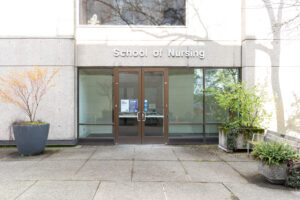
Washington Health System School of Nursing
Washington, PAprivate nonprofitwhs.org
The Washington Health System School of Nursing (now UPMC Washington School of Nursing) is a small, focused diploma program that operates with the intensity of a trade school and the clinical immersion of a teaching hospital. It’s a direct pipeline into the nursing profession, offering a rigorous 16-month curriculum where students train within the Washington Health System, leading to exceptionally high NCLEX pass rates and immediate job prospects in a high-demand field. This is not a traditional college experience; it’s a career launchpad where the classroom and the hospital floor are inextricably linked.
More details
- Undergrad enrollment
- 37
- Program Length
- 16-month diploma
- Median Earnings (10yr)
- $63,504
- NCLEX Pass Rate (2025)
- 92%
- Student Demographics (Largest Groups)
- 89.2% White, 5.41% Black or African American
Outcomes & value
Outcomes & value
- Median earnings (10 yr)
- $63,504
- Median debt at graduation
- $14,750
- Reducing loan balance (3 yr)
- 66%
- Pell (lower-income) share
- 28%
Earnings = median of students working ~10 years after entry; debt = median of graduates. Value divides 10-yr earnings by one year’s net price — read it as earnings per dollar of annual cost, not a full lifetime ROI; it favors lower-cost schools. Source: U.S. Dept. of Education College Scorecard. Figures lag ~2 years and reflect all students, not your intended major.
Campus & location
Campus safety
- On-campus violent crimes (2024)
- 5
On-campus criminal offenses classed as violent (murder/non-negligent manslaughter, rape, robbery, aggravated assault) for the most recent reported year. Source: U.S. Dept. of Education Campus Safety and Security (Clery Act). Counts reflect what’s reported to the school, and urban campuses often report more partly due to non-student incidents nearby — read alongside campus size and setting, not as a standalone safety verdict.
Climate
- Pleasant days / yr
- 101
- Summer high
- 81°F
- Winter low
- 27°F
- Annual rain
- 38"
- Annual snow
- 21.5"
- Natural-hazard risk
- Relatively Moderate
Pleasant days counts days per year with a mean temperature of 55–75°F, a high at or below 90°F, a low at or above 45°F, and little precipitation — a transparent comfort measure, not a weighting we invented. Computed from Open-Meteo ERA5 daily history (2019–2023). Natural-hazard risk is the county’s composite rating from the FEMA National Risk Index.
Quick answers
- How many undergraduates attend Washington Health System School of Nursing?
- Washington Health System School of Nursing enrolls approximately 37 undergraduate students.
- Where is Washington Health System School of Nursing located?
- Washington Health System School of Nursing is located in Washington, PA.
Admissions
Admissions is competitive, with a reported of 25%. The school seeks qualified applicants who meet its admission requirements, with recruitment activities outlined in its bulletins. While not an open-admission policy, the process is highly focused on preparedness for a rigorous nursing curriculum. The enrolled student body is predominantly White (89.2%), with Black or African American students making up 5.41% and 2.7% identifying as Two or More Races. Admitted students typically present SAT scores in the range of 880 to 1,160, or ACT scores between 16 and 24.
Academics
The school’s sole academic offering is an intensive, hospital-based nursing diploma program. The core program spans 16 months over four semesters. Upon completion, graduates are qualified to sit for the National Council Licensure Examination (NCLEX) to become registered nurses. The program is notably rigorous, designed to prepare students for immediate clinical practice. As of early 2026, the school reported a total enrollment of 50 students in its traditional diploma program, with an additional 17 students continuing their education in a Bachelor of Science in Nursing (BSN) track. The academic focus is singular and practical, centered entirely on nursing competencies.
Compare Washington Health System School of Nursing
See colleges similar to Washington Health System School of Nursing →Sources
- common-data-set-2024-2025.pdf
- Common Data Set 2023-2024
- Common Data Set 2025-2026
- Washington University in St. Louis Common Data Set 2017 ...
- Common Data Set Explorer 2026: Compare 100 Colleges
- Common Data Set: Home
- Washington Health System School of Nursing Acceptance ...
- Washington Health System School of Nursing
- WASHINGTON HEALTH SYSTEM SCHOOL OF NURSING ...
- Washington Health System School of Nursing