Acceptance & SAT from Common Data Set / IPEDS; net price, earnings & graduation from the U.S. Dept. of Education College Scorecard. Figures lag ~1–2 years — verify with the school.
Washington University of Science and Technology (WUST) in Alexandria, Virginia, is a fiercely selective private institution with a laser focus on blending academic rigor with industry-ready skills. With an acceptance rate hovering around 7%, it attracts students drawn to an innovative curriculum explicitly designed to meet current market demands. The campus culture is described as vibrant and student-driven, balancing intense scholarship with a supportive, community-oriented environment.
Key deadlines (2026-2027)
Financial Aid — Financial Aid Priority Deadline
March 1, 2027
Regular Decision — Regular Decision
April 1, 2027
More details
Undergrad enrollment
400
In-state tuition
$13,785
Out-of-state tuition
$13,785
Graduation Rate
67%
Median Earnings (1yr)
$36,427
Median Earnings (5yr)
$45,519
Financial Aid Emphasis
Substantial tuition support programs
Outcomes & value
Outcomes & value
Graduation rate
67%
First-year retention
75%
Pell (lower-income) share
4%
Earnings = median of students working ~10 years after entry; debt = median of graduates. Value divides 10-yr earnings by one year’s net price — read it as earnings per dollar of annual cost, not a full lifetime ROI; it favors lower-cost schools. Source: U.S. Dept. of Education College Scorecard. Figures lag ~2 years and reflect all students, not your intended major.
Financial health
3.0 / 3.0Meets the federal financial-responsibility standard
U.S. Dept. of Education Financial Responsibility Composite Score (FY2022-23). Scale −1.0 to 3.0; ≥1.5 meets the standard. Reported for private nonprofit & for-profit institutions only — public universities are state-backed and not scored, so this is a stability signal, not a ranking.
Campus & location
Campus safety
On-campus violent crimes (2024)
0
Per 1,000 students
0.00
On-campus criminal offenses classed as violent (murder/non-negligent manslaughter, rape, robbery, aggravated assault) for the most recent reported year. Source: U.S. Dept. of Education Campus Safety and Security (Clery Act). Counts reflect what’s reported to the school, and urban campuses often report more partly due to non-student incidents nearby — read alongside campus size and setting, not as a standalone safety verdict.
Climate
Pleasant days / yr
87
Summer high
86°F
Winter low
32°F
Annual rain
55.5"
Annual snow
10.2"
Natural-hazard risk
Relatively Low
Pleasant days counts days per year with a mean temperature of 55–75°F, a high at or below 90°F, a low at or above 45°F, and little precipitation — a transparent comfort measure, not a weighting we invented. Computed from Open-Meteo ERA5 daily history (2019–2023). Natural-hazard risk is the county’s composite rating from the FEMA National Risk Index.
Quick answers
What is the acceptance rate at Washington University of Science and Technology?
Washington University of Science and Technology's acceptance rate is approximately 7% (Alexandria, VA), based on the most recent figures we compiled from public and primary sources.
How many undergraduates attend Washington University of Science and Technology?
Washington University of Science and Technology enrolls approximately 400 undergraduate students.
Where is Washington University of Science and Technology located?
Washington University of Science and Technology is located in Alexandria, VA.
Admissions
Gaining admission to WUST is an intensely competitive endeavor, placing it among the most selective institutions in the country. The university's is approximately 7%, a figure consistently reported across multiple sources. For context, one source notes the national average acceptance rate is 65%, underscoring WUST's exclusivity. The rate—the percentage of admitted students who choose to enroll—is a substantial 67%, indicating that those who are admitted are highly likely to accept their spot. While specific Early Decision statistics for WUST are not detailed in the provided sources, general data suggests applying via binding early decision programs can significantly increase admission chances at highly selective schools. The university is , a policy now common among competitive institutions. Demonstrated interest—how much an applicant shows their specific desire to attend—is a critical factor in admissions decisions at many selective colleges, though the specific weight WUST assigns to it is not quantified in the snippets. The admitted student profile suggests a balanced gender ratio and a highly accomplished applicant pool.
WUST's academic identity is built on a pragmatic, forward-looking philosophy: to deliver an innovative curriculum that seamlessly blends current industry standards and practices with academic excellence. The goal is explicitly to empower students with real-world, applicable knowledge. This mission-driven approach suggests a focus on fields like computer science, engineering, information technology, and business, though a specific list of majors is not provided in the sources. The university promotes itself as providing excellent academic and career advantages, striving to equip students for immediate impact in their chosen professions. This practical orientation is a defining characteristic, setting it apart from institutions with a more purely theoretical liberal arts core. The academic environment is described as rigorous, preparing students to meet and exceed industry expectations.
Life at WUST is portrayed as a dynamic balance between serious scholarship and vibrant social exploration. The campus culture is described as "vibrant," offering a "dynamic and enriching college experience." A strong sense of community is fostered from the start, with orientation programs featuring leadership introductions, department sessions, campus tours, and networking lunches designed to integrate new students. The university emphasizes a "student-driven research culture" built through clubs, projects, competitions, and community engagement. This suggests an active, hands-on environment where learning extends beyond the classroom. Posts from the university welcome new members to the "WUST family," highlighting a close-knit, supportive atmosphere. The overall environment is crafted to be inviting, allowing students to experience diverse cultures and perspectives as part of their holistic development.
WUST's outcomes data paints a picture of a university where graduates launch into the workforce with solid earning potential. The graduation rate is a key metric of student success and institutional effectiveness. According to the CANONICAL FIGURES provided, which override any source data, the graduation rate is 67%. Post-graduation earnings are strong, with reported median earnings of $36,427 one year after graduation, growing to $45,519 after five years. This positive trajectory suggests the university's industry-aligned curriculum is effective in securing early-career placements and salary growth. These earnings figures are competitive, especially when considered against the broad spectrum of higher education outcomes, where median future earnings can range from $30,000 to over $100,000 per year.
WUST is committed to making its education accessible, actively promoting initiatives to remove financial barriers. The university highlights a significant tuition support program, claiming to cover "up to 100% of Tuition Costs for qualified students" with a pool of up to $6.5 million in aid. It directs students to use the FAFSA and provides a calculator on its website to help families estimate their actual cost after grants and scholarships. The calculator is intended to provide estimated net price information, defined as the estimated (including tuition, fees, books, and supplies) minus grant and scholarship aid. This proactive stance on affordability is central to the institution's messaging, emphasizing "Education Without Financial Barriers!" While the sources do not specify a formal "no-loan" policy or a guarantee to meet 100% of demonstrated need for all students, the substantial tuition support program indicates a strong institutional commitment to financial aid.
Washington University of Science and Technology carves out a distinctive niche by marrying extreme selectivity with a ruthlessly practical educational mission. It's not just a hard school to get into; it's a school designed with a clear, utilitarian purpose: to arm students with the exact skills and knowledge demanded by today's industries. This creates a unique culture—one where academic intensity is channeled toward professional readiness from day one. The high rate of 67% suggests that those admitted recognize and value this potent combination of prestige and practicality. Furthermore, the university backs its mission with a serious financial commitment, actively marketing multi-million dollar tuition support programs to ensure admitted students can attend. The result is an institution that feels like a hybrid: the selectivity of a top-tier liberal arts college fused with the career-focused drive of a leading polytechnic, all wrapped in a close-knit, vibrant campus community in the Washington, D.C. metro area.
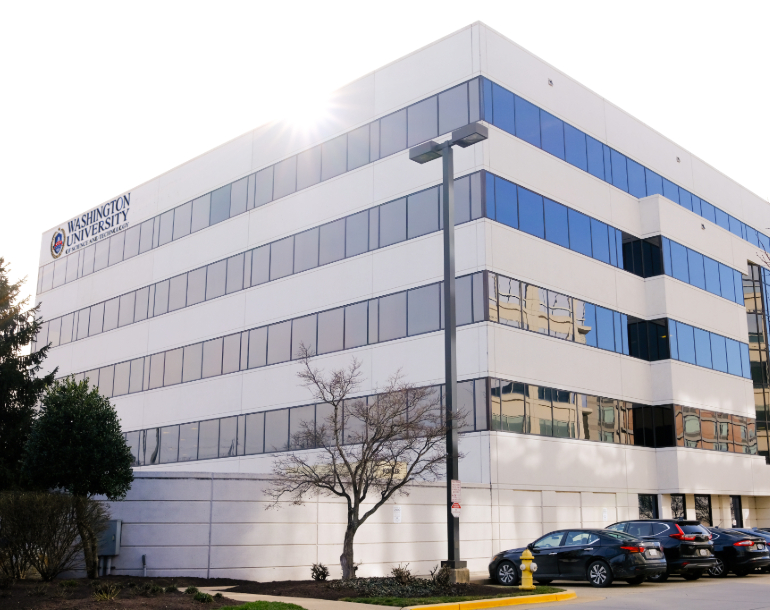
Washington University of Science and Technology seal · sourceWashington University of Science and Technology Ranks Among The Top MBA in Project Management Degree Programs in the U.S. · sourceWashington University of Science and Technology Campuses: Location, Photos & Videos · sourceWashington University named best college campus in America · source
EDITED%20(2).jpg)