Admit rate has ranged 20%–24% over the last 5 years, though the latest figure above (14%) falls outside that window. Source: IPEDS via Urban Institute.
Acceptance & SAT from Common Data Set / IPEDS; net price, earnings & graduation from the U.S. Dept. of Education College Scorecard. Figures lag ~1–2 years — verify with the school.
Webb Institute is not just a college; it's a singular, all-in bet on a specific future. This tiny, fiercely selective institution on the North Shore of Long Island offers exactly one degree—a Bachelor of Science in Naval Architecture and Marine Engineering—to a community of just over 100 students who live, eat, and breathe ship design. With a 100% job placement rate, a mandatory paid internship every January, and a tuition-free guarantee for all admitted students, Webb operates more like an elite professional guild than a traditional liberal arts college, producing graduates who immediately command top salaries in a niche, global industry.
Admission requirements
Test-optional — scores considered if submitted
Required
High school transcript
Grade point average
Letters of recommendation
College-prep program
Demonstrated competencies
Considered (not required)
Class rank
Test scores (SAT/ACT)
TOEFL (non-native English)
Source: IPEDS Admissions survey (2022) via Urban Institute. Covers formal factors only — it does not reflect essays, extracurriculars, or other holistic criteria.
More details
Undergrad enrollment
106
In-state tuition
$63,214
Out-of-state tuition
$63,214
Housing
Required on-campus for all students
Campus Setting
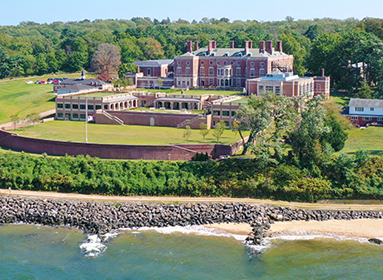
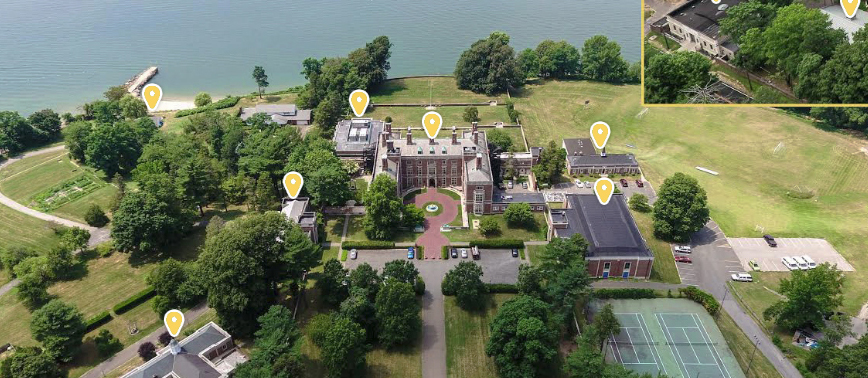
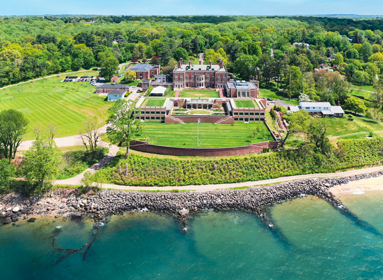
26-acre waterfront campus with private beach
Unique Feature
Full-tuition scholarship for all admitted students
Graduation Rate
88%
Student Body Size
106
Job Placement Rate
100%
Student-Faculty Ratio
10:1
Median Earnings (10yr)
$92,973
Outcomes & value
Outcomes & value
Graduation rate
88%
First-year retention
93%
Pell (lower-income) share
9%
Earnings = median of students working ~10 years after entry; debt = median of graduates. Value divides 10-yr earnings by one year’s net price — read it as earnings per dollar of annual cost, not a full lifetime ROI; it favors lower-cost schools. Source: U.S. Dept. of Education College Scorecard. Figures lag ~2 years and reflect all students, not your intended major.
Financial health
3.0 / 3.0Meets the federal financial-responsibility standard
U.S. Dept. of Education Financial Responsibility Composite Score (FY2022-23). Scale −1.0 to 3.0; ≥1.5 meets the standard. Reported for private nonprofit & for-profit institutions only — public universities are state-backed and not scored, so this is a stability signal, not a ranking.
Campus & location
Campus safety
On-campus violent crimes (2024)
1
On-campus criminal offenses classed as violent (murder/non-negligent manslaughter, rape, robbery, aggravated assault) for the most recent reported year. Source: U.S. Dept. of Education Campus Safety and Security (Clery Act). Counts reflect what’s reported to the school, and urban campuses often report more partly due to non-student incidents nearby — read alongside campus size and setting, not as a standalone safety verdict.
Climate
Pleasant days / yr
98
Summer high
82°F
Winter low
30°F
Annual rain
53.3"
Annual snow
19.7"
Natural-hazard risk
Relatively High
Pleasant days counts days per year with a mean temperature of 55–75°F, a high at or below 90°F, a low at or above 45°F, and little precipitation — a transparent comfort measure, not a weighting we invented. Computed from Open-Meteo ERA5 daily history (2019–2023). Natural-hazard risk is the county’s composite rating from the FEMA National Risk Index.
Deep dive — research, future-scholar output & economic mobility▾
Research output
Institutional h-index
97
Scholarly works
1,872
Institutional research volume and impact from OpenAlex. The h-index reflects large research universities and will be low for teaching-focused liberal-arts colleges — not a measure of undergraduate quality.
Quick answers
What is the acceptance rate at Webb Institute?
Webb Institute's acceptance rate is approximately 14% (Glen Cove, NY), based on the most recent figures we compiled from public and primary sources.
What SAT score do you need for Webb Institute?
Admitted students at Webb Institute typically score 1430–1530 on the SAT (the middle-50% range). Scores outside this band are still admitted, especially with strong applications.
How much does Webb Institute cost?
At Webb Institute, the average net price (after aid) is about $73,043 per year. Actual cost varies with financial aid and residency.
How many undergraduates attend Webb Institute?
Webb Institute enrolls approximately 106 undergraduate students.
Where is Webb Institute located?
Webb Institute is located in Glen Cove, NY.
Admissions
Gaining entry to Webb Institute is a high-stakes proposition, with only about 14 out of every 100 applicants receiving an offer. The admitted class is exceptionally small—total undergraduate enrollment is just 106 students—making each seat intensely competitive. The academic profile of those who succeed is formidable: the median unweighted GPA is 3.86, and the middle 50% SAT range for admitted students who submit scores is 1430–1530, with a math average of 760. The ACT composite middle 50% range is 32–34. The institute accepts the Common Application with a regular decision deadline of January 16. For the Class of 2029, standardized test scores (SAT/ACT) are required. The admissions —the percentage of admitted students who enroll—is a remarkably high 75.8%, indicating that those who are admitted are overwhelmingly choosing to attend. While the is a standard source for admissions factors like demonstrated interest, the specific CDS for Webb Institute was not among the provided sources to confirm its policy.
Webb’s academic model is monolithic and immersive. Every student graduates with the same Bachelor of Science degree in Naval Architecture and Marine Engineering, following a rigorous 146-credit curriculum built on a strong foundation of mathematics, basic sciences, and engineering principles. The program is distinguished by its relentless focus on design, providing rich, hands-on design experiences throughout all four years. The faculty consists of internationally recognized experts respected throughout the maritime fields. This hyper-specialization is facilitated by an exceptionally low student-faculty ratio of 10:1, ensuring close mentorship. There are no other majors, though related fields like engineering and architecture appear in categorization lists. The intellectual culture is that of a dedicated technical academy, where the entire community is aligned toward mastering the complexities of ship and offshore structure design.
Life at Webb is a total immersion experience on a 26-acre campus with a private beach and scenic views from dorm rooms. All students are required to live and eat on campus, forging a tight-knit, almost familial community. The small size means campus life is self-contained and highly collaborative. Students can engage in clubs and professional memberships, including groups that work to promote a more inclusive and less normative culture on and off-campus, with social activities planned throughout the year. The campus includes a newly renovated student kitchen. With a total enrollment of 106, the social scene is inevitably intimate, revolving around shared academic passion and the unique rhythms of the Webb schedule, which includes the famous January internship term.
Webb Institute’s outcomes are its most powerful selling point. The institute maintains a 100% job placement rate for graduates in industry or prestigious graduate programs. This flawless record is a cornerstone of its reputation. The financial payoff is significant: the median earnings of former students ten years after entering the institution are $92,973. Other sources note a starting median salary for Webb graduates of $81,500. The graduation rate is 83%. Every year, the institute celebrates its graduating class with a commencement ceremony held on its picturesque campus. These results validate Webb’s intense, specialized model, directly linking its rigorous curriculum to near-guaranteed, high-value employment in the marine industry.
Webb Institute presents a unique financial proposition. Every admitted student receives a full-tuition scholarship, valued at over $250,000 per student over four years. However, students are still responsible for significant living expenses, including room, board, and fees. The average after aid—the cost a student actually pays—is $73,043. Other sources cite different net price figures, such as $69,686 or $21,488 after scholarships and grants, indicating variability based on individual aid packages. Financial aid beyond the tuition scholarship is available; for example, New York State TAP Awards range from $100 to $5,165 per year, and Webb offers internal scholarships to help offset living expenses. The institute encourages the use of its Net Price Calculator for personalized estimates. A grant from the Robert David Lion Gardiner Foundation has also helped Webb meet the demonstrated need of its students.
Webb Institute stands alone in American higher education as a pure-play, ultra-specialized professional academy for naval architecture. Its distinctiveness is absolute: one degree, one focused mission, and a 100% placement guarantee. The model eliminates the exploration phase of college, attracting students who are certain of their path and ready for a grueling, all-consuming apprenticeship. The mandatory paid internship every January—a unique "Winter Work" term—integrates real-world industry experience directly into the curriculum, ensuring graduates are not just theoretically trained but practically proven. The combination of a full-tuition scholarship for all, an enviable 10:1 faculty ratio, and a stunning waterfront campus creates an environment of privileged intensity. It’s not for the undecided or the faint of heart, but for a specific kind of engineering mind obsessed with ships and the sea, it is quite literally the only place of its kind.
Webb Institute seal · sourceOur Story | Webb Institute · sourceWebb Institute Virtual Campus Tour | Webb Institute · sourceAdmissions | Webb Institute · source