Loading…
← All schools
Western Wyoming Community College
Rock Springs, WYpublicwesternwyoming.edu
Avg net price
$6,591
Earnings (10 yr)
$40,939
Graduation rate
33%
Acceptance & SAT from Common Data Set / IPEDS; net price, earnings & graduation from the U.S. Dept. of Education College Scorecard. Figures lag ~1–2 years — verify with the school.
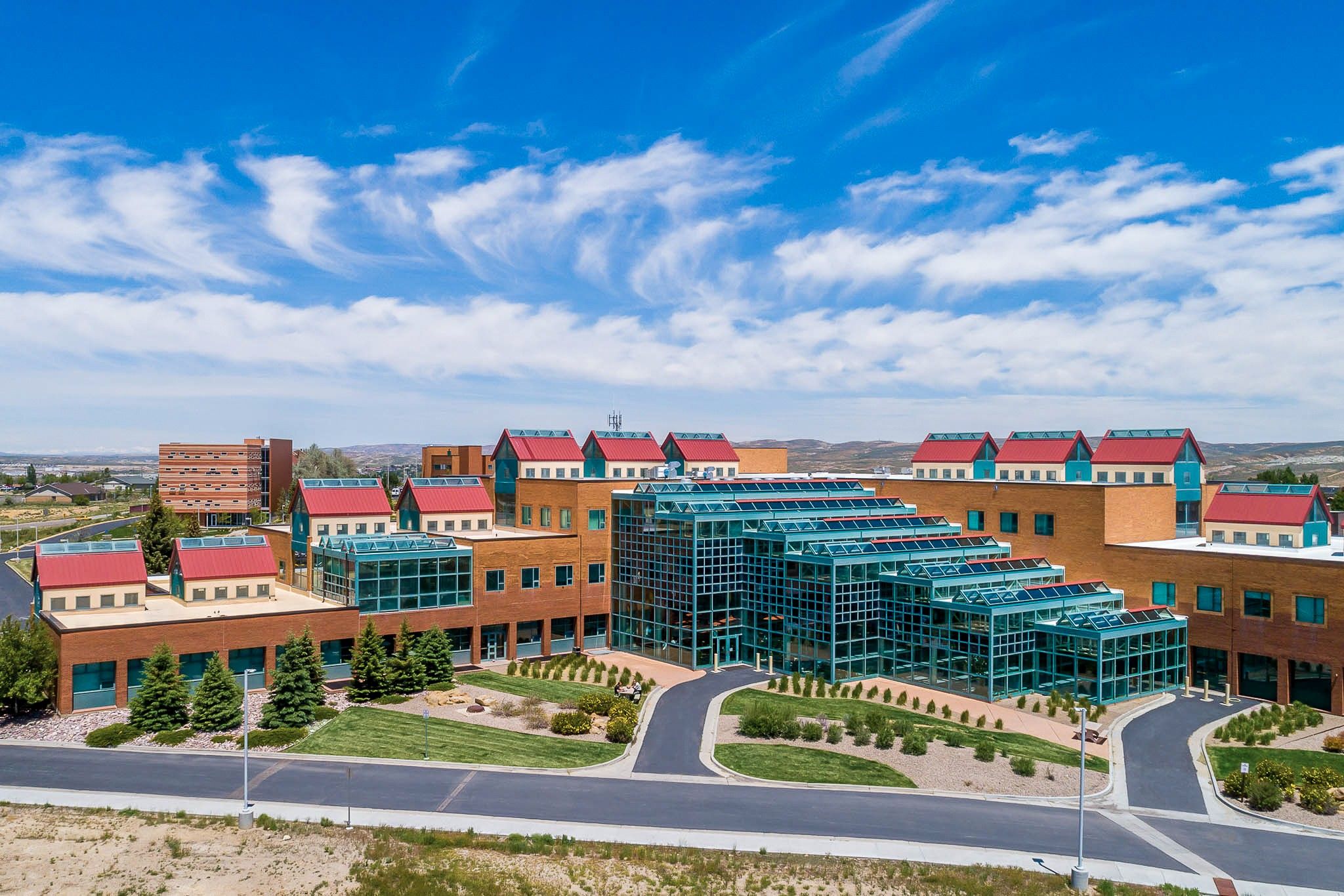
Western Wyoming Community College is a pragmatic, no-frills institution built for access and applied learning in the high desert of Rock Springs. Its identity is rooted in a straightforward mission: offering over 60 degree pathways in a single, consolidated campus building, with small classes and faculty advisors guiding students toward a 3.1 average GPA. This is a college for those seeking a direct, affordable, and supported path to a certificate, an associate degree, or a transfer—where student life revolves around a shared roof housing everything from the library to an Olympic-sized pool.
More details
- Undergrad enrollment
- 1,319
- In-state tuition
- $4,230
- Out-of-state tuition
- $10,530
- Campus Design
- Consolidated under one roof
- Application Fee
- Free
- Graduation Rate
- 33%
- Programs Offered
- Over 60 degree pathways, 42+ certificates
- Scholarship App Opens
- December 1 (for following academic year)
- Median Earnings (10yr)
- $40,939
- Student-to-Faculty Support
- Faculty advisor & success coach per student
Outcomes & value
Outcomes & value
- Median earnings (10 yr)
- $40,939
- Value (earnings ÷ net price)
- 6.2×
- Median debt at graduation
- $9,000
- Graduation rate
- 33%
- First-year retention
- 60%
- Reducing loan balance (3 yr)
- 53%
- Pell (lower-income) share
- 20%
- First-gen share (among federal-aid recipients)
- 47%
Campus & location
Campus safety
- On-campus violent crimes (2024)
- 4
On-campus criminal offenses classed as violent (murder/non-negligent manslaughter, rape, robbery, aggravated assault) for the most recent reported year. Source: U.S. Dept. of Education Campus Safety and Security (Clery Act). Counts reflect what’s reported to the school, and urban campuses often report more partly due to non-student incidents nearby — read alongside campus size and setting, not as a standalone safety verdict.
Climate
- Pleasant days / yr
- 80
- Summer high
- 82°F
- Winter low
- 7°F
- Annual rain
- 9.6"
- Annual snow
- 41"
- Natural-hazard risk
- Very Low
Pleasant days counts days per year with a mean temperature of 55–75°F, a high at or below 90°F, a low at or above 45°F, and little precipitation — a transparent comfort measure, not a weighting we invented. Computed from Open-Meteo ERA5 daily history (2019–2023). Natural-hazard risk is the county’s composite rating from the FEMA National Risk Index.
Deep dive — research, future-scholar output & economic mobility
Research output
- Institutional h-index
- 23
- Scholarly works
- 116
Institutional research volume and impact from OpenAlex. The h-index reflects large research universities and will be low for teaching-focused liberal-arts colleges — not a measure of undergraduate quality.
Economic mobility
- Mobility rate
- 1.7%
- Bottom → top quintile
- 18%
- From bottom quintile
- 10%
Mobility rate = the share of students who both start in the bottom household-income quintile and reach the top quintile; bottom → top is that chance conditional on starting at the bottom. Source: Opportunity Insights Mobility Report Cards (Chetty, Friedman, Saez, Turner & Yagan). Reflects 1980–82 birth cohorts, so it’s directional, not current.
Quick answers
- How much does Western Wyoming Community College cost?
- At Western Wyoming Community College, the average net price (after aid) is about $6,591 per year. Actual cost varies with financial aid and residency.
- How many undergraduates attend Western Wyoming Community College?
- Western Wyoming Community College enrolls approximately 1,319 undergraduate students.
- Where is Western Wyoming Community College located?
- Western Wyoming Community College is located in Rock Springs, WY.
Admissions
Western Wyoming operates with an open-access philosophy, prioritizing simplicity and removing financial barriers to application. The process is described as "simple and free," with no application fee required. Selectivity data varies by source, with reported ranging from 45.6% to 100%, indicating a generally non-competitive admissions environment. The college reported a total enrollment of 2,653 students in 2024, with 804 attending full-time. For the Fall 2025-2026 academic year, the scholarship application opens on December 1st. While acceptance to the college is broad, admission to specific academic programs may require prerequisites. Standardized test scores (ACT/SAT) are not accepted as substitutes for English language proficiency tests like TOEFL or IELTS for international applicants.
Compare Western Wyoming Community College
vs Northwestern Oklahoma State Universityvs University of Alaska Southeastvs Lincoln Universityvs Louisiana State University-Shreveport
See colleges similar to Western Wyoming Community College →Sources
- Admissions and Aid | Western Wyoming College
- Western Wyoming Community College
- Common Data Set 2024-2025
- Western Wyoming Community College
- Facts & Figures | Western Wyoming College
- Western Wyoming Community College - Tuition and Acceptance Rate
- Western Wyoming Community College Admissions - BigFuture
- Western Wyoming Community College - Sallie
- Western Wyoming College
- Admissions - Western Wyoming Community College