Admit rate has ranged 55%–58% over the last 5 years, though the latest figure above (52%) falls outside that window. Source: IPEDS via Urban Institute.
Acceptance & SAT from Common Data Set / IPEDS; net price, earnings & graduation from the U.S. Dept. of Education College Scorecard. Figures lag ~1–2 years — verify with the school.
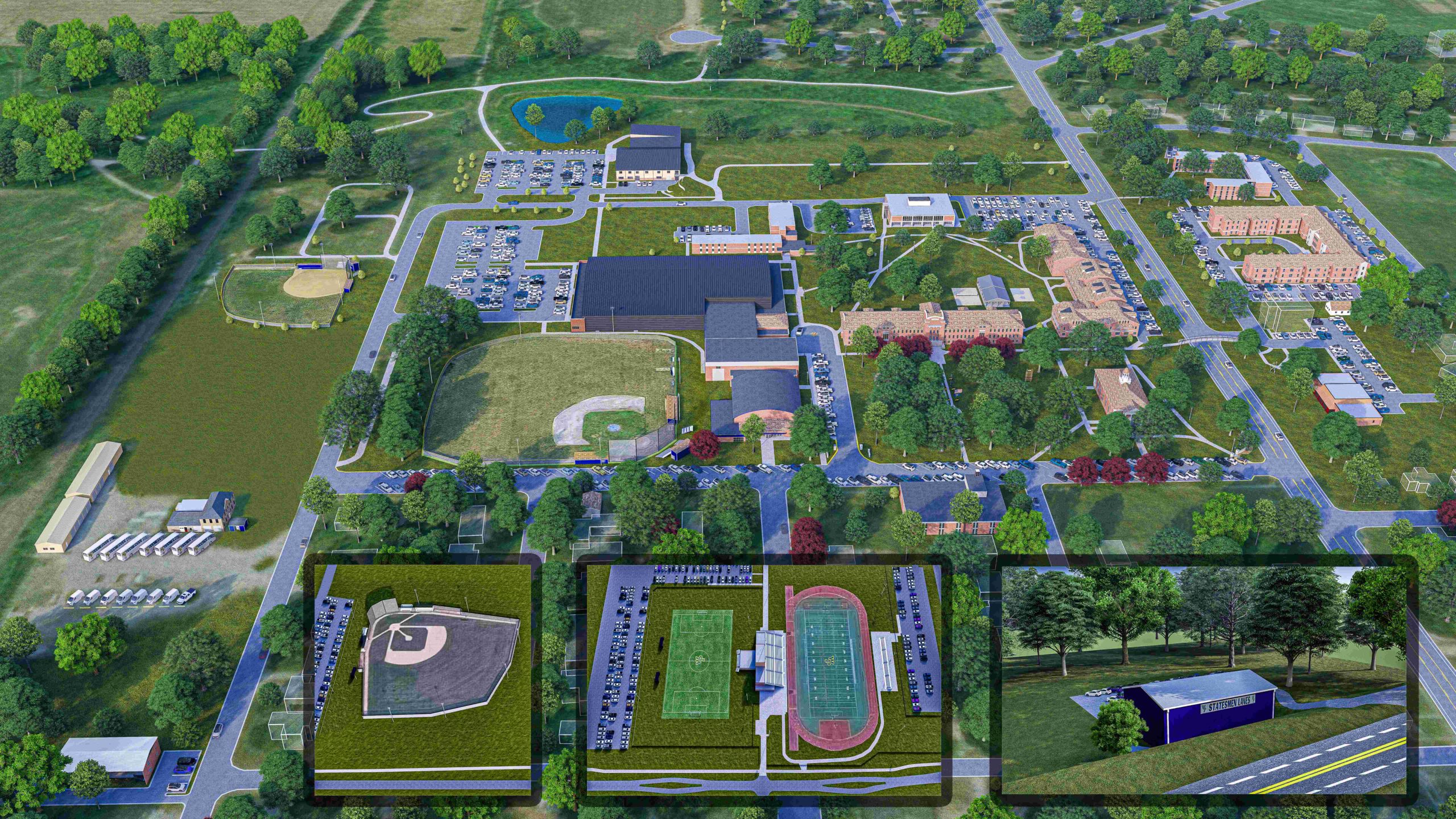
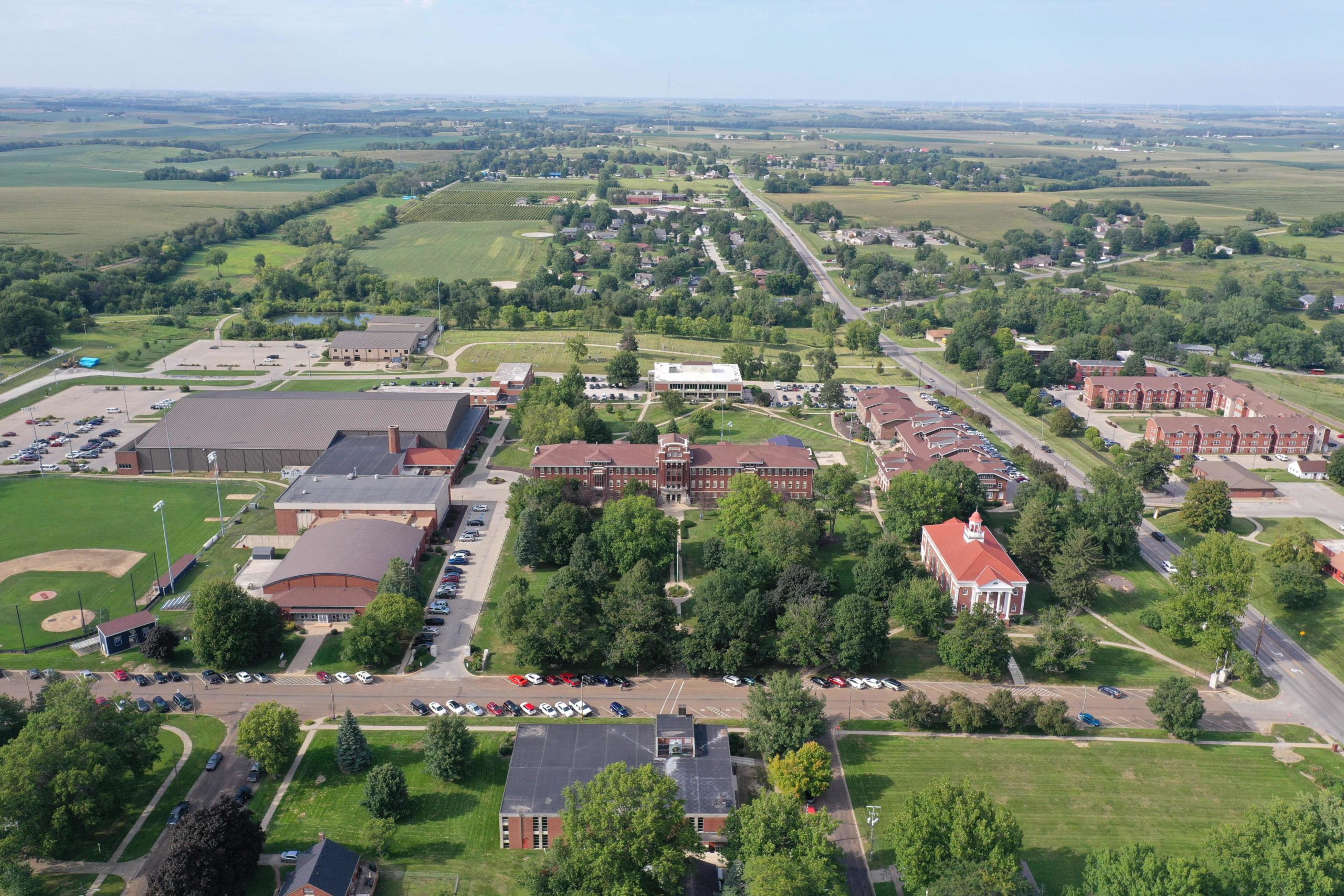
William Penn University is a small, private liberal arts institution in Oskaloosa, Iowa, that operates with a clear, pragmatic mission: to develop leaders through a career-focused curriculum. It's a place where the student-faculty ratio is tight, the campus community is described as 'family-like,' and the academic emphasis is squarely on leadership, technology, and helping students reach their 'inspired potential.' With an acceptance rate just over 50%, it serves a population where many are first-generation college students, and outcomes reflect the challenges and opportunities of that mission.
Admission requirements
Test-optional — scores considered if submitted
Required
High school transcript
Grade point average
TOEFL (non-native English)
Considered (not required)
Class rank
Letters of recommendation
Test scores (SAT/ACT)
College-prep program
Source: IPEDS Admissions survey (2022) via Urban Institute. Covers formal factors only — it does not reflect essays, extracurriculars, or other holistic criteria.
More details
Undergrad enrollment
1,301
In-state tuition
$29,750
Out-of-state tuition
$29,750
Popular Majors
Elementary Education, Business Administration
Graduation Rate
33%
Pell Grant Recipients
46% of undergraduates
Student-Faculty Ratio
13:1
Median Earnings (10yr)
$48,936
Financial Aid Recipients
100% of undergraduates
First-Year Retention Rate
~60%
Outcomes & value
Outcomes & value
Median earnings (10 yr)
$48,936
Value (earnings ÷ net price)
2.2×
Median debt at graduation
$22,415
Graduation rate
33%
First-year retention
58%
Reducing loan balance (3 yr)
51%
Pell (lower-income) share
47%
First-gen share (among federal-aid recipients)
38%
Financial health
1.6 / 3.0Meets the federal financial-responsibility standard
U.S. Dept. of Education Financial Responsibility Composite Score (FY2022-23). Scale −1.0 to 3.0; ≥1.5 meets the standard. Reported for private nonprofit & for-profit institutions only — public universities are state-backed and not scored, so this is a stability signal, not a ranking.
Top-earning majors
Median earnings by field of study (highest credential), ~2 years after completion.
Business/Commerce, General$58,402
Human Resources Management and Services$46,478
Source: U.S. Dept. of Education College Scorecard (field-of-study earnings). Figures cover graduates who received federal aid and lag ~2 years; not all programs report data.
On-campus criminal offenses classed as violent (murder/non-negligent manslaughter, rape, robbery, aggravated assault) for the most recent reported year. Source: U.S. Dept. of Education Campus Safety and Security (Clery Act). Counts reflect what’s reported to the school, and urban campuses often report more partly due to non-student incidents nearby — read alongside campus size and setting, not as a standalone safety verdict.
Climate
Pleasant days / yr
83
Summer high
84°F
Winter low
18°F
Annual rain
36.9"
Annual snow
25.8"
Natural-hazard risk
Very Low
Pleasant days counts days per year with a mean temperature of 55–75°F, a high at or below 90°F, a low at or above 45°F, and little precipitation — a transparent comfort measure, not a weighting we invented. Computed from Open-Meteo ERA5 daily history (2019–2023). Natural-hazard risk is the county’s composite rating from the FEMA National Risk Index.
Deep dive — research, future-scholar output & economic mobility▾
Research output
Institutional h-index
48
Scholarly works
1,721
Institutional research volume and impact from OpenAlex. The h-index reflects large research universities and will be low for teaching-focused liberal-arts colleges — not a measure of undergraduate quality.
Economic mobility
Mobility rate
1.6%
Bottom → top quintile
17%
From bottom quintile
10%
Mobility rate = the share of students who both start in the bottom household-income quintile and reach the top quintile; bottom → top is that chance conditional on starting at the bottom. Source: Opportunity Insights Mobility Report Cards (Chetty, Friedman, Saez, Turner & Yagan). Reflects 1980–82 birth cohorts, so it’s directional, not current.
Quick answers
What is the acceptance rate at William Penn University?
William Penn University's acceptance rate is approximately 52% (Oskaloosa, IA), based on the most recent figures we compiled from public and primary sources.
What SAT score do you need for William Penn University?
Admitted students at William Penn University typically score 880–1110 on the SAT (the middle-50% range). Scores outside this band are still admitted, especially with strong applications.
How much does William Penn University cost?
At William Penn University, the average net price (after aid) is about $22,601 per year. Actual cost varies with financial aid and residency.
How many undergraduates attend William Penn University?
William Penn University enrolls approximately 1,301 undergraduate students.
Where is William Penn University located?
William Penn University is located in Oskaloosa, IA.
Admissions
Gaining admission to William Penn University is a moderately selective process, with the institution accepting roughly half of its applicants. The university's is 52%. For those who submit scores, the middle 50% SAT range for admitted students is 880–1110, with an equivalent ACT range of 16 to 21. The admissions process requires either ACT or SAT scores, and students are encouraged to take these tests as early as possible. While the school is selective, scoring significantly above the average—such as a 1140 SAT or 22 ACT—is noted to 'nearly guarantee' admission. The university does not appear to have a binding Early Decision program, and none of the provided sources mention early decision statistics, acceptance rates, or policies specific to William Penn University; all early decision data in the sources references the University of Pennsylvania (Penn), a completely separate institution.
Earnings = median of students working ~10 years after entry; debt = median of graduates. Value divides 10-yr earnings by one year’s net price — read it as earnings per dollar of annual cost, not a full lifetime ROI; it favors lower-cost schools. Source: U.S. Dept. of Education College Scorecard. Figures lag ~2 years and reflect all students, not your intended major.
Academics
William Penn's academic structure is built around more than 20 majors distributed across seven academic divisions. The university explicitly designs all its programs to emphasize three pillars: leadership development, technological innovation, and helping students reach their full potential. This practical, career-oriented focus is reflected in popular majors, which include Elementary Education and Teaching and Business Administration and Management. The intimate scale of the university fosters close student-faculty interaction, supported by a student-faculty ratio reported as 13:1 or 15:1. However, retaining students through their academic journey is a noted challenge; the average freshman retention rate, a key indicator of student satisfaction, is reported at 60% (or 58% in another source). This suggests that while the environment can be supportive, a significant portion of the incoming class does not return for a second year.
Life at William Penn is defined by its close-knit, communal atmosphere in the small city of Oskaloosa. The university actively promotes a 'welcoming, family-like environment' where students build strong relationships with faculty and feel a true sense of belonging. Student life is designed to enrich the academic experience through a variety of channels: diverse student organizations, athletic events, and cultural activities. Students describe Penn as 'more than a place to learn; it's a community that feels like home,' a sentiment particularly echoed by students. The campus offers access to local bars and restaurants, athletics, and Greek life, providing traditional collegiate activities within a manageable, personal scale. The vibe is less about the anonymity of a large research university and more about finding one's place in a supportive, intentional community.
Outcomes for William Penn graduates present a mixed picture that underscores the university's mission and student population. The graduation rate is a primary point of consideration; the four-year rate is notably low at 22%, while the six-year rate is higher, reported at 32%, 33%, or 41% across different sources. This pattern indicates many students take longer than the traditional four years to complete their degrees. Financially, median earnings for graduates six years after entry are reported at $40,189. Early career earnings (which may align with the 10-year figure) average around $37,000 to $40,100 according to some sources, with one analysis noting this is about $9,000 better than might be expected for the institution's profile. These earnings figures suggest the career-focused curriculum can provide a tangible return, even as the path to graduation may be extended for many.
William Penn University is a tuition-driven institution where financial aid is crucial for most students. The average —the cost after grants and scholarships are applied—is $22,601. This net price is derived from an average financial aid package of $19,571. The university states that 100% of its undergraduate students receive some form of financial aid, with 46% benefiting from federal Pell grants awarded for demonstrated financial need. Aid packages are assembled from a 'wide variety' of sources based on program, merit, and talent, and include grants, scholarships, and loans. The university provides a net price calculator for families to estimate their eligibility. Notably, the provided sources do not indicate that William Penn University has a policy of meeting 100% of demonstrated financial need for all admitted students, nor do they describe a no-loan financial aid policy; such policies are referenced only in the context of the University of Pennsylvania.
William Penn University stands out for its unwavering commitment to a specific type of student: one who thrives in a small, familial setting and seeks a direct, practical education geared toward leadership and technological competence. It is not a university of lofty, abstract prestige, but one of grounded, applied mission. Its identity is crystallized in its three-part emphasis—leadership, technology, inspired potential—which is woven into every major. The 13:1 student-faculty ratio ensures students are known by their professors, creating the 'strong relationships' the university touts. This environment is particularly resonant for students seeking a supportive home. However, its profile is defined by stark realities: a retention rate that hints at academic or social friction, and a graduation timeline that is often longer than four years. For the right student—one who values close mentorship, a clear career path, and a tight-knit community over a fast-tracked degree or a big-name diploma—William Penn offers a distinct and purposeful alternative to larger, more impersonal institutions.
William Penn University seal · sourceVisit Campus - William Penn University · sourceGet to Know WPU - William Penn University · sourceAcademics - William Penn University · source