Loading…
← All schools
William Rainey Harper College
Palatine, ILpublicharpercollege.edu
Avg net price
$11,607
Earnings (10 yr)
$48,071
Acceptance & SAT from Common Data Set / IPEDS; net price, earnings & graduation from the U.S. Dept. of Education College Scorecard. Figures lag ~1–2 years — verify with the school.
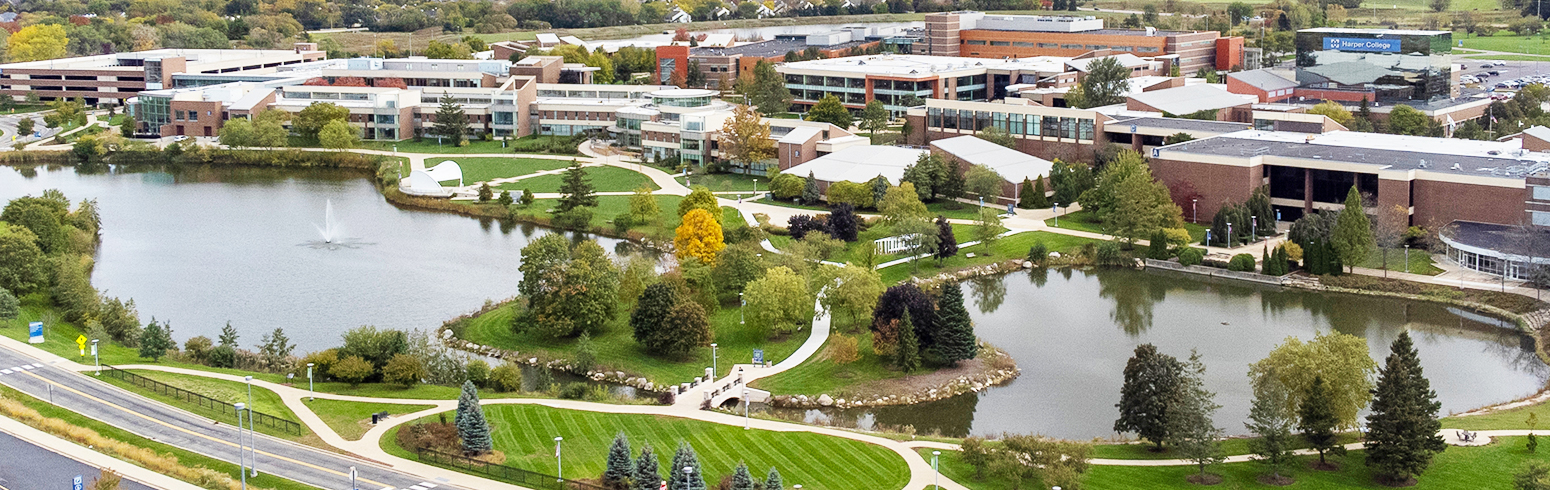
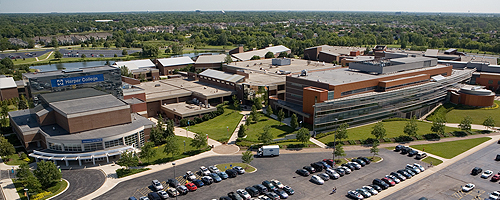
William Rainey Harper College is a sprawling, open-access community college in the Chicago suburbs that functions as a vital engine of social mobility and workforce development for its region. It’s a place where the mission of access is paramount, welcoming all high school graduates and GED holders into a pragmatic academic environment focused on career-ready skills and seamless transfer. The campus buzzes with a diverse, commuter-centric student body navigating a vast menu of associate degrees and certificates, all underpinned by a notably low net price.
More details
- Undergrad enrollment
- 9,313
- In-state tuition
- $3,894
- Out-of-state tuition
- $11,874
- Most Popular Major
- Liberal Arts and Sciences/Liberal Studies
- Student-Faculty Ratio
- 20:1
- Median Earnings (10yr)
- $48,071
Outcomes & value
Outcomes & value
- Median earnings (10 yr)
- $48,071
- Value (earnings ÷ net price)
- 4.1×
- Median debt at graduation
- $10,184
- Reducing loan balance (3 yr)
- 47%
- Pell (lower-income) share
- 20%
- First-gen share (among federal-aid recipients)
- 47%
Earnings = median of students working ~10 years after entry; debt = median of graduates. Value divides 10-yr earnings by one year’s net price — read it as earnings per dollar of annual cost, not a full lifetime ROI; it favors lower-cost schools. Source: U.S. Dept. of Education College Scorecard. Figures lag ~2 years and reflect all students, not your intended major.
Campus & location
Campus safety
- On-campus violent crimes (2024)
- 0
On-campus criminal offenses classed as violent (murder/non-negligent manslaughter, rape, robbery, aggravated assault) for the most recent reported year. Source: U.S. Dept. of Education Campus Safety and Security (Clery Act). Counts reflect what’s reported to the school, and urban campuses often report more partly due to non-student incidents nearby — read alongside campus size and setting, not as a standalone safety verdict.
Climate
- Pleasant days / yr
- 86
- Summer high
- 81°F
- Winter low
- 20°F
- Annual rain
- 42.4"
- Annual snow
- 33.6"
- Natural-hazard risk
- Very High
Pleasant days counts days per year with a mean temperature of 55–75°F, a high at or below 90°F, a low at or above 45°F, and little precipitation — a transparent comfort measure, not a weighting we invented. Computed from Open-Meteo ERA5 daily history (2019–2023). Natural-hazard risk is the county’s composite rating from the FEMA National Risk Index.
Quick answers
- How much does William Rainey Harper College cost?
- At William Rainey Harper College, the average net price (after aid) is about $11,607 per year. Actual cost varies with financial aid and residency.
- How many undergraduates attend William Rainey Harper College?
- William Rainey Harper College enrolls approximately 9,313 undergraduate students.
- Where is William Rainey Harper College located?
- William Rainey Harper College is located in Palatine, IL.
Admissions
Harper College operates on a fundamentally open-access model, a stark contrast to the selective admissions drama of four-year institutions. The college admits virtually all secondary school graduates or students with GED equivalency diplomas. This policy is reflected in its published of 100%. There are no reported SAT or ACT score ranges for admitted students, as standardized test scores are not a barrier to entry. Instead, the college uses placement testing to determine readiness for college-level coursework in English and math. For example, it considers students "college ready" if they have an SAT Evidence-Based Reading and Writing subscore of 480 or higher, an ACT English subscore of 19 or higher, or a high school GPA of 3.0 or higher on a 4.0 scale. The admitted student body is diverse, with data showing the most common enrolled demographic among full-time undergraduates as White Male (23.2%), followed by White Female (20.6%). Concepts like Early Decision, demonstrated interest, and rates—common in selective college admissions—are irrelevant in this context; Harper's door is open.
Compare William Rainey Harper College
vs University of Akron Main Campusvs Purdue University Northwestvs University of Central Missourivs Saginaw Valley State University
See colleges similar to William Rainey Harper College →Sources
- Common Data Set: Home
- Common Data Set | Office of Planning, Assessment, and ...
- Decoding the Common Data Set What You Need to Know for ...
- Common Data Set 2024-2025
- The Common Data Set: What It Is & How to Use It In ...
- Common Data Set (CDS) | Institutional Research
- Testing: College Ready at Harper
- William Rainey Harper College — Acceptance Rate, Costs & More
- Harper College - Niche
- William Rainey Harper College Statistics - Overgrad
- William Rainey Harper College - Community College Review