Loading…
← All schools
Williams Technical College
Houma, LAprivate forprofitwilliamstechnicalcollege.com
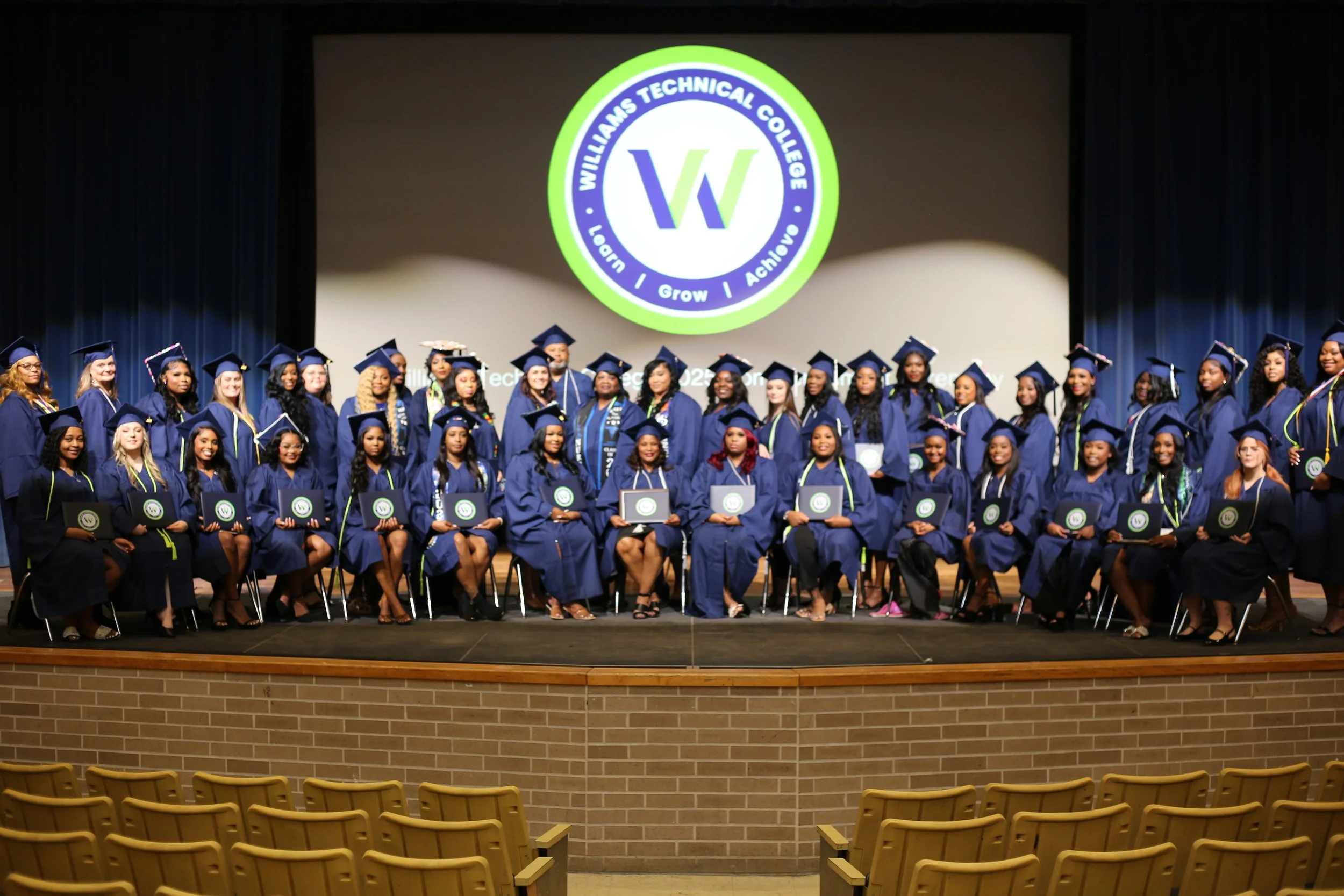
Williams Technical College in Houma, Louisiana, is a hyper-focused, open-admission career institute where the mission is singular and pragmatic: to train students, predominantly women, for immediate entry into specific healthcare support roles. With a 100% acceptance rate and a curriculum concentrated almost entirely on practical nursing and allied health certifications, it operates more like an intensive bootcamp than a traditional college, measuring its success directly by student completion and job placement. This is a school for those who know exactly which technical skill they need and want a direct, no-frills path to a paycheck.
More details
- Undergrad enrollment
- 28
- Most Popular Major
- Nursing Assistant
- Student Body Gender
- 96.6% Female (degree recipients)
- Median Earnings (10yr)
- $31,030
Outcomes & value
Outcomes & value
- Median debt at graduation
- $6,333
- Pell (lower-income) share
- 77%
Earnings = median of students working ~10 years after entry; debt = median of graduates. Value divides 10-yr earnings by one year’s net price — read it as earnings per dollar of annual cost, not a full lifetime ROI; it favors lower-cost schools. Source: U.S. Dept. of Education College Scorecard. Figures lag ~2 years and reflect all students, not your intended major.
Financial health
3.0 / 3.0Meets the federal financial-responsibility standard
U.S. Dept. of Education Financial Responsibility Composite Score (FY2022-23). Scale −1.0 to 3.0; ≥1.5 meets the standard. Reported for private nonprofit & for-profit institutions only — public universities are state-backed and not scored, so this is a stability signal, not a ranking.
Campus & location
Campus safety
- On-campus violent crimes (2024)
- 0
On-campus criminal offenses classed as violent (murder/non-negligent manslaughter, rape, robbery, aggravated assault) for the most recent reported year. Source: U.S. Dept. of Education Campus Safety and Security (Clery Act). Counts reflect what’s reported to the school, and urban campuses often report more partly due to non-student incidents nearby — read alongside campus size and setting, not as a standalone safety verdict.
Climate
- Pleasant days / yr
- 120
- Summer high
- 89°F
- Winter low
- 50°F
- Annual rain
- 53.1"
- Natural-hazard risk
- Relatively Moderate
Pleasant days counts days per year with a mean temperature of 55–75°F, a high at or below 90°F, a low at or above 45°F, and little precipitation — a transparent comfort measure, not a weighting we invented. Computed from Open-Meteo ERA5 daily history (2019–2023). Natural-hazard risk is the county’s composite rating from the FEMA National Risk Index.
Quick answers
- How many undergraduates attend Williams Technical College?
- Williams Technical College enrolls approximately 28 undergraduate students.
- Where is Williams Technical College located?
- Williams Technical College is located in Houma, LA.
Admissions
The admissions process at Williams Technical College is defined by its accessibility and practical focus. It is an open-admission institution, meaning it has a 100% acceptance rate for applicants who meet its basic requirements. The process is straightforward and designed for adult learners seeking career training: prospective students must complete an application, attend an informal interview with an administrative team member, and submit required documents. For its flagship Practical Nursing program, additional requirements include previous academic experience, specific exam scores (like the PN Entrance Exam and Accuplacer), and relevant healthcare certifications. There is no mention of standardized test scores like the SAT or ACT being considered, nor is there any indication of a of extracurricular activities or essays common at four-year liberal arts colleges. The barrier to entry is not selectivity, but a candidate's readiness to engage with a fast-paced, competency-based curriculum.
Academics
Academic life at Williams Technical College is intensely concentrated and vocationally specific. The college offers a narrow slate of programs focused exclusively on healthcare support roles. According to available data, the institution offered only two major categories as recently as 2024: . Niche's breakdown of popular majors confirms this focus, listing (57 graduates), (13 graduates), (10 graduates), and (6 graduates) as the most common paths. In 2024, the college awarded 87 degrees, with a striking , highlighting its role in training for a heavily female-dominated sector. The academic standard is clear and binary: to remain in good standing, a student must maintain at least a and complete their course within the designated timeframe. The college's stated philosophy is that "student outcomes are at the heart of everything we do," with success measured by program completion and subsequent employment. This is not an institution for intellectual exploration or a broad liberal arts education; it is a training ground for specific, in-demand technical skills.
Compare Williams Technical College
vs Thomas Universityvs West Virginia University Institute of Technologyvs Livingstone Collegevs Emory University-Oxford College
See colleges similar to Williams Technical College →Sources
- [PDF] Williams College Common Data Set 2025-2026
- Admissions - Williams Technical College
- [PDF] Williams College Common Data Set 2024-2025
- Williams College 2024-2025 Data Set | PDF - Scribd
- Common Data Set | Institutional Research | William & Mary
- Practical Nursing Program Requirements - Williams Technical College
- Williams Technical College - Niche
- Williams Acceptance Rate: Class of 2029 - Top Tier Admissions
- Williams Technical College Statistics | Overgrad
- Williams College SAT Scores and GPA - PrepScholar