Admit rate has ranged 30%–46% over the last 5 years — notably volatile, though the latest figure above (22%) falls outside that window. Source: IPEDS via Urban Institute.
Acceptance & SAT from Common Data Set / IPEDS; net price, earnings & graduation from the U.S. Dept. of Education College Scorecard. Figures lag ~1–2 years — verify with the school.
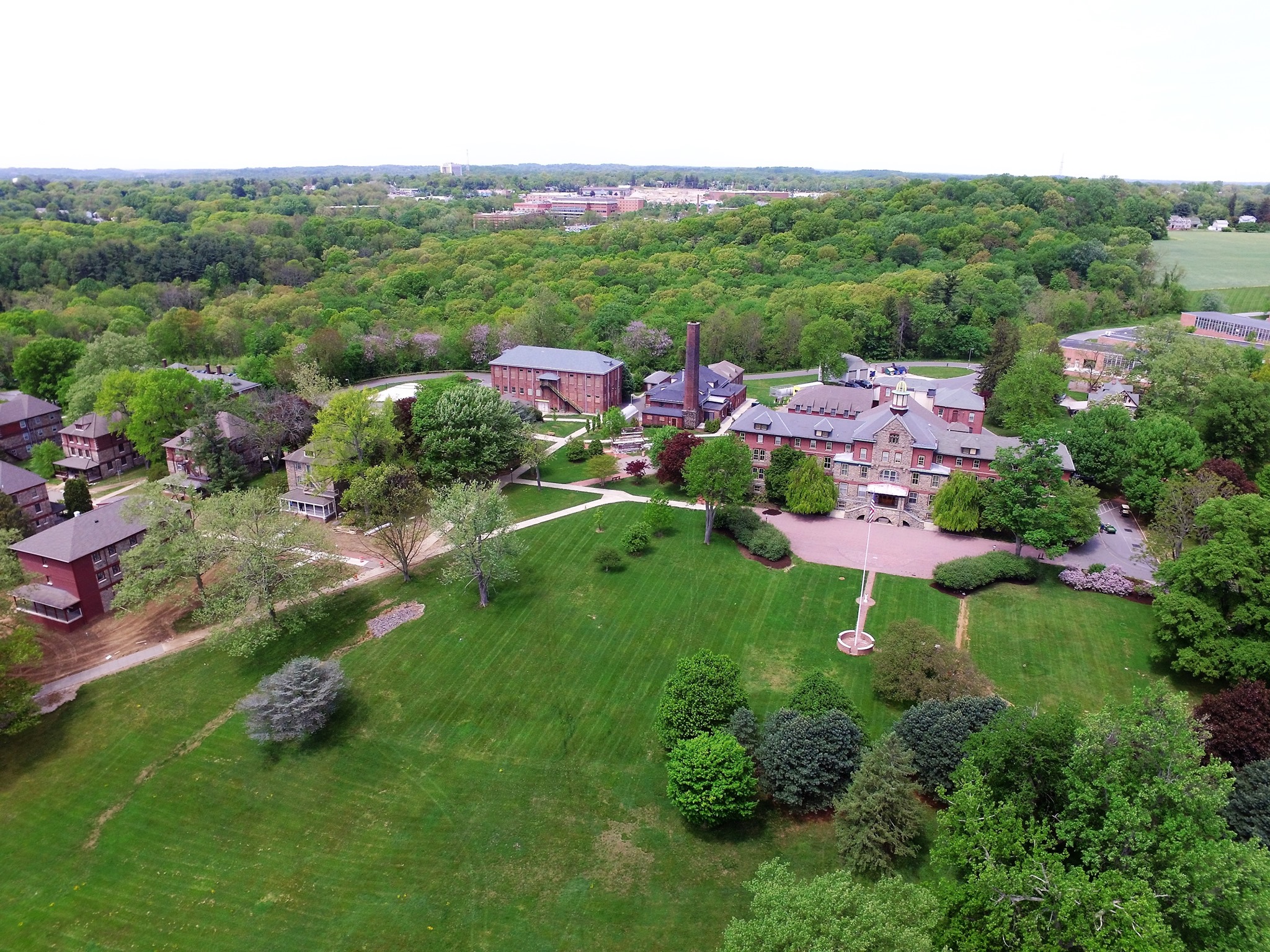
Williamson College of the Trades is a singular, all-male, residential trade school in Media, Pennsylvania, that operates on a radical model of zero-tuition and free room and board for every student. It combines rigorous, hands-on technical training in fields like precision metalworking and horticulture with a strict, character-forging environment of daily chapel, a dress code, and a focus on moral leadership. The result is a highly selective, debt-free path to a skilled trade, with near-perfect job placement for graduates who complete its intensive three-year program.
Admission requirements
Test-blind — scores not considered
Required
High school transcript
Grade point average
Considered (not required)
Letters of recommendation
Source: IPEDS Admissions survey (2022) via Urban Institute. Covers formal factors only — it does not reflect essays, extracurriculars, or other holistic criteria.
More details
Undergrad enrollment
322
In-state tuition
$31,611
Out-of-state tuition
$31,611
Student Body
All-male
Campus Setting
Suburban
Job Placement Rate
98%
Student-Faculty Ratio
12:1
Graduation Rate (3-year)
74%
Earnings 1 Year After Graduation
$65,497 per year
Students Receiving Full Scholarship
100%
Outcomes & value
Outcomes & value
Pell (lower-income) share
66%
Earnings = median of students working ~10 years after entry; debt = median of graduates. Value divides 10-yr earnings by one year’s net price — read it as earnings per dollar of annual cost, not a full lifetime ROI; it favors lower-cost schools. Source: U.S. Dept. of Education College Scorecard. Figures lag ~2 years and reflect all students, not your intended major.
Financial health
3.0 / 3.0Meets the federal financial-responsibility standard
U.S. Dept. of Education Financial Responsibility Composite Score (FY2022-23). Scale −1.0 to 3.0; ≥1.5 meets the standard. Reported for private nonprofit & for-profit institutions only — public universities are state-backed and not scored, so this is a stability signal, not a ranking.
Campus & location
Campus safety
On-campus violent crimes (2024)
1
On-campus criminal offenses classed as violent (murder/non-negligent manslaughter, rape, robbery, aggravated assault) for the most recent reported year. Source: U.S. Dept. of Education Campus Safety and Security (Clery Act). Counts reflect what’s reported to the school, and urban campuses often report more partly due to non-student incidents nearby — read alongside campus size and setting, not as a standalone safety verdict.
Climate
Pleasant days / yr
91
Summer high
84°F
Winter low
30°F
Annual rain
52.1"
Annual snow
13.9"
Natural-hazard risk
Relatively Moderate
Pleasant days counts days per year with a mean temperature of 55–75°F, a high at or below 90°F, a low at or above 45°F, and little precipitation — a transparent comfort measure, not a weighting we invented. Computed from Open-Meteo ERA5 daily history (2019–2023). Natural-hazard risk is the county’s composite rating from the FEMA National Risk Index.
Deep dive — research, future-scholar output & economic mobility▾
Research output
Institutional h-index
1
Scholarly works
2
Institutional research volume and impact from OpenAlex. The h-index reflects large research universities and will be low for teaching-focused liberal-arts colleges — not a measure of undergraduate quality.
Quick answers
What is the acceptance rate at Williamson College of the Trades?
Williamson College of the Trades's acceptance rate is approximately 22% (Media, PA), based on the most recent figures we compiled from public and primary sources.
How much does Williamson College of the Trades cost?
At Williamson College of the Trades, the average net price (after aid) is about $1,545 per year. Actual cost varies with financial aid and residency.
How many undergraduates attend Williamson College of the Trades?
Williamson College of the Trades enrolls approximately 322 undergraduate students.
Where is Williamson College of the Trades located?
Williamson College of the Trades is located in Media, PA.
Admissions
Gaining admission to Williamson is a competitive proposition, with the school accepting only about 130 young men into each freshman class from a pool of hundreds of applicants. While the initiative provides a framework for admissions data, specific institutional priorities for factors like demonstrated interest are not detailed in the provided sources. The process is selective, with admission open to all qualifying young men, but special consideration is given to those from families of financial need who would otherwise not be able to afford such an education. The school seeks applicants who are not only academically capable but also aligned with its values-based, structured environment.
Education at Williamson is a holistic, immersive experience built on four pillars: moral, trade, academic, and leadership. Students choose from a focused set of hands-on trade programs, with popular majors including Machine Tool Technology/Machinist and Applied Horticulture/Horticulture Operations. The curriculum is intensely practical, designed to provide students with the technical skills for immediate, high-value employment. This trade education is delivered within a tight-knit academic community, supported by a 12:1 student-faculty ratio. The mission explicitly integrates values of faith, integrity, diligence, excellence, and service into every aspect of learning, aiming to prepare young men to be respected leaders and productive members of society.
Life at Williamson is regimented, residential, and all-male, unfolding on a suburban campus that houses its 322 undergraduate students. The experience is defined by structure and community. As a required part of the Williamson experience, all students must adhere to a dress code and attend daily chapel. Every student is expected to follow the school's strict code of conduct. This environment stems from the founder's vision of a free boarding school that provided disadvantaged young men not only with technical skills but also with life skills, moral grounding, and opportunities for physical exercise and recreation. Campus housing is provided as part of the comprehensive scholarship, creating a 24/7 learning and living community focused on personal development and brotherhood.
Williamson's model delivers remarkably strong and clear results. The institution reports a high graduation rate, with one source noting 74% of students graduate in three years. For those who complete the program, the payoff is almost guaranteed employment: 98% of graduates go on to a job. Early career earnings are robust, with reported earnings one year after graduation at $65,497 per year. This combination of high completion rates and near-universal job placement validates the school's intensive, trade-focused approach, successfully preparing young men for respected, in-demand careers as skilled tradespeople and leaders.
Williamson's financial model is its most revolutionary feature. The school charges no tuition, and every enrolled student receives a comprehensive scholarship that covers tuition and room & board. This scholarship, valued at over $36,471, is awarded to 100% of students. Consequently, the for students after all grants and scholarships is extraordinarily low. This model ensures that admission is open to all qualifying young men, with special consideration for those from families of financial need, allowing students to pursue hands-on training without the debt load typical of many post-secondary paths.
Williamson College of the Trades is an anomaly in American higher education—a fiercely selective, character-based trade school that is essentially free. It rejects the contemporary liberal arts model entirely, offering instead a disciplined, three-year immersion in a skilled trade wrapped in a quasi-military ethos of daily chapel, a dress code, and strict conduct. Its value proposition is stark and powerful: in exchange for adherence to its rigid structure and values, a young man receives a debt-free education that virtually guarantees a well-paying job upon graduation. It doesn't just teach a trade; it attempts to build the whole man—a respected leader, a diligent craftsman, and a productive citizen—through a blend of technical rigor, moral instruction, and communal living. For the right student, it's not just an alternative to college; it's a direct pipeline to economic stability and personal purpose.
Williamson College of the Trades seal · sourceContact - Williamson College of the Trades · sourceWilliamson College of the Trades - Wikipedia · sourceWilliamson College of the Trades | Media PA · source