Loading…
← All schools
Wilmington College
Wilmington, OHprivate nonprofitwilmington.edu
Acceptance
92%
SAT 25–75
850–1220
Avg net price
$24,153
Earnings (10 yr)
$48,491
Graduation rate
47%
Admit rate has ranged 73%–88% over the last 5 years — notably volatile, though the latest figure above (92%) falls outside that window. Source: IPEDS via Urban Institute.
Acceptance & SAT from Common Data Set / IPEDS; net price, earnings & graduation from the U.S. Dept. of Education College Scorecard. Figures lag ~1–2 years — verify with the school.
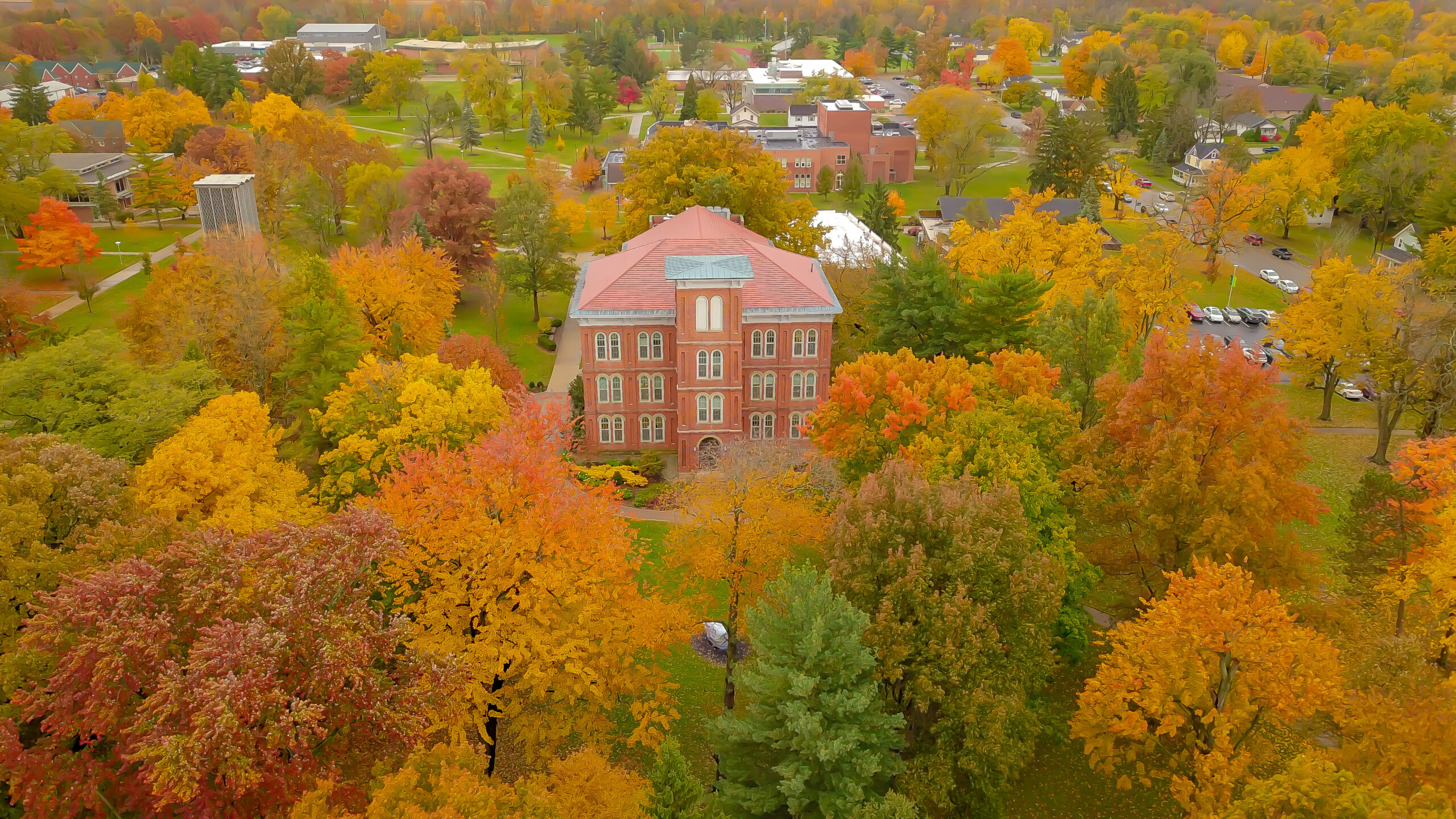
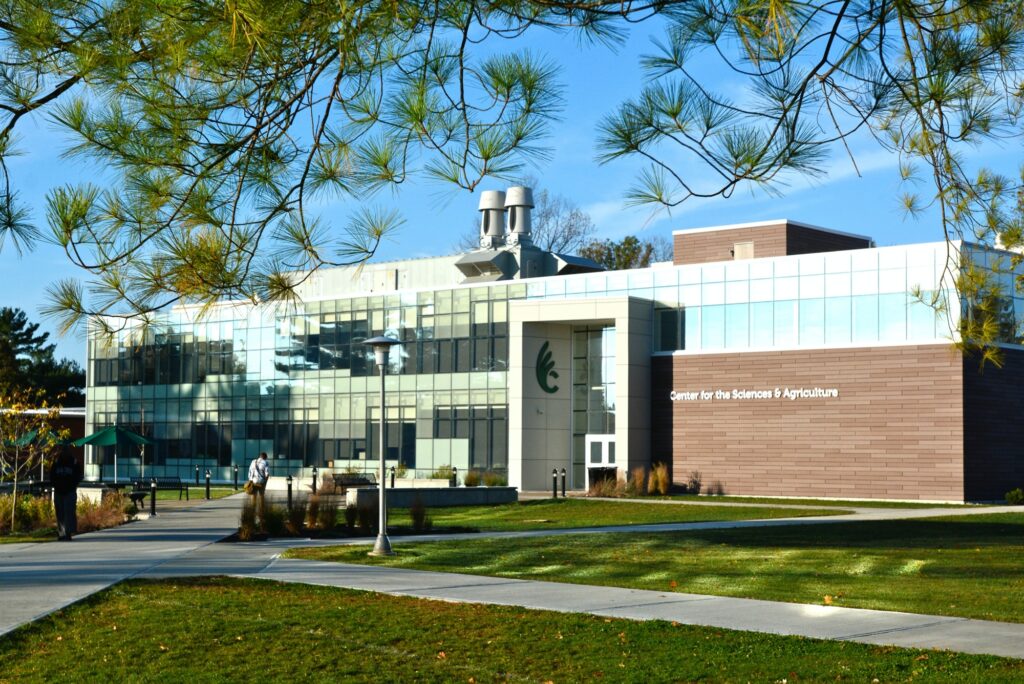
Wilmington College is a small, private liberal arts college in rural Ohio that operates more like a hands-on trade school with a Quaker heritage. It’s a place where students in Carhartts and lab coats coexist, pursuing practical degrees in agriculture, criminal justice, and health sciences on a campus that feels more like a working farm and athletic complex than an ivory tower. With an acceptance rate that welcomes nearly all comers and a focus on experiential learning, it’s built for students who want a direct, personalized path from the classroom to a paycheck.
Admission requirements
Test-optional — scores considered if submitted
Required
- High school transcript
- Grade point average
Considered (not required)
- Letters of recommendation
- Test scores (SAT/ACT)
- College-prep program
- Demonstrated competencies
- TOEFL (non-native English)
Source: IPEDS Admissions survey (2022) via Urban Institute. Covers formal factors only — it does not reflect essays, extracurriculars, or other holistic criteria.
More details
- Undergrad enrollment
- 1,006
- In-state tuition
- $32,082
- Out-of-state tuition
- $32,082
- Graduation Rate
- 47%
- On-Campus Housing
- 58%
- Student-Faculty Ratio
- 12:1
- Median Earnings (10yr)
- $48,491
- Average Financial Aid Package
- $24,263
- Students Receiving Financial Aid
- 99%
Outcomes & value
Outcomes & value
- Median earnings (10 yr)
- $48,491
- Value (earnings ÷ net price)
- 2.0×
- Median debt at graduation
- $24,208
- Graduation rate
- 47%
- First-year retention
- 72%
- Reducing loan balance (3 yr)
- 64%
- Pell (lower-income) share
- 39%
- First-gen share (among federal-aid recipients)
- 35%
Financial health
2.2 / 3.0Meets the federal financial-responsibility standard
U.S. Dept. of Education Financial Responsibility Composite Score (FY2022-23). Scale −1.0 to 3.0; ≥1.5 meets the standard. Reported for private nonprofit & for-profit institutions only — public universities are state-backed and not scored, so this is a stability signal, not a ranking.
Top-earning majors
Median earnings by field of study (highest credential), ~2 years after completion.
- Accounting and Related Services$52,107
- Business Administration, Management and Operations$42,123
- Agricultural Business and Management$36,437
- Communication and Media Studies$33,993
- Psychology, General$32,284
- Education, General$31,133
Campus & location
Campus safety
- On-campus violent crimes (2024)
- 1
- Per 1,000 students
- 0.96
On-campus criminal offenses classed as violent (murder/non-negligent manslaughter, rape, robbery, aggravated assault) for the most recent reported year. Source: U.S. Dept. of Education Campus Safety and Security (Clery Act). Counts reflect what’s reported to the school, and urban campuses often report more partly due to non-student incidents nearby — read alongside campus size and setting, not as a standalone safety verdict.
Climate
- Pleasant days / yr
- 91
- Summer high
- 82°F
- Winter low
- 27°F
- Annual rain
- 42.2"
- Annual snow
- 18.2"
- Natural-hazard risk
- Very Low
Pleasant days counts days per year with a mean temperature of 55–75°F, a high at or below 90°F, a low at or above 45°F, and little precipitation — a transparent comfort measure, not a weighting we invented. Computed from Open-Meteo ERA5 daily history (2019–2023). Natural-hazard risk is the county’s composite rating from the FEMA National Risk Index.
Deep dive — research, future-scholar output & economic mobility
Research output
- Institutional h-index
- 41
- Scholarly works
- 490
Institutional research volume and impact from OpenAlex. The h-index reflects large research universities and will be low for teaching-focused liberal-arts colleges — not a measure of undergraduate quality.
Economic mobility
- Mobility rate
- 0.9%
- Bottom → top quintile
- 13%
- From bottom quintile
- 7%
Mobility rate = the share of students who both start in the bottom household-income quintile and reach the top quintile; bottom → top is that chance conditional on starting at the bottom. Source: Opportunity Insights Mobility Report Cards (Chetty, Friedman, Saez, Turner & Yagan). Reflects 1980–82 birth cohorts, so it’s directional, not current.
Quick answers
- What is the acceptance rate at Wilmington College?
- Wilmington College's acceptance rate is approximately 92% (Wilmington, OH), based on the most recent figures we compiled from public and primary sources.
- What SAT score do you need for Wilmington College?
- Admitted students at Wilmington College typically score 850–1220 on the SAT (the middle-50% range). Scores outside this band are still admitted, especially with strong applications.
- How much does Wilmington College cost?
- At Wilmington College, the average net price (after aid) is about $24,153 per year. Actual cost varies with financial aid and residency.
- How many undergraduates attend Wilmington College?
- Wilmington College enrolls approximately 1,006 undergraduate students.
- Where is Wilmington College located?
- Wilmington College is located in Wilmington, OH.
Admissions
Wilmington College is among the least selective institutions in the country, with an open-door philosophy that results in an of 92%. The admissions process is straightforward and non-competitive; the college reports that nearly all applicants are admitted. Test scores are considered but not a dominant factor, with the middle 50% SAT range spanning from 850 to 1220, indicating a broad academic preparedness among incoming students. The rate—the percentage of admitted students who enroll—has historically been low, around 16%, but has shown improvement in recent years, increasing from 13.35% in 2015 to 20.03% more recently. This suggests that while many are admitted, Wilmington competes for students who have other options. The college does not charge an application fee, further lowering the barrier to apply. There is no mention of an Early Decision program or a policy regarding demonstrated interest in the provided sources, indicating a standard rolling admissions process focused on baseline eligibility rather than crafted applicant profiles.
Academics
Compare Wilmington College
See colleges similar to Wilmington College →Sources
- Common Data Sets | UNCW
- Disclosures - Wilmington College (Wilmington, Ohio) Liberal Arts ...
- Institutional Data - Wilmington University
- Common Data Set: Home
- Wilmington College - IPEDS - Department of Education
- Wilmington University Overview - CollegeData
- Wilmington College Admission Requirements
- Wilmington College Admissions - BigFuture College Search
- University Of North Carolina At Wilmington Admissions - BigFuture
- Wilmington College Acceptance Rate - CollegeData