Admit rate has ranged 64%–75% over the last 5 years — notably volatile, though the latest figure above (79%) falls outside that window. Source: IPEDS via Urban Institute.
Acceptance & SAT from Common Data Set / IPEDS; net price, earnings & graduation from the U.S. Dept. of Education College Scorecard. Figures lag ~1–2 years — verify with the school.
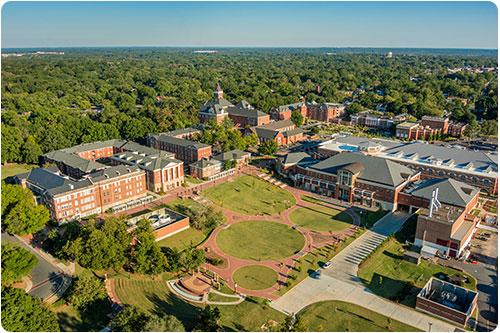
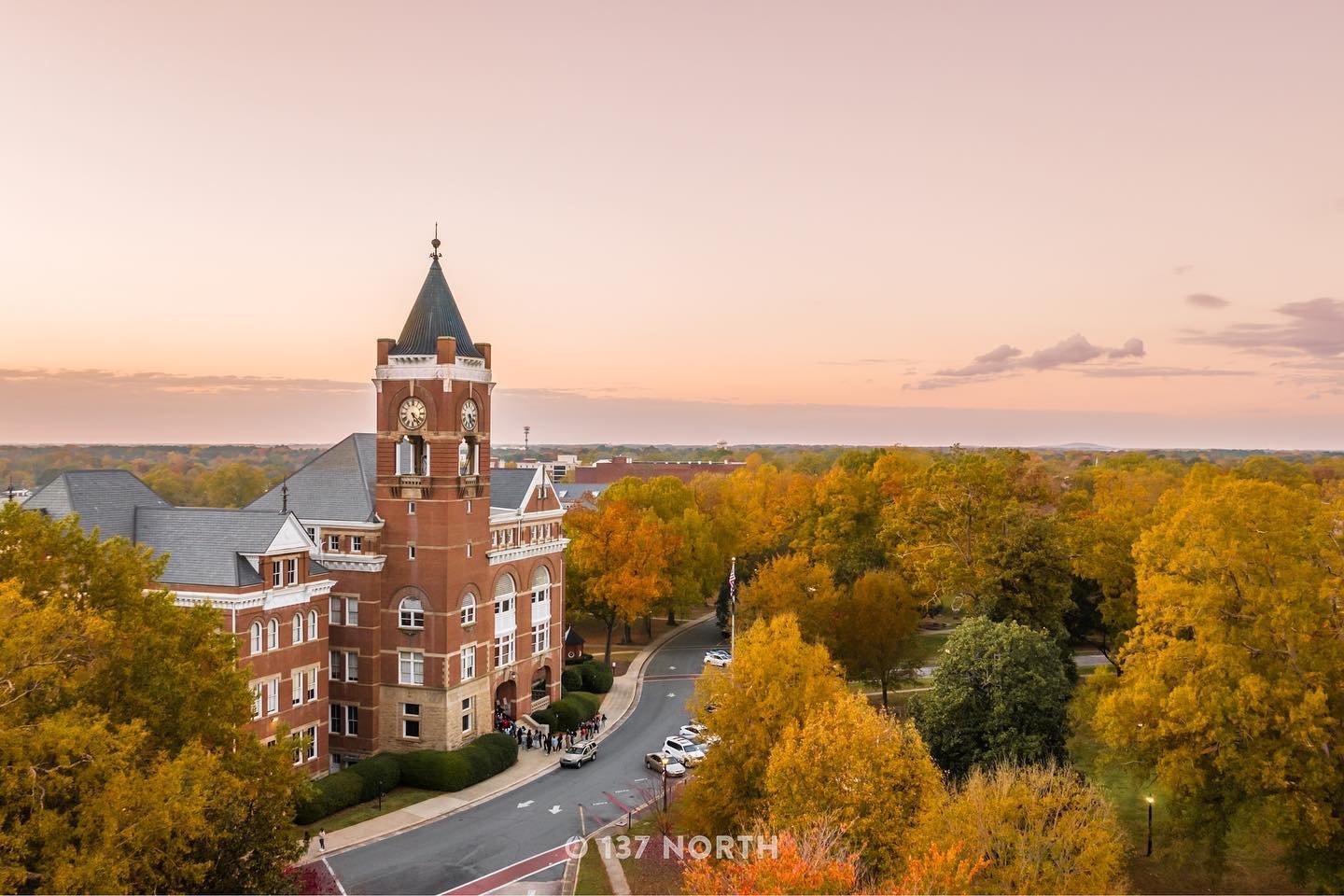
Winthrop University is a public liberal arts institution in Rock Hill, South Carolina, where nearly 80% of applicants get in—but those who stay find a tight-knit campus with standout programs in education, business, and the arts. With a 61% six-year graduation rate (above the national average for public universities) and an emphasis on undergraduate research, Winthrop punches above its weight for a regional comprehensive school. Its 5,000-odd students split almost evenly between on- and off-campus housing, creating a hybrid commuter/residential vibe.
Admission requirements
Test-optional — scores considered if submitted
Required
High school transcript
Grade point average
College-prep program
TOEFL (non-native English)
Considered (not required)
Letters of recommendation
Test scores (SAT/ACT)
Source: IPEDS Admissions survey (2022) via Urban Institute. Covers formal factors only — it does not reflect essays, extracurriculars, or other holistic criteria.
More details
Undergrad enrollment
3,523
In-state tuition
$14,678
Out-of-state tuition
$28,676
Type
Public
Founded
1886
Location
Rock Hill, SC
On-Campus Housing
47% of students
Student-Faculty Ratio
13:1
6-Year Graduation Rate
61%
Outcomes & value
Outcomes & value
Median earnings (10 yr)
$47,185
Value (earnings ÷ net price)
3.1×
Median debt at graduation
$26,975
Graduation rate
57%
First-year retention
74%
Reducing loan balance (3 yr)
49%
Pell (lower-income) share
41%
First-gen share (among federal-aid recipients)
28%
Top-earning majors
Median earnings by field of study (highest credential), ~2 years after completion.
Chemistry$40,368
Business Administration, Management and Operations$40,269
Design and Applied Arts$35,274
Special Education and Teaching$34,650
Teacher Education and Professional Development, Specific Levels and Methods$33,473
Public Relations, Advertising, and Applied Communication
Campus & location
Campus safety
On-campus violent crimes (2024)
6
Per 1,000 students
1.35
On-campus criminal offenses classed as violent (murder/non-negligent manslaughter, rape, robbery, aggravated assault) for the most recent reported year. Source: U.S. Dept. of Education Campus Safety and Security (Clery Act). Counts reflect what’s reported to the school, and urban campuses often report more partly due to non-student incidents nearby — read alongside campus size and setting, not as a standalone safety verdict.
Climate
Pleasant days / yr
107
Summer high
88°F
Winter low
39°F
Annual rain
45.5"
Annual snow
1.5"
Natural-hazard risk
Relatively Moderate
Pleasant days counts days per year with a mean temperature of 55–75°F, a high at or below 90°F, a low at or above 45°F, and little precipitation — a transparent comfort measure, not a weighting we invented. Computed from Open-Meteo ERA5 daily history (2019–2023). Natural-hazard risk is the county’s composite rating from the FEMA National Risk Index.
Deep dive — research, future-scholar output & economic mobility▾
Research output
Institutional h-index
107
Scholarly works
3,703
Institutional research volume and impact from OpenAlex. The h-index reflects large research universities and will be low for teaching-focused liberal-arts colleges — not a measure of undergraduate quality.
Economic mobility
Mobility rate
1.4%
Bottom → top quintile
18%
From bottom quintile
8%
Mobility rate = the share of students who both start in the bottom household-income quintile and reach the top quintile; bottom → top is that chance conditional on starting at the bottom. Source: Opportunity Insights Mobility Report Cards (Chetty, Friedman, Saez, Turner & Yagan). Reflects 1980–82 birth cohorts, so it’s directional, not current.
Quick answers
What is the acceptance rate at Winthrop University?
Winthrop University's acceptance rate is approximately 79% (Rock Hill, SC), based on the most recent figures we compiled from public and primary sources.
What SAT score do you need for Winthrop University?
Admitted students at Winthrop University typically score 1010–1220 on the SAT (the middle-50% range). Scores outside this band are still admitted, especially with strong applications.
How much does Winthrop University cost?
At Winthrop University, the average net price (after aid) is about $15,343 per year. Actual cost varies with financial aid and residency.
How many undergraduates attend Winthrop University?
Winthrop University enrolls approximately 3,523 undergraduate students.
Where is Winthrop University located?
Winthrop University is located in Rock Hill, SC.
Admissions
Winthrop’s admissions process leans accessible, with a 79% and middle-50% SAT scores between 1020–1200 for enrolled freshmen. The average admitted student sports a 4.06 high school GPA, suggesting a preference for strong performers in rigorous curricula over standardized test stars. Transfer students face slightly steeper odds (64% acceptance rate) and must submit SAT/ACT scores. The admissions office emphasizes , with no stated minimum GPA or test score cutoffs—though the CDS notes that academic rigor and grades weigh most heavily. Contact options include an 800 number (800-763-0230) and [email protected].
Earnings = median of students working ~10 years after entry; debt = median of graduates. Value divides 10-yr earnings by one year’s net price — read it as earnings per dollar of annual cost, not a full lifetime ROI; it favors lower-cost schools. Source: U.S. Dept. of Education College Scorecard. Figures lag ~2 years and reflect all students, not your intended major.
$33,459
Natural Resources Conservation and Research$32,925
Sports, Kinesiology, and Physical Education/Fitness$32,569
Source: U.S. Dept. of Education College Scorecard (field-of-study earnings). Figures cover graduates who received federal aid and lag ~2 years; not all programs report data.
Winthrop’s academic identity blends liberal arts foundations with career-ready programs, particularly in education (its historic roots as a teachers’ college still show), business, and visual/performing arts. The university mandates high-impact practices: 100% of programs require writing-intensive courses, 86% have senior capstones, and 79% incorporate first-year seminars. Small classes are the norm—the CDS reports 45% of courses have under 20 students—and undergrad research is emphasized across disciplines. A newer online Bachelor’s in Professional Studies caters to adult learners. Regionally, Winthrop ranks 17th among Southern universities (per U.S. News), with particular strength in undergraduate teaching.
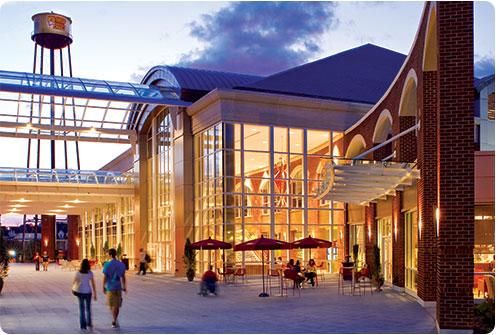
Life at Winthrop balances tradition and casual Southern energy. About 47% of students live on campus, with honors students clustered in dedicated housing. The 20+ multicultural organizations reflect growing diversity—the CDS notes 38% of students identify as non-white. Weekends mix DIY events (game nights, intramural fencing) with campus-wide traditions like ‘Garnet and Gold Fridays.’ Rock Hill’s proximity to Charlotte (25 minutes away) means off-campus options, but the university works to keep students engaged locally through club fairs, live music, and ‘Winthrop Wednesdays’ programming. The vibe is participatory but not overwhelming—perfect for students who want activity options without Greek life dominance (only 8% join sororities/fraternities).
Winthrop’s six-year graduation rate hit a record 61.4% for the 2013 cohort—surpassing its 2025 goal early—with women graduating at 62% vs. men’s 59%. Early-career earnings average $31,000, though the College Scorecard reports median alumni earn $47,185 a decade out. The 74% first-year retention rate suggests students who enroll tend to stick around, likely due to strong academic support (the CDS highlights tutoring and first-year advising). Education majors benefit from South Carolina’s teacher shortage, while business grads tap Charlotte’s banking sector. Not a cutthroat pipeline to elite grad schools, but a solid ROI for in-state students.
After aid, the average drops to $17,100—73% of students receive financial assistance, with typical packages totaling $19,635. Federal loans dominate aid offers ($3,500 for freshmen, scaling to $5,500 for upperclassmen), though the CDS notes 29% of undergrads snag institutional grants. South Carolina residents pay $15,806 in tuition/fees (2023-24), while out-of-staters face $29,966. The net price calculator suggests most families earning under $75,000 pay under $10k annually. Not the cheapest public option, but aid policies prevent sticker shock for middle-income students.
Winthrop carves a niche as South Carolina’s ‘public liberal arts’ alternative—small enough for undergrads to access research (100% of programs require writing-intensive work) but priced like a state school. Its education college feeds local schools, while business majors exploit Charlotte connections. The 79% masks improving outcomes: six-year grad rates now exceed 60%, and students find robust support. For learners who want professors—not TAs—leading discussions, plus D1 athletics (the Eagles compete in the Big South) without Greek life pressure, Winthrop delivers a Goldilocks ‘just right’ experience.
Winthrop University logo · sourcePhoto Gallery | Winthrop University · source10 Ways You Can Enjoy Winthrop's Campus Without Being Enrolled | York County, SC · sourceTimeline Gallery | Winthrop University · source