Admit rate has ranged 91%–97% over the last 5 years, though the latest figure above (72%) falls outside that window. Source: IPEDS via Urban Institute.
Acceptance & SAT from Common Data Set / IPEDS; net price, earnings & graduation from the U.S. Dept. of Education College Scorecard. Figures lag ~1–2 years — verify with the school.
Wittenberg University is a small, residential liberal arts college in Springfield, Ohio, that feels like a classic Midwestern campus with a surprisingly robust Greek life pulse. It's a place where the academic mission explicitly prioritizes strong speaking, writing, and critical thinking skills, and where nearly every student receives financial aid. While its graduation rate signals challenges, the university reports a strong 97% career outcome rate for recent graduates, suggesting a community that rallies to support students who persist.
Admission requirements
Test-optional — scores considered if submitted
Required
High school transcript
Grade point average
TOEFL (non-native English)
Considered (not required)
Class rank
Letters of recommendation
Test scores (SAT/ACT)
College-prep program
Demonstrated competencies
Source: IPEDS Admissions survey (2022) via Urban Institute. Covers formal factors only — it does not reflect essays, extracurriculars, or other holistic criteria.
More details
Undergrad enrollment
1,215
In-state tuition
$45,940
Out-of-state tuition
$45,940
Graduation Rate
53%
Meets Full Need
Planned starting Fall 2026
ED Share of Class
~60% (per source for a recent class)
Career Outcome Rate
97% (for a recent class)
First-Year Retention
73%
Student-Faculty Ratio
12:1
Median Earnings (10yr)
$54,947
Students Receiving Aid
>98%
Greek Life Participation
Outcomes & value
Outcomes & value
Median earnings (10 yr)
$54,947
Value (earnings ÷ net price)
2.9×
Median debt at graduation
$27,000
Graduation rate
53%
First-year retention
63%
Reducing loan balance (3 yr)
71%
Pell (lower-income) share
35%
First-gen share (among federal-aid recipients)
24%
Top-earning majors
Median earnings by field of study (highest credential), ~2 years after completion.
Marketing$50,856
Business/Commerce, General$49,464
Communication and Media Studies$37,748
Teacher Education and Professional Development, Specific Levels and Methods$37,208
Sociology$26,896
Psychology, General$25,774
Campus & location
Campus safety
On-campus violent crimes (2024)
5
Per 1,000 students
3.93
On-campus criminal offenses classed as violent (murder/non-negligent manslaughter, rape, robbery, aggravated assault) for the most recent reported year. Source: U.S. Dept. of Education Campus Safety and Security (Clery Act). Counts reflect what’s reported to the school, and urban campuses often report more partly due to non-student incidents nearby — read alongside campus size and setting, not as a standalone safety verdict.
Climate
Pleasant days / yr
91
Summer high
82°F
Winter low
26°F
Annual rain
42.6"
Annual snow
21.6"
Natural-hazard risk
Relatively Low
Pleasant days counts days per year with a mean temperature of 55–75°F, a high at or below 90°F, a low at or above 45°F, and little precipitation — a transparent comfort measure, not a weighting we invented. Computed from Open-Meteo ERA5 daily history (2019–2023). Natural-hazard risk is the county’s composite rating from the FEMA National Risk Index.
Deep dive — research, future-scholar output & economic mobility▾
Research output
Institutional h-index
137
Scholarly works
4,680
Institutional research volume and impact from OpenAlex. The h-index reflects large research universities and will be low for teaching-focused liberal-arts colleges — not a measure of undergraduate quality.
Economic mobility
Mobility rate
0.8%
Bottom → top quintile
25%
From bottom quintile
3%
Mobility rate = the share of students who both start in the bottom household-income quintile and reach the top quintile; bottom → top is that chance conditional on starting at the bottom. Source: Opportunity Insights Mobility Report Cards (Chetty, Friedman, Saez, Turner & Yagan). Reflects 1980–82 birth cohorts, so it’s directional, not current.
Quick answers
What is the acceptance rate at Wittenberg University?
Wittenberg University's acceptance rate is approximately 72% (Springfield, OH), based on the most recent figures we compiled from public and primary sources.
What SAT score do you need for Wittenberg University?
Admitted students at Wittenberg University typically score 980–1275 on the SAT (the middle-50% range). Scores outside this band are still admitted, especially with strong applications.
How much does Wittenberg University cost?
At Wittenberg University, the average net price (after aid) is about $18,649 per year. Actual cost varies with financial aid and residency.
How many undergraduates attend Wittenberg University?
Wittenberg University enrolls approximately 1,215 undergraduate students.
Where is Wittenberg University located?
Wittenberg University is located in Springfield, OH.
Admissions
Wittenberg's admissions process is best described as accessible, with a high that reflects its mission-focused, student-centered approach. The university is notably less selective, making it a realistic target for a broad range of students. For those certain Wittenberg is their top choice, applying Early Decision can be a strategic move; one source indicates that for a recent class, roughly 60% of the incoming class was admitted through Early Decision, with an Early Decision acceptance rate of 73% compared to a 31% rate for Regular Decision applicants. The rate—the percentage of admitted students who choose to enroll—is relatively low, reported at 11.63% for the 2025 academic year. The middle 50% SAT range for admitted students is 980–1275, and the most common high school GPA among accepted applicants is 3.5. The university provides a Calculator and encourages admitted students to contact their admission counselor directly with questions, especially after the May 1 decision deadline.
Earnings = median of students working ~10 years after entry; debt = median of graduates. Value divides 10-yr earnings by one year’s net price — read it as earnings per dollar of annual cost, not a full lifetime ROI; it favors lower-cost schools. Source: U.S. Dept. of Education College Scorecard. Figures lag ~2 years and reflect all students, not your intended major.
Biology, General$21,052
Source: U.S. Dept. of Education College Scorecard (field-of-study earnings). Figures cover graduates who received federal aid and lag ~2 years; not all programs report data.
A Wittenberg education is built on a three-part foundation: a broad liberal arts core, intensive study in a major, and an enhanced course of study like a minor or research experience. The university places considerable emphasis on developing strong speaking, writing, critical thinking, and research skills, aiming to prepare students to be competitive graduates and global leaders. With a student-faculty ratio of 12:1, classes are small and presumably interactive. The most popular majors reflect a blend of pre-professional and traditional liberal arts tracks, with Business/Commerce, Biology/Biological Sciences, and Psychology being among the top choices. Other notable undergraduate programs include Accounting, Finance, and International Business. The average freshman retention rate, a key indicator of student satisfaction, is 73%.
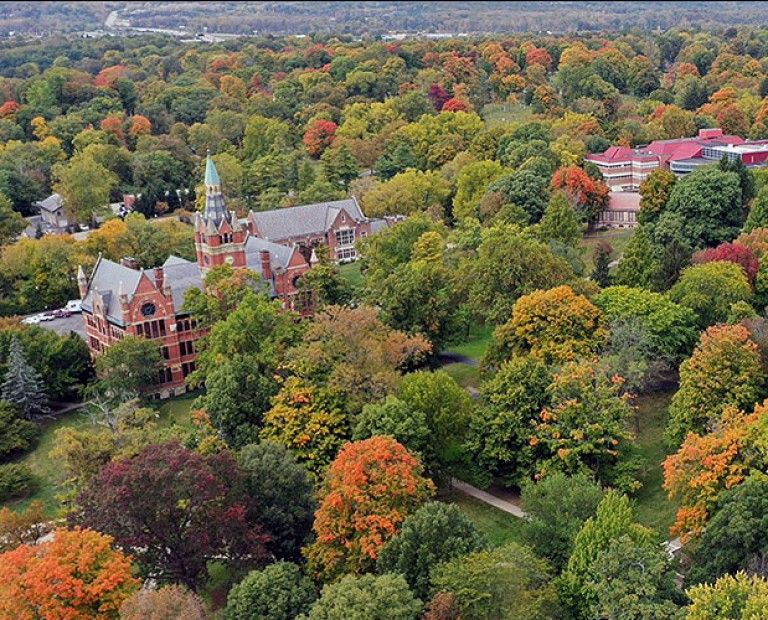
Life at Wittenberg is unmistakably residential and socially active, with Greek life forming a central pillar of the campus culture. Approximately 45% of students are involved in Greek life, with six sororities and six fraternities on campus. The university is committed to caring for the whole person and encouraging student growth, which starts with a requirement to live on campus. Reviews of campus life mention lots of social options from Wednesday through Saturday, with a mix of campus events and house parties. The community explicitly welcomes individuals of all faith backgrounds, supports healthy and sustainable living, and encourages diversity. This creates a classic, tight-knit liberal arts college environment where extracurricular involvement is high and the campus itself is the primary social hub.
Outcomes for Wittenberg graduates present a mixed but ultimately promising picture. The six-year graduation rate is a point of focus, though the university achieved a notable 97% career outcome rate for a recent class, marking a five-percent increase from the previous year. This high placement rate suggests robust career support for those who complete their degrees. Earnings data varies by source and timeframe; one source reports median earnings of $42,437 six years after enrollment, while another lists average earnings reaching $46,000 per year ten years after entry. The university itself highlights the success of its graduates in securing employment or graduate school placements shortly after commencement.
Affordability is a cornerstone of Wittenberg's value proposition. More than 98% of Wittenberg students receive financial aid or scholarships, with the university granting more than $40 million in scholarship and financial assistance annually. This widespread aid distribution significantly reduces the sticker price for most families. The university provides a Calculator to help families estimate their actual cost, and it has integrated its student financial services to streamline the process. Notably, the university has announced a significant future policy shift: starting in Fall 2026, Wittenberg plans to meet the full demonstrated financial need of all future students. This suggests a move toward a more robust, no-loan or low-loan financial aid model for incoming classes.
Wittenberg stands out for its potent combination of a classic, engaged liberal arts community and a serious, recent commitment to redefining affordability. The campus vibe is dominated by a high level of student involvement, particularly in its robust Greek system, which engages nearly half the student body, creating a socially vibrant and familiar residential experience. Academically, it doesn't just pay lip service to the liberal arts; it explicitly and repeatedly stakes its pedagogy on building concrete skills in writing, speaking, and critical thinking. But the most distinctive shift is its forward-looking financial aid promise. By announcing it will meet the full demonstrated need of all students starting in 2026, Wittenberg is signaling a transformative move to remove cost as a barrier, aiming to align its accessible admissions with truly accessible financing—a rare and ambitious pledge for a university in its category.
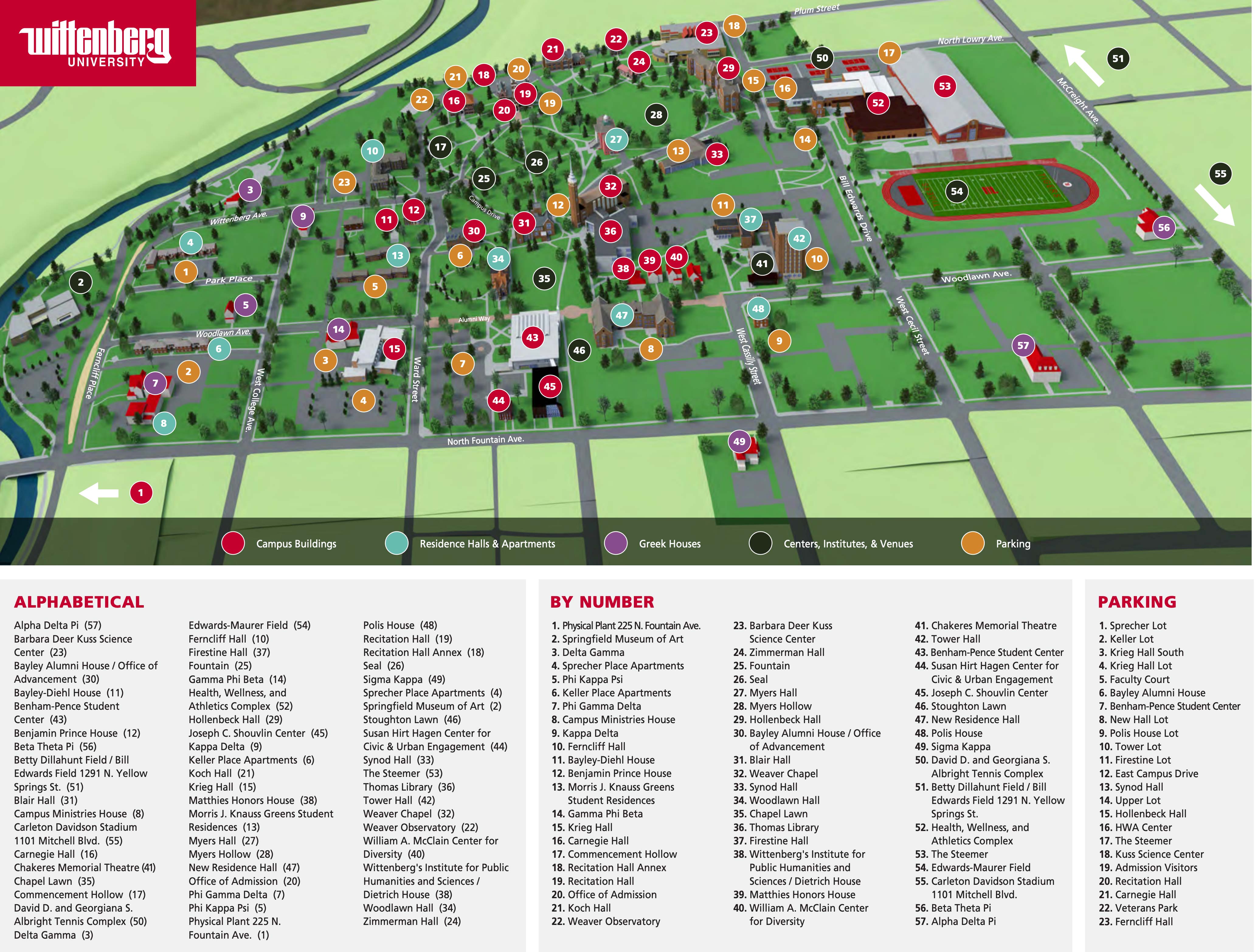
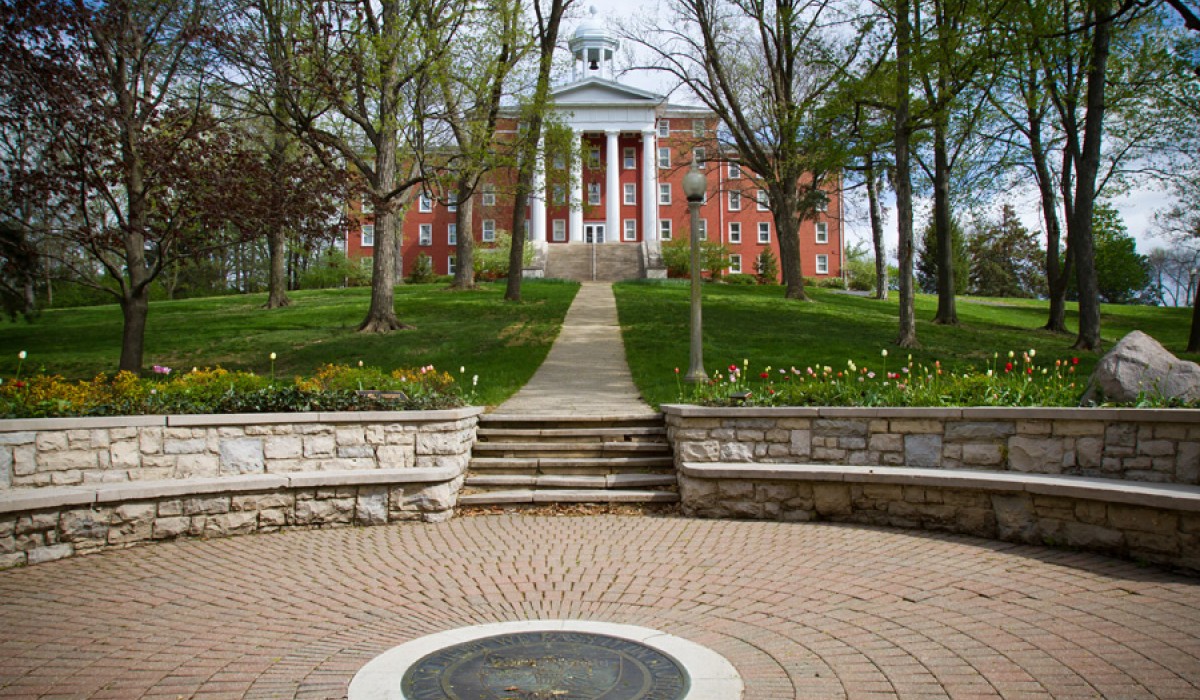
Wittenberg University seal · sourceCampus Map | Wittenberg University · sourceResidence Life & Housing | Wittenberg University · sourceCampus Seal | Wittenberg University · source