Loading…
← All schools.gif)
Woodland Community College
Woodland, CApublicwcc.yccd.edu
Avg net price
$8,356
Earnings (10 yr)
$40,042
Acceptance & SAT from Common Data Set / IPEDS; net price, earnings & graduation from the U.S. Dept. of Education College Scorecard. Figures lag ~1–2 years — verify with the school.
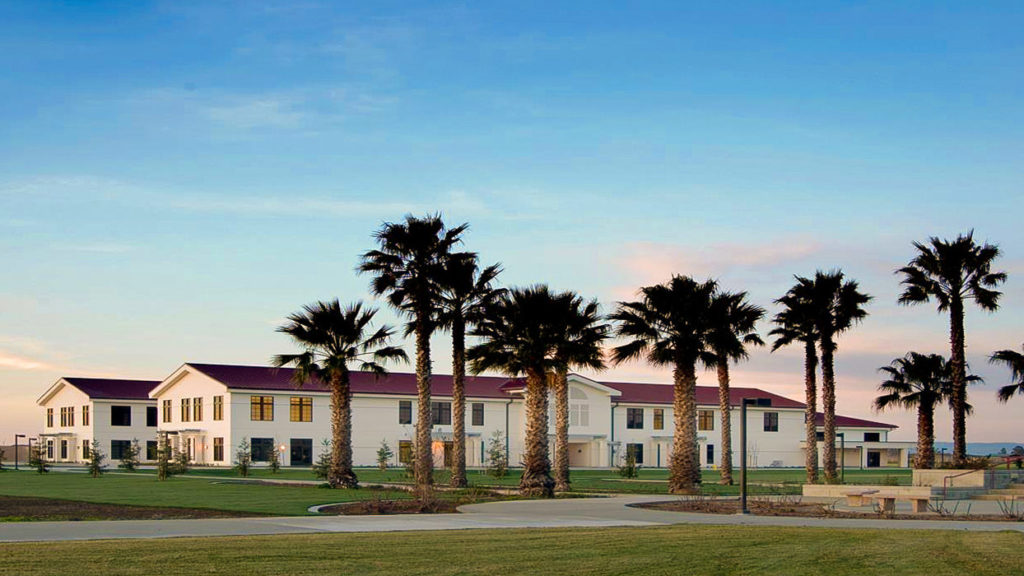
Woodland Community College is an open-access public institution in California's Central Valley, defined by its mission to provide a 'second chance' and an 'easier transition' to higher education. It operates with a starkly practical, no-frills ethos, serving a predominantly part-time student body with career-focused programs and a strong emphasis on transfer pathways to four-year universities. This is a college built for accessibility, affordability, and getting the job done, whether that job is earning an associate degree, a certificate, or a ticket to a UC or CSU campus.
More details
- Undergrad enrollment
- 3,154
- In-state tuition
- $1,124
- Out-of-state tuition
- $7,656
- Key Aid Program
- WCC Promise (tuition coverage, not need-based)
- Programs Offered
- 36 fields
- Transfer Standing
- Top 10% of CA community colleges for UC/CSU transfer rates
Outcomes & value
Outcomes & value
- Median earnings (10 yr)
- $40,042
- Value (earnings ÷ net price)
- 4.8×
- Reducing loan balance (3 yr)
- 29%
- Pell (lower-income) share
- 25%
- First-gen share (among federal-aid recipients)
- 58%
Earnings = median of students working ~10 years after entry; debt = median of graduates. Value divides 10-yr earnings by one year’s net price — read it as earnings per dollar of annual cost, not a full lifetime ROI; it favors lower-cost schools. Source: U.S. Dept. of Education College Scorecard. Figures lag ~2 years and reflect all students, not your intended major.
Campus & location
Campus safety
- On-campus violent crimes (2024)
- 0
On-campus criminal offenses classed as violent (murder/non-negligent manslaughter, rape, robbery, aggravated assault) for the most recent reported year. Source: U.S. Dept. of Education Campus Safety and Security (Clery Act). Counts reflect what’s reported to the school, and urban campuses often report more partly due to non-student incidents nearby — read alongside campus size and setting, not as a standalone safety verdict.
Climate
- Pleasant days / yr
- 108
- Summer high
- 96°F
- Winter low
- 41°F
- Annual rain
- 19.8"
- Annual snow
- 0.9"
- Natural-hazard risk
- Relatively Moderate
Pleasant days counts days per year with a mean temperature of 55–75°F, a high at or below 90°F, a low at or above 45°F, and little precipitation — a transparent comfort measure, not a weighting we invented. Computed from Open-Meteo ERA5 daily history (2019–2023). Natural-hazard risk is the county’s composite rating from the FEMA National Risk Index.
Quick answers
- How much does Woodland Community College cost?
- At Woodland Community College, the average net price (after aid) is about $8,356 per year. Actual cost varies with financial aid and residency.
- How many undergraduates attend Woodland Community College?
- Woodland Community College enrolls approximately 3,154 undergraduate students.
- Where is Woodland Community College located?
- Woodland Community College is located in Woodland, CA.
Admissions
Woodland Community College embodies the principle of open access. The admissions process is non-selective and designed to remove barriers, not create them. Multiple sources characterize the institution as having a 100% , reflecting its mission to serve all students in its community who seek higher education. The process is administrative rather than evaluative: the Admissions & Records office focuses on processing applications, troubleshooting account access, and evaluating transcripts from other colleges. There is no mention of standardized test requirements (SAT/ACT) for admission. The student body is overwhelmingly part-time, with only 18.7% of its 4,128 enrolled students attending full-time, indicating a population balancing education with work, family, and other commitments.
Academics
Academics at WCC are framed around pragmatic goals: career preparation, transfer, and personal empowerment. The college offers degrees and certificates in 36 different fields, organized into interest areas like Arts, Communication & Culture; Business, Hospitality & Entrepreneurship; Natural Resources & The Environment; and Social Sciences. Popular programs, according to available data, include Social Sciences, General, and Biological and Physical Sciences. The college explicitly markets itself on providing an 'easier transition to university studies,' and touts a significant point of pride: its students' combined UC and CSU transfer rates have consistently placed it 'among the top 10 percent of all community colleges.' The academic philosophy is student-centered, emphasizing that 'The Individual is Valued' and offering the 'Versatility and a ‘Second Chance’' that defines the community college mission. Instruction appears geared toward practical skill-building and fulfilling lower-division requirements for seamless transfer.
Compare Woodland Community College
vs United States Air Force Academyvs Fort Lewis Collegevs University of Hawaii at Hilovs United States Naval Academy
See colleges similar to Woodland Community College →Sources
- New Students - Woodland Community College
- Common Data Set: Home
- Admissions - Woodland Community College
- Consumer Information - Woodland Community College
- Woodland Community College | Data USA
- Common Data Set Repository - College Transitions
- Woodland Community College - Niche
- Woodland Community College - Tuition and Acceptance Rate
- Woodland Community College Acceptance Rate, SAT, GPA & ACT ...
- Woodland Community College | Class of 2030 ... - MeetYourClass
- Woodland Community College — Acceptance Rate, Costs & More
- Academics - Woodland Community College