Admit rate has ranged 35%–67% over the last 5 years — notably volatile. Source: IPEDS via Urban Institute.
Acceptance & SAT from Common Data Set / IPEDS; net price, earnings & graduation from the U.S. Dept. of Education College Scorecard. Figures lag ~1–2 years — verify with the school.
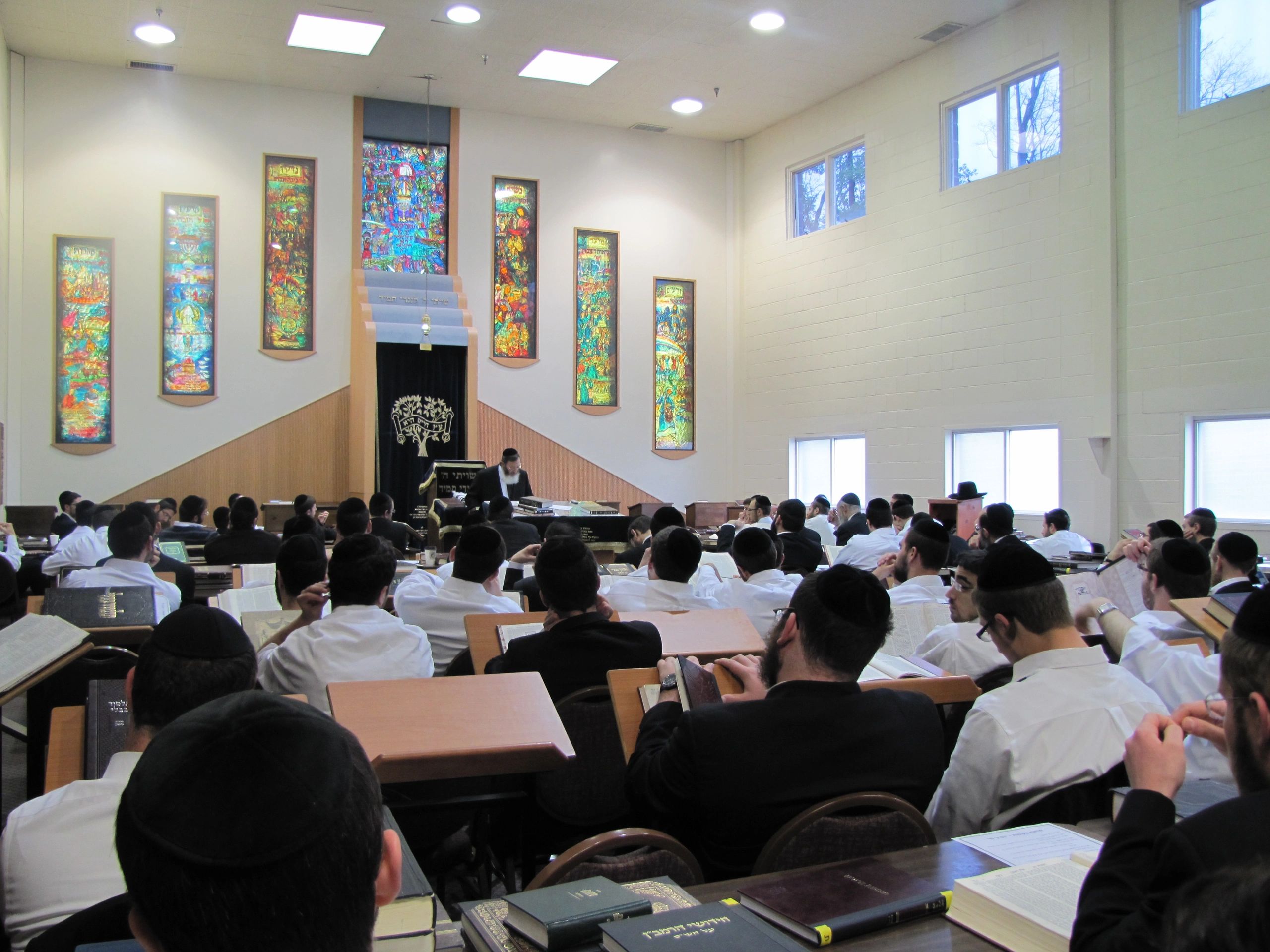
Yeshiva Shaarei Torah of Rockland is a singular institution, a small, all-male rabbinical college in Suffern, New York, dedicated entirely to Talmudic and Rabbinical Studies. It operates with the intensity of a classical yeshiva, demanding academic excellence in Jewish law and scholarship, while its admissions process is notably selective for a specialized religious school. The environment is one of deep immersion, where campus life is inseparable from the rigorous study of texts.
Admission requirements
Test-blind — scores not considered
Required
Letters of recommendation
College-prep program
Considered (not required)
High school transcript
Grade point average
Demonstrated competencies
Source: IPEDS Admissions survey (2022) via Urban Institute. Covers formal factors only — it does not reflect essays, extracurriculars, or other holistic criteria.
More details
Undergrad enrollment
152
In-state tuition
$13,000
Out-of-state tuition
$13,000
Single Major
Talmudic and Rabbinical Studies
% Receiving Grant Aid
100%
Median Earnings (10yr)
$89,548
Average Institutional Grant
$5,679
Outcomes & value
Outcomes & value
Median earnings (10 yr)
$89,548
Value (earnings ÷ net price)
8.3×
First-year retention
89%
Pell (lower-income) share
31%
Earnings = median of students working ~10 years after entry; debt = median of graduates. Value divides 10-yr earnings by one year’s net price — read it as earnings per dollar of annual cost, not a full lifetime ROI; it favors lower-cost schools. Source: U.S. Dept. of Education College Scorecard. Figures lag ~2 years and reflect all students, not your intended major.
Financial health
2.8 / 3.0Meets the federal financial-responsibility standard
U.S. Dept. of Education Financial Responsibility Composite Score (FY2022-23). Scale −1.0 to 3.0; ≥1.5 meets the standard. Reported for private nonprofit & for-profit institutions only — public universities are state-backed and not scored, so this is a stability signal, not a ranking.
Top-earning majors
Median earnings by field of study (highest credential), ~2 years after completion.
Religion/Religious Studies$12,961
Source: U.S. Dept. of Education College Scorecard (field-of-study earnings). Figures cover graduates who received federal aid and lag ~2 years; not all programs report data.
Campus & location
Campus safety
On-campus violent crimes (2024)
0
On-campus criminal offenses classed as violent (murder/non-negligent manslaughter, rape, robbery, aggravated assault) for the most recent reported year. Source: U.S. Dept. of Education Campus Safety and Security (Clery Act). Counts reflect what’s reported to the school, and urban campuses often report more partly due to non-student incidents nearby — read alongside campus size and setting, not as a standalone safety verdict.
Climate
Pleasant days / yr
93
Summer high
82°F
Winter low
27°F
Annual rain
53.7"
Annual snow
24.2"
Natural-hazard risk
Relatively Moderate
Pleasant days counts days per year with a mean temperature of 55–75°F, a high at or below 90°F, a low at or above 45°F, and little precipitation — a transparent comfort measure, not a weighting we invented. Computed from Open-Meteo ERA5 daily history (2019–2023). Natural-hazard risk is the county’s composite rating from the FEMA National Risk Index.
Quick answers
What is the acceptance rate at Yeshiva Shaarei Torah of Rockland?
Yeshiva Shaarei Torah of Rockland's acceptance rate is approximately 37% (Suffern, NY), based on the most recent figures we compiled from public and primary sources.
How much does Yeshiva Shaarei Torah of Rockland cost?
At Yeshiva Shaarei Torah of Rockland, the average net price (after aid) is about $10,753 per year. Actual cost varies with financial aid and residency.
How many undergraduates attend Yeshiva Shaarei Torah of Rockland?
Yeshiva Shaarei Torah of Rockland enrolls approximately 152 undergraduate students.
Where is Yeshiva Shaarei Torah of Rockland located?
Yeshiva Shaarei Torah of Rockland is located in Suffern, NY.
Admissions
Admissions at Yeshiva Shaarei Torah are fairly competitive, especially for a specialized religious institution, with an hovering around the mid-30s. The process is highly focused: the school does not use the Common Application, and notably, SAT or ACT scores are not considered for admission. The evaluation centers squarely on a candidate's preparedness for and commitment to an intensive program in Talmudic research. While the sources do not specify the exact weight given to factors like GPA, class rank, or recommendations, the school's mission implies these are assessed through the lens of rabbinical potential. The rate—the percentage of admitted students who enroll—is a critical metric here; one source cites a rate as high as 72.73%, indicating that those who are admitted are highly likely to accept, reflecting a self-selecting, dedicated applicant pool. Another source notes a yield of 52.9%, which is still substantial. There is no mention of an Early Decision program or policy regarding demonstrated interest in the provided sources.
The academic program is singular and all-consuming: the only major offered is Talmudic and Rabbinical Studies. This isn't a liberal arts college with a Judaic studies department; it is a yeshiva in the classic mold. The institution encourages its students to strive for academic excellence through a demanding program in Talmudic research and halacha (Jewish law). The curriculum is designed for deep immersion, blending classical Jewish scholarship with the context of American culture. All undergraduate degrees awarded are in this single field, and historically, the vast majority of degrees have been awarded to men. The focus is entirely on producing scholars and rabbis, with academics structured around text-based learning and mastery of religious law.
Student life is inextricably linked to the academic and religious mission. The campus experience in Suffern is built around the yeshiva model, where classes and study focus on blending classical Jewish scholarship with American culture. This suggests a community living within a religious framework while engaging with the wider world. Details on traditional extracurriculars like clubs or athletics are not provided in the sources, implying that the primary—if not exclusive—student activity is study. The environment is almost certainly residential and intensely communal, designed to support the all-male student body in their scholarly pursuits.
Outcomes data presents a complex picture. One source boasts a 100% graduation rate in a comparison, but more detailed data suggests a different reality: a six-year graduation rate of 34%. This disparity may reflect the unique, open-ended nature of yeshiva study, where students may study for many years without formally completing a degree, or may transfer to other institutions. Retention rates, however, appear strong, with one comparison noting an average retention rate of 91.5% for similar schools. For those who do graduate, the path is clearly toward rabbinical roles or advanced Jewish scholarship.
The sticker price for tuition is listed at $13,000, with total costs including room and board around $20,816. However, financial aid significantly reduces the for most students. A substantial 67% of students receive institutional grant aid, with the average award being $5,679. Furthermore, 100% of students receive some form of grant money. Federal Pell grants are also part of the aid package for eligible students (11% of students, averaging $7,395). The average grant award across all sources is noted as $10,865 in one source, and $7,525 in another. The school publishes a Financial Aid Handbook and a Code of Conduct for loans, indicating structured aid policies. The sources do not specify a 'meets full need' or 'no-loan' policy.
Yeshiva Shaarei Torah of Rockland stands out precisely because it does not try to be a conventional college. It is a pure yeshiva—a rare, specialized institution in the American higher education landscape dedicated solely to training rabbis and Talmudic scholars. Its selectivity is notable for a religious school, and its high rate reveals it attracts a committed, purpose-driven cohort. The entire experience—academics, community, and student life—revolves around an intense, text-centered immersion in Jewish law. For a young man seeking a rigorous, traditional path to rabbinical ordination within a supportive scholarly community, this is not just an option; it is the entire point.