Admit rate has ranged 64%–77% over the last 5 years — notably volatile, though the latest figure above (63%) falls outside that window. Source: IPEDS via Urban Institute.
Acceptance & SAT from Common Data Set / IPEDS; net price, earnings & graduation from the U.S. Dept. of Education College Scorecard. Figures lag ~1–2 years — verify with the school.
Young Harris College is a small, private liberal arts school nestled in the North Georgia mountains, offering a tight-knit, almost familial campus experience where connections are paramount. It operates with a notably accessible admissions process—test-optional and with a focus on high school coursework—and backs its students with a structured system of merit scholarships. While its graduation rates signal a challenging academic transition for some, the college provides a highly personalized education with an 11:1 student-faculty ratio, aiming to launch graduates into careers in business, education, and the health professions.
Admission requirements
Test-blind — scores not considered
Required
High school transcript
Grade point average
TOEFL (non-native English)
Source: IPEDS Admissions survey (2022) via Urban Institute. Covers formal factors only — it does not reflect essays, extracurriculars, or other holistic criteria.
More details
Undergrad enrollment
755
In-state tuition
$32,305
Out-of-state tuition
$32,305
Graduation Rate
42%
Average Aid Package
$26,794
Student-Faculty Ratio
11:1
Median Earnings (10yr)
$47,195
Merit Scholarship Tiers
4 ($17k-$21k)
% Students Receiving Aid
67.15%
First-Year Retention Rate
64%
Outcomes & value
Outcomes & value
Median earnings (10 yr)
$47,195
Value (earnings ÷ net price)
2.1×
Median debt at graduation
$27,000
Graduation rate
42%
First-year retention
65%
Reducing loan balance (3 yr)
59%
Pell (lower-income) share
20%
First-gen share (among federal-aid recipients)
28%
Financial health
2.4 / 3.0Meets the federal financial-responsibility standard
U.S. Dept. of Education Financial Responsibility Composite Score (FY2022-23). Scale −1.0 to 3.0; ≥1.5 meets the standard. Reported for private nonprofit & for-profit institutions only — public universities are state-backed and not scored, so this is a stability signal, not a ranking.
Top-earning majors
Median earnings by field of study (highest credential), ~2 years after completion.
Business Administration, Management and Operations$32,382
Source: U.S. Dept. of Education College Scorecard (field-of-study earnings). Figures cover graduates who received federal aid and lag ~2 years; not all programs report data.
On-campus criminal offenses classed as violent (murder/non-negligent manslaughter, rape, robbery, aggravated assault) for the most recent reported year. Source: U.S. Dept. of Education Campus Safety and Security (Clery Act). Counts reflect what’s reported to the school, and urban campuses often report more partly due to non-student incidents nearby — read alongside campus size and setting, not as a standalone safety verdict.
Climate
Pleasant days / yr
112
Summer high
83°F
Winter low
36°F
Annual rain
57.7"
Annual snow
5.3"
Natural-hazard risk
Very Low
Pleasant days counts days per year with a mean temperature of 55–75°F, a high at or below 90°F, a low at or above 45°F, and little precipitation — a transparent comfort measure, not a weighting we invented. Computed from Open-Meteo ERA5 daily history (2019–2023). Natural-hazard risk is the county’s composite rating from the FEMA National Risk Index.
Deep dive — research, future-scholar output & economic mobility▾
Research output
Institutional h-index
49
Scholarly works
311
Institutional research volume and impact from OpenAlex. The h-index reflects large research universities and will be low for teaching-focused liberal-arts colleges — not a measure of undergraduate quality.
Economic mobility
Mobility rate
0.3%
Bottom → top quintile
6%
From bottom quintile
6%
Mobility rate = the share of students who both start in the bottom household-income quintile and reach the top quintile; bottom → top is that chance conditional on starting at the bottom. Source: Opportunity Insights Mobility Report Cards (Chetty, Friedman, Saez, Turner & Yagan). Reflects 1980–82 birth cohorts, so it’s directional, not current.
Quick answers
What is the acceptance rate at Young Harris College?
Young Harris College's acceptance rate is approximately 63% (Young Harris, GA), based on the most recent figures we compiled from public and primary sources.
How much does Young Harris College cost?
At Young Harris College, the average net price (after aid) is about $22,034 per year. Actual cost varies with financial aid and residency.
How many undergraduates attend Young Harris College?
Young Harris College enrolls approximately 755 undergraduate students.
Where is Young Harris College located?
Young Harris College is located in Young Harris, GA.
Admissions
Young Harris College maintains an accessible, straightforward admissions process. The college is , explicitly stating that it does not require ACT or SAT scores for admission decisions. Instead, the primary focus is on a student's academic record in college-preparatory coursework, with a minimum GPA requirement of 2.0. The admissions office can be reached at (706) 379-5123 or via toll-free number (800) 241-3754, with an email address of [email protected].
According to the and other sources, the college's is consistently reported around 63%. For the Fall 2024 cycle, one source calculated an undergraduate acceptance rate of 62.6% (867 admissions from 1,384 applications). This places YHC in the 'less selective' or 'somewhat selective' category compared to national averages. The admitted student profile often includes an average high school GPA around 3.47. While some sources list SAT score ranges for admitted students (e.g., 890–1180 or 930–1160), these figures are provided for context as the policy is test-optional. The college does not appear to have a binding Early Decision program that significantly impacts its admissions statistics, and there is no indication from the provided Common Data Set that 'demonstrated interest' is a considered factor in admissions decisions.
Earnings = median of students working ~10 years after entry; debt = median of graduates. Value divides 10-yr earnings by one year’s net price — read it as earnings per dollar of annual cost, not a full lifetime ROI; it favors lower-cost schools. Source: U.S. Dept. of Education College Scorecard. Figures lag ~2 years and reflect all students, not your intended major.
Academics at Young Harris are defined by close faculty interaction and a focus on the liberal arts, supported by a very favorable 11:1 student-faculty ratio. The college offers 33 majors, allowing students to embark on academic journeys that align with their interests and goals. Programs are organized into broad categories including Arts, Business, Education, Health Professions, Humanities, and Science, Technology, and Math.
Specific popular and top-ranked majors include Business Administration and Management, Elementary Education and Teaching, Psychology, and Kinesiology and Exercise Science. The college promotes its innovative academic programs and small class sizes as mechanisms to ensure personalized attention and challenge students to broaden their horizons. A key indicator of the student academic experience, the average freshman retention rate, is reported at 64%, which serves as a measure of student satisfaction after the first year.
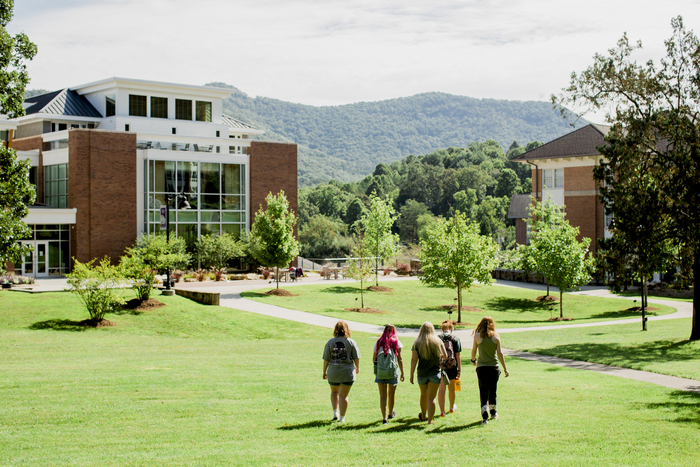
Life at Young Harris is intensely communal, often described by students in familial terms—a place where lifelong connections and a strong sense of belonging are forged. The campus culture is built around friendship, fun, connection, engagement, and community building. The college actively fosters this environment through a Residence Life Programming Model that offers both social and educational activities, encouraging students to stay active, make new friends, and have fun.
The heartbeat of campus life is found in the "big moments"—games, events, bid days for Greek life, and other traditions that bring the community together. Students shape their own experiences through a variety of clubs, activities, and events, creating memories that last a lifetime. The campus is patrolled for safety, supporting a residential environment where students can fully immerse themselves. This close-knit vibe is consistently highlighted as the defining characteristic of the YHC experience, from classroom conversations to campus-wide traditions.
Student outcomes at Young Harris present a mixed picture, with graduation rates being a notable area of focus. The college's own data shows a six-year graduation rate of 45%, with that rate holding steady at 45% by the eight-year mark. Other sources place the overall completion rate between 40% and 46%, which ranks the college in the lower percentiles nationally. The transfer rate is reported at 10.99%, and the dropout rate at 43.95%.
In terms of post-graduate earnings, data indicates that one year after graduation, alumni earn an average of $26,606 per year. This figure grows to $46,494 per year five years after graduation. The college points to its graduation rates, retention numbers, and other outcome data as proof that a YHC education works, encouraging prospective students to review this information.
Young Harris College is a private institution with a published full-year, residential cost of $47,695 for the 2026-2027 academic year. This includes a base tuition of $33,970. However, the college emphasizes that 100% of its students receive scholarships, significantly reducing the .
The financial aid system is anchored by a structured merit scholarship program. YHC offers four tiers of merit scholarships, ranging from $17,000 to $21,000 per year, each with its own eligibility criteria. Prospective students automatically qualify for one of these tiers based on their academic profile. On average, students receive a total aid package of $26,794, with the average grant aid awarded being $26,501. This aid combines institutional grants (averaging $20,208) and federal grants (averaging $6,594). As a result, the average net price after scholarships and grants—what students actually pay—is $20,509, with 67.15% of students receiving financial aid. The college offers federal loans, for which students do not need to demonstrate financial need to be eligible, but there is no indication from the provided sources that YHC has a "no-loan" policy or meets 100% of demonstrated financial need solely with grants.
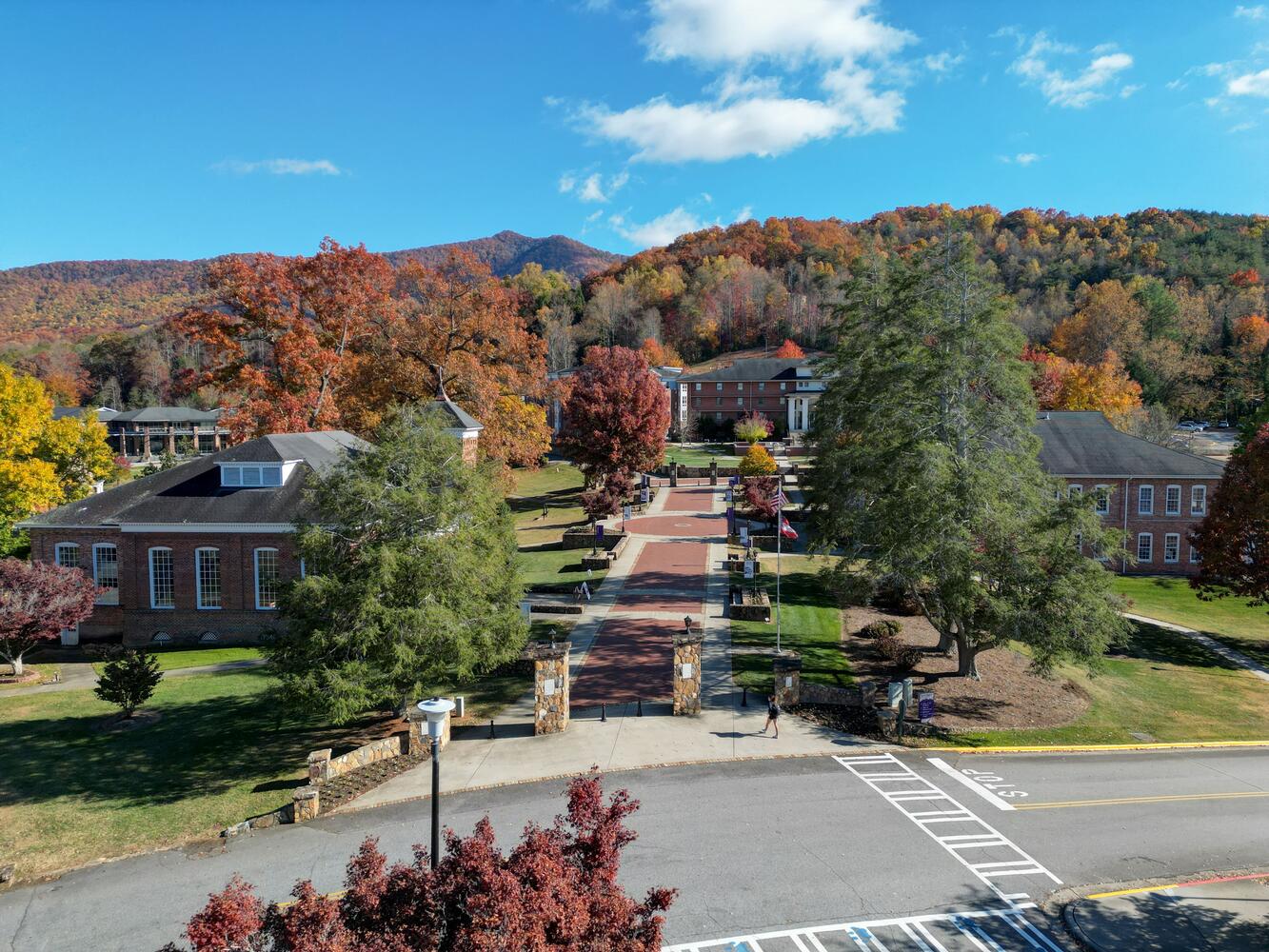
Young Harris College stands out for its unwavering commitment to a specific type of undergraduate experience: the small, personal, and deeply connected mountain college. It is not trying to be a large research university or a hyper-competitive liberal arts college. Instead, it carves a distinct niche by offering accessible admissions, guaranteed , and an 11:1 student-faculty ratio—all in service of creating a tight-knit 'campus family.' This is a place where the administration can truthfully claim that 100% of students receive a scholarship, and where the vibe is less about cutthroat competition and more about communal support, from the Residence Life programming to the big campus events.
Its location in the North Georgia mountains defines its aesthetic and sense of place, separating students from urban distractions and fostering a self-contained community. While its graduation rates indicate academic challenges that the institution must continue to address, for students who thrive on personal attention, a strong sense of belonging, and a structured path to affordability through merit awards, YHC offers a clear and singular proposition. It's a college that bets big on the transformative power of community and personalized attention, making it a distinctive option in the Southern liberal arts landscape.
Young Harris College seal · sourceVisit YHC - Young Harris College · sourceYoung Harris College Quick Facts | Founded 1886, 12:1 Ratio · sourceYoung Harris College - Profile, Rankings and Data | US News Best Colleges · source