Admit rate has ranged 65%–70% over the last 5 years, though the latest figure above (62%) falls outside that window. Source: IPEDS via Urban Institute.
Acceptance & SAT from Common Data Set / IPEDS; net price, earnings & graduation from the U.S. Dept. of Education College Scorecard. Figures lag ~1–2 years — verify with the school.
Agnes Scott College is a small, fiercely intellectual liberal arts college for women in Decatur, Georgia, that has pivoted from a genteel Southern tradition to a forward-thinking, globally-minded powerhouse. Its signature SUMMIT curriculum—built around global learning and leadership—defines the academic experience, while its 10:1 student-faculty ratio and average class size of 16 foster intense, personalized mentorship. The campus vibe is one of quiet, sunlit intensity, where smart, dedicated students engage in rigorous academics within a warm and accommodating community.
Admission requirements
Test-optional — scores considered if submitted
Required
High school transcript
Grade point average
Letters of recommendation
TOEFL (non-native English)
Considered (not required)
Class rank
Test scores (SAT/ACT)
College-prep program
Source: IPEDS Admissions survey (2022) via Urban Institute. Covers formal factors only — it does not reflect essays, extracurriculars, or other holistic criteria.
More details
Undergrad enrollment
836
In-state tuition
$50,604
Out-of-state tuition
$50,604
Campus Housing
84% live on-campus
No-Loan Policy
Yes, incomes < $60k
Graduation Rate
71%
Average Class Size
16
First-Year Retention
81%
Demonstrated Interest
Considered
Student-Faculty Ratio
10:1
Median Earnings (10yr)
$56,274
Students Receiving Aid
100%
Outcomes & value
Outcomes & value
Median earnings (10 yr)
$56,274
Value (earnings ÷ net price)
2.3×
Median debt at graduation
$26,749
Graduation rate
71%
First-year retention
81%
Reducing loan balance (3 yr)
56%
Pell (lower-income) share
39%
First-gen share (among federal-aid recipients)
21%
Financial health
2.2 / 3.0Meets the federal financial-responsibility standard
U.S. Dept. of Education Financial Responsibility Composite Score (FY2022-23). Scale −1.0 to 3.0; ≥1.5 meets the standard. Reported for private nonprofit & for-profit institutions only — public universities are state-backed and not scored, so this is a stability signal, not a ranking.
Top-earning majors
Median earnings by field of study (highest credential), ~2 years after completion.
Economics$39,729
Psychology, General$32,569
History$25,194
Public Health$24,035
Rhetoric and Composition/Writing Studies$21,052
Source: U.S. Dept. of Education College Scorecard (field-of-study earnings). Figures cover graduates who received federal aid and lag ~2 years; not all programs report data.
On-campus criminal offenses classed as violent (murder/non-negligent manslaughter, rape, robbery, aggravated assault) for the most recent reported year. Source: U.S. Dept. of Education Campus Safety and Security (Clery Act). Counts reflect what’s reported to the school, and urban campuses often report more partly due to non-student incidents nearby — read alongside campus size and setting, not as a standalone safety verdict.
Climate
Pleasant days / yr
101
Summer high
86°F
Winter low
39°F
Annual rain
65.6"
Annual snow
0.7"
Natural-hazard risk
Relatively Moderate
Pleasant days counts days per year with a mean temperature of 55–75°F, a high at or below 90°F, a low at or above 45°F, and little precipitation — a transparent comfort measure, not a weighting we invented. Computed from Open-Meteo ERA5 daily history (2019–2023). Natural-hazard risk is the county’s composite rating from the FEMA National Risk Index.
Deep dive — research, future-scholar output & economic mobility▾
Research output
Institutional h-index
82
Scholarly works
1,520
Institutional research volume and impact from OpenAlex. The h-index reflects large research universities and will be low for teaching-focused liberal-arts colleges — not a measure of undergraduate quality.
Share of this school’s graduates who go on to earn research doctorates (2010–20), by national rank and per-capita yield (NSF institutional-yield ratio). A signal of a research-oriented student culture — not a causal promise, since it partly reflects who enrolls. Only top producers appear. Source: NSF NCSES, Baccalaureate Origins of U.S. Research Doctorate Recipients.
Economic mobility
Mobility rate
1.5%
Bottom → top quintile
Quick answers
What is the acceptance rate at Agnes Scott College?
Agnes Scott College's acceptance rate is approximately 62% (Decatur, GA), based on the most recent figures we compiled from public and primary sources.
What SAT score do you need for Agnes Scott College?
Admitted students at Agnes Scott College typically score 1160–1330 on the SAT (the middle-50% range). Scores outside this band are still admitted, especially with strong applications.
How much does Agnes Scott College cost?
At Agnes Scott College, the average net price (after aid) is about $24,754 per year. Actual cost varies with financial aid and residency.
How many undergraduates attend Agnes Scott College?
Agnes Scott College enrolls approximately 836 undergraduate students.
Where is Agnes Scott College located?
Agnes Scott College is located in Decatur, GA.
Admissions
Agnes Scott's admissions process is characterized by its accessibility and . With an of 62%, the college is less selective, offering a realistic chance for a broad range of applicants. The middle 50% SAT range for admitted students is 1160–1330, and the average GPA is a strong 3.71. A defining feature is its policy; students may choose whether to submit SAT or ACT scores, with no penalty incurred for not submitting them. The college offers an Early Decision option with a November 15 deadline. While specific Early Decision acceptance rates are not detailed in the provided sources, data indicates that only about 16% of admitted students ultimately enroll (the rate), suggesting admitted students have many options. Demonstrated interest is a factor in admissions, as indicated by its inclusion in the factor grid, though its specific importance level is not detailed in the snippets.
Earnings = median of students working ~10 years after entry; debt = median of graduates. Value divides 10-yr earnings by one year’s net price — read it as earnings per dollar of annual cost, not a full lifetime ROI; it favors lower-cost schools. Source: U.S. Dept. of Education College Scorecard. Figures lag ~2 years and reflect all students, not your intended major.
20%
From bottom quintile
7%
Mobility rate = the share of students who both start in the bottom household-income quintile and reach the top quintile; bottom → top is that chance conditional on starting at the bottom. Source: Opportunity Insights Mobility Report Cards (Chetty, Friedman, Saez, Turner & Yagan). Reflects 1980–82 birth cohorts, so it’s directional, not current.
Academics at Agnes Scott are described as "rigorous but rewarding," with an expectation that students work hard outside the classroom to make in-class time valuable. The college's identity is anchored by its SUMMIT curriculum, a groundbreaking program centered on global learning and leadership. With a 10:1 student-to-faculty ratio and an average class size of 16, the environment guarantees meaningful connections with professors. Popular majors include Political Science and Government (6%), International Relations and Affairs (5%), Chemistry (4%), and Multi-/Interdisciplinary Studies (3%). The college offers a growing number of programs, including pre-law, pre-medicine, and dual-degree programs in computer science, engineering, and nursing. A notable minor in Data Analytics equips students with in-demand skills in programming (SQL, R, and Python) and data visualization. The overall impression from students and observers is of a "phenomenal school with rigorous academics and many opportunities for career exploration and networking."
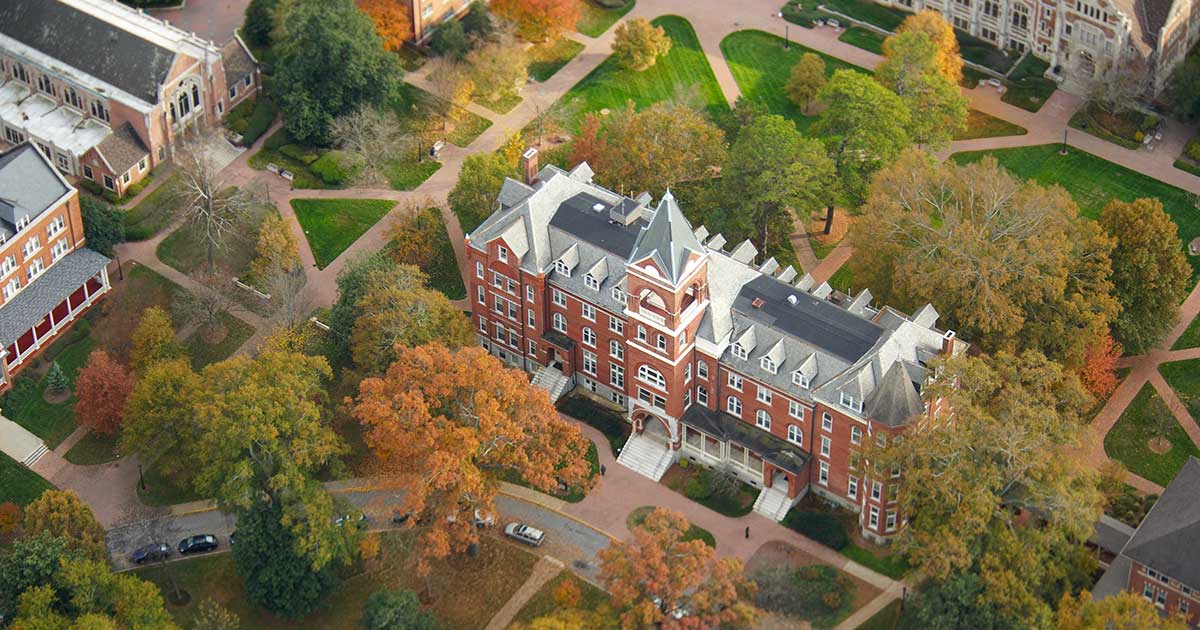
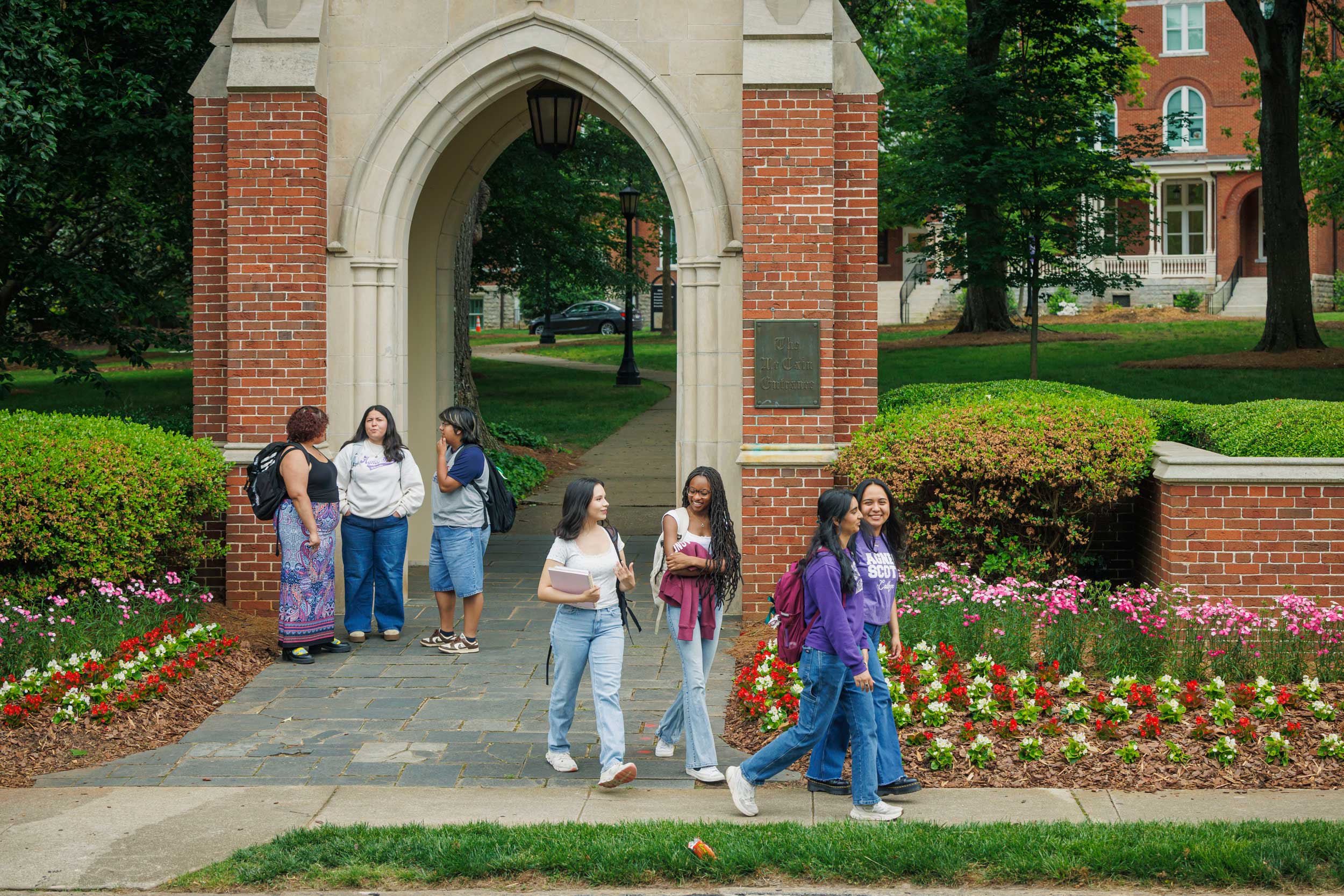
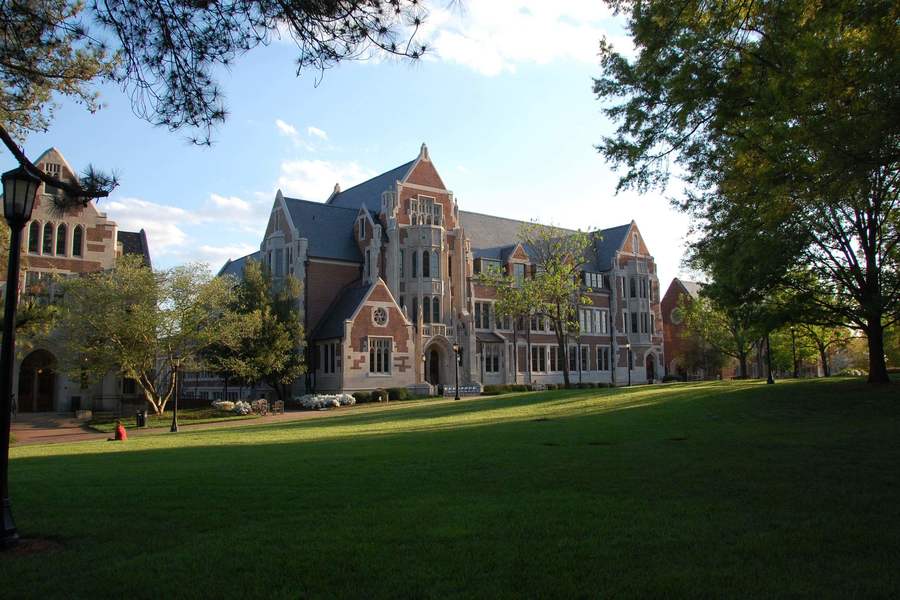
Life on Agnes Scott's historic, oak-shaded campus is described as "more than a campus. A feeling." The atmosphere is warm, welcoming, and intellectually engaged, with smart and dedicated professors and students. The college fosters a strong residential community, with 84% of students living in college-owned, -operated, or -affiliated housing. A robust slate of campus activities and traditions aims to inspire, challenge, and enrich the student experience. Student involvement opportunities are designed to celebrate diversity and bring different groups together to promote a sense of community. The overall sentiment from student opinions is that it's a "wonderful school" where almost all staff are accommodating and kind.
Agnes Scott demonstrates solid student achievement and post-graduate outcomes. The college's six-year graduation rate over a recent five-year period averaged 73%, which the institution notes is above its target for success. The overall graduation rate is 71%. First-year retention is a healthy 81%. In terms of earnings, the median salary for alumni 10 years after entry is $56,274. Earlier career earnings are lower, with reports showing about $22,347 one year after graduation and $50,787 five years after graduation, indicating a significant earnings trajectory over time. One analysis notes that early-career earnings are about $6,000 worse than might be expected given the mix of majors, but the strong 10-year median suggests graduates catch up and surpass expectations as their careers progress.
Agnes Scott is committed to making education affordable, with 100% of students receiving some form of financial aid and 88% of first-year students qualifying for . The average after aid—the out-of-pocket cost for students receiving aid—is $24,754. Aid packages can be substantial, with an average aid package of $43,834. The college offers Pell grants up to $7,395 and Stafford Loans up to $5,500 for the first year. It also provides merit-based scholarships like the Whitehead Scholarship, which ranges from $500 to $2,000 per year. The college has a notable no-loan policy for qualifying students: for the 2025-2026 academic year, students with family income below $60,000 per year will not have a loan expectation included in their financial aid package.
Agnes Scott stands out for its successful, deliberate evolution. It has transformed from a traditional Southern women's college into a modern, globally-focused institution without losing its core strengths of close mentorship and intellectual rigor. The SUMMIT curriculum is not just a buzzword; it's a comprehensive framework that reorients a liberal arts education around leadership and global challenges, giving every graduate a distinctive preparation. The 10:1 faculty ratio and tiny average class size ensure this ambitious curriculum is delivered personally. Furthermore, its strong financial aid commitment—meeting 100% of need for many and implementing a no-loan policy for lower-income families—allows it to attract a diverse student body capable of thriving in its demanding environment. The result is a unique niche: a small, supportive, and residential community for women that thinks big and prepares students to engage with a complex world.
Agnes Scott College seal · sourceAgnes Scott College | Women's Liberal Arts College | Atlanta, GA | Agnes Scott College · sourceAgnes Scott College | Women's Liberal Arts College | Atlanta, GA | Agnes Scott College · sourceAbout | Agnes Scott College | Atlanta, GA | Agnes Scott College · source