Admit rate has ranged 48%–76% over the last 5 years — notably volatile. Source: IPEDS via Urban Institute.
Acceptance & SAT from Common Data Set / IPEDS; net price, earnings & graduation from the U.S. Dept. of Education College Scorecard. Figures lag ~1–2 years — verify with the school.
Averett University is a small, private liberal arts institution in Danville, Virginia, that operates with a distinctively pragmatic, career-oriented focus. Its identity is split between a traditional residential campus offering niche programs like aviation and equine business, and a sprawling online operation serving adult learners. While its graduation rate signals challenges, the university provides a high-touch, supportive environment for students who thrive in close-knit settings and are drawn to its specialized professional tracks.
Admission requirements
Test-optional — scores considered if submitted
Required
Grade point average
TOEFL (non-native English)
Considered (not required)
High school transcript
Class rank
Letters of recommendation
Test scores (SAT/ACT)
College-prep program
Source: IPEDS Admissions survey (2022) via Urban Institute. Covers formal factors only — it does not reflect essays, extracurriculars, or other holistic criteria.
More details
Undergrad enrollment
1,231
In-state tuition
$38,550
Out-of-state tuition
$38,550
Graduation Rate
48%
Student-Faculty Ratio
13:1
Median Earnings (10yr)
$51,516
Students Receiving Aid
99%
First-Year Retention Rate
63%
Outcomes & value
Outcomes & value
Median earnings (10 yr)
$51,516
Value (earnings ÷ net price)
2.2×
Median debt at graduation
$25,000
Graduation rate
48%
First-year retention
65%
Reducing loan balance (3 yr)
53%
Pell (lower-income) share
41%
First-gen share (among federal-aid recipients)
38%
Financial health
2.2 / 3.0Meets the federal financial-responsibility standard
U.S. Dept. of Education Financial Responsibility Composite Score (FY2022-23). Scale −1.0 to 3.0; ≥1.5 meets the standard. Reported for private nonprofit & for-profit institutions only — public universities are state-backed and not scored, so this is a stability signal, not a ranking.
Top-earning majors
Median earnings by field of study (highest credential), ~2 years after completion.
Business Administration, Management and Operations$48,725
Criminal Justice and Corrections$38,289
Management Sciences and Quantitative Methods$37,208
Information Science/Studies$30,228
Health/Medical Preparatory Programs$25,709
Sports, Kinesiology, and Physical Education/Fitness
Campus & location
Campus safety
On-campus violent crimes (2024)
2
Per 1,000 students
1.37
On-campus criminal offenses classed as violent (murder/non-negligent manslaughter, rape, robbery, aggravated assault) for the most recent reported year. Source: U.S. Dept. of Education Campus Safety and Security (Clery Act). Counts reflect what’s reported to the school, and urban campuses often report more partly due to non-student incidents nearby — read alongside campus size and setting, not as a standalone safety verdict.
Climate
Pleasant days / yr
97
Summer high
88°F
Winter low
34°F
Annual rain
44.3"
Annual snow
4.9"
Natural-hazard risk
Relatively Low
Pleasant days counts days per year with a mean temperature of 55–75°F, a high at or below 90°F, a low at or above 45°F, and little precipitation — a transparent comfort measure, not a weighting we invented. Computed from Open-Meteo ERA5 daily history (2019–2023). Natural-hazard risk is the county’s composite rating from the FEMA National Risk Index.
Deep dive — research, future-scholar output & economic mobility▾
Research output
Institutional h-index
35
Scholarly works
254
Institutional research volume and impact from OpenAlex. The h-index reflects large research universities and will be low for teaching-focused liberal-arts colleges — not a measure of undergraduate quality.
Economic mobility
Mobility rate
0.6%
Bottom → top quintile
7%
From bottom quintile
8%
Mobility rate = the share of students who both start in the bottom household-income quintile and reach the top quintile; bottom → top is that chance conditional on starting at the bottom. Source: Opportunity Insights Mobility Report Cards (Chetty, Friedman, Saez, Turner & Yagan). Reflects 1980–82 birth cohorts, so it’s directional, not current.
Quick answers
What is the acceptance rate at Averett University?
Averett University's acceptance rate is approximately 57% (Danville, VA), based on the most recent figures we compiled from public and primary sources.
What SAT score do you need for Averett University?
Admitted students at Averett University typically score 926–1143 on the SAT (the middle-50% range). Scores outside this band are still admitted, especially with strong applications.
How much does Averett University cost?
At Averett University, the average net price (after aid) is about $22,925 per year. Actual cost varies with financial aid and residency.
How many undergraduates attend Averett University?
Averett University enrolls approximately 1,231 undergraduate students.
Where is Averett University located?
Averett University is located in Danville, VA.
Admissions
Averett's admissions process is moderately selective, with a policy that gives applicants flexibility. The university reports an of 57%, meaning it admits a clear majority of its applicants. For those who do submit scores, the middle 50% SAT range for admitted students is 926–1143, and the middle 50% ACT range is 15–22. The admissions office states it is "completely test optional," encouraging but not requiring SAT or ACT scores. While specific data on Early Decision advantages or demonstrated interest policies for Averett are not detailed in the provided sources, the framework indicates that such factors can be rated by institutions in their admissions decisions. All first-time, full-time students take a math placement test, and minimum subscores are required for admission to the university.
Averett's academic philosophy emphasizes practical, career-ready skills alongside a liberal arts foundation. The university explicitly aims to develop "independent problem-solving and analysis, clear writing and effective public speaking, quantitative and scientific reasoning, and collaborative work capabilities." With a student-faculty ratio of 13:1, classes are small and presumably personalized. The curriculum is divided between on-campus programs and a significant online offering, with degrees spanning business, liberal arts, and healthcare. The university has carved out a niche with several distinctive, hands-on programs that set it apart, including aviation, equine business management, and sports management. Other bachelor's degree programs include Art, Chemistry, Math, Modern Languages, and Religion, alongside graduate offerings like a master's in Criminal Justice. The average freshman retention rate, a common indicator of student satisfaction, is 63%.
Earnings = median of students working ~10 years after entry; debt = median of graduates. Value divides 10-yr earnings by one year’s net price — read it as earnings per dollar of annual cost, not a full lifetime ROI; it favors lower-cost schools. Source: U.S. Dept. of Education College Scorecard. Figures lag ~2 years and reflect all students, not your intended major.
$25,194
Source: U.S. Dept. of Education College Scorecard (field-of-study earnings). Figures cover graduates who received federal aid and lag ~2 years; not all programs report data.
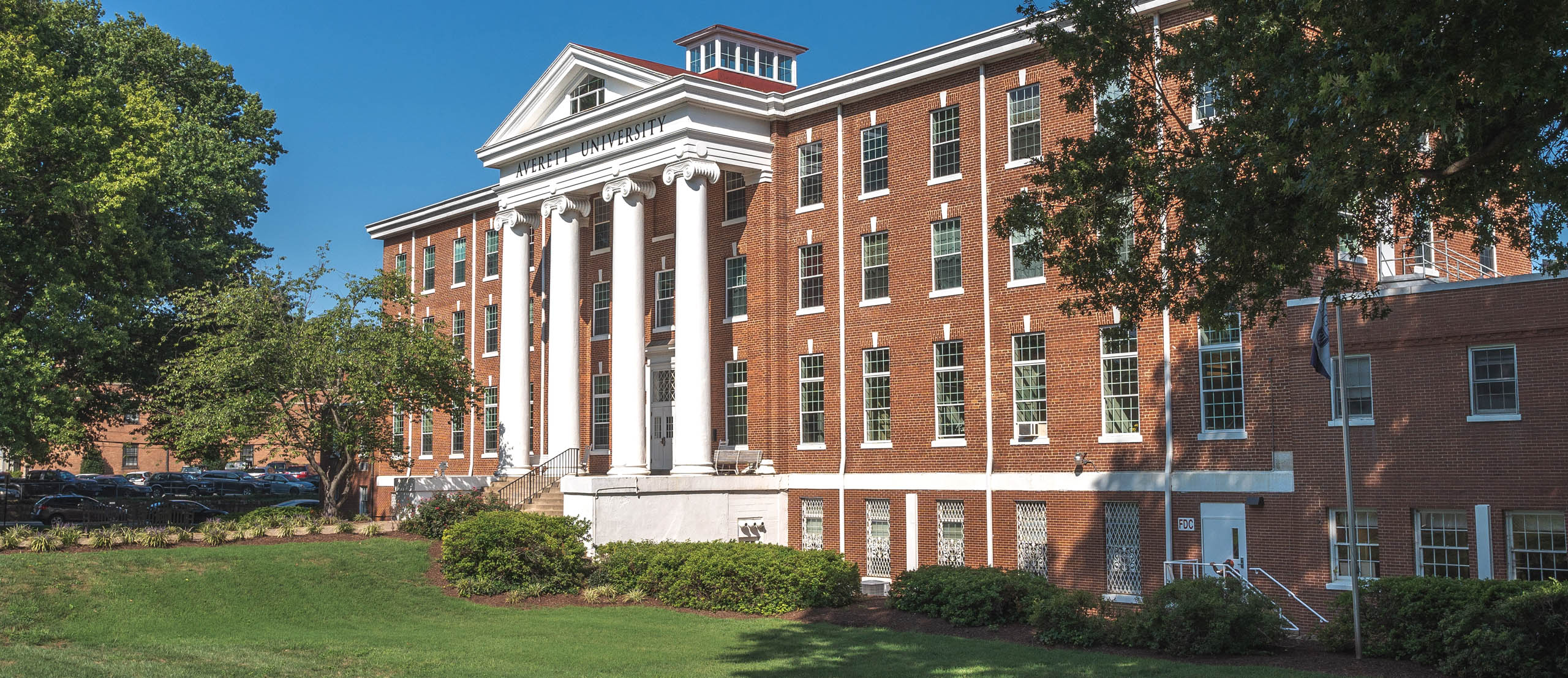
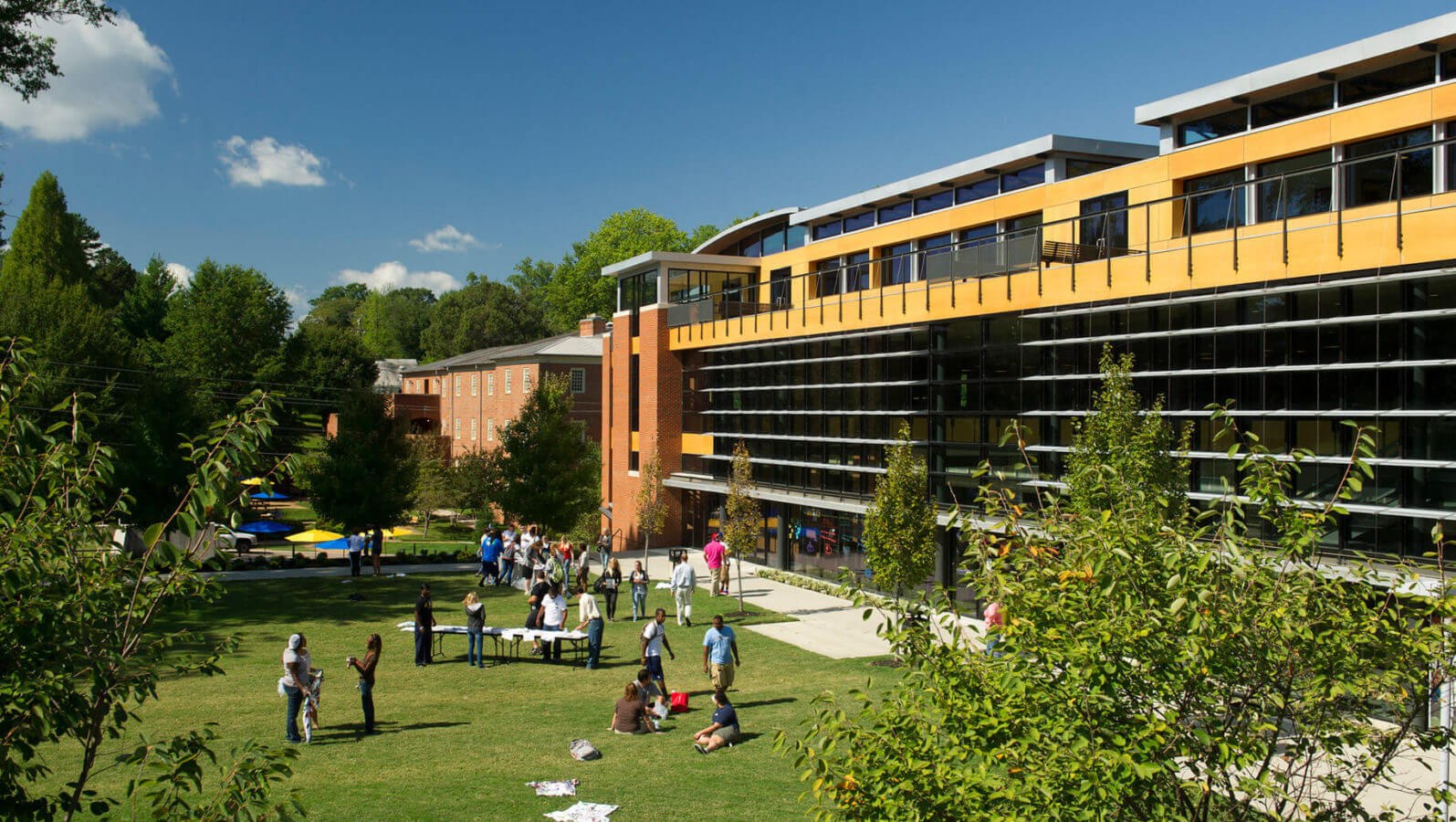
Life on Averett's residential campus in Danville is defined by its intimate scale and a student life division committed to creating an "inclusive environment enabling each student to develop and enhance personal" growth. With a total undergraduate enrollment of 1,180 (fall 2023), the community is small and close-knit. Campus events are central to the culture; students highlight the importance of traditions like Spring Fling, a week of activities that actively shapes campus life and fosters community. Students generally report feeling safe on campus, citing visible security and prompt responses from campus and town police. The university also hosts a diverse international community, contributing to a "vibrant tapestry of student life."
Graduation and post-graduate earnings data reveal a mixed picture of outcomes for Averett alumni. The six-year graduation rate for first-time, full-time students is 48%. Other sources note a 150% graduation rate of 46%. Early-career earnings are modest; one source reports median alumni earnings of $45,152, with an average income of approximately $64,865. More granular data shows earnings one year after graduation at $36,427, rising to $45,519 five years after graduation. Program-specific wage data is tracked, with the university reporting average monthly earnings for graduates six months after completion for select programs. The return on the university's endowment was reported as 1.33M (23.4%), significantly higher than a 9.2% average benchmark.
Averett is aggressive in providing financial assistance, awarding more than $20 million in financial aid and scholarships to 99% of its students. The average after grants and scholarships is $22,925. Other sources cite similar average net prices of $23,781 and $24,091. The university provides net price calculators for both traditional and online students to estimate costs and aid options. All students must complete the FAFSA to be considered for aid. recipients are determined based on federal methodology; students with no demonstrated need are still eligible for non-need-based scholarships, loans, and employment. The university offers federal student loans and details loan programs on its website, but the provided sources do not indicate that Averett has a "no-loan" policy or that it meets 100% of demonstrated financial need for all admitted students.
Averett University stands out for its deliberate, almost dual identity: a small, hands-on residential college in Southern Virginia and a major online educator. Its distinctiveness lies in the specific, career-focused programs you'd be hard-pressed to find at other liberal arts colleges of its size—think training future pilots in its aviation program or managers in its equine business track. This isn't a place for abstract theory alone; the curriculum is built around practical skills like clear writing, public speaking, and collaborative work. The 13:1 student-faculty ratio and the intensive community fostered by events like Spring Fling create a supportive, high-touch environment for traditional undergraduates. However, its profile is equally defined by serving non-traditional and online students, with a vast majority receiving significant financial aid. The outcome is a university that is deeply pragmatic, meeting students where they are—both geographically and in their life journeys—with a clear focus on professional preparation.
Averett University seal · sourceCampus-Map22_imageonly - Averett Admissions · sourceAverett University - Virginia Private Colleges · sourceInternational Students - Averett Admissions · source