Admit rate has ranged 45%–67% over the last 5 years — notably volatile, though the latest figure above (45%) falls outside that window. Source: IPEDS via Urban Institute.
Acceptance & SAT from Common Data Set / IPEDS; net price, earnings & graduation from the U.S. Dept. of Education College Scorecard. Figures lag ~1–2 years — verify with the school.
Bennington College is a fiercely independent liberal arts institution where students design their own academic paths—think of it as the anti-core-curriculum. With a student body of artists, writers, and iconoclasts, its Vermont campus buzzes with a creative energy that comes at a price, with an average net cost of $30,947. The model clearly resonates, producing a 71% graduation rate and alumni with a singular, self-directed edge.
Admission requirements
Test-optional — scores considered if submitted
Required
High school transcript
Grade point average
Letters of recommendation
College-prep program
TOEFL (non-native English)
Considered (not required)
Class rank
Test scores (SAT/ACT)
Demonstrated competencies
Source: IPEDS Admissions survey (2022) via Urban Institute. Covers formal factors only — it does not reflect essays, extracurriculars, or other holistic criteria.
More details
Undergrad enrollment
780
In-state tuition
$66,262
Out-of-state tuition
$66,262
Founded
1932
Location
Bennington, VT
Top Majors
Visual/Performing Arts (41%), English (16%)
Student-Faculty Ratio
9:1
6-Year Graduation Rate
70%
Avg First-Year Aid Package
$58,302
Outcomes & value
Outcomes & value
Median earnings (10 yr)
$38,289
Value (earnings ÷ net price)
1.2×
Median debt at graduation
$26,000
Graduation rate
71%
First-year retention
82%
Reducing loan balance (3 yr)
74%
Pell (lower-income) share
25%
First-gen share (among federal-aid recipients)
13%
Top-earning majors
Median earnings by field of study (highest credential), ~2 years after completion.
English Language and Literature, General$21,964
Visual and Performing Arts, General$17,950
Source: U.S. Dept. of Education College Scorecard (field-of-study earnings). Figures cover graduates who received federal aid and lag ~2 years; not all programs report data.
On-campus criminal offenses classed as violent (murder/non-negligent manslaughter, rape, robbery, aggravated assault) for the most recent reported year. Source: U.S. Dept. of Education Campus Safety and Security (Clery Act). Counts reflect what’s reported to the school, and urban campuses often report more partly due to non-student incidents nearby — read alongside campus size and setting, not as a standalone safety verdict.
Climate
Pleasant days / yr
86
Summer high
78°F
Winter low
20°F
Annual rain
53.3"
Annual snow
49.6"
Natural-hazard risk
Relatively Low
Pleasant days counts days per year with a mean temperature of 55–75°F, a high at or below 90°F, a low at or above 45°F, and little precipitation — a transparent comfort measure, not a weighting we invented. Computed from Open-Meteo ERA5 daily history (2019–2023). Natural-hazard risk is the county’s composite rating from the FEMA National Risk Index.
Deep dive — research, future-scholar output & economic mobility▾
Research output
Institutional h-index
71
Scholarly works
917
Institutional research volume and impact from OpenAlex. The h-index reflects large research universities and will be low for teaching-focused liberal-arts colleges — not a measure of undergraduate quality.
Economic mobility
Mobility rate
0.9%
Bottom → top quintile
10%
From bottom quintile
9%
Mobility rate = the share of students who both start in the bottom household-income quintile and reach the top quintile; bottom → top is that chance conditional on starting at the bottom. Source: Opportunity Insights Mobility Report Cards (Chetty, Friedman, Saez, Turner & Yagan). Reflects 1980–82 birth cohorts, so it’s directional, not current.
Quick answers
What is the acceptance rate at Bennington College?
Bennington College's acceptance rate is approximately 45% (Bennington, VT), based on the most recent figures we compiled from public and primary sources.
What SAT score do you need for Bennington College?
Admitted students at Bennington College typically score 1291–1403 on the SAT (the middle-50% range). Scores outside this band are still admitted, especially with strong applications.
How much does Bennington College cost?
At Bennington College, the average net price (after aid) is about $30,947 per year. Actual cost varies with financial aid and residency.
How many undergraduates attend Bennington College?
Bennington College enrolls approximately 780 undergraduate students.
Where is Bennington College located?
Bennington College is located in Bennington, VT.
Admissions
Bennington is selective but not cutthroat, with a 44.5% ([BigFuture](https://bigfuture.collegeboard.org/colleges/bennington-college/admissions), [PrepScholar](https://www.prepscholar.com/sat/s/colleges/Bennington-College-sat-scores-GPA)). Early decision is more competitive at 37% ([Bennington News](https://www.bennington.edu/news-and-features/bennington-college-breaks-early-admissions-application-record)). The middle 50% of admitted students score between 1308–1375 on the SAT or 34 on the ACT ([Class of 2029](https://www.bennington.edu/news-and-features/bennington-college-welcomes-class-of-2029)), though test scores are optional. Notably, 40% of enrollees ranked in the top 10% of their high school class. The college received 2,996 applications for the 2023 cycle, admitting 1,334 ([Peterson’s](https://www.petersons.com/college-search/bennington-college-000_10000242.aspx)).
Earnings = median of students working ~10 years after entry; debt = median of graduates. Value divides 10-yr earnings by one year’s net price — read it as earnings per dollar of annual cost, not a full lifetime ROI; it favors lower-cost schools. Source: U.S. Dept. of Education College Scorecard. Figures lag ~2 years and reflect all students, not your intended major.
Bennington’s academic model is radically student-driven: there are no required courses, just a ‘Plan Process’ where students design their own curriculum with faculty guidance ([Academics](https://www.bennington.edu/academics)). Over 40% of majors are in visual/performing arts ([US News](https://www.usnews.com/best-colleges/bennington-college-3682/academics)), reflecting the college’s reputation as a haven for creatives. The Princeton Review praises its ‘individualized curriculum’ ([Review](https://www.princetonreview.com/college/bennington-college-1024058)), while students cite the freedom to blend disciplines—say, dance with environmental science—as a defining feature. Faculty are actively practicing artists, writers, and scholars, with a 9:1 student-faculty ratio ([Fast Facts](https://www.bennington.edu/about/fast-facts)).
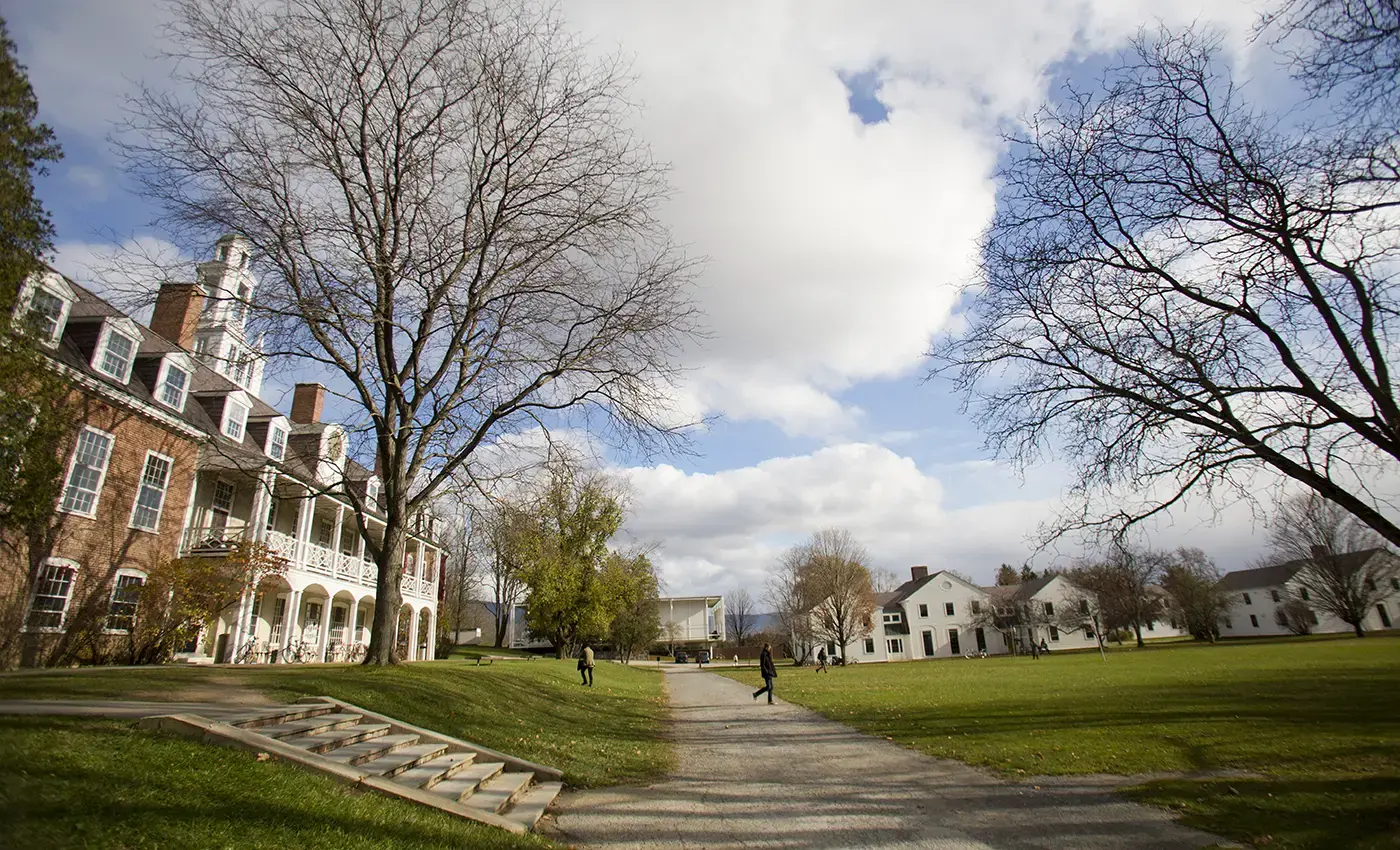
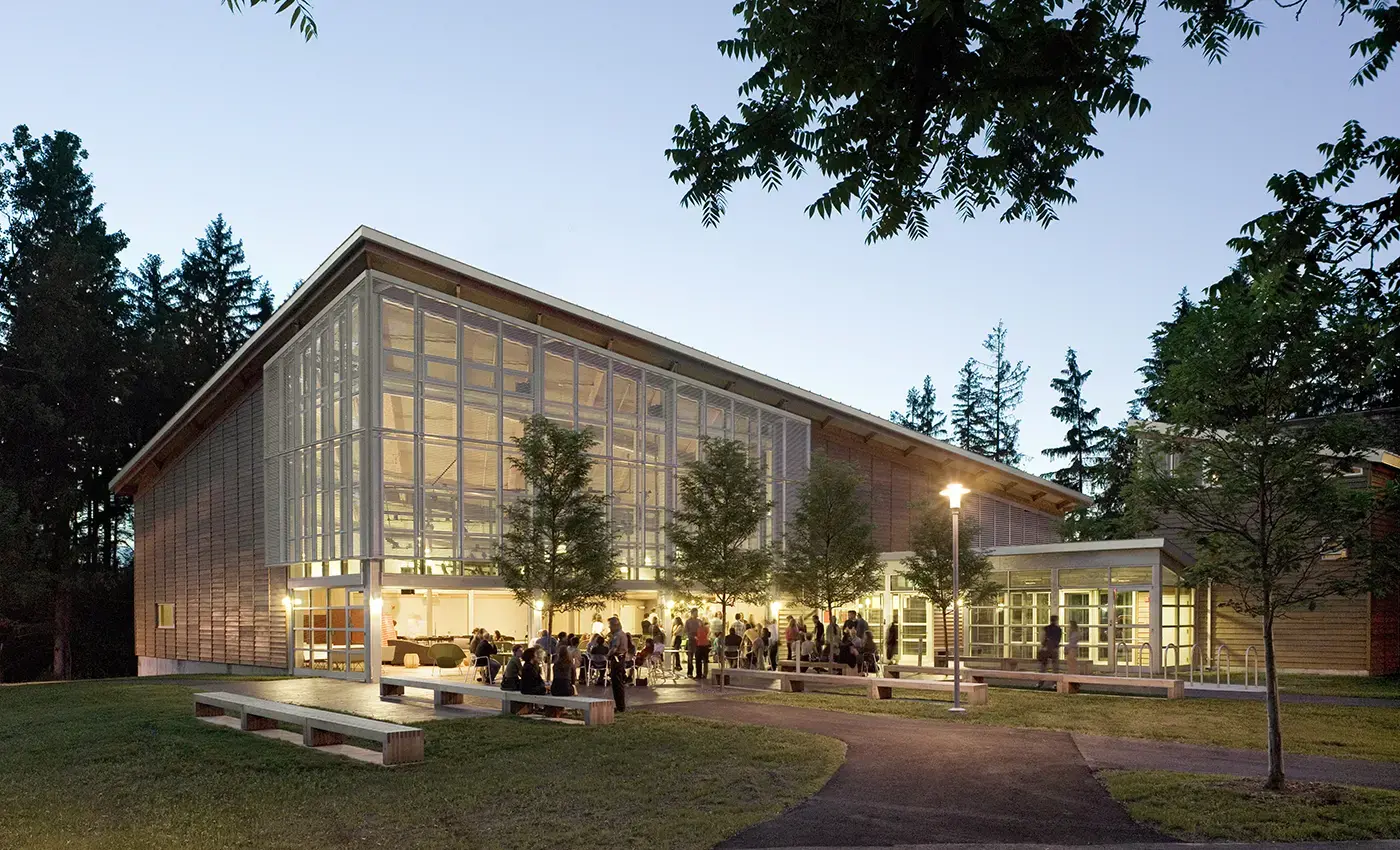
Life at Bennington orbits around quirky, tight-knit dorm cultures (98% live on campus; [US News](https://www.usnews.com/best-colleges/bennington-college-3682/student-life)), where ‘each house has its own personality’ ([Reddit](https://www.reddit.com/r/vermont/comments/ybinav/thoughts_on_bennington_college/)). The vibe is artsy and nonconformist—think midnight poetry slams in the dining hall or impromptu sculpture installations. There are no Greek organizations, but clubs range from ‘Bee Keeping Collective’ to ‘Anarchist Reading Group’ ([Student Life](https://www.bennington.edu/office-of-student-life)). Niche describes the student body as ‘eccentric and passionate’ ([Niche](https://www.niche.com/colleges/bennington-college/campus-life/)), with a penchant for thrift-store fashion and philosophical debates. The rural Vermont setting means hiking and skiing are popular escapes.
Bennington’s 6-year graduation rate is 70% ([Fast Facts](https://www.bennington.edu/about/fast-facts)), above the national average for liberal arts colleges. Alumni earnings are modest initially ($36,427 at 1 year post-grad) but rise to $61,000 within 2–5 years ([Outcomes](https://www.bennington.edu/outcomes), [Niche](https://www.niche.com/colleges/bennington-college/after-college/)). US News reports a 61% 4-year graduation rate, with 64% borrowing federal loans ([US News](https://www.usnews.com/best-colleges/bennington-college-3682)). The college emphasizes ‘non-linear’ career paths—many graduates pivot between arts, education, and activism. Notable alumni include Donna Tartt and Jonathan Lethem, underscoring its literary pedigree.
At $64,050 for tuition/fees (2024–25) ([CDS](https://www.bennington.edu/sites/default/files/sources/docs/cds_bennington_2024-2025_final.pdf)), Bennington is pricey but meets 100% of demonstrated need. The average first-year aid package is $58,302 ([US News](https://www.usnews.com/best-colleges/bennington-college-3682/paying)), with merit scholarships ranging from $20,000 to $45,000 ([Financial Aid](https://www.bennington.edu/admissions/apply/financing-your-education)). About 63% of freshmen receive need-based grants. The calculator suggests families earning <$75k pay ~$15k annually ([Calculator](https://webinfo.bennington.edu/NetPriceCalculator/npcalc.htm)).
Bennington is a cult favorite for self-directed creatives—its ‘no rules’ curriculum attracts students who’d chafe under distribution requirements. The Plan Process forces undergrads to articulate their intellectual goals, yielding unusually focused (if unconventional) graduates. Its tiny size (800 students) ensures close mentorship, while the ‘Field Work Term’—a required annual internship—provides real-world stakes. The trade-off? Those craving structure may flounder. But for artists, writers, and interdisciplinary mavericks, it’s a rare place where ‘doing your own thing’ isn’t just allowed—it’s the whole point.
Bennington College logo · sourceThe Campus | Bennington College · sourceThe Campus | Bennington College · sourceThe Campus | Bennington College · source