Admit rate has ranged 62%–77% over the last 5 years — notably volatile. Source: IPEDS via Urban Institute.
Acceptance & SAT from Common Data Set / IPEDS; net price, earnings & graduation from the U.S. Dept. of Education College Scorecard. Figures lag ~1–2 years — verify with the school.
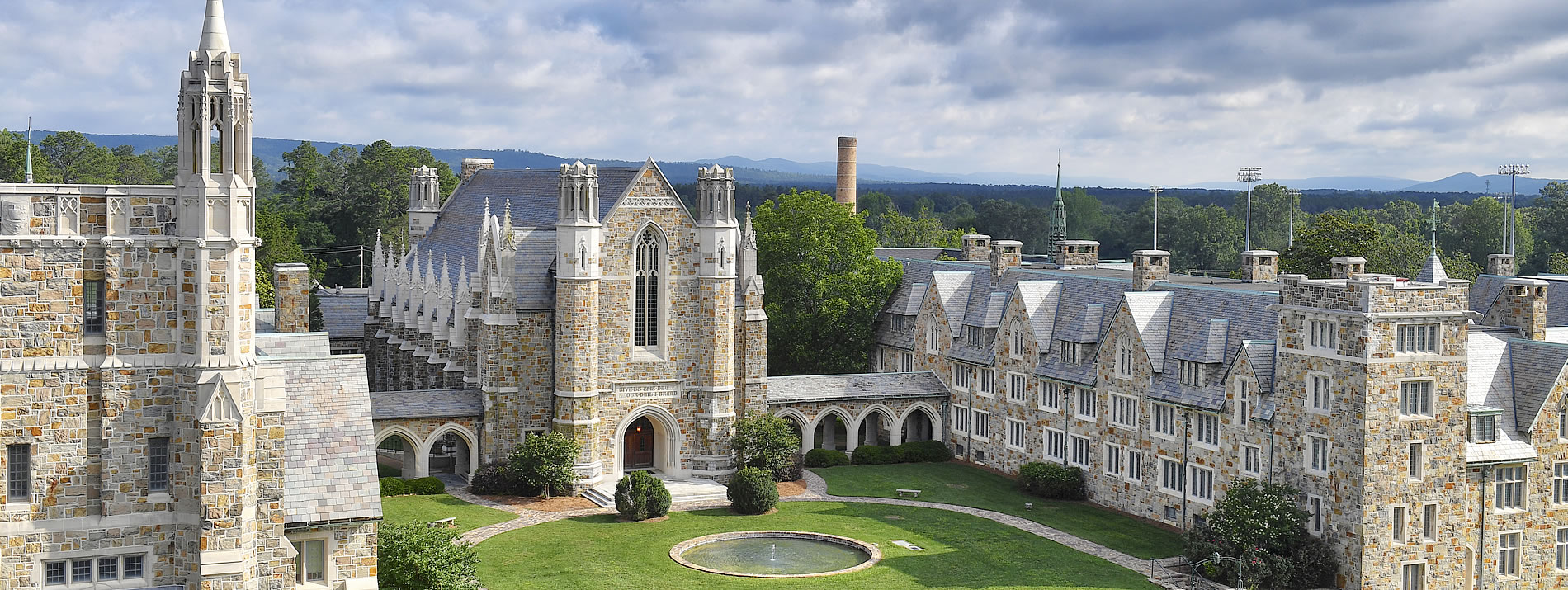
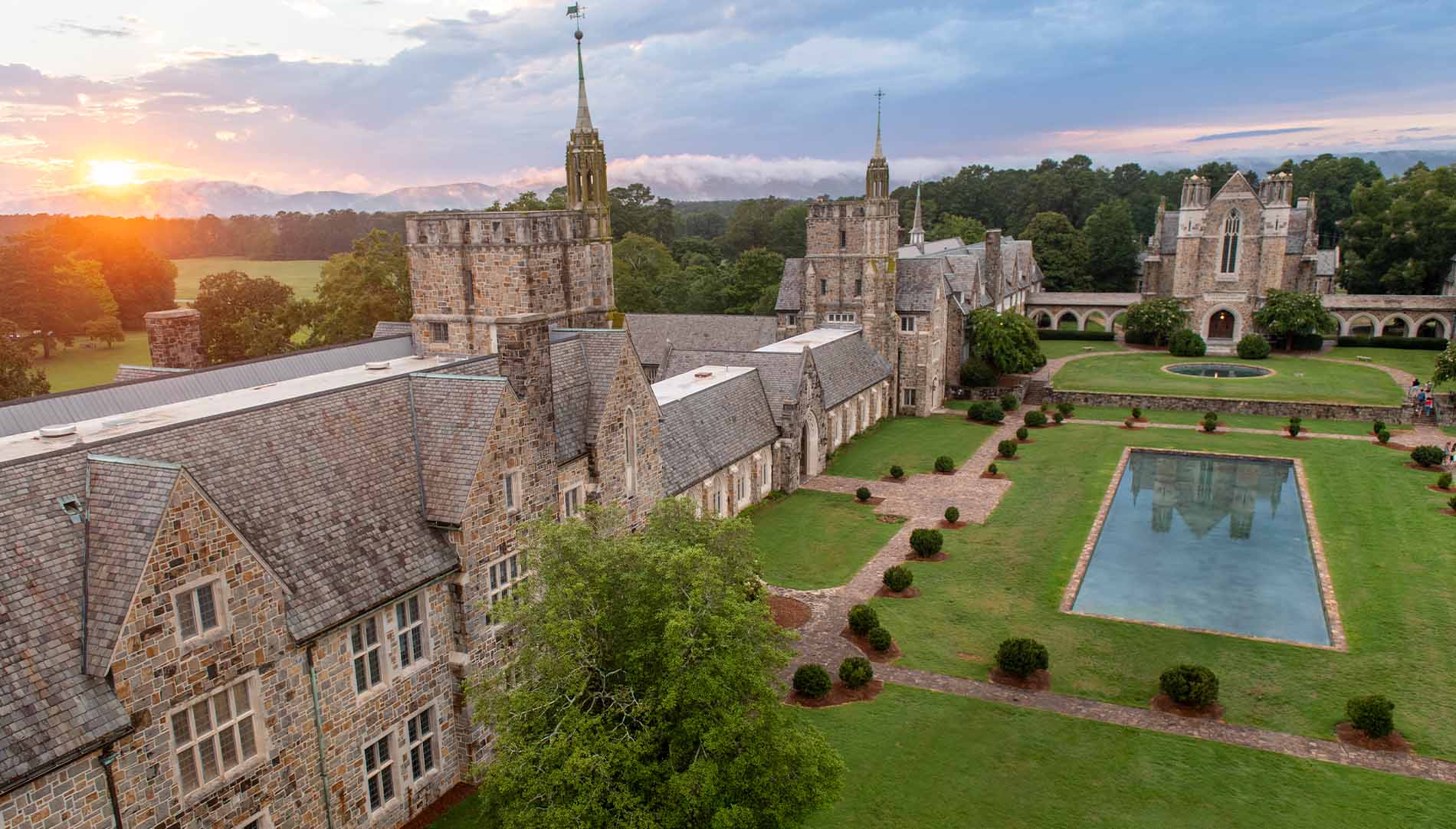
Berry College isn't just a school; it's a sprawling, 27,000-acre world unto itself in the foothills of northwest Georgia. This private liberal arts institution combines a rigorous, faculty-focused academic culture with a uniquely immersive residential experience—nearly 90% of students live on its breathtakingly beautiful campus. Known for its 'work experience' program and a practical, outcomes-oriented approach, Berry produces graduates who are not only well-educated but distinctly employable, with a remarkable 99% landing a job or graduate school placement within a year of earning their degree.
Admission requirements
Test-optional — scores considered if submitted
Required
High school transcript
Grade point average
College-prep program
TOEFL (non-native English)
Considered (not required)
Letters of recommendation
Test scores (SAT/ACT)
Source: IPEDS Admissions survey (2022) via Urban Institute. Covers formal factors only — it does not reflect essays, extracurriculars, or other holistic criteria.
More details
Undergrad enrollment
2,245
In-state tuition
$41,686
Out-of-state tuition
$41,686
Graduation Rate
69%
On-Campus Living
~90%
Student-Faculty Ratio
12:1
Median Earnings (10yr)
$53,800
Job/Grad School Placement (1yr)
99%
Outcomes & value
Outcomes & value
Median earnings (10 yr)
$53,800
Value (earnings ÷ net price)
2.4×
Median debt at graduation
$23,250
Graduation rate
69%
First-year retention
84%
Reducing loan balance (3 yr)
73%
Pell (lower-income) share
27%
First-gen share (among federal-aid recipients)
17%
Financial health
3.0 / 3.0Meets the federal financial-responsibility standard
U.S. Dept. of Education Financial Responsibility Composite Score (FY2022-23). Scale −1.0 to 3.0; ≥1.5 meets the standard. Reported for private nonprofit & for-profit institutions only — public universities are state-backed and not scored, so this is a stability signal, not a ranking.
Top-earning majors
Median earnings by field of study (highest credential), ~2 years after completion.
Registered Nursing, Nursing Administration, Nursing Research and Clinical Nursing$51,482
Accounting and Related Services$50,439
Mathematics$46,673
Finance and Financial Management Services$43,798
Teacher Education and Professional Development, Specific Levels and Methods$40,747
Marketing
Campus & location
Campus safety
On-campus violent crimes (2024)
1
Per 1,000 students
0.40
On-campus criminal offenses classed as violent (murder/non-negligent manslaughter, rape, robbery, aggravated assault) for the most recent reported year. Source: U.S. Dept. of Education Campus Safety and Security (Clery Act). Counts reflect what’s reported to the school, and urban campuses often report more partly due to non-student incidents nearby — read alongside campus size and setting, not as a standalone safety verdict.
Climate
Pleasant days / yr
95
Summer high
88°F
Winter low
38°F
Annual rain
61.5"
Annual snow
1.2"
Natural-hazard risk
Relatively Moderate
Pleasant days counts days per year with a mean temperature of 55–75°F, a high at or below 90°F, a low at or above 45°F, and little precipitation — a transparent comfort measure, not a weighting we invented. Computed from Open-Meteo ERA5 daily history (2019–2023). Natural-hazard risk is the county’s composite rating from the FEMA National Risk Index.
Deep dive — research, future-scholar output & economic mobility▾
Research output
Institutional h-index
103
Scholarly works
2,361
Institutional research volume and impact from OpenAlex. The h-index reflects large research universities and will be low for teaching-focused liberal-arts colleges — not a measure of undergraduate quality.
Economic mobility
Mobility rate
1.2%
Bottom → top quintile
31%
From bottom quintile
4%
Mobility rate = the share of students who both start in the bottom household-income quintile and reach the top quintile; bottom → top is that chance conditional on starting at the bottom. Source: Opportunity Insights Mobility Report Cards (Chetty, Friedman, Saez, Turner & Yagan). Reflects 1980–82 birth cohorts, so it’s directional, not current.
Quick answers
What is the acceptance rate at Berry College?
Berry College's acceptance rate is approximately 64% (Mount Berry, GA), based on the most recent figures we compiled from public and primary sources.
What SAT score do you need for Berry College?
Admitted students at Berry College typically score 1125–1330 on the SAT (the middle-50% range). Scores outside this band are still admitted, especially with strong applications.
How much does Berry College cost?
At Berry College, the average net price (after aid) is about $22,320 per year. Actual cost varies with financial aid and residency.
How many undergraduates attend Berry College?
Berry College enrolls approximately 2,245 undergraduate students.
Where is Berry College located?
Berry College is located in Mount Berry, GA.
Admissions
Berry College operates with a selective but accessible admissions process, admitting about two-thirds of its applicants. The profile of an admitted student is strong: 60% graduated in the top quarter of their high school class, and the average recalculated high school GPA is 3.78. While standardized tests are not required—a policy that began in fall 2020—scores are considered if submitted, with the middle 50% SAT range for admitted students who submitted them falling between 1125 and 1330. The early is notably higher than the regular decision pool, at 77.8%. However, Berry's —the percentage of admitted students who choose to enroll—is relatively low, around 14-15%, indicating that many admitted students ultimately select other institutions. The admissions committee considers a range of factors, though the specific weight given to demonstrated interest is detailed in the 's factor importance grid (C7).
Test-Optional Policy: SAT/ACT scores are not required but will be considered if submitted.
Academic Profile: Admitted students typically have a 3.78 average high school GPA, with 60% ranking in the top 25% of their class.
Early Decision Advantage: Applying Early Decision can significantly boost chances, with an acceptance rate of 77.8%.
Earnings = median of students working ~10 years after entry; debt = median of graduates. Value divides 10-yr earnings by one year’s net price — read it as earnings per dollar of annual cost, not a full lifetime ROI; it favors lower-cost schools. Source: U.S. Dept. of Education College Scorecard. Figures lag ~2 years and reflect all students, not your intended major.
$38,289
Communication, Journalism, and Related Programs, Other$35,810
Business Administration, Management and Operations$35,416
Source: U.S. Dept. of Education College Scorecard (field-of-study earnings). Figures cover graduates who received federal aid and lag ~2 years; not all programs report data.
Berry's academic offering is built on a classic liberal arts foundation but with a distinctly practical bent. Students can choose from more than 45 majors and 40 minors, with particularly strong draws in Biological and Biomedical Sciences (17% of degrees), Business (16%), Education (8%), and Psychology (8%). The college prides itself on a rigorous curriculum delivered by dedicated faculty, a commitment recognized by U.S. News & World Report, which ranked Berry No. 2 for "best undergraduate teaching" among Southern universities. This is facilitated by an intimate 12:1 student-to-faculty ratio, ensuring personalized attention. The academic experience is frequently described by students as supported by "great faculty" and supplemented by "plenty of developmental opportunities outside of the classroom." This blend of classroom theory and real-world application is a hallmark of the Berry education.
Life at Berry is defined by immersion. With almost 90% of students living on campus, it fosters a tight-knit, all-encompassing community. The setting is unparalleled: a 27,000-acre campus of "stunning beauty" that offers vast space to relax, connect with nature, and engage in everything from team sports to personal fitness challenges. This sheer size and rural location in Mount Berry, however, lead some to wonder about off-campus activities, with questions like "is there anything to do there?" being common. The answer lies within the campus bubble, which is vibrant and self-sufficient. Students can choose from more than 80 active organizations, including religious groups, intramural teams, theater and music ensembles, and a student newspaper. Reviews highlight that "events on campus are really fun" and "dorms are good as well," painting a picture of a fulfilling, if somewhat insular, collegiate experience where the campus itself is the primary venue for work, study, connection, and play.
Berry College's raison d'être is student success, and its outcomes data tells a compelling story. The institution tracks graduation rates as a primary indicator, with a four-year rate of 63% and a six-year rate climbing to 74%. The payoff for that degree is tangible: 74% of students have job offers on graduation day, and a staggering 99% report that their Berry education led to a job or acceptance to graduate or professional school within one year of graduation. While salary figures vary by source, the focus on employability and further education is the consistent and impressive throughline. The college's integrated work experience program and career-focused support seem to effectively bridge the gap between academic study and professional launch, making a Berry degree a pragmatic investment for career-minded students.
As a private institution, Berry carries a significant sticker price, with a total annual around $60,889 (comprising $42,885 in tuition and fees and $14,780 for room and board). However, the college is aggressive in using aid to bring down the for families. A high percentage of students (65%) receive financial aid, with the average aid package totaling $37,755. This results in an average net price after aid that is substantially lower than the published cost. Berry offers both merit-based and need-based grants to bridge the gap. Merit scholarships range from $12,500 to $25,000, while need-based grants can range from $1,000 to $15,000. The college provides a Net Price Calculator to help families estimate their individual cost, emphasizing that while the initial price may be high, the actual investment is often much lower. The college's financial aid policies, including whether it meets full need or has a no-loan policy for lower-income families, are detailed in its official aid documentation and the .
Berry College carves out a singular niche in American higher education. It's not just the massive, picturesque campus—though that's a undeniable part of its identity. It's the synthesis of that immersive, almost pastoral environment with a fiercely practical educational mission. This isn't an ivory tower; it's a training ground. The college has mastered the art of blending a respected liberal arts curriculum with real-world readiness, a formula that earns top marks for undergraduate teaching and value. The student experience is all-in: you live here, you work here (often through Berry's renowned student work program), you study under accessible professors, and you graduate not just with a diploma but with a clear next step. For a student seeking a traditional, residential college experience that feels like a cohesive world away from distractions, coupled with an education explicitly designed to open doors on day one, Berry is a compelling and unique proposition.