Admit rate has ranged 57%–70% over the last 5 years — notably volatile, though the latest figure above (74%) falls outside that window. Source: IPEDS via Urban Institute.
Acceptance & SAT from Common Data Set / IPEDS; net price, earnings & graduation from the U.S. Dept. of Education College Scorecard. Figures lag ~1–2 years — verify with the school.
Biola University is a private Christian university in Southern California that operates with a dual mission: rigorous academics anchored in evangelical faith. It’s a place where students can major in everything from cinema to nursing while adhering to a community covenant that prohibits alcohol and drugs on campus, creating a distinctively wholesome, close-knit suburban environment. The school’s identity is defined by this integration, where spiritual formation is as much a part of the curriculum as writing seminars and senior capstones.
Admission requirements
Test-optional — scores considered if submitted
Required
High school transcript
Grade point average
TOEFL (non-native English)
Considered (not required)
Test scores (SAT/ACT)
Source: IPEDS Admissions survey (2022) via Urban Institute. Covers formal factors only — it does not reflect essays, extracurriculars, or other holistic criteria.
More details
Undergrad enrollment
3,474
In-state tuition
$48,984
Out-of-state tuition
$48,984
Common App?
No
Graduation Rate
68%
First-Year Retention
85%
Median Earnings (10yr)
$56,778
Church Matching Scholarship
Up to $1,300
Outcomes & value
Outcomes & value
Median earnings (10 yr)
$56,778
Value (earnings ÷ net price)
1.8×
Median debt at graduation
$23,875
Graduation rate
68%
First-year retention
84%
Reducing loan balance (3 yr)
74%
Pell (lower-income) share
26%
First-gen share (among federal-aid recipients)
24%
Financial health
2.2 / 3.0Meets the federal financial-responsibility standard
U.S. Dept. of Education Financial Responsibility Composite Score (FY2022-23). Scale −1.0 to 3.0; ≥1.5 meets the standard. Reported for private nonprofit & for-profit institutions only — public universities are state-backed and not scored, so this is a stability signal, not a ranking.
Top-earning majors
Median earnings by field of study (highest credential), ~2 years after completion.
Registered Nursing, Nursing Administration, Nursing Research and Clinical Nursing$74,576
Computer Science$47,260
Business/Commerce, General$44,711
Political Science and Government$40,188
Music$39,369
Communication and Media Studies$35,772
Campus & location
Campus safety
On-campus violent crimes (2024)
3
Per 1,000 students
0.55
On-campus criminal offenses classed as violent (murder/non-negligent manslaughter, rape, robbery, aggravated assault) for the most recent reported year. Source: U.S. Dept. of Education Campus Safety and Security (Clery Act). Counts reflect what’s reported to the school, and urban campuses often report more partly due to non-student incidents nearby — read alongside campus size and setting, not as a standalone safety verdict.
Climate
Pleasant days / yr
230
Summer high
86°F
Winter low
47°F
Annual rain
19.9"
Natural-hazard risk
Very High
Pleasant days counts days per year with a mean temperature of 55–75°F, a high at or below 90°F, a low at or above 45°F, and little precipitation — a transparent comfort measure, not a weighting we invented. Computed from Open-Meteo ERA5 daily history (2019–2023). Natural-hazard risk is the county’s composite rating from the FEMA National Risk Index.
Deep dive — research, future-scholar output & economic mobility▾
Research output
Institutional h-index
89
Scholarly works
1,871
Institutional research volume and impact from OpenAlex. The h-index reflects large research universities and will be low for teaching-focused liberal-arts colleges — not a measure of undergraduate quality.
Economic mobility
Mobility rate
1.8%
Bottom → top quintile
26%
From bottom quintile
7%
Mobility rate = the share of students who both start in the bottom household-income quintile and reach the top quintile; bottom → top is that chance conditional on starting at the bottom. Source: Opportunity Insights Mobility Report Cards (Chetty, Friedman, Saez, Turner & Yagan). Reflects 1980–82 birth cohorts, so it’s directional, not current.
Quick answers
What is the acceptance rate at Biola University?
Biola University's acceptance rate is approximately 74% (La Mirada, CA), based on the most recent figures we compiled from public and primary sources.
What SAT score do you need for Biola University?
Admitted students at Biola University typically score 1160–1370 on the SAT (the middle-50% range). Scores outside this band are still admitted, especially with strong applications.
How much does Biola University cost?
At Biola University, the average net price (after aid) is about $31,495 per year. Actual cost varies with financial aid and residency.
How many undergraduates attend Biola University?
Biola University enrolls approximately 3,474 undergraduate students.
Where is Biola University located?
Biola University is located in La Mirada, CA.
Admissions
Biola’s admissions process is moderately selective and notably for freshman applicants, who are not required to submit SAT or ACT scores. The university does not accept the Common Application. While sources show varying , the canonical figure is 74%. The middle 50% SAT range for admitted students is 1160–1370, and the average unweighted GPA is reported as 3.54. An early acceptance rate of 85.8% suggests a significant advantage for those who apply early. The university’s , a primary source for admissions factors, is publicly available for download, indicating transparency in their process.
Test Policy: Test-optional for freshmen.
Application Platform: Does not accept the Common Application.
Early Decision Advantage: Early acceptance rate is 85.8%.
Academic Profile: Average unweighted GPA of admitted students is 3.54.
Earnings = median of students working ~10 years after entry; debt = median of graduates. Value divides 10-yr earnings by one year’s net price — read it as earnings per dollar of annual cost, not a full lifetime ROI; it favors lower-cost schools. Source: U.S. Dept. of Education College Scorecard. Figures lag ~2 years and reflect all students, not your intended major.
Public Relations, Advertising, and Applied Communication$33,993
English Language and Literature, General$31,670
Source: U.S. Dept. of Education College Scorecard (field-of-study earnings). Figures cover graduates who received federal aid and lag ~2 years; not all programs report data.
Biola offers a comprehensive, Christ-centered education across 43 majors and 42 minors, structured to provide a well-rounded intellectual foundation. The curriculum emphasizes writing across disciplines (94% of programs), first-year experiences (76%), and a senior capstone or culminating academic experience. The university prides itself on academic strength, noting a recent tie with institutions like Harvard, Cornell, and MIT on a U.S. News “Best Undergraduate Teaching” list. The Princeton Review observes that the “biblically-centered academics ‘hold [students] to a high’ standard,” indicating a rigorous integration of faith and learning. Programs span arts, business, education, health professions, and humanities, allowing students to pursue fields like cinema, nursing, and psychology within a faith-based framework.
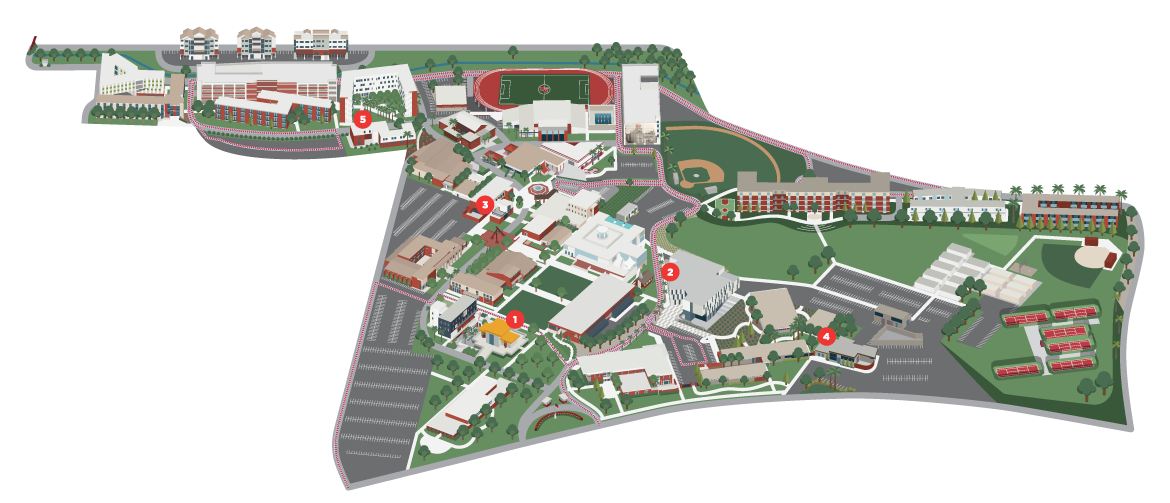
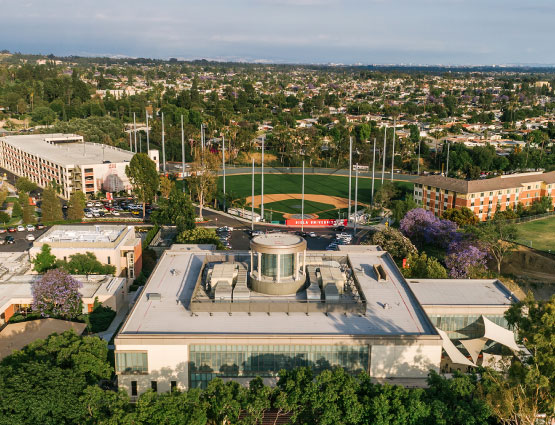
Life at Biola is defined by a strong, community-oriented culture on its suburban Southern California campus. The environment is consistently described as warm, welcoming, supportive, peaceful, and safe. This vibe is fostered by a vibrant, diverse community offering belonging through sports, student clubs, music, and more. A defining characteristic, rooted in its faith-based community covenant, is the absence of on-campus partying or substance use—a feature some students actively seek and appreciate, though others note weekend social life can be quiet as a result. With over 3,500 undergraduate students, campus housing costs average about $12,370 per year. The experience is intentionally designed to blend spiritual growth with extracurricular engagement.
Biola measures success not just in graduation rates but in holistic preparedness. The six-year graduation rate is reported at 69% (with a four-year rate of 55%), and the first-year retention rate is 85%. Post-graduation surveys indicate high levels of student satisfaction: 96% of bachelor’s students felt satisfied with being equipped intellectually, and 97% felt prepared for a “Spirit-Led Life.” Early career earnings data shows graduates earning $36,740 one year after graduation and $56,263 five years after. The university is recognized in the national universities tier by U.S. News & World Report, which it cites as evidence of its “enduring dedication” to quality. These outcomes reflect the institution’s mission to develop students both professionally and personally.
Attending Biola represents a significant financial commitment, with an average after aid of $31,495. The university awards over $70 million in scholarships and student aid annually. A vast majority (99%) of full-time beginning undergraduates receive grant or scholarship aid, with the average aid package reported at $30,654. Academic merit scholarships range from $14,000 to $24,500 and do not need to be repaid. Biola also has a unique Church Matching Scholarship program, matching up to two church checks per year for a total of up to $1,300 for a full-time student demonstrating need. The university provides a net price calculator tool for families to estimate their individual cost.
Biola carves out a singular niche in higher education by unapologetically fusing rigorous academics with an all-encompassing evangelical Christian environment. It’s not just a college with chapel; it’s a community where the “biblically-centered academics” are designed to hold students to a high standard across all 43 majors. This integration is palpable in campus life, governed by a covenant that creates a substance-free, intentionally supportive atmosphere—a major draw for some, a potential limitation for others. The university’s recent recognition alongside Ivy League and tech giants for undergraduate teaching underscores that this faith commitment does not come at the expense of academic quality. For students seeking a comprehensive education where spiritual development is woven into the fabric of every lecture, dorm life, and campus event, Biola offers a distinctive and coherent package that few other institutions can match.
Biola University seal · sourcePlan Your Visit - Biola University · sourceExplore Southern California - Biola University · sourcePlan Your Visit - Biola University · source
_(cropped).jpg?width=1600)