Admit rate has ranged 71%–77% over the last 5 years. Source: IPEDS via Urban Institute.
Acceptance & SAT from Common Data Set / IPEDS; net price, earnings & graduation from the U.S. Dept. of Education College Scorecard. Figures lag ~1–2 years — verify with the school.
Calvin University is a distinctively Christian, academically rigorous liberal arts university in Grand Rapids, Michigan, where faith and intellectual curiosity are not just compatible but intertwined. With over 100 programs and a faculty where 90% hold the highest degree in their field, it offers a serious, community-focused education grounded in Reformed Christian tradition. The campus culture is intentionally dry, fostering deep friendships and discussions, and the outcomes—a strong graduation rate and solid early-career earnings—reflect an institution that prepares students for purposeful work and life.
Admission requirements
Test-optional — scores considered if submitted
Required
High school transcript
Grade point average
College-prep program
TOEFL (non-native English)
Considered (not required)
Class rank
Letters of recommendation
Test scores (SAT/ACT)
Source: IPEDS Admissions survey (2022) via Urban Institute. Covers formal factors only — it does not reflect essays, extracurriculars, or other holistic criteria.
More details
Undergrad enrollment
3,193
In-state tuition
$39,350
Out-of-state tuition
$39,350
Top Majors
Nursing, Engineering, Religious Vocations
Graduation Rate
74%
Merit Aid Guarantee
Yes, for GPA 3.0+
Campus Alcohol Policy
Not permitted
Median Earnings (10yr)
$58,375
Outcomes & value
Outcomes & value
Median earnings (10 yr)
$58,375
Value (earnings ÷ net price)
2.5×
Median debt at graduation
$23,250
Graduation rate
74%
First-year retention
87%
Reducing loan balance (3 yr)
83%
Pell (lower-income) share
17%
First-gen share (among federal-aid recipients)
13%
Financial health
2.4 / 3.0Meets the federal financial-responsibility standard
U.S. Dept. of Education Financial Responsibility Composite Score (FY2022-23). Scale −1.0 to 3.0; ≥1.5 meets the standard. Reported for private nonprofit & for-profit institutions only — public universities are state-backed and not scored, so this is a stability signal, not a ranking.
Top-earning majors
Median earnings by field of study (highest credential), ~2 years after completion.
Engineering, General$65,188
Computer Science$61,020
Registered Nursing, Nursing Administration, Nursing Research and Clinical Nursing$57,770
Accounting and Related Services$57,564
Business Administration, Management and Operations$45,980
Special Education and Teaching
Campus & location
Campus safety
On-campus violent crimes (2024)
3
Per 1,000 students
0.85
On-campus criminal offenses classed as violent (murder/non-negligent manslaughter, rape, robbery, aggravated assault) for the most recent reported year. Source: U.S. Dept. of Education Campus Safety and Security (Clery Act). Counts reflect what’s reported to the school, and urban campuses often report more partly due to non-student incidents nearby — read alongside campus size and setting, not as a standalone safety verdict.
Climate
Pleasant days / yr
91
Summer high
81°F
Winter low
22°F
Annual rain
41.1"
Annual snow
38.8"
Natural-hazard risk
Relatively Moderate
Pleasant days counts days per year with a mean temperature of 55–75°F, a high at or below 90°F, a low at or above 45°F, and little precipitation — a transparent comfort measure, not a weighting we invented. Computed from Open-Meteo ERA5 daily history (2019–2023). Natural-hazard risk is the county’s composite rating from the FEMA National Risk Index.
Deep dive — research, future-scholar output & economic mobility▾
Research output
Institutional h-index
136
Scholarly works
3,497
Institutional research volume and impact from OpenAlex. The h-index reflects large research universities and will be low for teaching-focused liberal-arts colleges — not a measure of undergraduate quality.
Quick answers
What is the acceptance rate at Calvin University?
Calvin University's acceptance rate is approximately 71% (Grand Rapids, MI), based on the most recent figures we compiled from public and primary sources.
What SAT score do you need for Calvin University?
Admitted students at Calvin University typically score 1083–1330 on the SAT (the middle-50% range). Scores outside this band are still admitted, especially with strong applications.
How much does Calvin University cost?
At Calvin University, the average net price (after aid) is about $22,992 per year. Actual cost varies with financial aid and residency.
How many undergraduates attend Calvin University?
Calvin University enrolls approximately 3,193 undergraduate students.
Where is Calvin University located?
Calvin University is located in Grand Rapids, MI.
Admissions
Calvin University operates with a moderately selective admissions process, welcoming a majority of its applicants. The university is , meaning students are not required to submit SAT, ACT, or CLT scores as part of their application. While the admissions office considers a range of factors, the most recent incoming classes have been academically strong, with one recent class bringing the highest average GPA on record at 3.75. The rate—the percentage of admitted students who choose to enroll—is reported to be around 21%. This suggests that while many students are admitted, Calvin competes for their final commitment against other institutions.
Calvin's academic identity is built on a broad liberal arts foundation infused with a Christian worldview, offering over 100 bachelor's and master's programs. The faculty is highly credentialed, with 90% holding the highest degree in their field, ensuring instruction is led by experts. Popular majors reflect both professional and liberal arts tracks, with Nursing, Engineering, Religious Vocations, Psychology, and Biology among the most graduated programs. The academic environment is described as challenging and supportive, designed to equip students not just for a career but for a life of service. This rigorous approach is evidenced by the consistently high academic preparedness of incoming students.
Earnings = median of students working ~10 years after entry; debt = median of graduates. Value divides 10-yr earnings by one year’s net price — read it as earnings per dollar of annual cost, not a full lifetime ROI; it favors lower-cost schools. Source: U.S. Dept. of Education College Scorecard. Figures lag ~2 years and reflect all students, not your intended major.
$39,009
Mathematics$38,337
Teacher Education and Professional Development, Specific Levels and Methods$35,060
Source: U.S. Dept. of Education College Scorecard (field-of-study earnings). Figures cover graduates who received federal aid and lag ~2 years; not all programs report data.
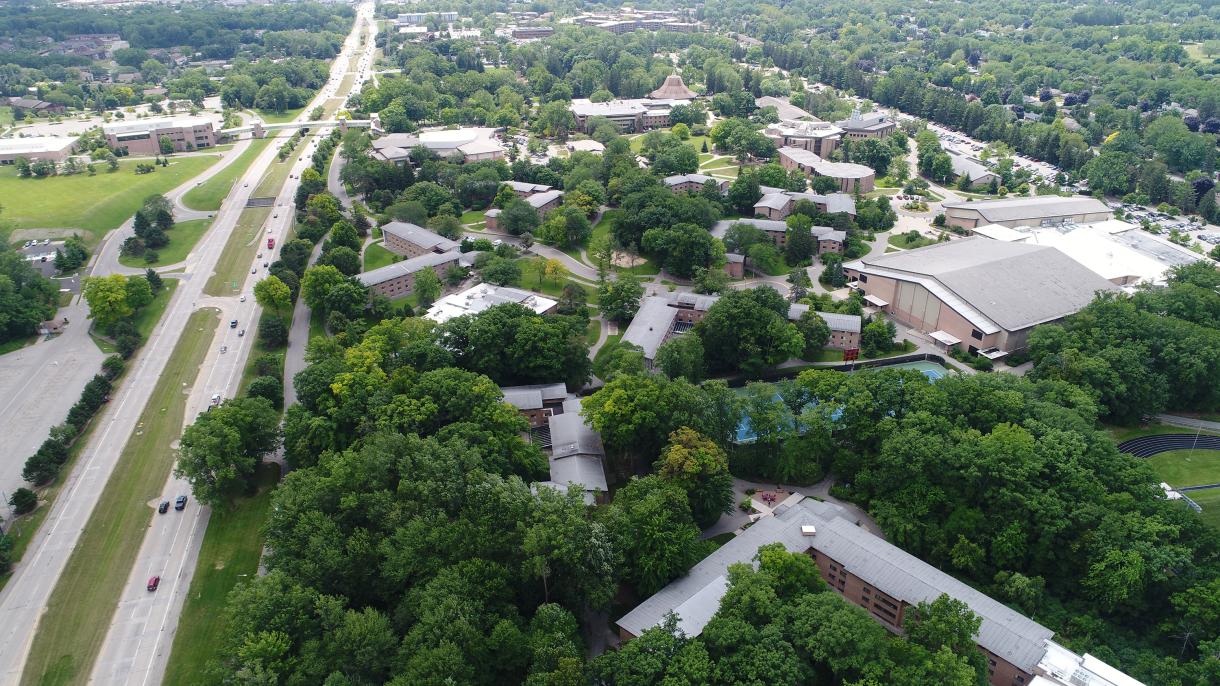
Life at Calvin is defined by its close-knit, intentionally Christian community on a compact, walkable campus in Grand Rapids. The Student Life division's mission is to "cultivate co-curricular learning experiences that disciple, develop and equip students to thrive as Christ's agents of renewal in the world." This translates to a vibrant but regulated campus culture. Notably, alcohol is not permitted on campus, a policy that shapes social life and fosters an environment where, as one student review notes, "the Christian environment allows for some great discussions and deep friendships." The campus is considered safe and beautiful, facilitating a community-focused experience where students are supported in their personal and spiritual growth.
Calvin University demonstrates strong student success metrics, with a focus on both completion and post-graduate placement. The graduation rate is a point of institutional pride and improvement, having risen from 74% to 77% according to one internal report, placing it in the top 15% nationally. The vast majority of graduates—99.5% according to a 2019 plan report—are employed or in graduate school shortly after graduation. Early-career earnings for graduates are reported around $43,110 one year out and $58,375 ten years after entry, indicating solid long-term financial returns on the Calvin degree. The university also reports that its Pell Grant recipients graduate at a rate 12 percentage points higher than the national average for similar students, suggesting effective support for lower-income students.
Calvin employs a proactive merit-based scholarship model to make its education more accessible. The university guarantees an academic scholarship to any admitted student with a high school GPA of 3.0 or higher, with these awards ranging up to $22,000 based on merit. This approach significantly reduces the for most families. The average financial aid package is reported to be $36,289, with over half of students receiving some form of aid. After factoring in scholarships and grants, the net price—the average cost a student actually pays—comes in well below the sticker price. Students are guided to use the university's Net Price Calculator for a personalized estimate. The financial aid policy includes standard federal student loans, and the university has policies regarding aid eligibility for repeated courses.
Calvin University carves out a singular niche as an institution where serious academic inquiry and deep Christian conviction are not at odds but are the central, integrated engine of the educational experience. It's not a school for the casually religious; it's for students seeking to rigorously explore their field—be it engineering, nursing, or theology—through the lens of a Reformed Christian worldview. The dry campus and close-knit community foster an intensity of relationship and discussion that substitutes for a typical party scene. This combination produces tangible results: a graduation rate that competes with far more selective national liberal arts colleges and a near-universal post-graduate placement rate. Calvin stands out for families who want the holistic development of a faith-based community without sacrificing academic rigor or strong career outcomes.
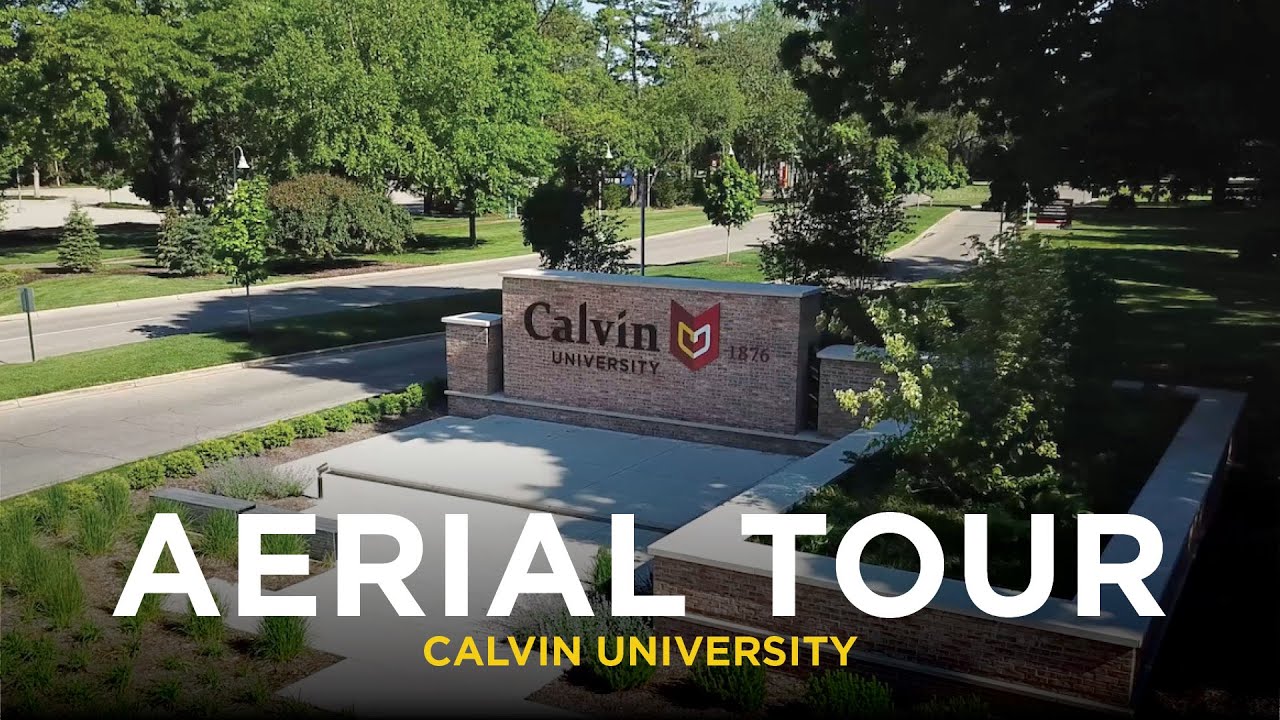
Calvin University seal · sourceAbout Calvin | Calvin University · sourceCampus & Location - About Calvin | Calvin University · sourceAbout Calvin | Calvin University · source