Loading…
← All schools
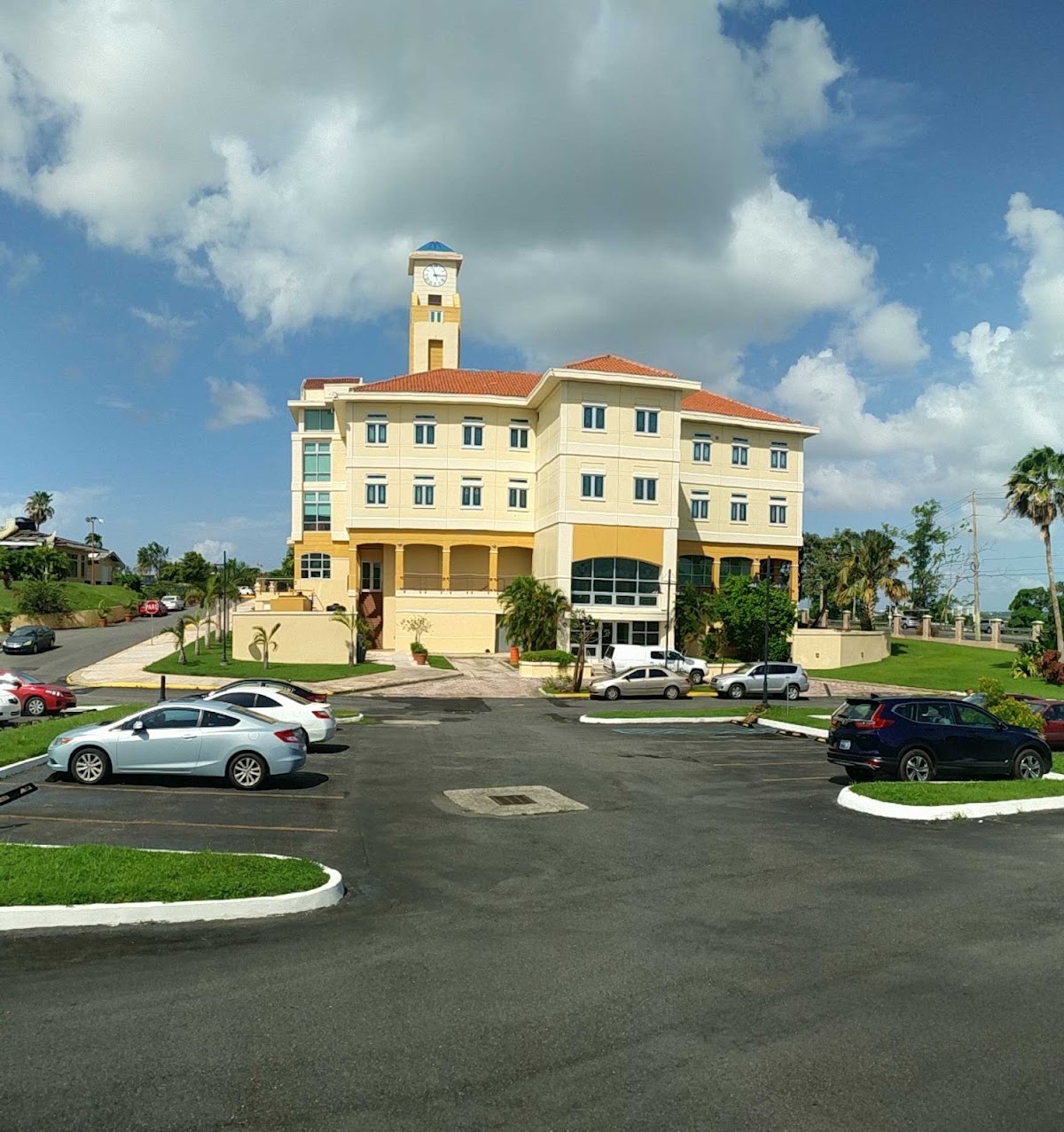
Caribbean University-Bayamon
Bayamon, PRprivate nonprofitwww.caribbean.edu/
Avg net price
$4,665
Earnings (10 yr)
$22,842
Graduation rate
43%
Acceptance & SAT from Common Data Set / IPEDS; net price, earnings & graduation from the U.S. Dept. of Education College Scorecard. Figures lag ~1–2 years — verify with the school.
Caribbean University-Bayamon is a small, urban institution in Puerto Rico that operates with an open-access philosophy, admitting virtually all applicants into its career-focused and vocational programs. Its identity is defined by a tight-knit, practical environment where students pursue degrees in fields like cosmetology, nursing assistance, and massage therapy, supported by a notably low student-faculty ratio. While graduation rates are low, the university offers an exceptionally affordable path to postsecondary credentials, serving a local population with a focus on applied skills and immediate workforce entry.
More details
- Undergrad enrollment
- 639
- In-state tuition
- $8,844
- Out-of-state tuition
- $8,844
- Campus Setting
- Urban
- Popular Majors
- Esthetician/Skin Care, Nursing Assistant, Massage Therapy
- Graduation Rate
- 43%
- Student-Faculty Ratio
- 10:1
- Median Earnings (10yr)
- $22,842
Outcomes & value
Outcomes & value
- Median earnings (10 yr)
- $22,842
- Value (earnings ÷ net price)
- 4.9×
- Median debt at graduation
- $10,500
- Graduation rate
- 43%
- First-year retention
- 71%
- Reducing loan balance (3 yr)
- 32%
- Pell (lower-income) share
- 77%
- First-gen share (among federal-aid recipients)
- 50%
Top-earning majors
Median earnings by field of study (highest credential), ~2 years after completion.
- Electrical/Electronic Engineering Technologies/Technicians$23,579
- Civil Engineering$21,964
- Teacher Education and Professional Development, Specific Levels and Methods$16,478
- Criminal Justice and Corrections$16,015
- Practical Nursing, Vocational Nursing and Nursing Assistants$14,935
- Social Work
Campus & location
Campus safety
- On-campus violent crimes (2024)
- 0
- Per 1,000 students
- 0.00
On-campus criminal offenses classed as violent (murder/non-negligent manslaughter, rape, robbery, aggravated assault) for the most recent reported year. Source: U.S. Dept. of Education Campus Safety and Security (Clery Act). Counts reflect what’s reported to the school, and urban campuses often report more partly due to non-student incidents nearby — read alongside campus size and setting, not as a standalone safety verdict.
Climate
- Pleasant days / yr
- 35
- Summer high
- 90°F
- Winter low
- 69°F
- Annual rain
- 45.4"
Pleasant days counts days per year with a mean temperature of 55–75°F, a high at or below 90°F, a low at or above 45°F, and little precipitation — a transparent comfort measure, not a weighting we invented. Computed from Open-Meteo ERA5 daily history (2019–2023).
Quick answers
- How much does Caribbean University-Bayamon cost?
- At Caribbean University-Bayamon, the average net price (after aid) is about $4,665 per year. Actual cost varies with financial aid and residency.
- How many undergraduates attend Caribbean University-Bayamon?
- Caribbean University-Bayamon enrolls approximately 639 undergraduate students.
- Where is Caribbean University-Bayamon located?
- Caribbean University-Bayamon is located in Bayamon, PR.
Admissions
Caribbean University-Bayamon is not a selective institution; it maintains an open-access admissions policy. Multiple independent sources report an of 100%, indicating that nearly all applicants who complete an actionable application are admitted. The university does not publish a standardized test score range (SAT/ACT) for admissions, as these scores are not a central component of its evaluation process. Prospective students can apply for admission for the fall (August), spring (January), or summer sessions. The admissions process is straightforward, with no indication that the university tracks or considers demonstrated interest as a factor in decisions—a practice common at highly selective schools but irrelevant here given the near-universal acceptance rate.
Academics
The academic profile is intensely practical, centered on associate and bachelor's degrees designed for direct career entry. The most specialized and popular majors are in personal and culinary services, including Esthetician and Skin Care, Massage Therapy and Bodywork, and Nursing Assistant training. Philosophy and Religious Studies is also listed as a specialized major, though degree awards in that field are far fewer. The institution boasts a remarkably low student-faculty ratio of 10:1, which facilitates close interaction and personalized instruction—a significant asset for its hands-on programs. The curriculum is delivered through both on-campus and distance education formats. Graduation rates, however, are a persistent challenge; one source cites a four-year rate of 8%, a six-year rate of 12%, and an eight-year rate of 14%, highlighting the non-traditional, often part-time trajectory of many students.
Compare Caribbean University-Bayamon
vs Inter American University of Puerto Rico-Fajardovs EDP University of Puerto Rico Inc-San Juanvs Inter American University of Puerto Rico-Arecibovs Inter American University of Puerto Rico-Aguadilla
See colleges similar to Caribbean University-Bayamon →Sources
- Common Data Set: Home
- The Common Data Set: What It Is & How to Use It In College ...
- [PDF] Common Data Set 2022-2023
- Caribbean University-Bayamon - DFR Report HTML
- [PDF] Common Data Set 2024-2025 - Salisbury University
- [PDF] Catalogo_Subgraduado rev.09042020 - Caribbean University
- Caribbean University Admissions - BigFuture College Search
- Caribbean University Requirements for Admission - PrepScholar
- Caribbean University - Bayamon Admissions & Acceptance - Niche
- Caribbean University-Bayamon - Tuition and Acceptance Rate