Admit rate has ranged 10%–21% over the last 5 years — notably volatile. Source: IPEDS via Urban Institute.
Acceptance & SAT from Common Data Set / IPEDS; net price, earnings & graduation from the U.S. Dept. of Education College Scorecard. Figures lag ~1–2 years — verify with the school.
College of the Ozarks, known as 'Hard Work U.,' is a fiercely selective, private Christian liberal arts college that operates on a radical premise: no student pays tuition. Instead, every undergraduate works 15 hours a week at an on-campus job to cover their costs, forging a campus culture defined by discipline, patriotism, and a profound aversion to debt. This is not a place for the faint of heart or the party-inclined; it's a tightly knit, rule-bound community in the Ozark Mountains where character education is as central as the curriculum, and graduating debt-free is the universal expectation.
Admission requirements
Test scores required
Required
High school transcript
Grade point average
Letters of recommendation
Test scores (SAT/ACT)
Considered (not required)
Class rank
College-prep program
Source: IPEDS Admissions survey (2022) via Urban Institute. Covers formal factors only — it does not reflect essays, extracurriculars, or other holistic criteria.
More details
Undergrad enrollment
1,444
In-state tuition
$22,320
Out-of-state tuition
$22,320
No-Loan Policy
Yes, college does not participate in loan programs
Graduation Rate
64%
Work Requirement
15 hours/week for all students
On-Campus Housing
93% of students
Class Rank Considered
Top 50%
Student-Faculty Ratio
14:1
Median Earnings (10yr)
$41,592
Outcomes & value
Outcomes & value
Median earnings (10 yr)
$41,592
Value (earnings ÷ net price)
6.8×
Graduation rate
64%
First-year retention
90%
Pell (lower-income) share
49%
First-gen share (among federal-aid recipients)
33%
Earnings = median of students working ~10 years after entry; debt = median of graduates. Value divides 10-yr earnings by one year’s net price — read it as earnings per dollar of annual cost, not a full lifetime ROI; it favors lower-cost schools. Source: U.S. Dept. of Education College Scorecard. Figures lag ~2 years and reflect all students, not your intended major.
Financial health
2.5 / 3.0Meets the federal financial-responsibility standard
U.S. Dept. of Education Financial Responsibility Composite Score (FY2022-23). Scale −1.0 to 3.0; ≥1.5 meets the standard. Reported for private nonprofit & for-profit institutions only — public universities are state-backed and not scored, so this is a stability signal, not a ranking.
Top-earning majors
Median earnings by field of study (highest credential), ~2 years after completion.
Computer Science$58,673
Registered Nursing, Nursing Administration, Nursing Research and Clinical Nursing$52,107
Business Administration, Management and Operations$40,896
Public Relations, Advertising, and Applied Communication$32,391
Agricultural Business and Management$30,409
Wildlife and Wildlands Science and Management
Campus & location
Campus safety
On-campus violent crimes (2024)
0
On-campus criminal offenses classed as violent (murder/non-negligent manslaughter, rape, robbery, aggravated assault) for the most recent reported year. Source: U.S. Dept. of Education Campus Safety and Security (Clery Act). Counts reflect what’s reported to the school, and urban campuses often report more partly due to non-student incidents nearby — read alongside campus size and setting, not as a standalone safety verdict.
Climate
Pleasant days / yr
80
Summer high
89°F
Winter low
32°F
Annual rain
49.6"
Annual snow
9.1"
Natural-hazard risk
Relatively Moderate
Pleasant days counts days per year with a mean temperature of 55–75°F, a high at or below 90°F, a low at or above 45°F, and little precipitation — a transparent comfort measure, not a weighting we invented. Computed from Open-Meteo ERA5 daily history (2019–2023). Natural-hazard risk is the county’s composite rating from the FEMA National Risk Index.
Deep dive — research, future-scholar output & economic mobility▾
Research output
Institutional h-index
40
Scholarly works
223
Institutional research volume and impact from OpenAlex. The h-index reflects large research universities and will be low for teaching-focused liberal-arts colleges — not a measure of undergraduate quality.
Economic mobility
Mobility rate
3.3%
Bottom → top quintile
18%
From bottom quintile
18%
Mobility rate = the share of students who both start in the bottom household-income quintile and reach the top quintile; bottom → top is that chance conditional on starting at the bottom. Source: Opportunity Insights Mobility Report Cards (Chetty, Friedman, Saez, Turner & Yagan). Reflects 1980–82 birth cohorts, so it’s directional, not current.
Quick answers
What is the acceptance rate at College of the Ozarks?
College of the Ozarks's acceptance rate is approximately 12% (Point Lookout, MO), based on the most recent figures we compiled from public and primary sources.
What SAT score do you need for College of the Ozarks?
Admitted students at College of the Ozarks typically score 1050–1220 on the SAT (the middle-50% range). Scores outside this band are still admitted, especially with strong applications.
How much does College of the Ozarks cost?
At College of the Ozarks, the average net price (after aid) is about $6,100 per year. Actual cost varies with financial aid and residency.
How many undergraduates attend College of the Ozarks?
College of the Ozarks enrolls approximately 1,444 undergraduate students.
Where is College of the Ozarks located?
College of the Ozarks is located in Point Lookout, MO.
Admissions
Gaining admission to College of the Ozarks is a highly competitive feat, with the school accepting only about 12% of its thousands of applicants—a rate that places it among the more selective regional colleges in the nation. The selectivity isn't just about grades; it's a holistic filter for mission alignment. The college reports a staggeringly high yield rate of 81.14%, meaning the vast majority of students who are admitted choose to enroll, reflecting the powerful draw of its unique value proposition.
Applicants must meet clear academic thresholds: at least a 20 composite on the ACT or a 1030 on the SAT, a minimum 3.0 GPA, and a class rank in the top 50%. The middle 50% of admitted students who submit test scores have an SAT range of 1050–1220. The admissions process operates on a rolling basis, beginning October 1, and notably, there is no housing deposit required upon acceptance. While the outlines factors considered in admissions, the college's extreme suggests admitted students have deeply demonstrated their fit for the institution's distinctive work-study and character-focused model.
Teacher Education and Professional Development, Specific Levels and Methods$28,381
Source: U.S. Dept. of Education College Scorecard (field-of-study earnings). Figures cover graduates who received federal aid and lag ~2 years; not all programs report data.
Academics at C of O are delivered through a traditional liberal arts framework, but infused with the college's core pillars: Christian faith, hard work, and patriotism. With a student-to-faculty ratio of 14:1, instruction is personal and focused. The college offers 57 majors, with the most popular including Psychology, General Business/Commerce, Accounting, Animal Sciences, and Registered Nursing/Registered Nurse.
The curriculum is explicitly designed to combine foundational bachelor's degree requirements with unique character education and patriotic studies. This integration is central to the college's vision of developing "citizens of Christ-like character who are well-educated, hard-working, and patriotic." The institution has earned national recognition for its model, recently being ranked the No. 1 Best Performer on Social Mobility in the Midwest, No. 2 Most Innovative School in the Midwest, and No. 4 for Undergraduate Teaching in the Midwest. The graduation rate is 64%, reflecting the demands of its combined academic and work program.
Life at College of the Ozarks is immersive, structured, and defined by its community covenants. An overwhelming 93% of students live in college-owned, -operated, or -affiliated housing, creating a self-contained, residential experience on its picturesque Point Lookout campus. The atmosphere is intentionally Christian, with student activities designed to foster a "fun, Christian atmosphere" through events like lip sync competitions and a 'Catwalk' show.
The culture is also notably strict. College policy prohibits alcohol, drugs, smoking, and vaping on campus for all students. This rule-bound environment extends to a focus on cultivating "high personal standards" and an appreciation for the fine arts and global understanding as part of its Cultural Pillar. It’s a campus where the nickname 'Hard Work U.' is lived daily, with every student balancing a 15-hour-per-week work commitment with their studies, leaving little room for a typical collegiate party scene. The vision is clear: to shape a specific type of citizen—hard-working, patriotic, and of character—within a tightly controlled environment.
The ultimate outcome for a College of the Ozarks graduate is a bachelor's degree held without the burden of student loan debt—a rare and powerful financial head start. The institution's six-year graduation rate is 64%. In terms of post-graduate earnings, the median earnings ten years after entry are $41,592.
The college's outcomes have garnered external recognition focused on value and mobility. It was recently highlighted by Money Magazine among the country's top 745 colleges based on graduation rates, cost of attendance, financial aid, and alumni salaries. Its top ranking for Social Mobility underscores its success in propelling students from lower-economic backgrounds toward degree completion and career launch without the anchor of debt, which is the cornerstone of its institutional mission.
The financial model at College of the Ozarks is its defining and revolutionary feature. The college operates a comprehensive no-loan policy. It does not participate in federal, state, or private loan programs and actively discourages student borrowing. Instead, it provides a debt-free college experience through a combination of its mandatory student work program and institutional scholarships.
Every full-time student works 15 hours per week (and two 40-hour weeks during breaks) at an on-campus job to cover the cost of tuition. This is facilitated by the Tuition Assurance Scholarship, which pays for tuition but not room, board, fees, or books. The average net price after all aid is $6,100, with additional scholarships available to help offset costs for housing, food, and books. The college states that 87.45% of students receive financial aid, with an average aid package of $20,800. This model means the sticker price is largely irrelevant; the real cost is the commitment of labor and adherence to the college's lifestyle standards.
College of the Ozarks stands alone in American higher education as a radical experiment in value and virtue. It is not merely a affordable college; it is a tuition-free college for the working student, swapping financial debt for an investment of sweat equity. This creates a self-selecting community of intensely motivated, service-oriented students who buy wholly into a lifestyle code. The education is dual-purpose: academic major coursework runs in parallel with a mandatory curriculum in character, patriotism, and Christian principles.
Its accolades—like being ranked the #1 school for Social Mobility and among the Most Innovative in the Midwest—speak to the potent effectiveness of its model for the students it serves. It rejects the national conversation about student loan debt by simply opting out of the system. The result is a singular institution: part liberal arts college, part vocational training ground, and part character forge, all dedicated to producing graduates who are, by design, unencumbered by debt and steeped in a very specific set of traditional values.
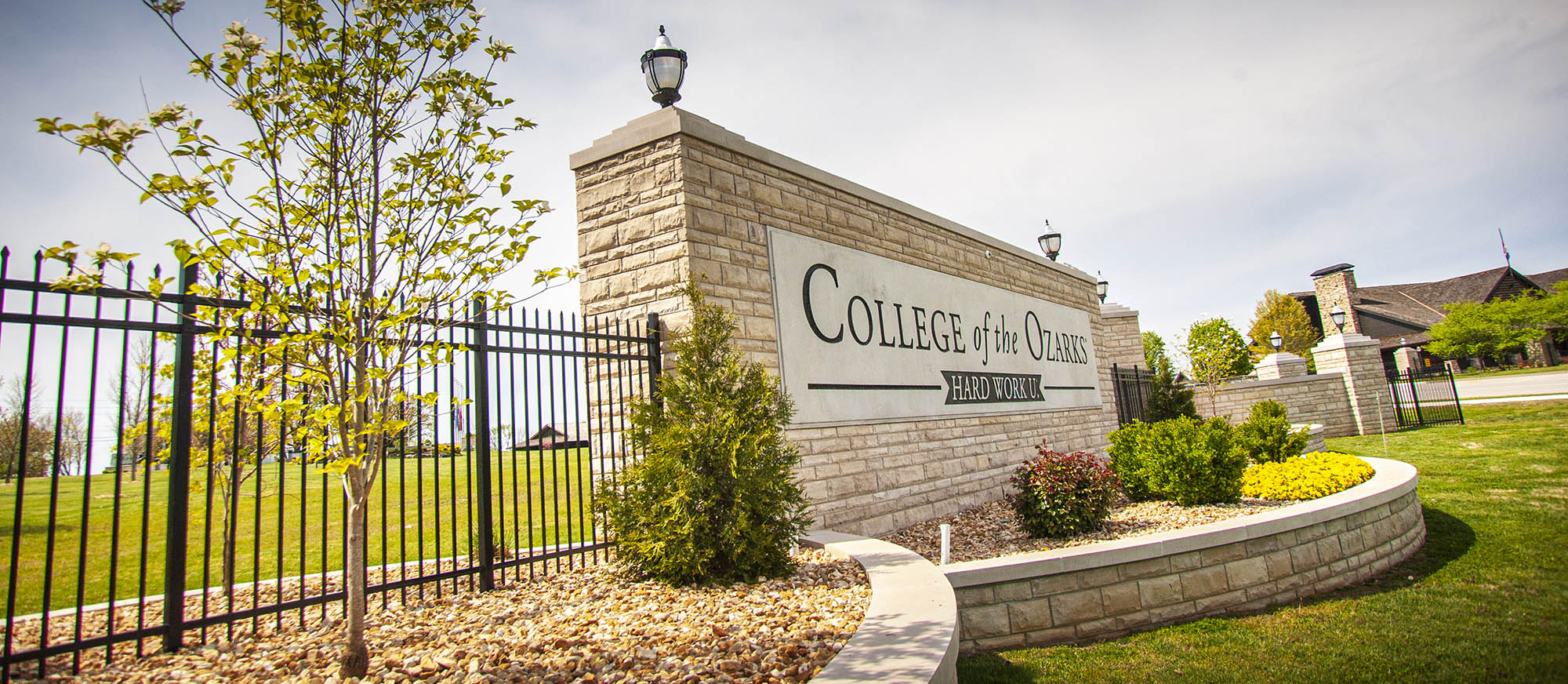
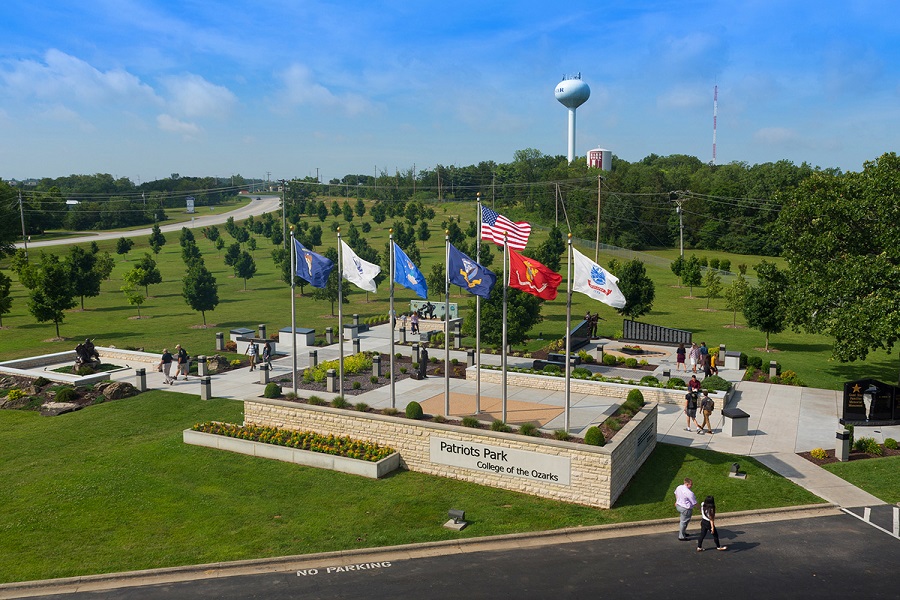
College of the Ozarks seal · sourceVisit | Sights to See | College of the Ozarks · sourceVisiting College of the Ozarks | Point Lookout MO · sourceVisit | Sights to See | College of the Ozarks · source