Admit rate has ranged 68%–98% over the last 5 years — notably volatile. Source: IPEDS via Urban Institute.
Acceptance & SAT from Common Data Set / IPEDS; net price, earnings & graduation from the U.S. Dept. of Education College Scorecard. Figures lag ~1–2 years — verify with the school.
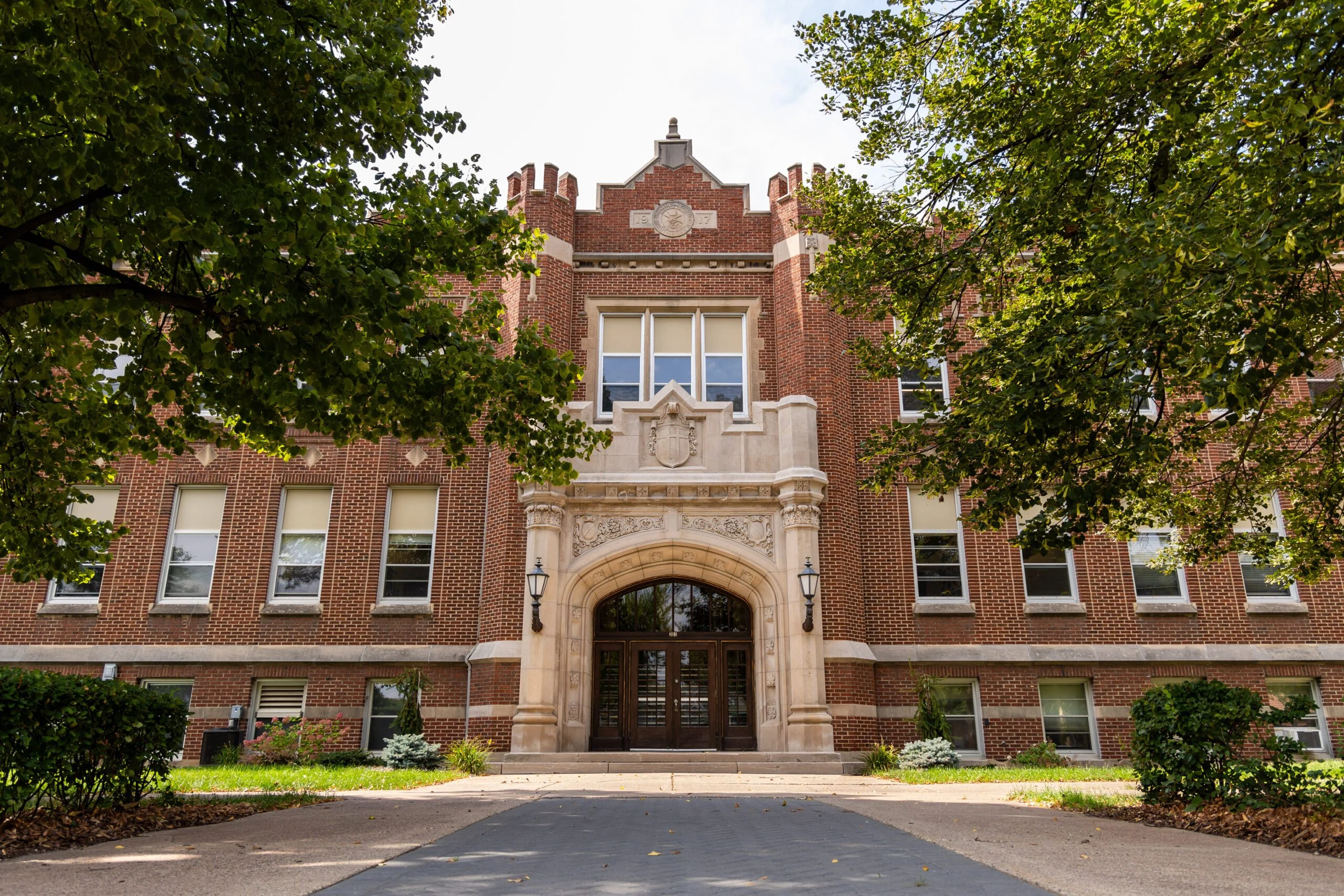
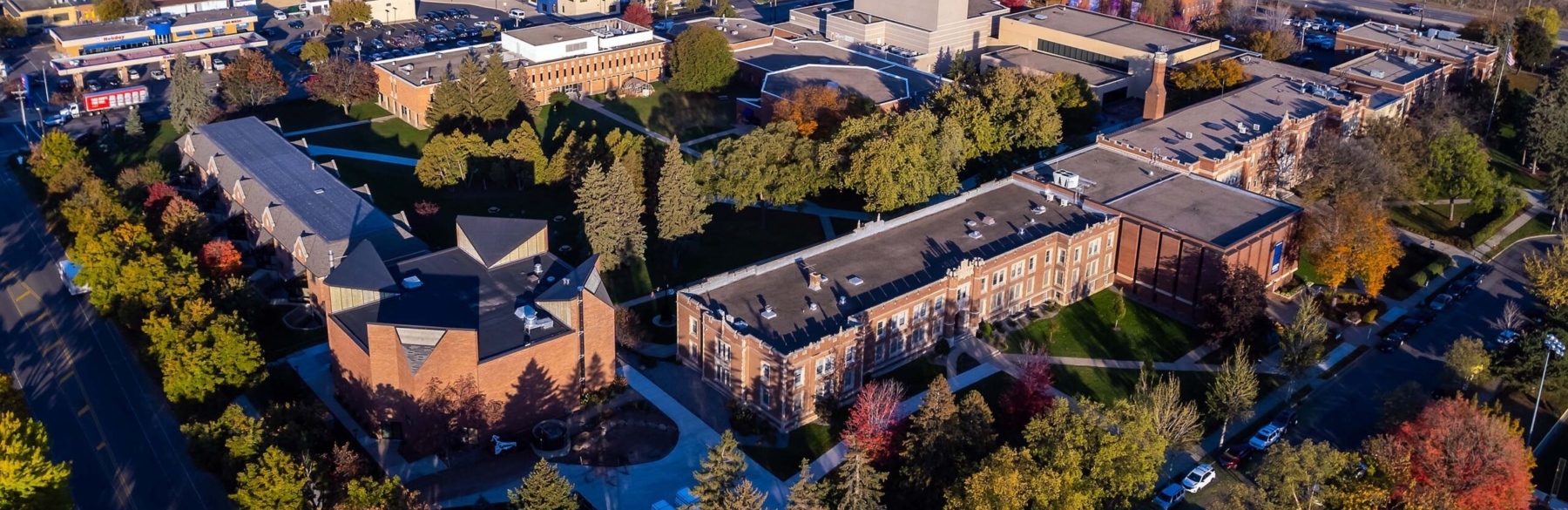
Concordia University-Saint Paul operates less as a traditional, cloistered liberal arts campus and more as a practical, faith-infused launchpad for working adults and career-focused undergraduates in the Twin Cities. Its identity is split between a modest residential undergraduate experience on a compact Saint Paul campus and a sprawling online and graduate operation, offering over 100 degree options with a pronounced tilt toward business, education, and health sciences. The vibe is pragmatic and supportive, with a Christian foundation, but the academic model is aggressively modernizing, recently introducing stripped-down, 90-credit three-year bachelor's degrees aimed directly at workforce demand.
Admission requirements
Test-optional — scores considered if submitted
Required
Grade point average
TOEFL (non-native English)
Considered (not required)
Letters of recommendation
Test scores (SAT/ACT)
Source: IPEDS Admissions survey (2022) via Urban Institute. Covers formal factors only — it does not reflect essays, extracurriculars, or other holistic criteria.
More details
Undergrad enrollment
3,018
In-state tuition
$25,600
Out-of-state tuition
$25,600
Graduation Rate
46%
Full-Time Students
71%
Part-Time Students
29%
Early Decision Offered
No
Median Earnings (10yr)
$59,871
Merit Scholarship Example
$7,000/year (2.5-2.99 GPA)
Outcomes & value
Outcomes & value
Median earnings (10 yr)
$59,871
Value (earnings ÷ net price)
3.2×
Median debt at graduation
$17,832
Graduation rate
46%
First-year retention
67%
Reducing loan balance (3 yr)
61%
Pell (lower-income) share
35%
First-gen share (among federal-aid recipients)
34%
Financial health
2.8 / 3.0Meets the federal financial-responsibility standard
U.S. Dept. of Education Financial Responsibility Composite Score (FY2022-23). Scale −1.0 to 3.0; ≥1.5 meets the standard. Reported for private nonprofit & for-profit institutions only — public universities are state-backed and not scored, so this is a stability signal, not a ranking.
Top-earning majors
Median earnings by field of study (highest credential), ~2 years after completion.
Computer Science$62,012
Health and Medical Administrative Services$56,415
Business Administration, Management and Operations$56,054
Marketing$49,464
Human Resources Management and Services$49,019
Teacher Education and Professional Development, Specific Subject Areas
Campus & location
Campus safety
On-campus violent crimes (2024)
0
Per 1,000 students
0.00
On-campus criminal offenses classed as violent (murder/non-negligent manslaughter, rape, robbery, aggravated assault) for the most recent reported year. Source: U.S. Dept. of Education Campus Safety and Security (Clery Act). Counts reflect what’s reported to the school, and urban campuses often report more partly due to non-student incidents nearby — read alongside campus size and setting, not as a standalone safety verdict.
Climate
Pleasant days / yr
85
Summer high
83°F
Winter low
8°F
Annual rain
36.6"
Annual snow
43.3"
Natural-hazard risk
Relatively High
Pleasant days counts days per year with a mean temperature of 55–75°F, a high at or below 90°F, a low at or above 45°F, and little precipitation — a transparent comfort measure, not a weighting we invented. Computed from Open-Meteo ERA5 daily history (2019–2023). Natural-hazard risk is the county’s composite rating from the FEMA National Risk Index.
Deep dive — research, future-scholar output & economic mobility▾
Economic mobility
Mobility rate
1.7%
Bottom → top quintile
22%
From bottom quintile
8%
Mobility rate = the share of students who both start in the bottom household-income quintile and reach the top quintile; bottom → top is that chance conditional on starting at the bottom. Source: Opportunity Insights Mobility Report Cards (Chetty, Friedman, Saez, Turner & Yagan). Reflects 1980–82 birth cohorts, so it’s directional, not current.
Quick answers
What is the acceptance rate at Concordia University-Saint Paul?
Concordia University-Saint Paul's acceptance rate is approximately 79% (Saint Paul, MN), based on the most recent figures we compiled from public and primary sources.
How much does Concordia University-Saint Paul cost?
At Concordia University-Saint Paul, the average net price (after aid) is about $18,462 per year. Actual cost varies with financial aid and residency.
How many undergraduates attend Concordia University-Saint Paul?
Concordia University-Saint Paul enrolls approximately 3,018 undergraduate students.
Where is Concordia University-Saint Paul located?
Concordia University-Saint Paul is located in Saint Paul, MN.
Admissions
Concordia-Saint Paul's admissions process is decidedly accessible, reflecting its mission to serve a broad population. The university admits a significant majority of its applicants, with an of 79%. For a recent cycle, out of 3,540 applicants, 2,792 were admitted, though only 464 ultimately enrolled, indicating a relatively low . The process is , and while the university offers an Early Action option, it does not have a binding Early Decision program. Admission statistics show a focus on academic preparation within the applicant pool, with reported GPA ranges: 13% of enrolled freshmen had a GPA of 3.75 or higher, 14% between 3.50–3.74, and 18% between 3.25–3.49. The middle 50% ACT score range for admitted students is 17 to 25. The university's admissions data is categorized for institutions that do not have an open admission policy and applies to first-time, degree/certificate-seeking undergraduates.
Earnings = median of students working ~10 years after entry; debt = median of graduates. Value divides 10-yr earnings by one year’s net price — read it as earnings per dollar of annual cost, not a full lifetime ROI; it favors lower-cost schools. Source: U.S. Dept. of Education College Scorecard. Figures lag ~2 years and reflect all students, not your intended major.
$46,478
Criminal Justice and Corrections$46,087
Accounting and Related Services$45,618
Source: U.S. Dept. of Education College Scorecard (field-of-study earnings). Figures cover graduates who received federal aid and lag ~2 years; not all programs report data.
Academics at CSP are defined by flexibility, career alignment, and a recent, significant structural innovation. The university offers over 80 academic programs across its undergraduate, graduate, and online divisions, serving almost 6,000 students in total. Traditional undergraduate majors span fields from Accounting and Actuarial Science to Biblical Studies, Biology, Biochemistry, and Business. Popular areas of study, based on conferred degrees, include Education, Family and Consumer Sciences/Human Sciences, Biological and Biomedical Sciences, and Homeland Security. A major recent shift is the introduction of 90-credit, three-year bachelor's degrees, which the university describes as "intentional academic design — focused, rigorous, and aligned to workforce demand." This model, part of a university-wide career portfolio initiative, represents a move away from the standard 120-credit, four-year track. Graduate and online offerings are robust, including programs like an online Master of Science in Data Science designed to prepare students for data-driven decision-making. The English major allows for choice between four emphasis areas.
Student life at Concordia-Saint Paul centers on a compact, Christ-centered campus in Saint Paul that promotes a "calm and peaceful atmosphere" with noted low crime rates. The university supports a range of co-curricular activities, including student clubs, ministry groups, and performing arts. Athletics compete at the NCAA Division II level. A specific club highlighted is the Global Student Club, which is for all CSP students interested in learning about new cultures, countries, and global topics. The student body is split, with 71% of students attending full-time and 29% part-time, reflecting the institution's blend of traditional and non-traditional learners. University messaging emphasizes support for students as they "explore your academic interests and refine your career choices" in an "ever-global world."
Outcome data for Concordia-Saint Paul presents a mixed picture, with notable variance in reported figures. The four-year graduation rate is reported as 33%, while the six-year rate is higher. One source reports an overall graduation rate of 61%, and another cites a figure of 87.2% for "Graduation Rates," though the context for this high figure is unclear and may refer to a specific cohort or program. Post-graduation earnings also show a range. The median salary for graduates six years after entry is reported as $50,646. Another source cites a median alumni salary of $53,793, with average earnings near $36,321 and Teacher Education graduates earning around $35,970. These figures underscore the importance of field of study in determining postgraduate income. The university publishes student achievement data, indicating a focus on tracking these metrics.
Concordia-Saint Paul is a private institution with a published tuition and fees of $44,900 and room and board at $26,400. However, the —what students actually pay after grants and scholarships—is significantly lower. The average net price is reported as $17,776 to $17,989 per year. Financial aid is widely available, with 99% of full-time beginning undergraduates receiving grant or scholarship aid, and 76.42% of all students receiving financial aid with an average aid package. The university offers merit-based scholarships, such as a $7,000 per year Concordia Scholarship for students with a GPA between 2.5 and 2.99. It provides a net price calculator and has simplified the FAFSA process with a custom website. The university's financial aid FAQ indicates that if federal loans and need-based grants do not fully cover tuition, students must pay the remainder out of pocket or seek private loans, suggesting it does not have a "no-loan" policy that meets full need without loans. The state of Minnesota notes that the college offers scholarships.
Concordia-Saint Paul stands out for its aggressive pivot toward a compressed, career-focused undergraduate model at a time when cost and time-to-degree are paramount concerns for many students. The launch of 90-credit, three-year bachelor's degrees is a bold curricular experiment that directly challenges the traditional four-year liberal arts structure, explicitly tying academic design to "workforce demand." This makes CSP a compelling case study in higher education innovation, particularly for students seeking a faster, potentially less expensive path to a credential. Furthermore, its operational model is dual-natured: it maintains a small, faith-based residential campus with DII athletics and clubs, while simultaneously running a large-scale online and graduate operation. This allows it to serve traditional undergraduates seeking a supportive, Christian environment and working adults seeking flexible, practical advancement—all under one institutional banner. Its high and widespread financial aid make it an accessible option within the private university landscape.
Concordia University-Saint Paul seal · sourceConcordia University, St. Paul - Wikipedia · sourceConcordia University, St. Paul · sourceVisit Concordia St. Paul - Concordia University, St. Paul · source