Admit rate has ranged 49%–69% over the last 5 years — notably volatile. Source: IPEDS via Urban Institute.
Acceptance & SAT from Common Data Set / IPEDS; net price, earnings & graduation from the U.S. Dept. of Education College Scorecard. Figures lag ~1–2 years — verify with the school.
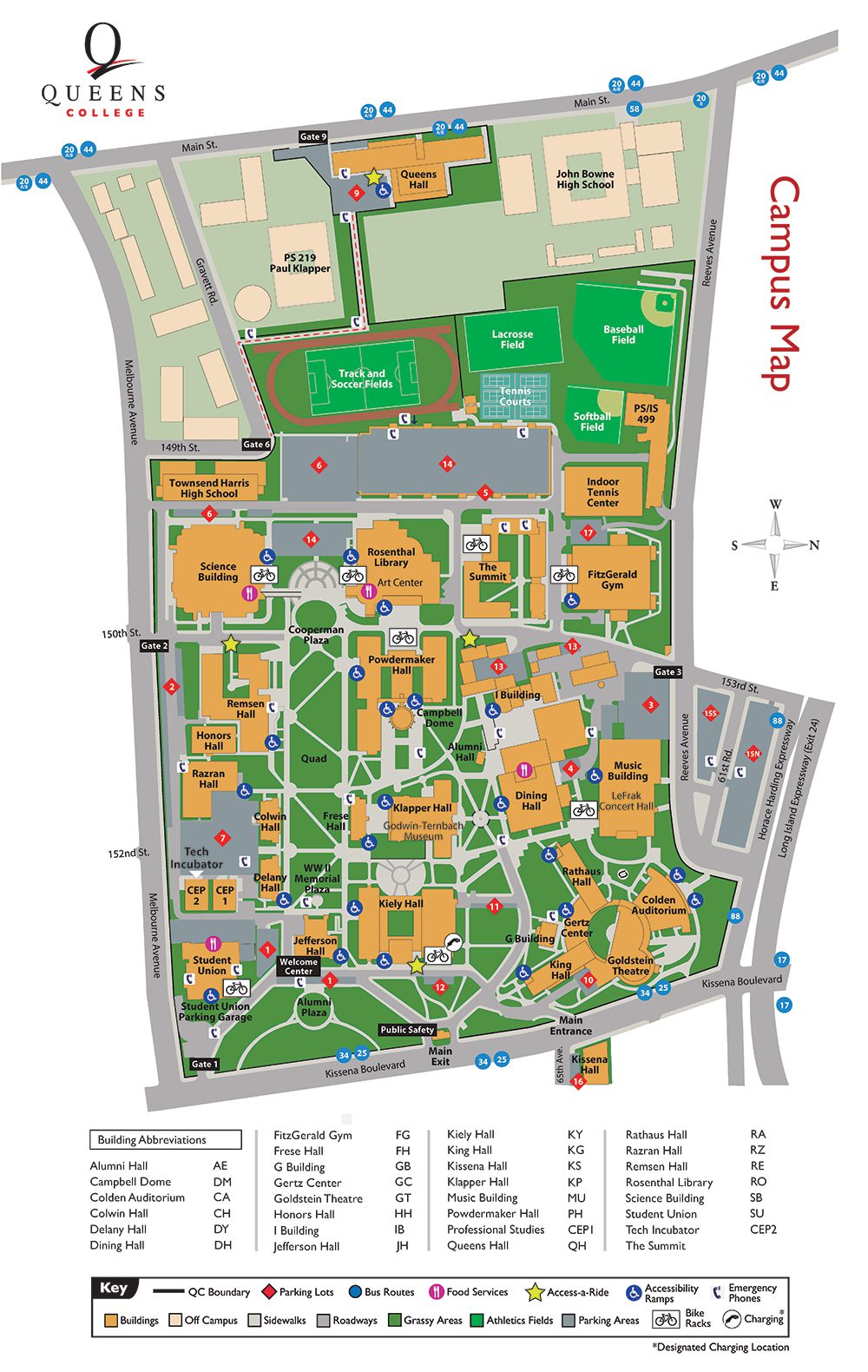
CUNY Queens College is the scrappy, hyper-diverse intellectual engine of New York City's public university system, offering a rigorous, no-frills education on a verdant 80-acre campus with a stunning Manhattan skyline view. It's a place where first-generation strivers, commuter students, and aspiring professionals converge for over 70 majors, driven by accessible professors and a staggering value proposition—a top-tier public education at a net price that often dips below $5,000. Don't expect a rah-rah campus culture; the vibe is pragmatic, global, and intensely focused on upward mobility, with alumni outcomes that consistently outpace CUNY and SUNY peers.
Admission requirements
Test-blind — scores not considered
Required
High school transcript
Grade point average
Letters of recommendation
College-prep program
TOEFL (non-native English)
Source: IPEDS Admissions survey (2022) via Urban Institute. Covers formal factors only — it does not reflect essays, extracurriculars, or other holistic criteria.
More details
Undergrad enrollment
12,550
In-state tuition
$7,538
Out-of-state tuition
$15,488
Campus Housing
3% of students
Graduation Rate
53%
Most Popular Majors
Psychology, Computer Science, Accounting
Median Earnings (10yr)
$62,763
First-Year Students Receiving Aid
81%
Average Need-Based Grant (First-Year)
$10,100
Outcomes & value
Outcomes & value
Median earnings (10 yr)
$62,763
Value (earnings ÷ net price)
15.0×
Median debt at graduation
$10,298
Graduation rate
53%
First-year retention
79%
Reducing loan balance (3 yr)
56%
Pell (lower-income) share
47%
First-gen share (among federal-aid recipients)
47%
Top-earning majors
Median earnings by field of study (highest credential), ~2 years after completion.
Computer Science$59,873
Teacher Education and Professional Development, Specific Subject Areas$41,565
Accounting and Related Services$41,308
Finance and Financial Management Services$39,909
Urban Studies/Affairs$38,289
International Business$38,289
Campus & location
Campus safety
On-campus violent crimes (2024)
2
Per 1,000 students
0.13
On-campus criminal offenses classed as violent (murder/non-negligent manslaughter, rape, robbery, aggravated assault) for the most recent reported year. Source: U.S. Dept. of Education Campus Safety and Security (Clery Act). Counts reflect what’s reported to the school, and urban campuses often report more partly due to non-student incidents nearby — read alongside campus size and setting, not as a standalone safety verdict.
Climate
Pleasant days / yr
93
Summer high
82°F
Winter low
29°F
Annual rain
54.4"
Annual snow
17.7"
Natural-hazard risk
Relatively High
Pleasant days counts days per year with a mean temperature of 55–75°F, a high at or below 90°F, a low at or above 45°F, and little precipitation — a transparent comfort measure, not a weighting we invented. Computed from Open-Meteo ERA5 daily history (2019–2023). Natural-hazard risk is the county’s composite rating from the FEMA National Risk Index.
Deep dive — research, future-scholar output & economic mobility▾
Economic mobility
Mobility rate
7.1%
Bottom → top quintile
35%
From bottom quintile
20%
Mobility rate = the share of students who both start in the bottom household-income quintile and reach the top quintile; bottom → top is that chance conditional on starting at the bottom. Source: Opportunity Insights Mobility Report Cards (Chetty, Friedman, Saez, Turner & Yagan). Reflects 1980–82 birth cohorts, so it’s directional, not current.
Quick answers
What is the acceptance rate at CUNY Queens College?
CUNY Queens College's acceptance rate is approximately 64% (Queens, NY), based on the most recent figures we compiled from public and primary sources.
What SAT score do you need for CUNY Queens College?
Admitted students at CUNY Queens College typically score 1010–1290 on the SAT (the middle-50% range). Scores outside this band are still admitted, especially with strong applications.
How much does CUNY Queens College cost?
At CUNY Queens College, the average net price (after aid) is about $4,195 per year. Actual cost varies with financial aid and residency.
How many undergraduates attend CUNY Queens College?
CUNY Queens College enrolls approximately 12,550 undergraduate students.
Where is CUNY Queens College located?
CUNY Queens College is located in Queens, NY.
Admissions
Queens College operates with a moderately selective, high-volume admissions process typical of CUNY's senior colleges. With an of 64%, it's accessible yet not a guaranteed admit, receiving over 20,800 applications for a freshman class of around 2,082 students. The middle 50% SAT range for admitted students is 1010–1290, and about 79% of admitted students submit SAT scores. The rate—the percentage of accepted students who enroll—is notably low, at around 11%, reflecting the highly local and commuter-oriented nature of the student body, where admitted students often weigh multiple affordable CUNY options. The admissions process is centralized through the CUNY application, and there is no indication of an Early Decision program; the focus is on academic preparation and meeting CUNY-wide standards rather than crafting a curated, holistic class.
Earnings = median of students working ~10 years after entry; debt = median of graduates. Value divides 10-yr earnings by one year’s net price — read it as earnings per dollar of annual cost, not a full lifetime ROI; it favors lower-cost schools. Source: U.S. Dept. of Education College Scorecard. Figures lag ~2 years and reflect all students, not your intended major.
History$38,289
Natural Resources Conservation and Research$37,779
Source: U.S. Dept. of Education College Scorecard (field-of-study earnings). Figures cover graduates who received federal aid and lag ~2 years; not all programs report data.
The academic offering at Queens College is vast and pragmatic, built to serve the career and intellectual ambitions of one of the most diverse student populations in the nation. The college offers undergraduate degrees in over 70 majors, with particularly strong footprints in Psychology, Computer Science, and Accounting—its three most popular programs. The curriculum is designed to graduate students who can "think critically, address complex problems, explore various cultures, and use modern technologies." This is not a place of light teaching loads; student testimonials describe classes as "challenging" and professors as "very assessable [accessible] and helpful." The college also provides significant graduate and accelerated pathways, with graduate studies in over 100 degree programs and certificates and over 40 accelerated master's programs, allowing ambitious undergraduates to fast-track advanced degrees. The academic culture is serious and direct, mirroring the work ethic of its student body.
Life at Queens College is defined by its commuter reality and its staggering diversity. Only 3% of students live in college-affiliated housing, with 97% living off-campus. This creates a campus that pulses during the day but can quiet down in the evenings and weekends. As one Reddit user plainly put it, "QC is just not the typical college experience, where parties happen every weekend. There is no 'Syllabus Week' or 'Spring break'." The hub of on-campus activity is the Student Union, containing "major social, cultural, recreational, and educational facilities and services." Student life is actively promoted through athletics, over 100 student organizations, arts programming, and volunteer opportunities. The college's Instagram account for student life highlights free events, tickets, and a mix of in-person, hybrid, and online courses. The social fabric is built around shared academic goals and the unique cultural mosaic of Queens, rather than traditional residential bonding rituals.
This is where the Queens College value proposition crystallizes into powerful, tangible results. The college's alumni earn median wages that consistently outperform broader public university peers. Five years after graduation, QC alumni earn a median of $65,000, jumping to $84,000 at the ten-year mark—figures that are higher than the medians for CUNY and SUNY students overall. One year after graduation, earnings are around $41,467. The graduation rate is a focal point for improvement within CUNY; the six-year graduation rate for first-time, full-time freshmen has been reported around 55-56%, slightly below the national midpoint for four-year colleges. However, for those who persist, the return on a minimal investment is exceptional, with strong earnings growth demonstrating the market value of a Queens College degree in the New York City economy and beyond.
Queens College represents one of the most dramatic values in American higher education. The average after aid is a breathtakingly low $4,195. This is achieved through a robust aid apparatus: 81% of full-time beginning undergraduates receive grant or scholarship aid, with the average need-based scholarship or grant for first-year students being $10,100. Financial aid is need-based, and the college promotes programs like the Excelsior Scholarship, which can make CUNY tuition-free for eligible New York State students from families with household incomes of $125,000 or less, providing up to $5,500 per academic year. The Office of Financial Aid Services emphasizes scholarships based on academic merit and supports students through federal and NYS grants. The messaging from the college is clear: they offer "need-based financial aid, full application support, interview prep, and budgeting workshops to help you graduate debt-free." Loan options exist but are framed as supplementary for covering emergencies or remaining need.
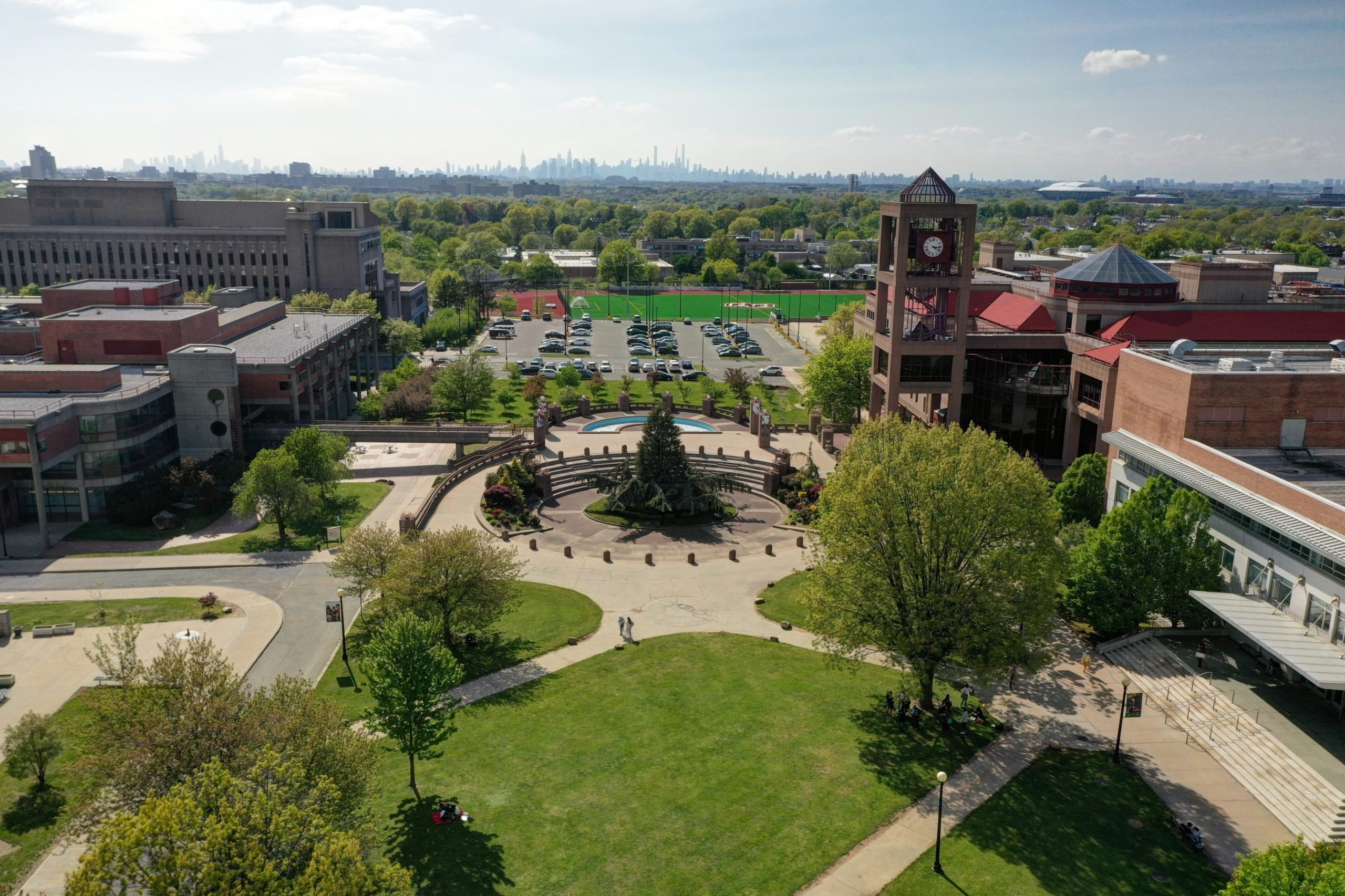
Queens College stands out as the definitive 'smart buy' in the nation's largest city—a public college that delivers private-school academic rigor at a community college price. Its distinction isn't found in manicured quads or football weekends, but in its raw, unfiltered representation of New York City itself: fiercely diverse, intellectually demanding, and relentlessly pragmatic. The campus itself is an oasis, with 80 acres of green space and a postcard view of the Manhattan skyline, serving as a serene counterpoint to the bustling borough that surrounds it. Its academic strengths in fields like Computer Science, Psychology, and Accounting are directly tied to the city's economic engine. Most importantly, it has a proven track record of elevating its students' economic trajectories, with alumni earnings that outpace their public university peers. For driven, cost-conscious students—particularly and commuter students—Queens College isn't just a college; it's a highly efficient launchpad.