Admit rate has ranged 39%–62% over the last 5 years — notably volatile. Source: IPEDS via Urban Institute.
Acceptance & SAT from Common Data Set / IPEDS; net price, earnings & graduation from the U.S. Dept. of Education College Scorecard. Figures lag ~1–2 years — verify with the school.
Delaware State University is a historically black public institution in Dover that operates with a distinct dual character: it's an open-access gateway for in-state students while practicing selective admissions for out-of-state applicants. With a focus on career-ready degrees across more than 60 paths, from aviation to studio art, DSU fosters a notably close-knit, family-like campus culture where involvement in clubs and Greek life is central. Its profile is defined by a mission of access—evident in its net price and test score ranges—and a practical focus on outcomes for its predominantly first-generation and Pell-eligible student body.
Admission requirements
Test-optional — scores considered if submitted
Required
High school transcript
Grade point average
TOEFL (non-native English)
Considered (not required)
Test scores (SAT/ACT)
College-prep program
Source: IPEDS Admissions survey (2022) via Urban Institute. Covers formal factors only — it does not reflect essays, extracurriculars, or other holistic criteria.
More details
Undergrad enrollment
4,398
In-state tuition
$10,670
Out-of-state tuition
$20,634
Graduation Rate
39%
Median Earnings (10yr)
$49,307
On-Campus Housing Percentage
63%
Students Receiving Grant/Scholarship Aid
89%
Outcomes & value
Outcomes & value
Median earnings (10 yr)
$49,307
Value (earnings ÷ net price)
3.5×
Median debt at graduation
$26,000
Graduation rate
39%
First-year retention
70%
Reducing loan balance (3 yr)
31%
Pell (lower-income) share
49%
First-gen share (among federal-aid recipients)
36%
Top-earning majors
Median earnings by field of study (highest credential), ~2 years after completion.
Registered Nursing, Nursing Administration, Nursing Research and Clinical Nursing$72,022
Teacher Education and Professional Development, Specific Levels and Methods$45,584
Business Administration, Management and Operations$43,128
Accounting and Related Services$38,289
Political Science and Government$36,848
Public Health
Campus & location
Campus safety
On-campus violent crimes (2024)
34
Per 1,000 students
6.61
On-campus criminal offenses classed as violent (murder/non-negligent manslaughter, rape, robbery, aggravated assault) for the most recent reported year. Source: U.S. Dept. of Education Campus Safety and Security (Clery Act). Counts reflect what’s reported to the school, and urban campuses often report more partly due to non-student incidents nearby — read alongside campus size and setting, not as a standalone safety verdict.
Climate
Pleasant days / yr
95
Summer high
84°F
Winter low
33°F
Annual rain
54"
Annual snow
9.6"
Natural-hazard risk
Relatively Moderate
Pleasant days counts days per year with a mean temperature of 55–75°F, a high at or below 90°F, a low at or above 45°F, and little precipitation — a transparent comfort measure, not a weighting we invented. Computed from Open-Meteo ERA5 daily history (2019–2023). Natural-hazard risk is the county’s composite rating from the FEMA National Risk Index.
Deep dive — research, future-scholar output & economic mobility▾
Research output
Institutional h-index
132
Scholarly works
3,456
Institutional research volume and impact from OpenAlex. The h-index reflects large research universities and will be low for teaching-focused liberal-arts colleges — not a measure of undergraduate quality.
Quick answers
What is the acceptance rate at Delaware State University?
Delaware State University's acceptance rate is approximately 47% (Dover, DE), based on the most recent figures we compiled from public and primary sources.
What SAT score do you need for Delaware State University?
Admitted students at Delaware State University typically score 800–1020 on the SAT (the middle-50% range). Scores outside this band are still admitted, especially with strong applications.
How much does Delaware State University cost?
At Delaware State University, the average net price (after aid) is about $13,910 per year. Actual cost varies with financial aid and residency.
How many undergraduates attend Delaware State University?
Delaware State University enrolls approximately 4,398 undergraduate students.
Where is Delaware State University located?
Delaware State University is located in Dover, DE.
Admissions
Delaware State University employs a bifurcated admissions policy: it maintains an open admission policy for in-state students while practicing selective admission for out-of-state applicants. The overall is 47%. For those who submit test scores, the middle 50% SAT range is 800–1020, and the ACT range is 17–26. The university reports that admitted students typically have a high school GPA of 2.0 or higher with a 'C' or better in 19 required course units. The admissions process is described as holistic, and while the provided sources do not explicitly state whether demonstrated interest is considered, the is the definitive source for such policy details. There is no mention of an Early Decision program in the provided sources; the primary application path appears to be through regular decision.
Earnings = median of students working ~10 years after entry; debt = median of graduates. Value divides 10-yr earnings by one year’s net price — read it as earnings per dollar of annual cost, not a full lifetime ROI; it favors lower-cost schools. Source: U.S. Dept. of Education College Scorecard. Figures lag ~2 years and reflect all students, not your intended major.
$34,526
Social Work$32,925
Criminology$31,936
Source: U.S. Dept. of Education College Scorecard (field-of-study earnings). Figures cover graduates who received federal aid and lag ~2 years; not all programs report data.
DSU offers a practical, career-focused curriculum across more than 60 undergraduate, graduate, and doctoral programs spanning 17 academic departments. The academic portfolio is designed to be 'relevant' and 'career-ready,' with popular majors including Psychology, Social Sciences, Communication/Journalism, Public Administration, Kinesiology, and Criminal Justice. Interdisciplinary study is encouraged. The university structures its offerings from traditional liberal arts undergraduate programs to high-level doctoral programs in the sciences. This breadth allows students to pursue paths as varied as accounting, aviation, and studio art. The academic environment is frequently described in student contexts as supportive, aligning with the institution's mission to serve its student body.
Life at DSU is consistently characterized as welcoming, familial, and engagement-focused. The suburban campus in Dover houses a significant majority of its undergraduate student body—63% live in college-owned, -operated, or -affiliated housing. The heart of the experience lies in involvement: students find camaraderie in a wide array of clubs, organizations, cultural groups, and a prominent Greek life scene. The university actively works to create a safe, healthy, and inclusive environment through its Division of Student Affairs, which provides programs aimed at blending student life with academic success. This results in a vibrant, activity-rich campus where students have many opportunities to connect and lead.
The graduation rate at Delaware State University is 39%. For graduates, median earnings ten years after entry are $49,307. Earlier career earnings are lower, with reported median salaries of approximately $37,057 one year after graduation and $36,427 five years after. The university's outcomes place it in a distinct position relative to national averages, reflecting its access-oriented mission and the demographic profile of its students. The four-year graduation rate is notably lower than the six-year rate, indicating many students take longer than the traditional timeline to complete their degrees.
The average after aid at Delaware State University is $13,910. A very high percentage—89%—of full-time beginning undergraduates receive grant or scholarship aid. The university encourages all students to use its Net Price Calculator to obtain a personalized estimate of and aid eligibility. Financial aid packages are designed to meet a student's Student Aid Index (SAI) through a combination of grants, scholarships, student loans, or other resources. Delaware State has also undertaken direct institutional efforts to support students with debt, such as a 2021 program that provided debt reduction for over 1,100 qualified students. While the sources describe , they do not specify a university-wide 'no-loan' policy or a guarantee to meet 100% of demonstrated financial need without loans.
Delaware State University stands out for its deliberate and consequential dual identity. It is unapologetically an engine of access and opportunity, maintaining an open-door policy for Delaware residents while curating a more selective out-of-state cohort. This creates a uniquely diverse student body unified by a palpable, family-like campus culture. Academically, it avoids pretense, focusing squarely on delivering 'relevant, career-ready degree programs'—from its strong aviation and criminal justice offerings to its doctoral sciences—that align with tangible post-graduate outcomes. Furthermore, DSU doesn't just admit students with financial need; it actively works to support them beyond standard aid packages, as evidenced by its direct debt relief initiatives. It is a university defined by its mission: practical, supportive, and committed to serving as a transformative pathway for the students who choose it.
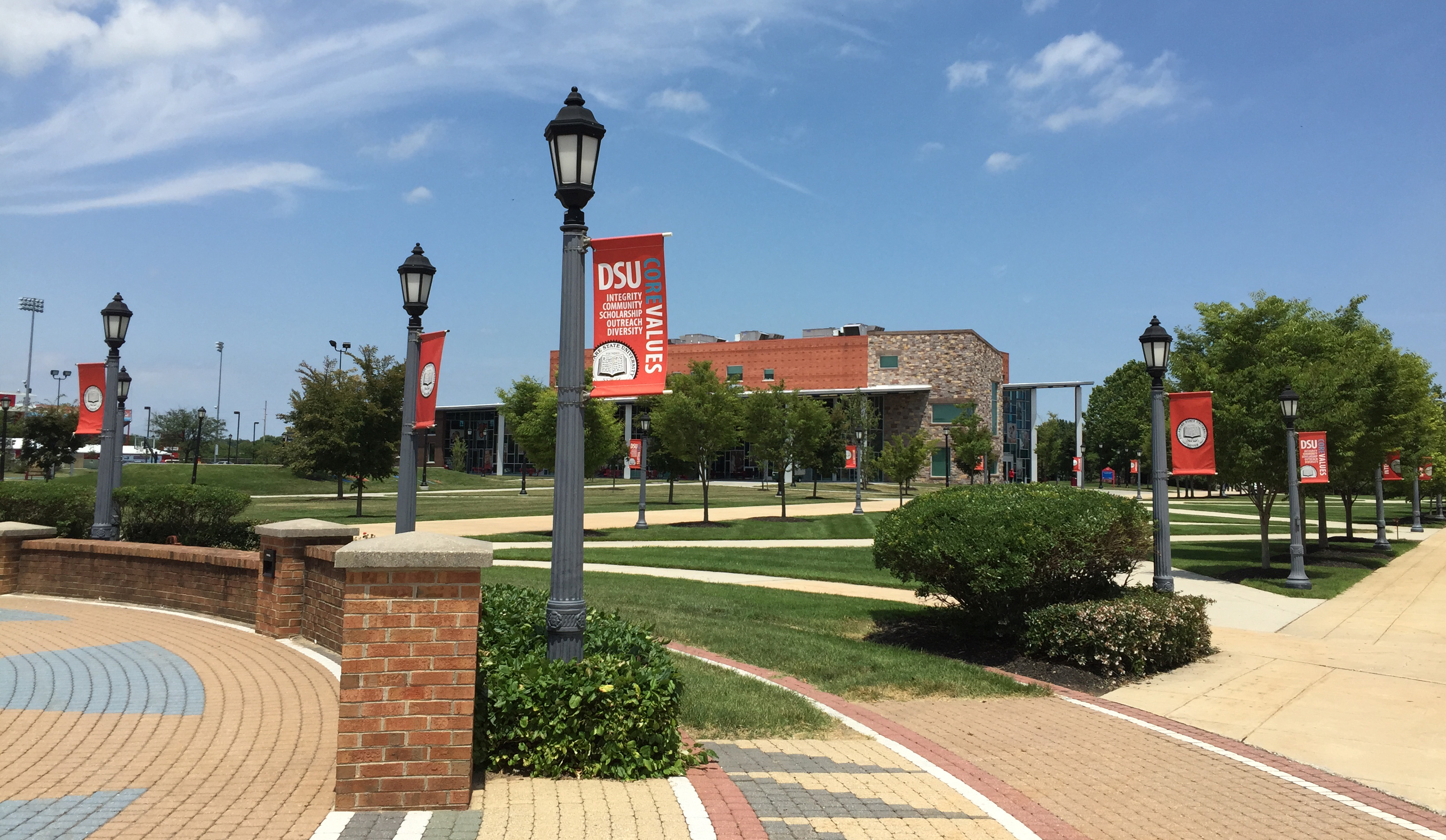
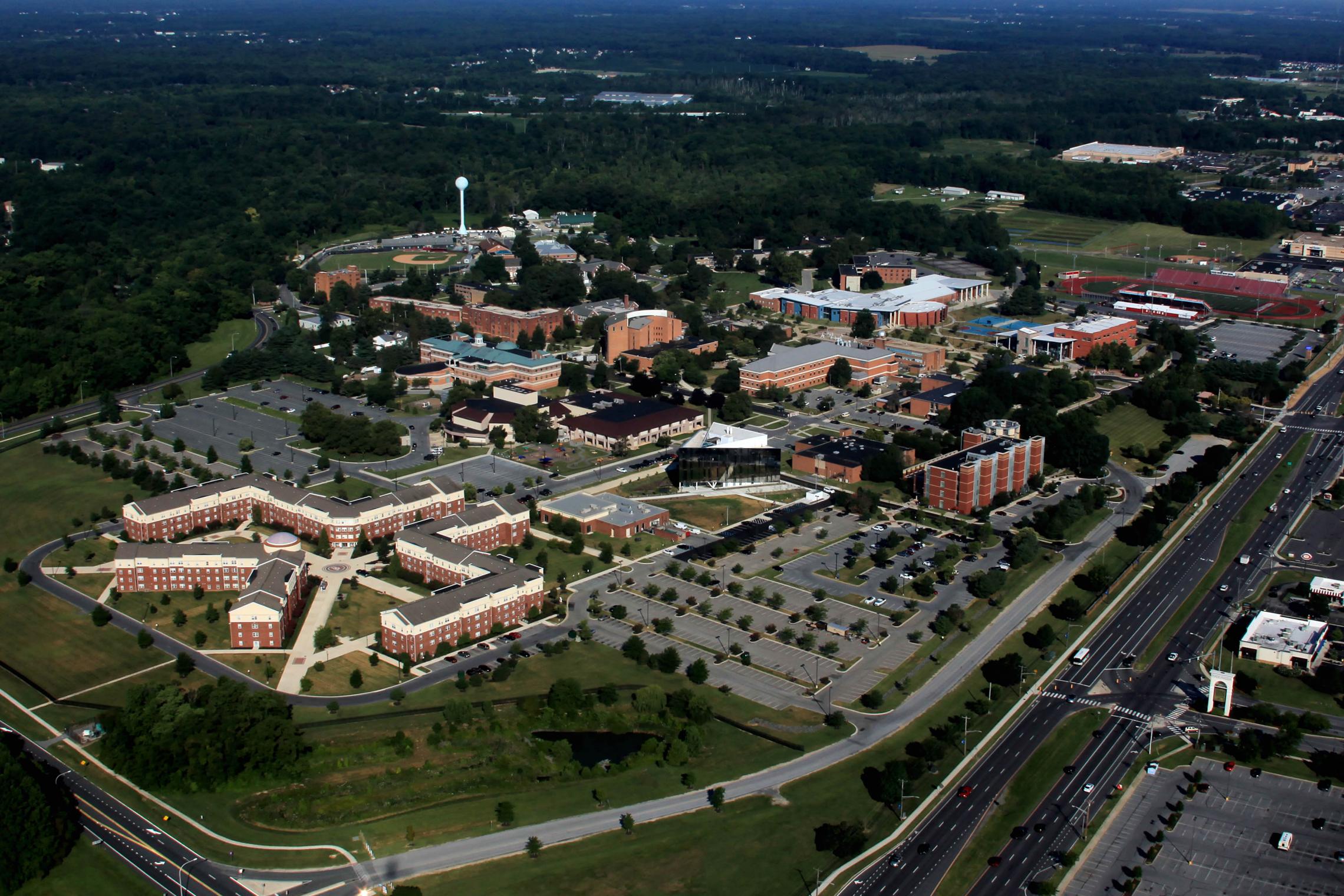
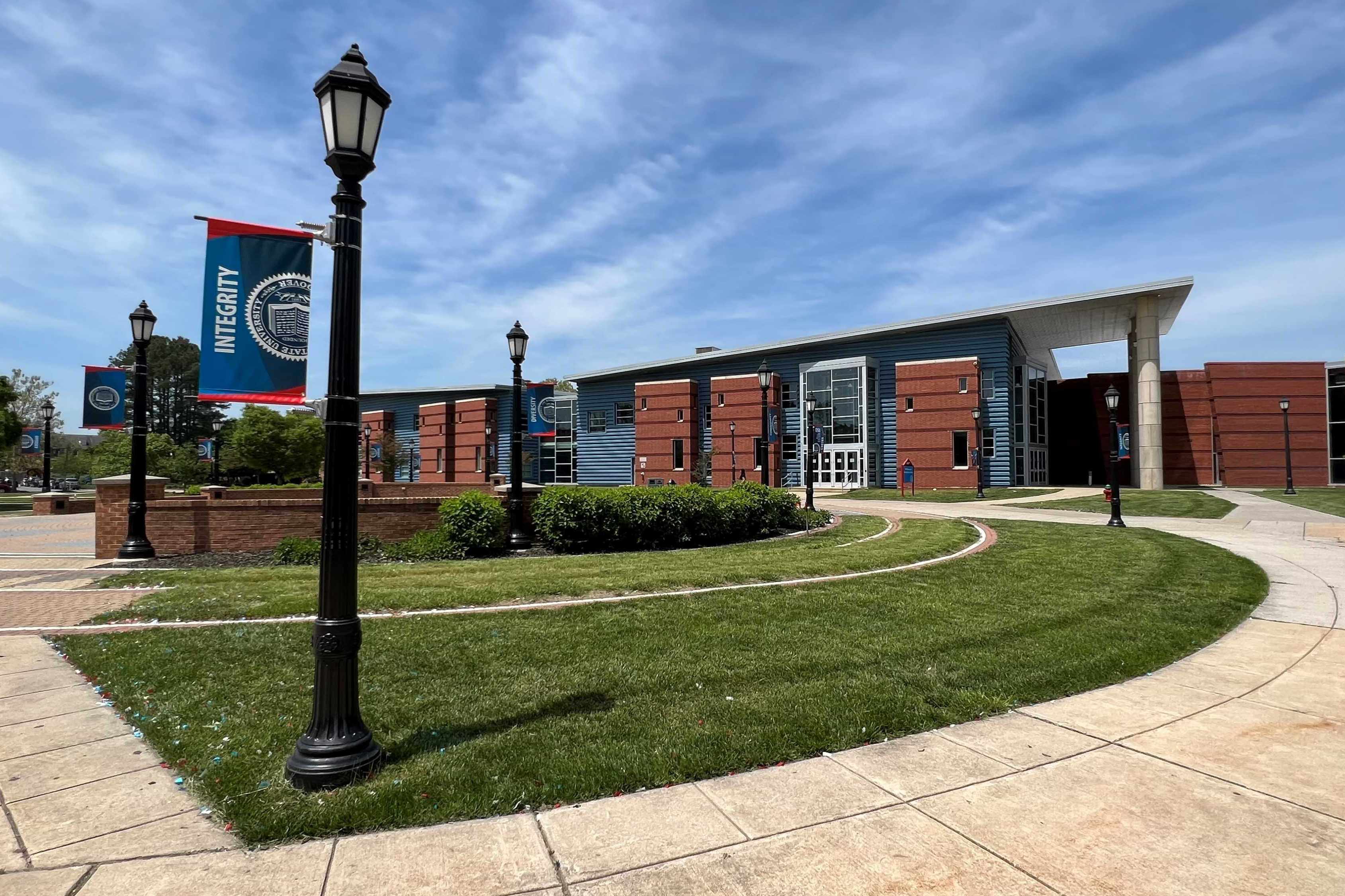
Delaware State University seal · sourceDel State named among Top 50 Beautiful Campuses | Delaware State · sourceFacilities | Delaware State · sourceAs Homecoming Week Begins, DSU Projects Record Enrollment Again | Delaware State · source