Admit rate has ranged 39%–80% over the last 5 years — notably volatile. Source: IPEDS via Urban Institute.
Acceptance & SAT from Common Data Set / IPEDS; net price, earnings & graduation from the U.S. Dept. of Education College Scorecard. Figures lag ~1–2 years — verify with the school.
Dillard University isn't just Louisiana's oldest HBCU—it's a tight-knit, culturally vibrant incubator in the heart of New Orleans where close-knit community and professional preparation collide. With a focus on turning out leaders in nursing, business, and the arts, Dillard wraps students in a family atmosphere on a historic campus, backed by a significant institutional aid budget that makes its private education more accessible. The experience is defined by its intimate scale, its location in a world-class city, and a legacy of fostering Black excellence.
Admission requirements
Test-optional — scores considered if submitted
Required
High school transcript
Grade point average
TOEFL (non-native English)
Considered (not required)
Letters of recommendation
Test scores (SAT/ACT)
Source: IPEDS Admissions survey (2022) via Urban Institute. Covers formal factors only — it does not reflect essays, extracurriculars, or other holistic criteria.
More details
Undergrad enrollment
1,063
In-state tuition
$23,918
Out-of-state tuition
$23,918
Graduation Rate
43%
First-Year Retention
78%
Student Organizations
80+
Median Earnings (10yr)
$39,196
Average Institutional Grant
$9,193
Annual Institutional Aid Awarded
$14 million
Minimum Test Scores (Consideration)
ACT 18 / SAT 960
Outcomes & value
Outcomes & value
Median earnings (10 yr)
$39,196
Value (earnings ÷ net price)
1.8×
Median debt at graduation
$31,000
Graduation rate
43%
First-year retention
78%
Reducing loan balance (3 yr)
55%
Pell (lower-income) share
70%
First-gen share (among federal-aid recipients)
35%
Financial health
3.0 / 3.0Meets the federal financial-responsibility standard
U.S. Dept. of Education Financial Responsibility Composite Score (FY2022-23). Scale −1.0 to 3.0; ≥1.5 meets the standard. Reported for private nonprofit & for-profit institutions only — public universities are state-backed and not scored, so this is a stability signal, not a ranking.
Top-earning majors
Median earnings by field of study (highest credential), ~2 years after completion.
Registered Nursing, Nursing Administration, Nursing Research and Clinical Nursing$59,253
Accounting and Related Services$33,993
Psychology, General$28,960
Public Health$26,037
Biology, General$22,771
Communication and Media Studies$20,140
Campus & location
Campus safety
On-campus violent crimes (2024)
4
Per 1,000 students
3.72
On-campus criminal offenses classed as violent (murder/non-negligent manslaughter, rape, robbery, aggravated assault) for the most recent reported year. Source: U.S. Dept. of Education Campus Safety and Security (Clery Act). Counts reflect what’s reported to the school, and urban campuses often report more partly due to non-student incidents nearby — read alongside campus size and setting, not as a standalone safety verdict.
Climate
Pleasant days / yr
113
Summer high
88°F
Winter low
51°F
Annual rain
67.6"
Natural-hazard risk
Relatively High
Pleasant days counts days per year with a mean temperature of 55–75°F, a high at or below 90°F, a low at or above 45°F, and little precipitation — a transparent comfort measure, not a weighting we invented. Computed from Open-Meteo ERA5 daily history (2019–2023). Natural-hazard risk is the county’s composite rating from the FEMA National Risk Index.
Deep dive — research, future-scholar output & economic mobility▾
Research output
Institutional h-index
47
Scholarly works
678
Institutional research volume and impact from OpenAlex. The h-index reflects large research universities and will be low for teaching-focused liberal-arts colleges — not a measure of undergraduate quality.
Economic mobility
Mobility rate
5.0%
Bottom → top quintile
20%
From bottom quintile
25%
Mobility rate = the share of students who both start in the bottom household-income quintile and reach the top quintile; bottom → top is that chance conditional on starting at the bottom. Source: Opportunity Insights Mobility Report Cards (Chetty, Friedman, Saez, Turner & Yagan). Reflects 1980–82 birth cohorts, so it’s directional, not current.
Quick answers
What is the acceptance rate at Dillard University?
Dillard University's acceptance rate is approximately 42% (New Orleans, LA), based on the most recent figures we compiled from public and primary sources.
What SAT score do you need for Dillard University?
Admitted students at Dillard University typically score 968–1202 on the SAT (the middle-50% range). Scores outside this band are still admitted, especially with strong applications.
How much does Dillard University cost?
At Dillard University, the average net price (after aid) is about $22,094 per year. Actual cost varies with financial aid and residency.
How many undergraduates attend Dillard University?
Dillard University enrolls approximately 1,063 undergraduate students.
Where is Dillard University located?
Dillard University is located in New Orleans, LA.
Admissions
Dillard's admissions process is moderately selective, with a focus on core academic readiness. The university sets clear minimum benchmarks for consideration: a 2.5 cumulative unweighted GPA, an 18 ACT composite, or a 960 SAT score (combined math and evidence-based reading and writing). While test scores are a factor, the indicates that the rigor of a student's secondary school record is considered the most important academic factor in admissions decisions.
Admissions statistics show variation across sources, reflecting different reporting years and data sets. One Common Data Set report lists an of 56.0% from 6,098 applications, resulting in 3,417 admits and 325 enrolled students. Other sources report rates ranging from 40.5% to 81%. The rate—the percentage of admitted students who choose to enroll—is noted to be low, at around 6% in one analysis. The middle 50% SAT range for admitted students is typically reported between 970–1200, with some sources citing a slightly narrower band. The university does not appear to have a binding Early Decision program; the provided sources on early admission rates do not mention Dillard, and no Early Decision share of class or acceptance rate is specified in the available data.
Earnings = median of students working ~10 years after entry; debt = median of graduates. Value divides 10-yr earnings by one year’s net price — read it as earnings per dollar of annual cost, not a full lifetime ROI; it favors lower-cost schools. Source: U.S. Dept. of Education College Scorecard. Figures lag ~2 years and reflect all students, not your intended major.
Business Administration, Management and Operations$20,140
Source: U.S. Dept. of Education College Scorecard (field-of-study earnings). Figures cover graduates who received federal aid and lag ~2 years; not all programs report data.
Dillard offers a focused, career-oriented curriculum through 22 undergraduate programs, organized within its College of Arts and Sciences. The academic environment is intimate, prioritizing close faculty-student interaction. The most popular majors reflect a strong emphasis on professional pathways: Nursing (16% of graduates), Business Administration and Management (10%), and Criminal Justice/Safety Studies (10%).
The university provides a traditional liberal arts core alongside these professional tracks. The School of Humanities, for example, offers degrees in English, Film, and Mass Communication with concentrations in Multimedia Journalism and Public Relations. This blend aims to develop both specialized skills and broad critical thinking. As Louisiana's oldest HBCU, Dillard's academic mission is deeply intertwined with its historical role in educating Black leaders, thinkers, and artists. The curriculum is designed to prepare students for direct entry into the workforce or further graduate study, with a clear focus on leadership development across all disciplines.
Life at Dillard is defined by a powerful sense of community and familial connection, amplified by its small campus size in a major city. Students consistently describe an atmosphere where everyone knows each other, fostering close relationships with peers and professors. The university actively cultivates this through a vibrant array of over 80 student clubs and organizations, covering interests from academic and professional groups to cultural, religious, and recreational activities.
The Office of Student Life structures engagement around key pillars: Student Organizations, Religious Life, Recreation, Health and Wellness, Student Support, and Housing and Residential Life. This infrastructure supports a full, on-campus experience. Social media glimpses show a dynamic campus culture with dorm experiences, freshman traditions, and the unique energy of being an HBCU in New Orleans—a city that itself becomes an extension of the campus. The combination of a self-contained, supportive community with the rich cultural and professional opportunities of New Orleans creates a distinctive student experience.
Student persistence and graduation are central metrics for Dillard, as outlined in its institutional Student Achievement Report. The report sets a goal for its six-year graduation rate to approach the 75th percentile marker among private non-profit institutions. Current graduation rates show variation across sources, with one reporting a 45% overall rate (46% for women, 41% for men). Other sources report four-year graduation rates around 29%, five-year rates near 41%, and six-year rates at 43%, 45%, or 47%. A separate outcomes data project lists a 52.03% graduation rate for Dillard.
The first-year retention rate—a key indicator of student satisfaction and academic support—is reported at 78%. Post-graduation, median earnings for recent graduates are reported in one source as $26,414, with 47% of graduates earning more than a high school graduate. The university itself is a significant employer in the area, with a reported annual payroll of $19.2 million.
Dillard is a private institution with a published tuition of $20,118 for direct costs. However, the university commits substantial resources to making attendance financially feasible. Each year, Dillard awards approximately $14 million in institutional aid alone, with the average institutional grant per student being $9,193. This significant investment in grants and scholarships brings the average —the cost after aid—down considerably.
Prospective students are directed to use the university's Net Price Calculator to get a personalized estimate of their cost, which factors in tuition, fees, books, supplies, and living expenses minus anticipated aid. The Office of Financial Aid and Scholarships uses standardized cost-of-attendance budgets to determine aid packages. To maintain eligibility for this aid, students must meet Dillard's Satisfactory Academic Progress (SAP) standards. The available sources do not indicate that Dillard has a "no-loan" policy or a stated commitment to meet 100% of demonstrated financial need without loans.
Dillard University carves out a singular niche by fusing the intimate, nurturing environment of a small liberal arts college with the historic mission and cultural vibrancy of a premier HBCU, all set in one of America's most dynamic cities. Its identity is rooted in being Louisiana's oldest HBCU, a that informs a close-knit, family-oriented campus where leadership development for Black students is paramount. This isn't an abstract ideal; it's lived through a 13:1 student-to-faculty ratio and a community where, as students note, 'everyone knows everyone.'
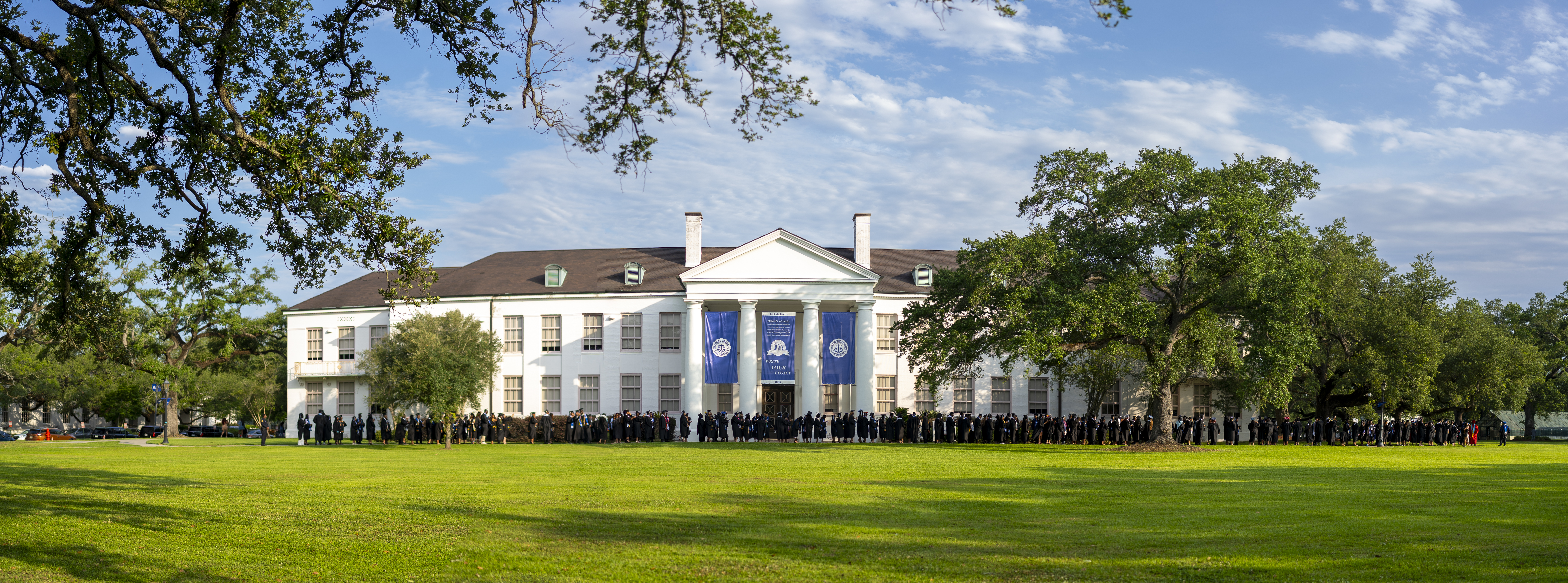
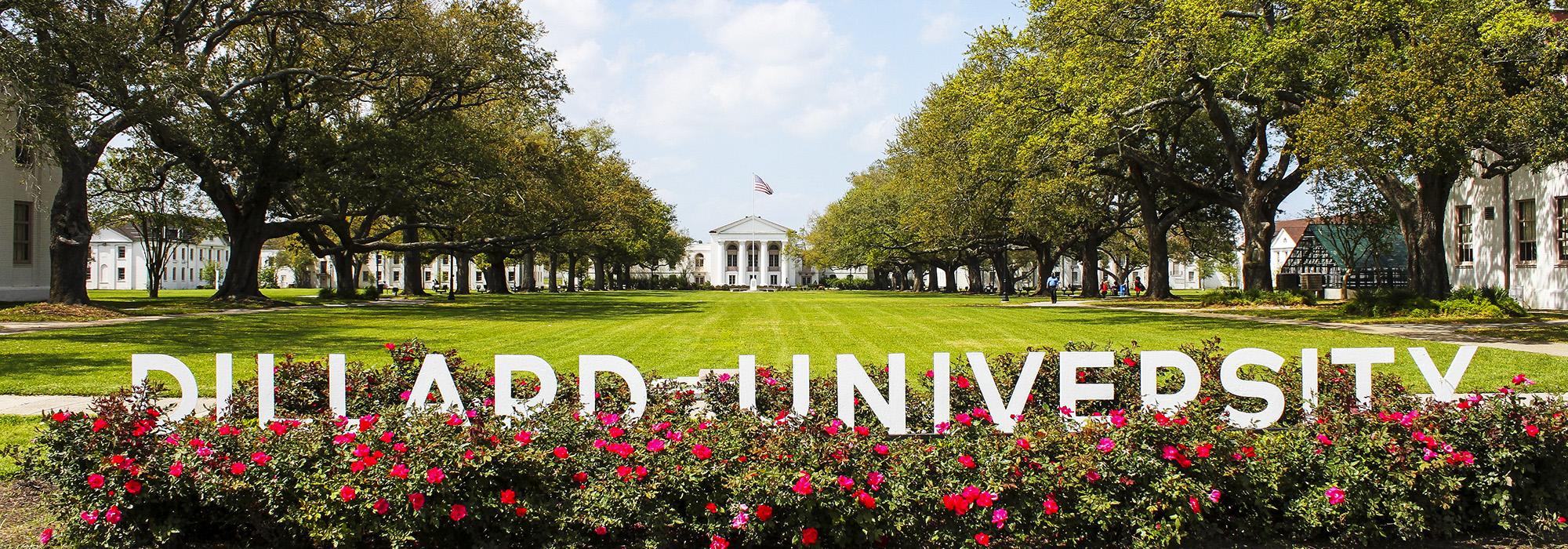
Academically, Dillard avoids trying to be everything to everyone. Instead, it doubles down on high-impact, professional pathways where its graduates consistently find traction—most notably in Nursing, Business, and Criminal Justice, which together account for over a third of its degrees. The campus itself, with its iconic Avenue of the Oaks and historic architecture, provides a serene, self-contained haven that contrasts with and complements the exhilarating chaos of New Orleans just beyond its gates.
Perhaps most importantly for its student body, Dillard backs its commitment with substantial resources, awarding $14 million annually in institutional aid to directly lower the . The result is a rare package: the personalized attention and community of a small school, the cultural capital and career networks of an HBCU, the unparalleled experiential learning lab of New Orleans, and a real commitment to affordability. It's a place designed not just for education, but for transformation within a supportive familial framework.
Dillard University seal · sourceCampus Map | Dillard University, New Orleans, LA · sourceRes Life Contact Information Residence Hall Photos | Portal | MyDU · sourceAcademic Affairs | Dillard University, HBCU · source