Admit rate has ranged 65%–79% over the last 5 years — notably volatile. Source: IPEDS via Urban Institute.
Acceptance & SAT from Common Data Set / IPEDS; net price, earnings & graduation from the U.S. Dept. of Education College Scorecard. Figures lag ~1–2 years — verify with the school.
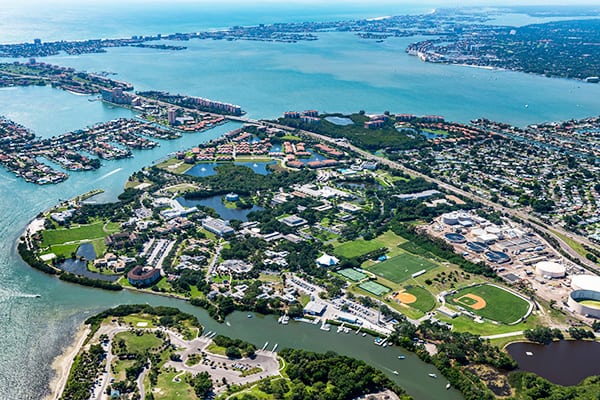
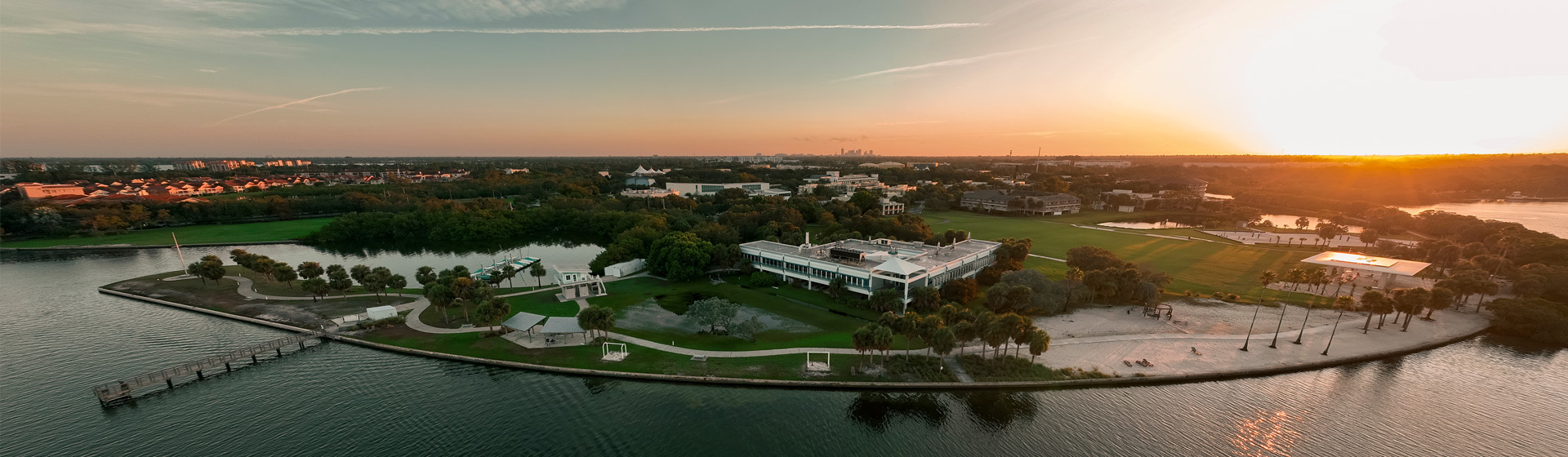
Eckerd College is a small, private liberal arts college in St. Petersburg, Florida, where the Gulf Coast setting shapes its identity as much as its academics. Known for its marine science program and a laid-back, sun-soaked campus culture, Eckerd attracts students who want a personalized education with easy access to beaches and outdoor activities. While not the most academically rigorous, it offers a tight-knit community and strong support for international students.
Admission requirements
Test-optional — scores considered if submitted
Required
High school transcript
Grade point average
Letters of recommendation
TOEFL (non-native English)
Considered (not required)
Test scores (SAT/ACT)
College-prep program
Demonstrated competencies
Source: IPEDS Admissions survey (2022) via Urban Institute. Covers formal factors only — it does not reflect essays, extracurriculars, or other holistic criteria.
More details
Undergrad enrollment
1,888
In-state tuition
$51,884
Out-of-state tuition
$51,884
Location
Saint Petersburg, FL
Graduation Rate
68%
Notable Program
Marine Science
On-Campus Housing
87%
Early-Career Salary
$36,427
Student-Faculty Ratio
12:1
Outcomes & value
Outcomes & value
Median earnings (10 yr)
$51,819
Value (earnings ÷ net price)
1.4×
Median debt at graduation
$27,000
Graduation rate
66%
First-year retention
76%
Reducing loan balance (3 yr)
64%
Pell (lower-income) share
21%
First-gen share (among federal-aid recipients)
20%
Top-earning majors
Median earnings by field of study (highest credential), ~2 years after completion.
Business Administration, Management and Operations$61,218
Computer Science$47,260
Business/Commerce, General$32,708
Communication and Media Studies$32,382
International Business$30,771
Research and Experimental Psychology$28,960
Campus & location
Campus safety
On-campus violent crimes (2024)
3
On-campus criminal offenses classed as violent (murder/non-negligent manslaughter, rape, robbery, aggravated assault) for the most recent reported year. Source: U.S. Dept. of Education Campus Safety and Security (Clery Act). Counts reflect what’s reported to the school, and urban campuses often report more partly due to non-student incidents nearby — read alongside campus size and setting, not as a standalone safety verdict.
Climate
Pleasant days / yr
138
Summer high
88°F
Winter low
58°F
Annual rain
49.1"
Natural-hazard risk
Relatively High
Pleasant days counts days per year with a mean temperature of 55–75°F, a high at or below 90°F, a low at or above 45°F, and little precipitation — a transparent comfort measure, not a weighting we invented. Computed from Open-Meteo ERA5 daily history (2019–2023). Natural-hazard risk is the county’s composite rating from the FEMA National Risk Index.
Deep dive — research, future-scholar output & economic mobility▾
Research output
Institutional h-index
121
Scholarly works
2,187
Institutional research volume and impact from OpenAlex. The h-index reflects large research universities and will be low for teaching-focused liberal-arts colleges — not a measure of undergraduate quality.
Economic mobility
Mobility rate
1.1%
Bottom → top quintile
24%
From bottom quintile
5%
Mobility rate = the share of students who both start in the bottom household-income quintile and reach the top quintile; bottom → top is that chance conditional on starting at the bottom. Source: Opportunity Insights Mobility Report Cards (Chetty, Friedman, Saez, Turner & Yagan). Reflects 1980–82 birth cohorts, so it’s directional, not current.
Quick answers
What is the acceptance rate at Eckerd College?
Eckerd College's acceptance rate is approximately 76% (Saint Petersburg, FL), based on the most recent figures we compiled from public and primary sources.
What SAT score do you need for Eckerd College?
Admitted students at Eckerd College typically score 1160–1330 on the SAT (the middle-50% range). Scores outside this band are still admitted, especially with strong applications.
How much does Eckerd College cost?
At Eckerd College, the average net price (after aid) is about $38,071 per year. Actual cost varies with financial aid and residency.
How many undergraduates attend Eckerd College?
Eckerd College enrolls approximately 1,888 undergraduate students.
Where is Eckerd College located?
Eckerd College is located in Saint Petersburg, FL.
Admissions
Eckerd College is a moderately selective institution with an of 75.8%, admitting about three-quarters of its applicants. The middle 50% of admitted students score between 1100-1300 on the SAT or 23-28 on the ACT, with an average GPA of 3.6. Unlike highly competitive liberal arts colleges, Eckerd doesn’t require SAT/ACT scores for admission, making it accessible to a broader range of students. The school emphasizes , considering extracurricular involvement and personal essays alongside academic performance.
Acceptance Rate: 75.8% (3,844 admitted out of 5,071 applicants)
Earnings = median of students working ~10 years after entry; debt = median of graduates. Value divides 10-yr earnings by one year’s net price — read it as earnings per dollar of annual cost, not a full lifetime ROI; it favors lower-cost schools. Source: U.S. Dept. of Education College Scorecard. Figures lag ~2 years and reflect all students, not your intended major.
Psychology, General$28,816
Anthropology$25,967
Source: U.S. Dept. of Education College Scorecard (field-of-study earnings). Figures cover graduates who received federal aid and lag ~2 years; not all programs report data.
Eckerd offers a classic liberal arts curriculum, requiring all students to take courses across the arts, humanities, natural sciences, and social sciences—regardless of major. The most popular programs include marine science, biology, psychology, and business, with marine science standing out as a particular strength due to the school’s coastal location. While some students describe the academic rigor as manageable rather than intense, the small class sizes (averaging 15 students) allow for close faculty mentorship.
Top Majors: Marine Science, Biology, Psychology, Business
Core Curriculum: Four-year interdisciplinary liberal arts requirement
Class Size: Average of 15 students
Notable Strength: Marine Science (with direct access to Gulf Coast research opportunities)
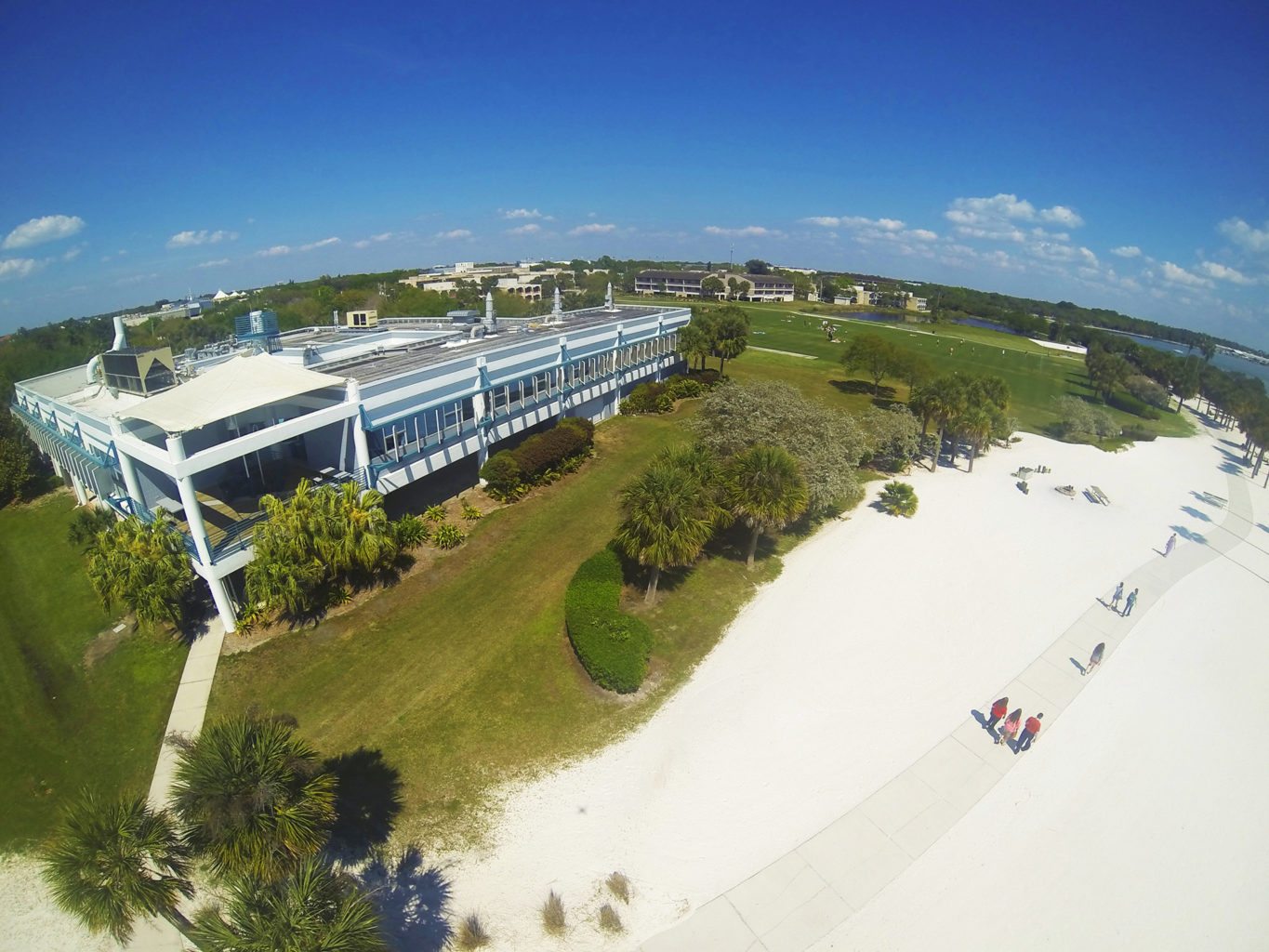
Life at Eckerd revolves around its beach-adjacent campus, where students spend as much time outdoors as in class. With 87% of students living on campus, the vibe is tight-knit and socially active, with frequent events like beach bonfires, kayaking trips, and volunteer opportunities. The school has a strong international community, offering tailored support for global students. While not a big sports school, Eckerd competes in NCAA Division II, and intramurals are popular. The overall atmosphere is relaxed, inclusive, and environmentally conscious—fitting for a Florida school where flip-flops are practically part of the dress code.
Eckerd’s 68% graduation rate places it in the top 30% of U.S. colleges, though post-grad earnings are modest compared to national averages. The median salary for graduates one year out is $36,427, rising to around $43,000 within a decade. While not a pipeline to high finance or tech, the school does well in fields like environmental science, education, and nonprofit work, where its hands-on learning and strong alumni network help graduates land jobs. Some students pursue graduate school, particularly in marine biology and related sciences.
Graduation Rate: 68% (top 30% nationally)
Early-Career Salary: $36,427 (median at 1 year)
Mid-Career Salary: ~$43,000 (estimated)
Top Fields: Environmental science, education, nonprofits
With a sticker price around $50,000 per year, Eckerd isn’t cheap, but 65% of first-year students receive need-based aid, averaging $27,714. The after aid is approximately $40,119, though this varies by family income. Merit scholarships are available, ranging from $200 to $2,600 per year, and the school offers a net price calculator to estimate individualized costs. While not the most generous with aid, Eckerd does provide solid support for middle-income families compared to pricier private colleges.
Eckerd’s location is its X-factor—few colleges offer a liberal arts education with a built-in beach lifestyle. The marine science program leverages its Gulf Coast setting for hands-on research, while the small size fosters close student-faculty relationships. It’s a school for free spirits who want sunshine alongside their seminars, with a culture that prioritizes sustainability, global perspectives, and work-life balance over cutthroat academics. If you’re looking for a chill, outdoorsy community where you can study environmental science by day and watch the sunset over the water by night, Eckerd delivers.
Eckerd College logo · sourceLiberal Arts College in Florida - Eckerd College · sourceAbout Us | Eckerd College in Florida · sourceSouth Beach - Eckerd College · source