Admit rate has ranged 65%–78% over the last 5 years — notably volatile. Source: IPEDS via Urban Institute.
Acceptance & SAT from Common Data Set / IPEDS; net price, earnings & graduation from the U.S. Dept. of Education College Scorecard. Figures lag ~1–2 years — verify with the school.
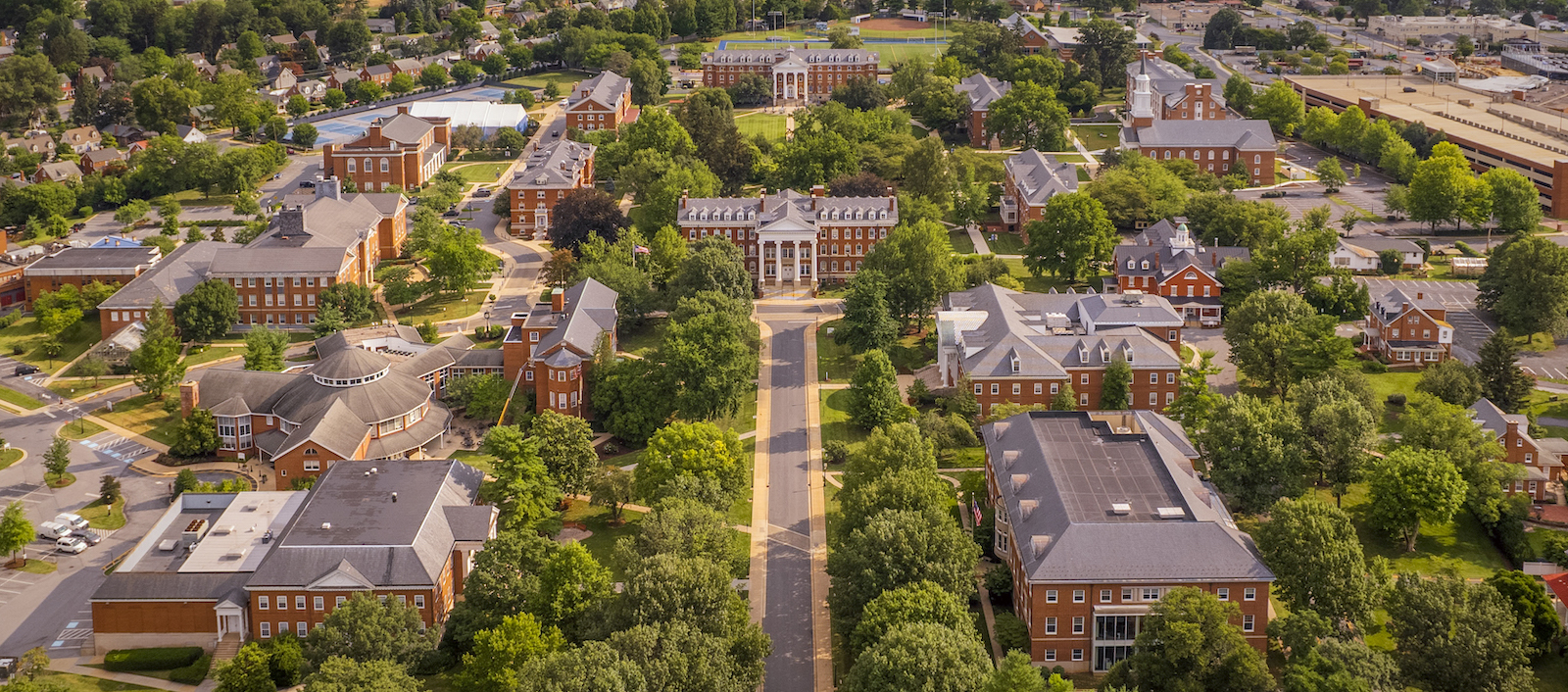
Hood College is a small, independent liberal arts college in Frederick, Maryland, where the vibe is more supportive than cutthroat. It's a place where the 'tradition-rich atmosphere' binds together a community of just over 1,150 undergraduates, many of whom are drawn to its popular health professions and business programs. While its graduation rate suggests some students struggle to persist, those who finish often find a solid financial return, with median earnings a decade out notably exceeding the average net price paid.
Admission requirements
Test-blind — scores not considered
Required
High school transcript
College-prep program
TOEFL (non-native English)
Considered (not required)
Grade point average
Class rank
Letters of recommendation
Demonstrated competencies
Source: IPEDS Admissions survey (2022) via Urban Institute. Covers formal factors only — it does not reflect essays, extracurriculars, or other holistic criteria.
More details
Undergrad enrollment
1,194
In-state tuition
$47,700
Out-of-state tuition
$47,700
Graduation Rate
57%
On-Campus Housing
58% of students
Most Popular Majors
Health Professions (16%), Business (16%)
Median Earnings (10yr)
$57,089
Outcomes & value
Outcomes & value
Median earnings (10 yr)
$57,089
Value (earnings ÷ net price)
2.7×
Median debt at graduation
$25,000
Graduation rate
57%
First-year retention
68%
Reducing loan balance (3 yr)
70%
Pell (lower-income) share
37%
First-gen share (among federal-aid recipients)
31%
Financial health
2.6 / 3.0Meets the federal financial-responsibility standard
U.S. Dept. of Education Financial Responsibility Composite Score (FY2022-23). Scale −1.0 to 3.0; ≥1.5 meets the standard. Reported for private nonprofit & for-profit institutions only — public universities are state-backed and not scored, so this is a stability signal, not a ranking.
Top-earning majors
Median earnings by field of study (highest credential), ~2 years after completion.
Computer Science$53,810
Special Education and Teaching$45,980
Business Administration, Management and Operations$36,992
Social Work$34,526
Communication and Media Studies$33,993
Natural Resources Conservation and Research$29,685
Campus & location
Campus safety
On-campus violent crimes (2024)
1
Per 1,000 students
0.48
On-campus criminal offenses classed as violent (murder/non-negligent manslaughter, rape, robbery, aggravated assault) for the most recent reported year. Source: U.S. Dept. of Education Campus Safety and Security (Clery Act). Counts reflect what’s reported to the school, and urban campuses often report more partly due to non-student incidents nearby — read alongside campus size and setting, not as a standalone safety verdict.
Climate
Pleasant days / yr
86
Summer high
86°F
Winter low
30°F
Annual rain
46.1"
Annual snow
15.5"
Natural-hazard risk
Relatively Low
Pleasant days counts days per year with a mean temperature of 55–75°F, a high at or below 90°F, a low at or above 45°F, and little precipitation — a transparent comfort measure, not a weighting we invented. Computed from Open-Meteo ERA5 daily history (2019–2023). Natural-hazard risk is the county’s composite rating from the FEMA National Risk Index.
Deep dive — research, future-scholar output & economic mobility▾
Research output
Institutional h-index
67
Scholarly works
963
Institutional research volume and impact from OpenAlex. The h-index reflects large research universities and will be low for teaching-focused liberal-arts colleges — not a measure of undergraduate quality.
Economic mobility
Mobility rate
2.8%
Bottom → top quintile
44%
From bottom quintile
6%
Mobility rate = the share of students who both start in the bottom household-income quintile and reach the top quintile; bottom → top is that chance conditional on starting at the bottom. Source: Opportunity Insights Mobility Report Cards (Chetty, Friedman, Saez, Turner & Yagan). Reflects 1980–82 birth cohorts, so it’s directional, not current.
Quick answers
What is the acceptance rate at Hood College?
Hood College's acceptance rate is approximately 78% (Frederick, MD), based on the most recent figures we compiled from public and primary sources.
How much does Hood College cost?
At Hood College, the average net price (after aid) is about $20,873 per year. Actual cost varies with financial aid and residency.
How many undergraduates attend Hood College?
Hood College enrolls approximately 1,194 undergraduate students.
Where is Hood College located?
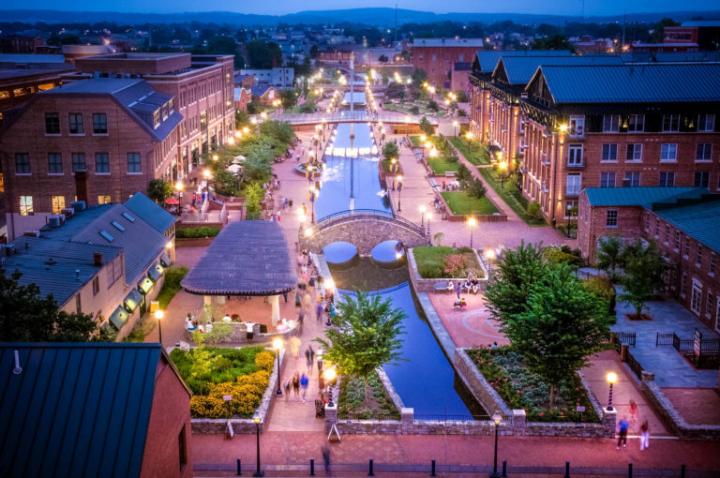
Hood College is located in Frederick, MD.
Admissions
Hood College is a less selective institution with an accessible admissions process. The college received 3,352 undergraduate applications in 2024. It accepts the Common Application and operates under a test-blind policy, meaning SAT or ACT scores are neither required nor recommended for admission decisions. The average accepted student has around a 3.4 weighted high school GPA. While the college does not publish an average SAT score for admitted students, external sources suggest the middle 50% of admitted students historically scored between 1040–1260 on the SAT or 17–24 on the ACT. The rate—the percentage of admitted students who choose to enroll—is 12%, with women enrolling at a slightly higher rate (13%) than men (10%). The college does not appear to have an Early Decision program that significantly impacts its admissions profile, as the Regular Decision matches the overall rate.
Earnings = median of students working ~10 years after entry; debt = median of graduates. Value divides 10-yr earnings by one year’s net price — read it as earnings per dollar of annual cost, not a full lifetime ROI; it favors lower-cost schools. Source: U.S. Dept. of Education College Scorecard. Figures lag ~2 years and reflect all students, not your intended major.
History$27,488
Political Science and Government$25,194
Source: U.S. Dept. of Education College Scorecard (field-of-study earnings). Figures cover graduates who received federal aid and lag ~2 years; not all programs report data.
Hood defines itself as an independent liberal arts college, offering more than 25 bachelor's degrees alongside four pre-professional programs. The academic environment is described as having a 'tradition-rich atmosphere' that binds students together in an 'academically-driven' community with strong support from faculty. The curriculum spans from Accounting and Actuarial Science to African American Studies and Archaeology. In terms of popular majors, Health Professions and Related Programs, along with Business, Management, Marketing, and Related Support Services, each constitute 16% of the degrees awarded. Business Administration and Management, General, is specifically cited as the school's most popular single major, with about 35 degrees awarded annually in that field.
Life at Hood is framed around the belief that 'living as a member of a community provides the best atmosphere for individual growth.' The college emphasizes that the experience is about more than academics—it's also about 'athletics, activities, experiences, friendships and traditions.' The campus maintains a full-time security staff and safety features intended to make students feel comfortable. Residential life is a mix, with 58% of students living in college-owned, -operated, or -affiliated housing and 42% living off campus. The Office of Student Engagement aims to enhance student involvement by providing programming that fosters a 'fun and inclusive environment.' While the official materials promote a close-knit community, some external perspectives, like a Reddit post from a prospective transfer student, hint at financial concerns, noting that a significant scholarship 'isn’t making a dent' in costs.
Post-graduation outcomes for Hood alumni present a mixed picture. The college promotes the value of its graduate programs, noting that graduates with advanced degrees 'earn higher salaries on average and qualify for more specialized positions' and that graduate alumni report 'strong' outcomes. Data on undergraduate outcomes shows variation. One source reports an overall graduation rate of 55% and an average income of $41,936, though it's unclear when post-graduation that figure is measured. Another source states that Hood College graduates earn a median of $70,173 four years after graduation, which it claims is 16% above the national average. Earnings are noted to 'vary significantly by major.'
Hood College awards more than $40 million in financial aid annually to undergraduate students through a combination of scholarships, grants, loans, and student employment opportunities. The college states that 100% of full-time, first-year undergraduates receive grant or scholarship aid. is a key component, with 'Hood Grants' awarded to full-time undergraduates who demonstrate financial need; priority for these grants is given to students who meet a March 1 deadline. The aid policy includes students being 'eligible to receive financial aid up to 186 attempted hours.' The college offers a Calculator for prospective students to estimate their costs. It's important to note that while the college provides substantial grant aid, none of the provided sources indicate that Hood College has a 'no-loan' policy or that it meets 100% of demonstrated financial need without including loans in packages.
Hood College stands out for its distinct blend of a small, tradition-focused liberal arts environment with a pragmatic orientation toward career-ready fields like health professions and business. Its test-blind admissions policy removes a significant barrier to application, aligning with its less-selective, accessible ethos. The college invests heavily in student aid, distributing over $40 million annually, which ensures that every incoming full-time student receives some form of grant or scholarship. While its graduation rate indicates challenges with persistence, the college creates a deliberately supportive community aimed at individual growth, backed by a faculty that students praise. For students who thrive in this environment and complete their degrees, the financial payoff—particularly for those who pursue graduate studies—can be substantial, offering a tangible return on investment. Its location in Frederick provides a classic college-town feel with the security of a campus that prioritizes student safety.