Admit rate has ranged 81%–88% over the last 5 years. Source: IPEDS via Urban Institute.
Acceptance & SAT from Common Data Set / IPEDS; net price, earnings & graduation from the U.S. Dept. of Education College Scorecard. Figures lag ~1–2 years — verify with the school.
John Carroll University is a Jesuit, mid-sized university in suburban Cleveland that operates like a high-touch, high-retention finishing school for the Midwest's ambitious strivers. It's a place where the 14:1 student-to-faculty ratio and a campus where 91% of students say living on campus creates belonging translate into a 79% graduation rate—a figure that punches well above its 81% acceptance rate. The vibe is communal, career-focused, and deeply rooted in Jesuit values of ethical action and service, funneling students into strong regional business, health, and STEM networks.
Admission requirements
Test-optional — scores considered if submitted
Required
High school transcript
Grade point average
Letters of recommendation
College-prep program
Considered (not required)
Class rank
Test scores (SAT/ACT)
Demonstrated competencies
TOEFL (non-native English)
Source: IPEDS Admissions survey (2022) via Urban Institute. Covers formal factors only — it does not reflect essays, extracurriculars, or other holistic criteria.
More details
Undergrad enrollment
2,274
In-state tuition
$50,500
Out-of-state tuition
$50,500
Graduation Rate
79%
Demonstrated Interest
Considered
Student Organizations
80+
Median Earnings (10yr)
$62,860
Student-to-Faculty Ratio
14:1
First-Year Retention Rate
83%
Annual Student Service Hours
138,000+
Average Financial Aid Package
$43,395
Students Receiving Financial Aid
Outcomes & value
Outcomes & value
Median earnings (10 yr)
$62,860
Value (earnings ÷ net price)
2.2×
Median debt at graduation
$26,000
Graduation rate
79%
First-year retention
83%
Reducing loan balance (3 yr)
75%
Pell (lower-income) share
21%
First-gen share (among federal-aid recipients)
19%
Top-earning majors
Median earnings by field of study (highest credential), ~2 years after completion.
Accounting and Related Services$56,054
Finance and Financial Management Services$54,618
Computer Science$53,775
Economics$53,358
Business Administration, Management and Operations$52,107
Marketing$46,589
Campus & location
Campus safety
On-campus violent crimes (2024)
2
Per 1,000 students
0.71
On-campus criminal offenses classed as violent (murder/non-negligent manslaughter, rape, robbery, aggravated assault) for the most recent reported year. Source: U.S. Dept. of Education Campus Safety and Security (Clery Act). Counts reflect what’s reported to the school, and urban campuses often report more partly due to non-student incidents nearby — read alongside campus size and setting, not as a standalone safety verdict.
Climate
Pleasant days / yr
96
Summer high
78°F
Winter low
26°F
Annual rain
49.3"
Annual snow
40.7"
Natural-hazard risk
Relatively High
Pleasant days counts days per year with a mean temperature of 55–75°F, a high at or below 90°F, a low at or above 45°F, and little precipitation — a transparent comfort measure, not a weighting we invented. Computed from Open-Meteo ERA5 daily history (2019–2023). Natural-hazard risk is the county’s composite rating from the FEMA National Risk Index.
Deep dive — research, future-scholar output & economic mobility▾
Research output
Institutional h-index
123
Scholarly works
3,847
Institutional research volume and impact from OpenAlex. The h-index reflects large research universities and will be low for teaching-focused liberal-arts colleges — not a measure of undergraduate quality.
Economic mobility
Mobility rate
1.0%
Bottom → top quintile
28%
From bottom quintile
3%
Mobility rate = the share of students who both start in the bottom household-income quintile and reach the top quintile; bottom → top is that chance conditional on starting at the bottom. Source: Opportunity Insights Mobility Report Cards (Chetty, Friedman, Saez, Turner & Yagan). Reflects 1980–82 birth cohorts, so it’s directional, not current.
Quick answers
What is the acceptance rate at John Carroll University?
John Carroll University's acceptance rate is approximately 81% (University Heights, OH), based on the most recent figures we compiled from public and primary sources.
What SAT score do you need for John Carroll University?
Admitted students at John Carroll University typically score 1180–1330 on the SAT (the middle-50% range). Scores outside this band are still admitted, especially with strong applications.
How much does John Carroll University cost?
At John Carroll University, the average net price (after aid) is about $28,746 per year. Actual cost varies with financial aid and residency.
How many undergraduates attend John Carroll University?
John Carroll University enrolls approximately 2,274 undergraduate students.
Where is John Carroll University located?
John Carroll University is located in University Heights, OH.
Admissions
John Carroll's admissions process is accessible but self-selecting, with a high that masks a student body profile of solid academic achievers. The university is and accepts the Common Application, with a rolling regular decision deadline. The middle 50% of admitted students who submit scores show an SAT range of 1180–1330 and an ACT range of 25–32, with a significant portion (53%) reporting high school GPAs of 3.75 or above. While the overall acceptance rate is high, there is a notable early acceptance rate of 90.7%, suggesting that applying early can be a strategic advantage. Demonstrated interest is a factor in admissions, as indicated by C7 data, meaning campus visits, attending info sessions, and applying early can positively influence a decision. The —the percentage of admitted students who enroll—is not explicitly stated in the provided sources, but the high acceptance rate and rolling admissions suggest the university is actively building each class from a large applicant pool.
Earnings = median of students working ~10 years after entry; debt = median of graduates. Value divides 10-yr earnings by one year’s net price — read it as earnings per dollar of annual cost, not a full lifetime ROI; it favors lower-cost schools. Source: U.S. Dept. of Education College Scorecard. Figures lag ~2 years and reflect all students, not your intended major.
Chemistry
$42,682
International Business$41,295
Source: U.S. Dept. of Education College Scorecard (field-of-study earnings). Figures cover graduates who received federal aid and lag ~2 years; not all programs report data.
The academic culture at John Carroll is defined by a Jesuit emphasis on critical thinking, skillful communication, and ethical action. With a 14:1 student-to-faculty ratio, the experience is intentionally personal. The curriculum is broad, with undergraduate majors and minors spanning arts, sciences, business, and health. Popular majors include Psychology, Multi/Interdisciplinary Studies, Education, and Computer and Information Sciences. The Boler School of Business and STEM programs receive particular mention for their strength. A newer College of Health is organized around three pillars: 'Belonging in Practice: Caring for All,' 'Innovation and Entrepreneurship,' and 'Resilience.' Students describe classes as "rigorous and rewarding," with some incorporating off-campus service opportunities, tying learning directly to the university's mission. The approach is practical and engaged, designed to develop well-rounded professionals ready for the real world.
Life at John Carroll is intensely residential and communal, creating what the university itself calls a "true sense of belonging"—a claim backed by data showing 91% of students believe living on campus fosters that feeling. The student body of roughly 3,000 hails from 31 states, creating a moderately diverse but tightly knit community. Students live in a mix of residence halls, duplexes, houses, and apartments. Over 80 student organizations focus on service, Greek life, academics, culture, and social activities, providing ample avenues for involvement. The Jesuit commitment to service is lived out, with the campus community contributing over 138,000 service hours annually. While the University Heights campus is self-contained, Cleveland's vibrant culture, cuisine, and career opportunities are just a short trip away, offering a significant metropolitan advantage without the constant bustle of an urban campus.
John Carroll's outcomes tell a story of effective student support and strong regional placement. The first-year retention rate is a robust 83%, indicating students are satisfied and engaged from the start. The six-year graduation rate of 79% is notably strong for a university with its accessibility, placing it in the top 20% nationally according to one analysis. This suggests the high-touch model works. While specific postgraduate employment rates aren't detailed in the sources, the focus on practical, ethical education and the Cleveland connection likely feeds into solid career launches. The median earnings 10 years after entry are reported as $62,860, a figure that reflects the value of its business, STEM, and health alumni networks in the Midwest economy.
John Carroll is a private institution with a significant sticker price, but it actively uses financial aid to bring down the net cost for most families. The university awards nearly $25 million in financial aid to incoming first-year students each year, through a combination of merit scholarships (rewarding academics, leadership, and commitment) and need-based grants. A notable program offers up to eight semesters of support to meet the full cost of tuition and mandatory fees. The average financial aid package is reported to be $43,395, with 70.78% of students receiving aid. The —the cost after grants and scholarships—comes in at $28,746. The university offers federal Direct Subsidized and Unsubsidized Loans, but the sources do not indicate a universal "no-loan" policy where 100% of need is met without loans for all qualifying students. Financial aid is awarded annually and is designed to remain approximately the same for four years unless a family's financial circumstances change.
John Carroll stands out for its potent combination of Jesuit mission, high-retention community, and practical career focus—all delivered at a scale that feels personal. It's not the most selective school, but it is exceptionally good at shepherding the students it admits to graduation (79%) and into solid mid-career earnings. The 91% of students who report that on-campus living creates belonging isn't just marketing fluff; it's a statistic that points to a successful, immersive model of undergraduate education. The 14:1 faculty ratio and the integration of service and ethics into the curriculum ensure students aren't just trained for a job but are formed as individuals. For a student seeking a supportive, community-oriented college experience with strong regional ties in business, health, and STEM—and who values the reflective, service-oriented dimension of a Jesuit education—John Carroll offers a compelling and effective path.
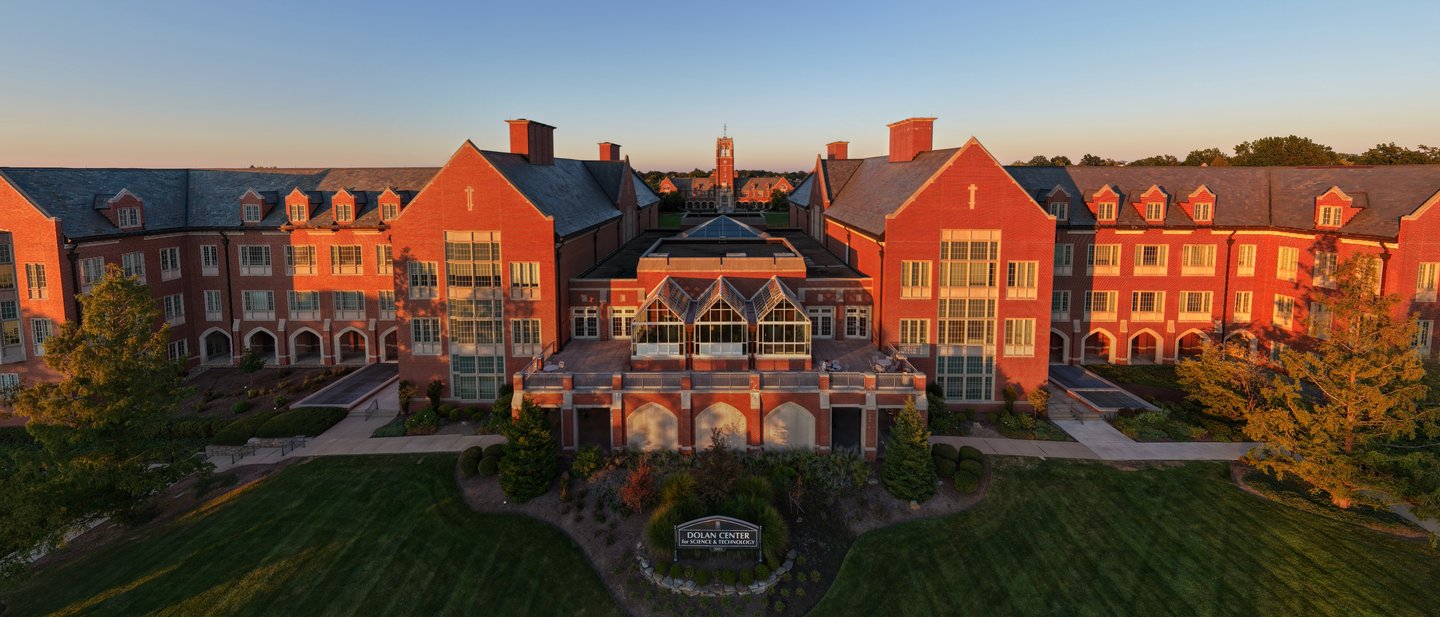
John Carroll University seal · sourceExperience JCU | John Carroll University · sourceJohn Carroll University Virtual Campus Tour · sourceJohn Carroll University - Jesuits.org · source