Admit rate has ranged 58%–79% over the last 5 years — notably volatile. Source: IPEDS via Urban Institute.
Acceptance & SAT from Common Data Set / IPEDS; net price, earnings & graduation from the U.S. Dept. of Education College Scorecard. Figures lag ~1–2 years — verify with the school.
Massachusetts College of Art and Design (MassArt) is a public art school in Boston that operates less like a cloistered conservatory and more like a gritty, urban studio collective. It’s a place where the portfolio matters infinitely more than the test score, and where students dive headfirst into disciplines like Illustration and Film Production within a campus that’s woven directly into the city’s fabric. The vibe is intensely practical and collaborative, producing graduates who are ready to work, though the financial return on that work can be a slow burn in the creative economy.
Admission requirements
Test-blind — scores not considered
Required
High school transcript
Grade point average
Letters of recommendation
College-prep program
Demonstrated competencies
TOEFL (non-native English)
Source: IPEDS Admissions survey (2022) via Urban Institute. Covers formal factors only — it does not reflect essays, extracurriculars, or other holistic criteria.
More details
Undergrad enrollment
1,831
In-state tuition
$15,400
Out-of-state tuition
$43,400
Graduation Rate
69%
On-Campus Housing
40%
Most Popular Major
Illustration (21%)
Demonstrated Interest
Considered
Median Earnings (10yr)
$43,582
Students Receiving Grant/Scholarship Aid
84%
Outcomes & value
Outcomes & value
Median earnings (10 yr)
$43,582
Value (earnings ÷ net price)
1.8×
Median debt at graduation
$25,755
Graduation rate
69%
First-year retention
89%
Reducing loan balance (3 yr)
68%
Pell (lower-income) share
30%
First-gen share (among federal-aid recipients)
23%
Top-earning majors
Median earnings by field of study (highest credential), ~2 years after completion.
Design and Applied Arts$34,298
Architecture$33,993
Teacher Education and Professional Development, Specific Subject Areas$32,563
Film/Video and Photographic Arts$26,353
Fine and Studio Arts$25,932
Source: U.S. Dept. of Education College Scorecard (field-of-study earnings). Figures cover graduates who received federal aid and lag ~2 years; not all programs report data.
On-campus criminal offenses classed as violent (murder/non-negligent manslaughter, rape, robbery, aggravated assault) for the most recent reported year. Source: U.S. Dept. of Education Campus Safety and Security (Clery Act). Counts reflect what’s reported to the school, and urban campuses often report more partly due to non-student incidents nearby — read alongside campus size and setting, not as a standalone safety verdict.
Climate
Pleasant days / yr
91
Summer high
81°F
Winter low
25°F
Annual rain
49"
Annual snow
31.4"
Natural-hazard risk
Relatively Moderate
Pleasant days counts days per year with a mean temperature of 55–75°F, a high at or below 90°F, a low at or above 45°F, and little precipitation — a transparent comfort measure, not a weighting we invented. Computed from Open-Meteo ERA5 daily history (2019–2023). Natural-hazard risk is the county’s composite rating from the FEMA National Risk Index.
Deep dive — research, future-scholar output & economic mobility▾
Research output
Institutional h-index
28
Scholarly works
277
Institutional research volume and impact from OpenAlex. The h-index reflects large research universities and will be low for teaching-focused liberal-arts colleges — not a measure of undergraduate quality.
Economic mobility
Mobility rate
1.3%
Bottom → top quintile
20%
From bottom quintile
7%
Mobility rate = the share of students who both start in the bottom household-income quintile and reach the top quintile; bottom → top is that chance conditional on starting at the bottom. Source: Opportunity Insights Mobility Report Cards (Chetty, Friedman, Saez, Turner & Yagan). Reflects 1980–82 birth cohorts, so it’s directional, not current.
Quick answers
What is the acceptance rate at Massachusetts College of Art and Design?
Massachusetts College of Art and Design's acceptance rate is approximately 76% (Boston, MA), based on the most recent figures we compiled from public and primary sources.
How much does Massachusetts College of Art and Design cost?
At Massachusetts College of Art and Design, the average net price (after aid) is about $24,100 per year. Actual cost varies with financial aid and residency.
How many undergraduates attend Massachusetts College of Art and Design?
Massachusetts College of Art and Design enrolls approximately 1,831 undergraduate students.
Where is Massachusetts College of Art and Design located?
Massachusetts College of Art and Design is located in Boston, MA.
Admissions
MassArt’s admissions process is a portfolio-first, test-blind gateway into a public art school. The school is not highly selective, with an of 76%. Crucially, MassArt no longer requires SAT or ACT scores and does not factor them into admission or merit scholarship decisions, placing all emphasis on the artistic portfolio and academic record. The average GPA of admitted students is 3.56. Demonstrated interest is considered in the admissions process, meaning visits, interviews, and engagement can play a role. The rate—the percentage of admitted students who enroll—is 17.3%. There is no data available on an Early Decision acceptance rate or the share of the class filled via Early Decision, suggesting the school may not offer a binding early decision option or that it is not a major factor in enrollment.
Key Admissions Notes:
Test Policy: Test-blind. SAT/ACT scores are not required or considered.
Selectivity: The school is described as "less selective" and "somewhat selective."
Primary Factors: Artistic portfolio and academic record are paramount.
Earnings = median of students working ~10 years after entry; debt = median of graduates. Value divides 10-yr earnings by one year’s net price — read it as earnings per dollar of annual cost, not a full lifetime ROI; it favors lower-cost schools. Source: U.S. Dept. of Education College Scorecard. Figures lag ~2 years and reflect all students, not your intended major.
The academics at MassArt are described as "equal parts instructional excellence, practical application, and limitless creativity." The curriculum is intensely studio-focused, with majors heavily concentrated in visual and media arts. The most popular majors are Illustration (21% of graduates), Cinematography and Film/Video Production (16%), and Digital Communication and Media/Multimedia (9%). Students also expand their knowledge through coursework in liberal arts subjects like literature, writing, philosophy, film studies, history, musicology, and civic engagement. The student body is described as friendly, inclusive, and passionate about art, with many forming close-knit groups within their majors. The strongest academic programs are not explicitly ranked in the provided sources, but the popularity of Illustration and Film points to well-regarded, industry-focused departments.
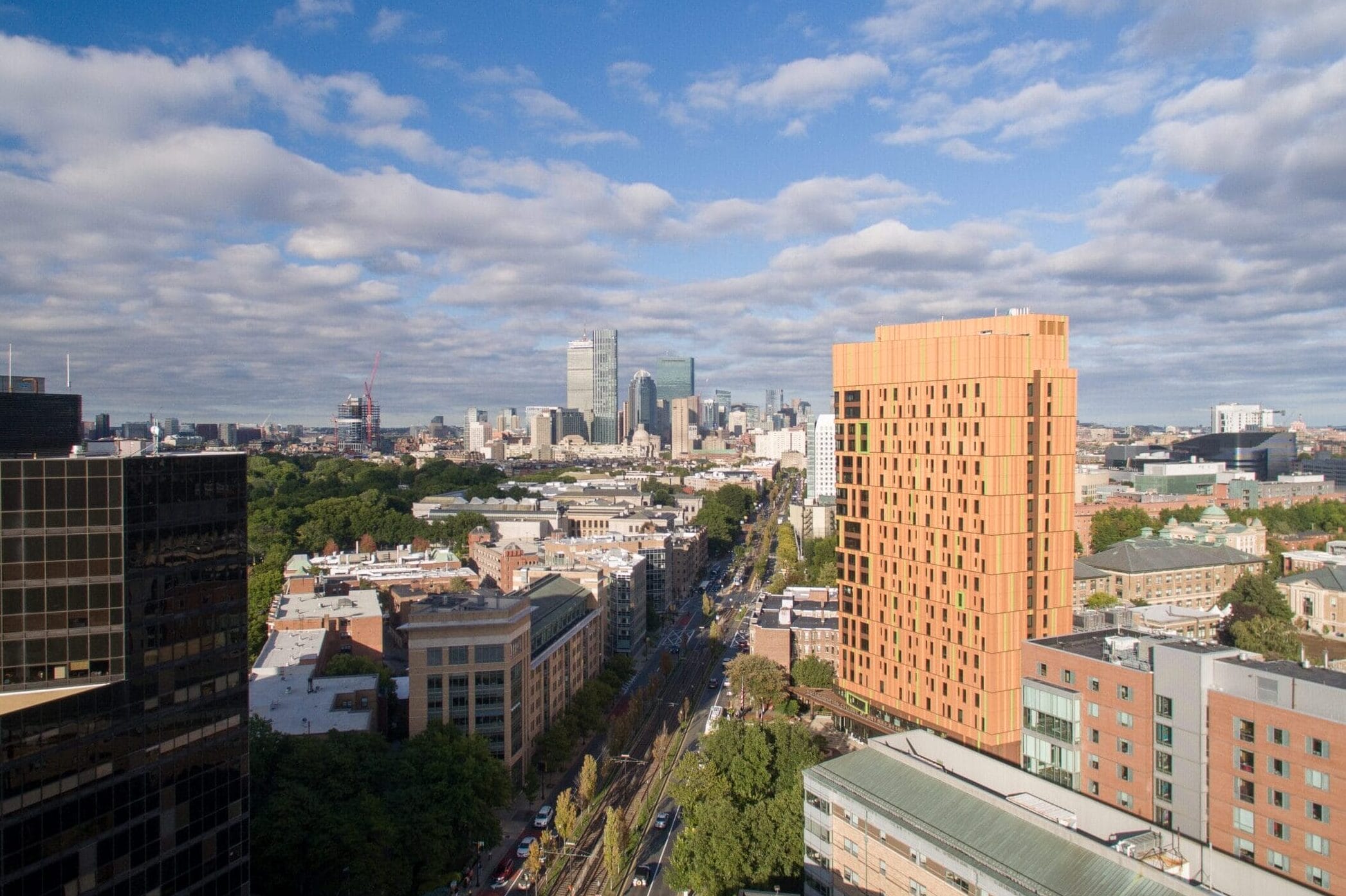
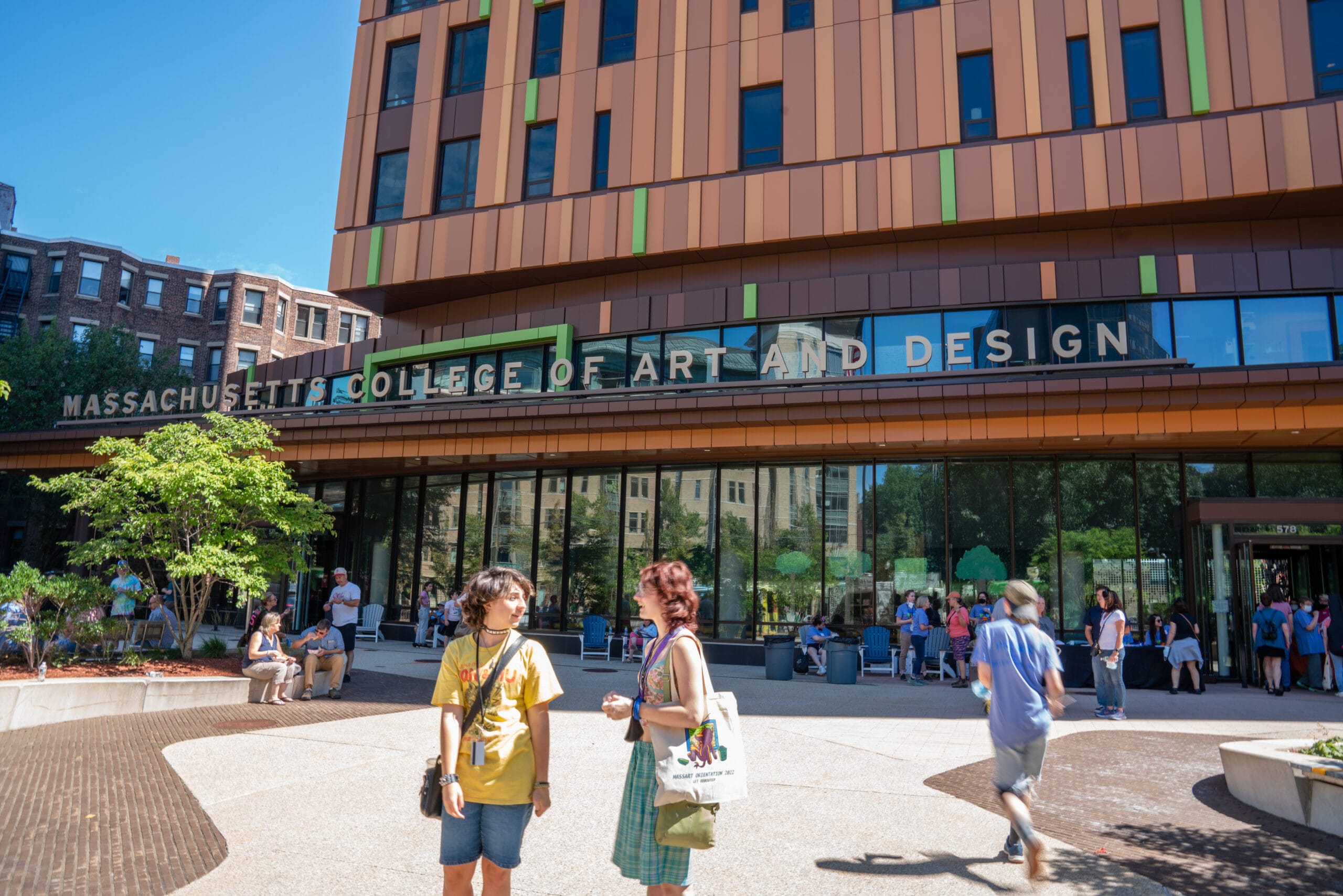
Life at MassArt is defined by its urban integration. The campus blends creative energy with an active community atmosphere—studios, galleries, residence halls, and student spaces are woven into a lively Boston neighborhood. It’s not a traditional, secluded campus; it’s an urban creative hub. Approximately 40% of students live in college-owned, -operated, or -affiliated housing, while 60% live off-campus. The school is situated next to a cluster of other colleges with larger party cultures, including Emerson, Emmanuel, Wentworth, and Northeastern, offering social opportunities beyond the art school bubble. Student life includes clubs, events, and support services designed to help students thrive in the city. Descriptions from visitors note a rich campus life with active art and 3D printing classes, suggesting a hands-on, workshop-oriented environment.
MassArt graduates enter the creative economy, a path known for its non-linear trajectories. The six-year graduation rate is 69%. Early career earnings are modest, with median earnings one year after graduation reported at $24,364. The median earnings five years after graduation are also reported as $24,364 per year, though another source cites an average of $39,463 for recent graduates. Alumni salary data shows a range, with those one to three years out of school and those four to ten years out having different median annual salary ranges (specific figures are not provided in the snippet). The median student debt for recent graduates is $25,755. A significant majority of alumni (81%) are reported to be employed one to ten years after graduation.
As a public institution, MassArt’s costs are lower than many private art schools, but attending still requires significant financial planning. The average —the cost after grants and scholarships—is $24,100. Other sources cite average net prices of $24,864 and $28,696, but the canonical figure overrides these. A substantial 84% of full-time beginning undergraduates receive grant or scholarship aid. The average financial aid package is reported as $9,122. is available for students who demonstrate financial need and have no prior bachelor’s degree. The school also participates in the Massachusetts No Interest Loan (NIL) program, which offers zero-interest loans with a 10-year repayment period to assist with educational costs. The school’s Net Price Calculator is recommended for families to estimate their actual cost.
MassArt stands out as a publicly funded, fiercely practical art school embedded in a major city. Its identity is built on accessibility (a 76% , test-blind policy) and a no-nonsense, studio-driven education that prioritizes portfolio over pedigree. Unlike more insular art institutes, it leverages its Boston location, sitting amid a consortium of other colleges and the city's cultural resources. The curriculum is unapologetically focused on market-ready skills in high-demand creative fields like Illustration and Film Production. This is not a school for the theoretical or faint of heart; it’s for students who want to make things and build a career from day one, accepting the financial realities of the creative professions. The community is described as inclusive and close-knit, forming a supportive network within the larger, sometimes impersonal, urban environment.
Massachusetts College of Art and Design seal · sourceLife in Boston | Massachusetts College of Art and Design (MassArt) · sourceHousing & Dining | Massachusetts College of Art and Design (MassArt) · sourceMassachusetts College of Art and Design - Wikipedia · source
_(54954429453).jpg?width=1600)