Admit rate has ranged 76%–79% over the last 5 years. Source: IPEDS via Urban Institute.
Acceptance & SAT from Common Data Set / IPEDS; net price, earnings & graduation from the U.S. Dept. of Education College Scorecard. Figures lag ~1–2 years — verify with the school.
Messiah University is a private Christian liberal arts school in Pennsylvania that operates less like a cloistered seminary and more like a pragmatic, hands-on training ground for 'strong servant leaders.' Its identity is defined by an explicit, pervasive integration of faith and learning across more than 80 academic programs, from nursing and engineering to the arts. The campus vibe is active, residential, and tradition-bound, with a strong emphasis on community—85% of students live on campus—and outcomes that are solidly practical, with 98% of graduates employed or in graduate school shortly after commencement.
Admission requirements
Test-optional — scores considered if submitted
Required
High school transcript
Grade point average
College-prep program
TOEFL (non-native English)
Considered (not required)
Class rank
Letters of recommendation
Test scores (SAT/ACT)
Source: IPEDS Admissions survey (2022) via Urban Institute. Covers formal factors only — it does not reflect essays, extracurriculars, or other holistic criteria.
More details
Undergrad enrollment
2,259
In-state tuition
$42,240
Out-of-state tuition
$42,240
No-Loan Policy
Not specified in sources
Graduation Rate
75%
Meets Full Need
Not specified in sources
ED Share of Class
No Early Decision program
On-Campus Housing
85% of students
First-Year Retention
Not specified in sources
Demonstrated Interest
Not considered
Median Earnings (10yr)
$54,064
Post-Grad Success Rate
Outcomes & value
Outcomes & value
Median earnings (10 yr)
$54,064
Value (earnings ÷ net price)
2.0×
Median debt at graduation
$25,621
Graduation rate
75%
First-year retention
89%
Reducing loan balance (3 yr)
83%
Pell (lower-income) share
20%
First-gen share (among federal-aid recipients)
18%
Financial health
2.3 / 3.0Meets the federal financial-responsibility standard
U.S. Dept. of Education Financial Responsibility Composite Score (FY2022-23). Scale −1.0 to 3.0; ≥1.5 meets the standard. Reported for private nonprofit & for-profit institutions only — public universities are state-backed and not scored, so this is a stability signal, not a ranking.
Top-earning majors
Median earnings by field of study (highest credential), ~2 years after completion.
Registered Nursing, Nursing Administration, Nursing Research and Clinical Nursing$62,546
Engineering, General$60,623
Accounting and Related Services$53,608
Computer Science$51,273
Business Administration, Management and Operations$49,214
Teacher Education and Professional Development, Specific Levels and Methods
Campus & location
Campus safety
On-campus violent crimes (2024)
4
Per 1,000 students
1.33
On-campus criminal offenses classed as violent (murder/non-negligent manslaughter, rape, robbery, aggravated assault) for the most recent reported year. Source: U.S. Dept. of Education Campus Safety and Security (Clery Act). Counts reflect what’s reported to the school, and urban campuses often report more partly due to non-student incidents nearby — read alongside campus size and setting, not as a standalone safety verdict.
Climate
Pleasant days / yr
88
Summer high
85°F
Winter low
28°F
Annual rain
42.9"
Annual snow
18.7"
Natural-hazard risk
Relatively Moderate
Pleasant days counts days per year with a mean temperature of 55–75°F, a high at or below 90°F, a low at or above 45°F, and little precipitation — a transparent comfort measure, not a weighting we invented. Computed from Open-Meteo ERA5 daily history (2019–2023). Natural-hazard risk is the county’s composite rating from the FEMA National Risk Index.
Deep dive — research, future-scholar output & economic mobility▾
Research output
Institutional h-index
64
Scholarly works
1,046
Institutional research volume and impact from OpenAlex. The h-index reflects large research universities and will be low for teaching-focused liberal-arts colleges — not a measure of undergraduate quality.
Quick answers
What is the acceptance rate at Messiah University?
Messiah University's acceptance rate is approximately 79% (Mechanicsburg, PA), based on the most recent figures we compiled from public and primary sources.
What SAT score do you need for Messiah University?
Admitted students at Messiah University typically score 1110–1350 on the SAT (the middle-50% range). Scores outside this band are still admitted, especially with strong applications.
How much does Messiah University cost?
At Messiah University, the average net price (after aid) is about $26,502 per year. Actual cost varies with financial aid and residency.
How many undergraduates attend Messiah University?
Messiah University enrolls approximately 2,259 undergraduate students.
Where is Messiah University located?
Messiah University is located in Mechanicsburg, PA.
Admissions
Messiah's admissions process is accessible, with a high that reflects its mission to serve a broad segment of students seeking a faith-based education. The university is considered 'less selective' or 'somewhat selective' by most external rankings. The middle 50% SAT range for admitted students is 1110–1350, with some sources citing a similar ACT range of 23–30. The indicates that Messiah does not offer an Early Decision program, and therefore does not report an Early Decision acceptance rate. Demonstrated interest is not considered in admissions decisions, according to analysis of Common Data Set Section C7. The overall rate—the percentage of admitted students who enroll—is reported as 31%.
Earnings = median of students working ~10 years after entry; debt = median of graduates. Value divides 10-yr earnings by one year’s net price — read it as earnings per dollar of annual cost, not a full lifetime ROI; it favors lower-cost schools. Source: U.S. Dept. of Education College Scorecard. Figures lag ~2 years and reflect all students, not your intended major.
$40,621
Marketing$37,054
Teacher Education and Professional Development, Specific Subject Areas$35,594
Source: U.S. Dept. of Education College Scorecard (field-of-study earnings). Figures cover graduates who received federal aid and lag ~2 years; not all programs report data.
Messiah describes itself as 'nationally recognized for its integration of top-tier academics and Christian faith' and as a 'nationally ranked private Christian college of the liberal and applied arts and sciences.' The curriculum spans over 80 undergraduate majors, minors, and programs. The most popular majors, based on graduate counts, are Health Service Preparatory Studies, Nursing, Psychology, Biology, and Business. Specific programs highlighted include Early Childhood Education and Teaching, Family and Community Services, Mechanical Engineering, and Fine/Studio Arts. The academic philosophy emphasizes choosing a major that aligns with a student's interests, strengths, and abilities, and aims to educate graduates who combine intellectual rigor with a service-oriented mindset.
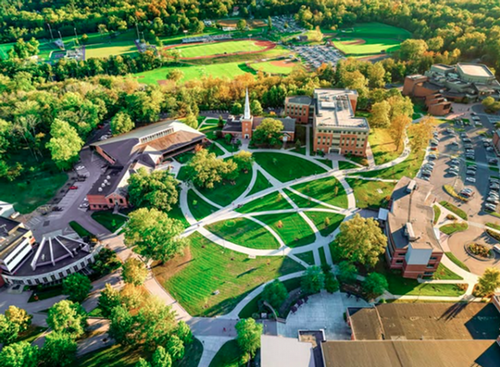
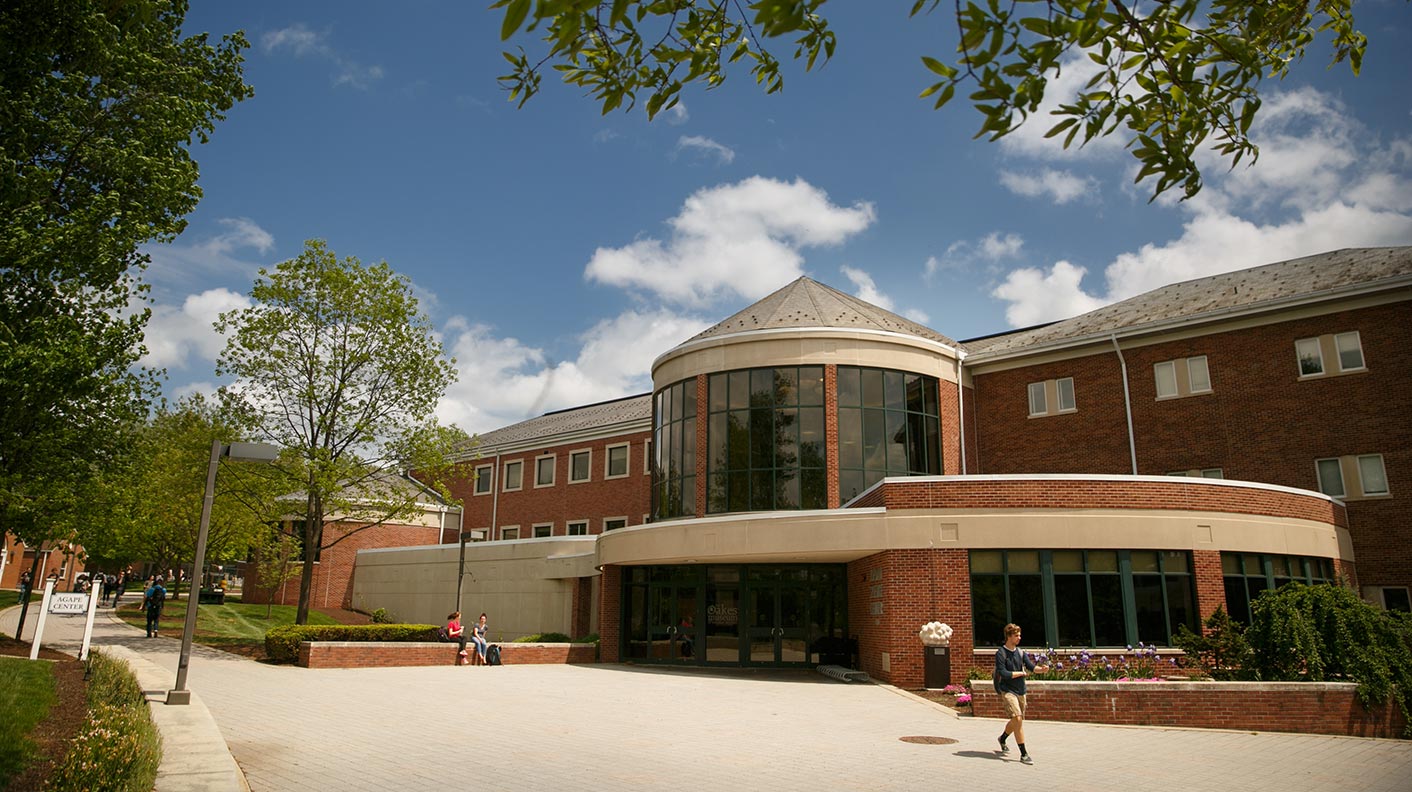
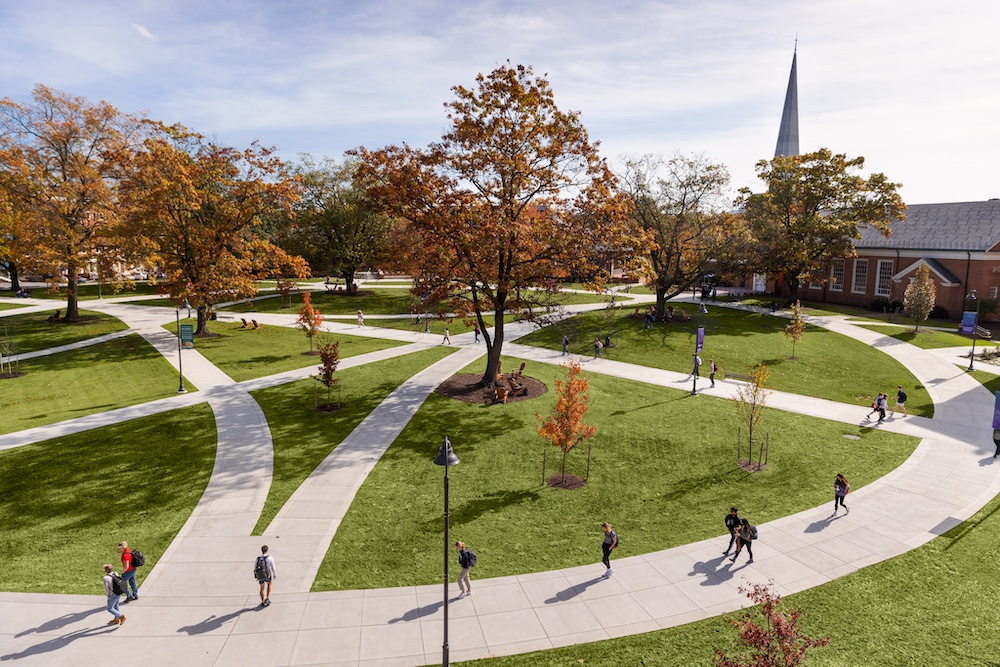
Life at Messiah is intensely residential and community-focused, with 85% of students living in college-owned, -operated, or -affiliated housing. The campus is described as an 'active, busy place' where students form lifelong friendships. A strong Christian identity is central, influencing campus life through activities like worship and mandatory chapel attendance. The university seeks to provide educational and cultural opportunities to both the campus and local community. Students are allowed to stay on-campus during Fall break and Thanksgiving break, fostering a continuous residential experience. The overall atmosphere is one of a 'supportive community' where traditions thrive.
Messiah University reports strong post-graduation outcomes, with 98% of all graduates employed or in professional school within 6-9 months of graduation. The institution's overall graduation rate is reported in the high 70s, with one source citing a 78% rate that ranks in the top 15% nationally, and another noting a 77% five-year completion rate. Early-career earnings for graduates are reported around $38,000. The university's career services obtain a 71% response rate on their follow-up surveys to track these outcomes.
Messiah University offers a variety of financial aid options, including scholarships, grants, loans, and job opportunities. The average financial aid package is reported as $37,684, with 66.56% of students receiving financial aid. The university provides a Messiah University Grant, which is institutional aid based on a combination of demonstrated financial need and academic criteria. Examples of aid components include a Dean's Scholarship ($1,000), the Messiah University Grant ($10,853), Pell Grants, and state grants like the PA State Grant. The university has a calculator to help families estimate costs. The financial aid policy includes adjustments if a student's total aid exceeds their demonstrated need by more than $300. The sources do not indicate that Messiah University has a 'no-loan' policy for meeting full financial need.
Messiah University carves out a distinctive niche by refusing to silo faith from profession. It's a place where nursing clinicals, engineering labs, and art studios are explicitly framed as Christian callings. This integration isn't theoretical; it's operational, shaping a campus where mandatory chapel coexists with a near-perfect job placement rate. The community is intentionally residential and tight-knit—85% live on campus—creating an environment where 'servant leadership' is both a curriculum theme and a lived experience. Unlike many faith-based schools, Messiah leans into applied, high-demand fields, producing graduates who are as likely to be found in a hospital or a boardroom as in a church. It’s a pragmatic, outcome-oriented Christian college that measures success not just in spiritual formation, but in employability and societal impact.
Messiah University seal · sourceCampus and Building Services | Messiah, a private Christian University in PA · sourceAbout Messiah University | Christian College in Pennsylvania · sourceAbout Messiah University | Christian College in Pennsylvania · source