Admit rate has ranged 70%–75% over the last 5 years. Source: IPEDS via Urban Institute.
Acceptance & SAT from Common Data Set / IPEDS; net price, earnings & graduation from the U.S. Dept. of Education College Scorecard. Figures lag ~1–2 years — verify with the school.
New College of Florida is Florida's designated honors college, a small, fiercely independent public liberal arts institution perched on Sarasota Bay. It operates on a distinctive academic contract system, where students design their own majors and receive narrative evaluations instead of grades, cultivating a culture of intense intellectual self-direction. The campus vibe is a unique blend of academic rigor and Gulf Coast casual, set among historic mansions and modernist architecture, though recent years have seen significant institutional upheaval.
Admission requirements
Test scores required
Required
High school transcript
Grade point average
Test scores (SAT/ACT)
College-prep program
TOEFL (non-native English)
Considered (not required)
Class rank
Letters of recommendation
Source: IPEDS Admissions survey (2022) via Urban Institute. Covers formal factors only — it does not reflect essays, extracurriculars, or other holistic criteria.
More details
Undergrad enrollment
843
In-state tuition
$6,916
Out-of-state tuition
$29,944
Graduation Rate
67%
Full-Time Faculty
98%
Early Action Deadline
November 1
Median Earnings (10yr)
$48,082
Graduate with Zero Debt
63%
Regular Decision Deadline
July 1
Outcomes & value
Outcomes & value
Median earnings (10 yr)
$48,082
Value (earnings ÷ net price)
6.7×
Median debt at graduation
$17,375
Graduation rate
67%
First-year retention
76%
Reducing loan balance (3 yr)
71%
Pell (lower-income) share
34%
First-gen share (among federal-aid recipients)
21%
Top-earning majors
Median earnings by field of study (highest credential), ~2 years after completion.
Liberal Arts and Sciences, General Studies and Humanities$22,444
Source: U.S. Dept. of Education College Scorecard (field-of-study earnings). Figures cover graduates who received federal aid and lag ~2 years; not all programs report data.
Campus & location
Campus safety
On-campus violent crimes (2024)
0
Per 1,000 students
0.00
On-campus criminal offenses classed as violent (murder/non-negligent manslaughter, rape, robbery, aggravated assault) for the most recent reported year. Source: U.S. Dept. of Education Campus Safety and Security (Clery Act). Counts reflect what’s reported to the school, and urban campuses often report more partly due to non-student incidents nearby — read alongside campus size and setting, not as a standalone safety verdict.
Climate
Pleasant days / yr
139
Summer high
87°F
Winter low
58°F
Annual rain
48.2"
Natural-hazard risk
Relatively High
Pleasant days counts days per year with a mean temperature of 55–75°F, a high at or below 90°F, a low at or above 45°F, and little precipitation — a transparent comfort measure, not a weighting we invented. Computed from Open-Meteo ERA5 daily history (2019–2023). Natural-hazard risk is the county’s composite rating from the FEMA National Risk Index.
Deep dive — research, future-scholar output & economic mobility▾
Research output
Institutional h-index
81
Scholarly works
1,884
Institutional research volume and impact from OpenAlex. The h-index reflects large research universities and will be low for teaching-focused liberal-arts colleges — not a measure of undergraduate quality.
Quick answers
What is the acceptance rate at New College of Florida?
New College of Florida's acceptance rate is approximately 73% (Sarasota, FL), based on the most recent figures we compiled from public and primary sources.
What SAT score do you need for New College of Florida?
Admitted students at New College of Florida typically score 1060–1245 on the SAT (the middle-50% range). Scores outside this band are still admitted, especially with strong applications.
How much does New College of Florida cost?
At New College of Florida, the average net price (after aid) is about $7,195 per year. Actual cost varies with financial aid and residency.
How many undergraduates attend New College of Florida?
New College of Florida enrolls approximately 843 undergraduate students.
Where is New College of Florida located?
New College of Florida is located in Sarasota, FL.
Admissions
New College practices a selective admissions process, though it is notably more accessible than many elite liberal arts colleges. The school accepts the Common Application with a July 1 deadline for regular decision and offers an Early Action option with a November 1 deadline. For the Fall 2026 admitted class, the middle 50% range for high school GPA was 3.7 to 4.4, with SAT scores between 1100 and 1320 and ACT scores between 22 and 29. The admissions office states that college preparatory course requirements are considered for admission. Notably, the rate—the percentage of admitted students who enroll—is reported as 19%, which is considered medium. Fall 2023 saw New College welcome its largest-ever incoming cohort and achieve its highest total enrollment in five years.
The academic experience at New College is its defining, and most unconventional, feature. Students choose from over 50 undergraduate areas of concentration (majors) across the arts, sciences, and humanities, including unique options like Animal Wellbeing & Conservation and Biopsychology. The curriculum is built around an honors contract system, granting students exceptional agency to design their own academic paths and pursue independent research. Instead of traditional letter grades, students receive detailed narrative evaluations from professors, a practice intended to foster deeper intellectual engagement and self-reflection. The faculty is almost entirely full-time, with a reported 98% full-time faculty ratio. This model demands a high level of self-drive and inquisitiveness from students, creating an environment described as "truly enriching and difficult." The school also offers a master's degree in applied data science.
Earnings = median of students working ~10 years after entry; debt = median of graduates. Value divides 10-yr earnings by one year’s net price — read it as earnings per dollar of annual cost, not a full lifetime ROI; it favors lower-cost schools. Source: U.S. Dept. of Education College Scorecard. Figures lag ~2 years and reflect all students, not your intended major.
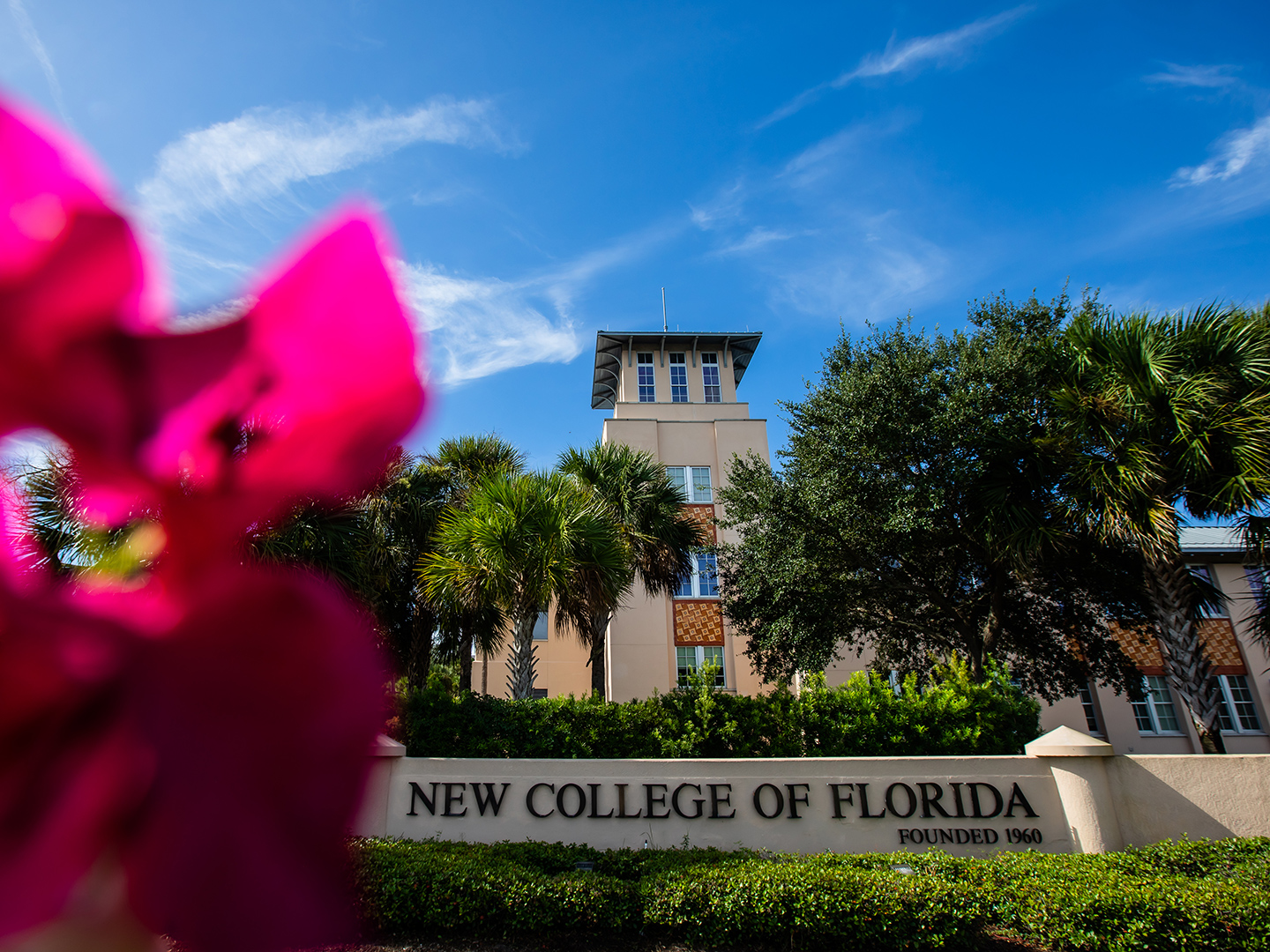
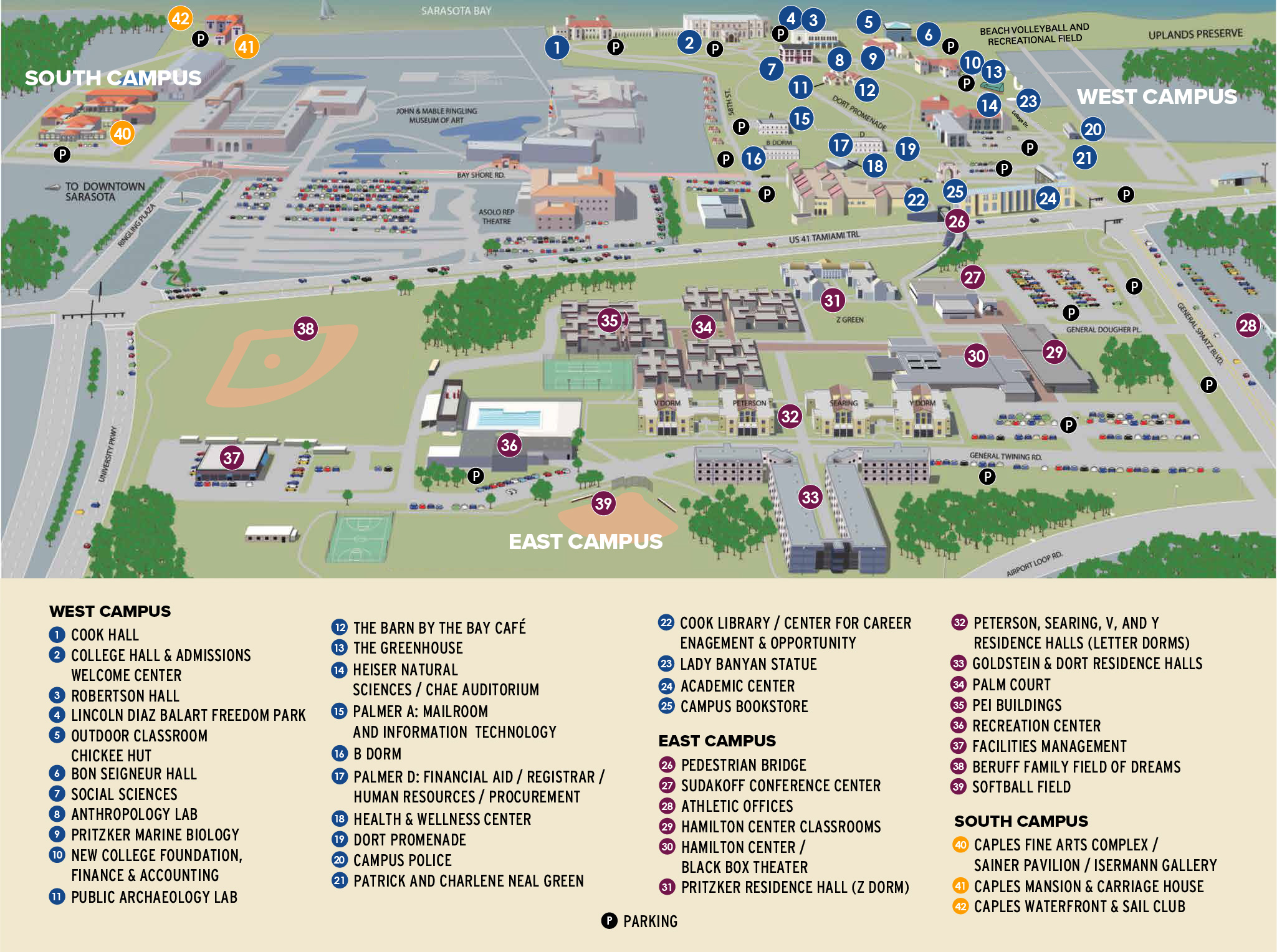
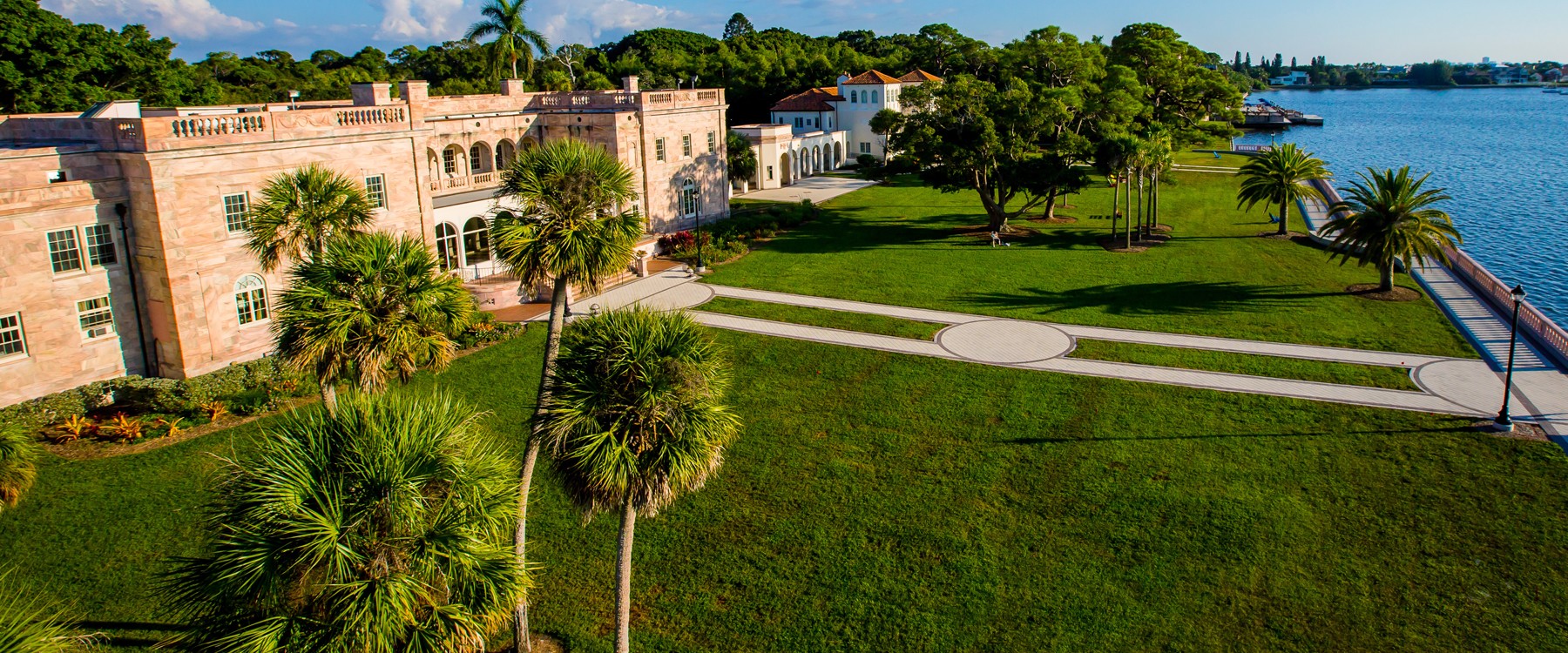
Life on the 110-acre campus on Sarasota Bay blends academic intensity with a distinctly laid-back, creative Gulf Coast energy. The campus itself is a scenic mix of historic Gilded Age mansions and modernist architecture, with students socializing in spaces like Palm Court and Z Green. Located an hour south of Tampa and St. Petersburg, Sarasota provides a cultural and recreational backdrop. Campus culture is characterized by student-driven initiative; social gatherings are often creatively organized by students themselves, ranging from raves and concerts to movie nights hosted in dorm rooms. The offices of Student Activities & Campus Engagement and Campus Recreation provide support and structure within this flexible environment.
Outcomes data for New College graduates presents a mixed picture, with salary potential appearing to increase significantly over time. According to the institution, the median salary for graduates within five years of graduation is $55,000. That figure reportedly jumps to $106,300 within ten years of graduation. However, a separate state report listed the median first-year earnings for graduates with bachelor's degrees from New College at $28,000, the lowest among Florida's State University System institutions at the time of that report. The school also highlights that students who participate in certain seminars are retained at a higher rate, which improves the six-year graduation rate.
As Florida's public honors college, New College offers a relatively low , especially for in-state residents. The school reports that 99% of full-time, first-year undergraduates receive grant or scholarship aid. The average financial aid award is reported as $11,886, and the average after scholarships and grants is listed as $8,603. The institution promotes a statistic that 63% of students graduate with zero debt. Financial aid includes federal subsidized loans, which are offered based on demonstrated financial need, as well as unsubsidized loans and alternative loans that are not need-based. There is no indication in the provided sources that New College has a "no-loan" policy that meets 100% of need with grants alone.
New College of Florida stands out as an academic experiment within the state system—a tiny, public honors college built on a fiercely independent, student-directed model. Its core identity is rooted in the contract system and narrative evaluations, which attract intellectually autonomous students who thrive outside traditional structures. The physical setting—a bayside campus blending historic and modern architecture—complements its unconventional vibe. However, its distinctiveness has also been a source of tension; the sources reference "many changes being forced" and significant institutional upheaval, suggesting a college in a state of notable flux. It occupies a unique niche: a highly affordable public option offering an elite liberal arts college's pedagogical approach, for students willing to navigate both its academic demands and its evolving institutional landscape.
New College of Florida seal · sourceHome - New College of Florida · sourceCampus Map - New College of Florida · sourceNew College of Florida - State University System of Florida · source