Loading…
← All schools
New England Tractor Trailer Training School of Connecticut
Somers, CTprivate forprofitwww.nettts.com/
Avg net price
$15,284
Earnings (10 yr)
$44,444
Acceptance & SAT from Common Data Set / IPEDS; net price, earnings & graduation from the U.S. Dept. of Education College Scorecard. Figures lag ~1–2 years — verify with the school.
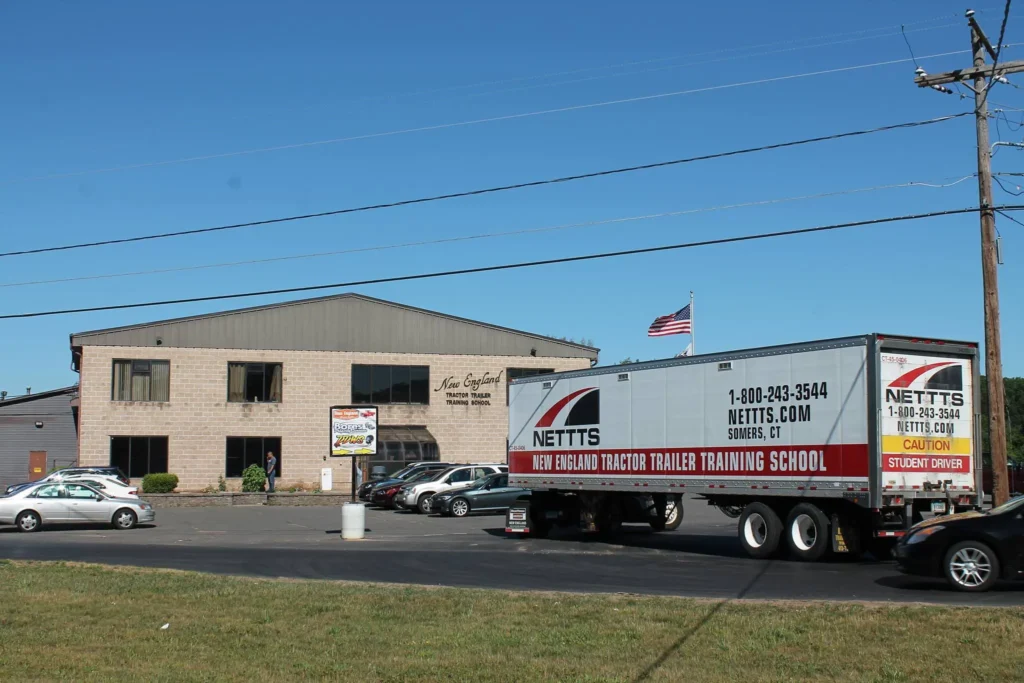
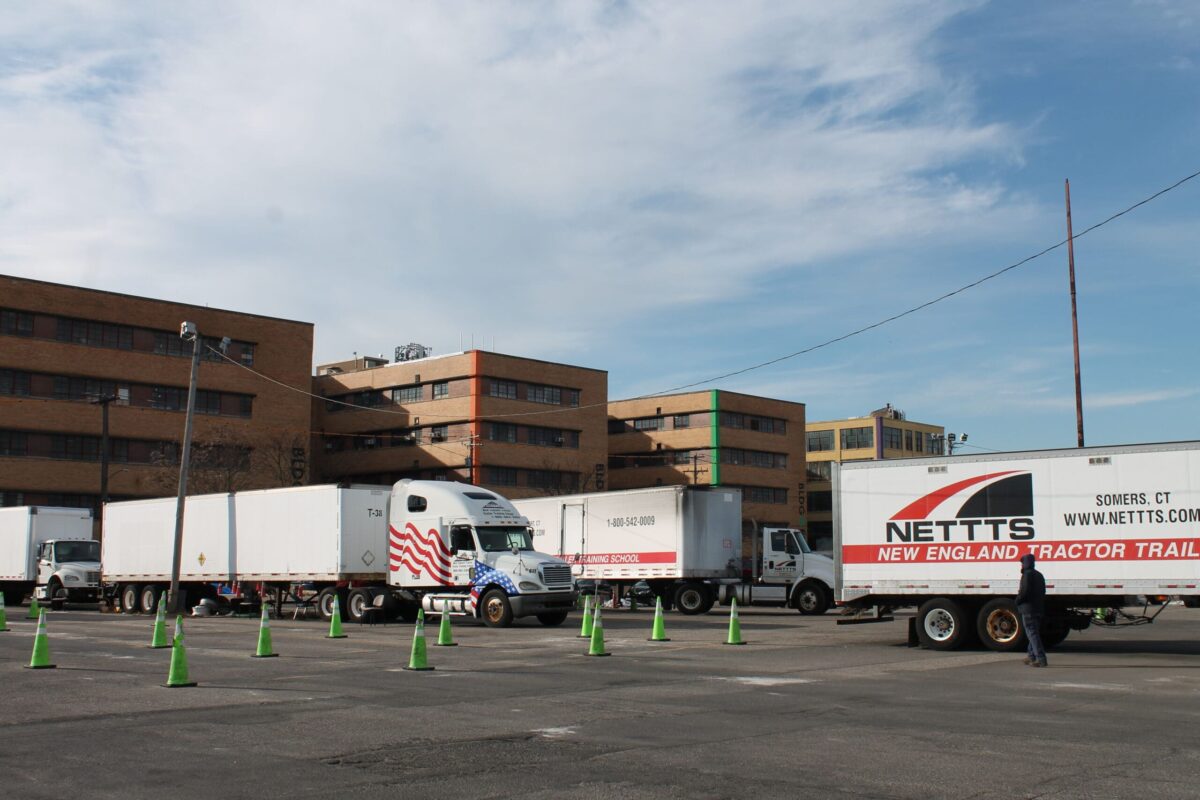
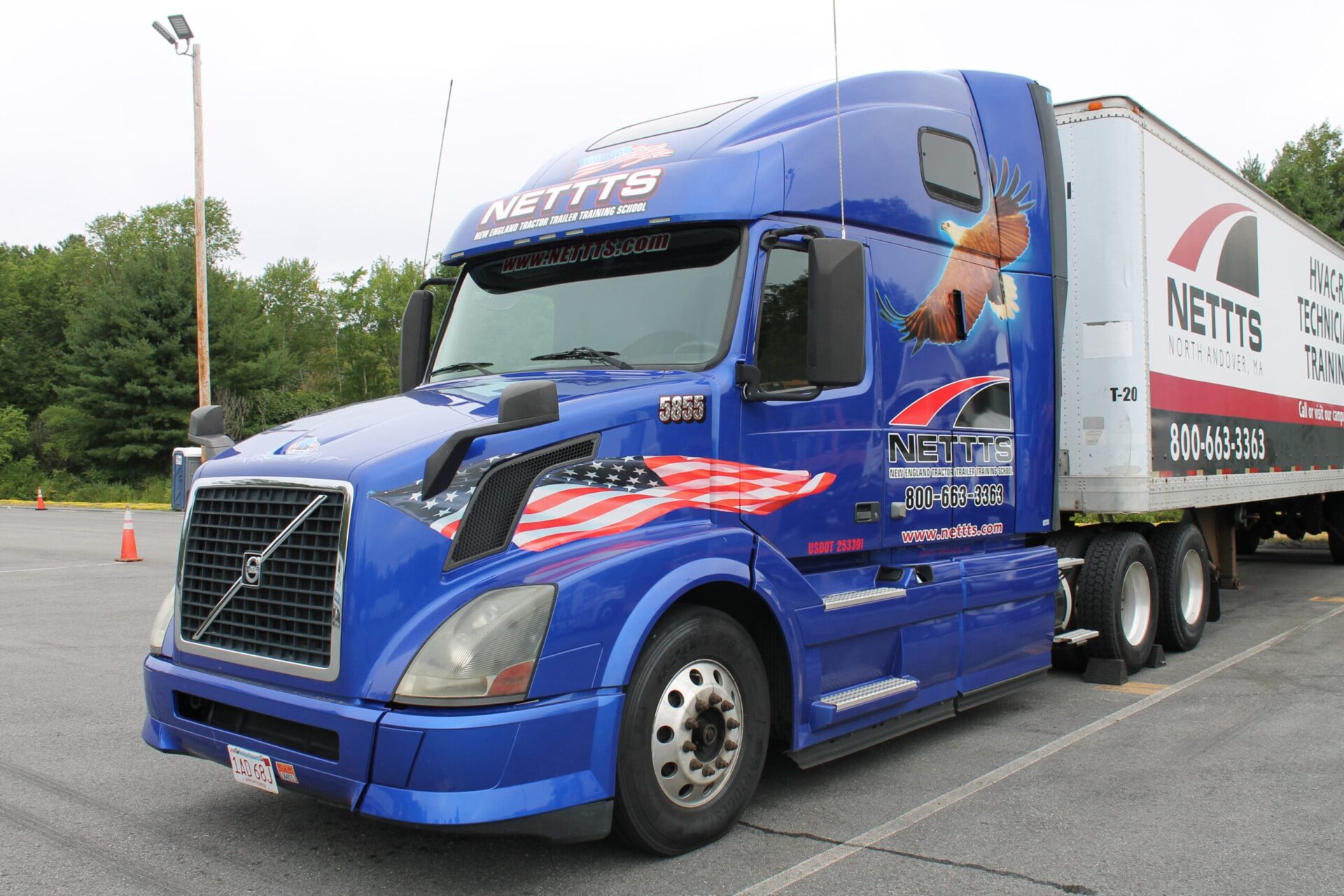
New England Tractor Trailer Training School of Connecticut (NETTTS) is a no-nonsense, single-purpose vocational institution where the admissions gate is wide open, but the road to graduation is a demanding, hands-on proving ground. Founded 60 years ago by a former truck driver in Somers, CT, it exists to turn adults into certified commercial drivers and HVAC technicians with a speed and focus that traditional colleges can't match. This is a place where the classroom is a yard full of rigs, the credential is a Commercial Driver's License, and the payoff is a steady, middle-class income shortly after a few months of training.
More details
- Undergrad enrollment
- 289
- Most Popular Major
- Truck, Bus, and Commercial Vehicle Operation
- Median Earnings (10yr)
- $44,444
- Median Debt at Graduation
- $6,333
- Graduation Rate (CDL Program)
- 72%
Outcomes & value
Outcomes & value
- Median earnings (10 yr)
- $44,444
- Value (earnings ÷ net price)
- 2.9×
- Median debt at graduation
- $6,333
- Reducing loan balance (3 yr)
- 38%
- Pell (lower-income) share
- 45%
- First-gen share (among federal-aid recipients)
- 67%
Earnings = median of students working ~10 years after entry; debt = median of graduates. Value divides 10-yr earnings by one year’s net price — read it as earnings per dollar of annual cost, not a full lifetime ROI; it favors lower-cost schools. Source: U.S. Dept. of Education College Scorecard. Figures lag ~2 years and reflect all students, not your intended major.
Financial health
2.4 / 3.0Meets the federal financial-responsibility standard
U.S. Dept. of Education Financial Responsibility Composite Score (FY2022-23). Scale −1.0 to 3.0; ≥1.5 meets the standard. Reported for private nonprofit & for-profit institutions only — public universities are state-backed and not scored, so this is a stability signal, not a ranking.
Campus & location
Campus safety
- On-campus violent crimes (2024)
- 0
On-campus criminal offenses classed as violent (murder/non-negligent manslaughter, rape, robbery, aggravated assault) for the most recent reported year. Source: U.S. Dept. of Education Campus Safety and Security (Clery Act). Counts reflect what’s reported to the school, and urban campuses often report more partly due to non-student incidents nearby — read alongside campus size and setting, not as a standalone safety verdict.
Climate
- Pleasant days / yr
- 91
- Summer high
- 81°F
- Winter low
- 24°F
- Annual rain
- 50.5"
- Annual snow
- 31.1"
Pleasant days counts days per year with a mean temperature of 55–75°F, a high at or below 90°F, a low at or above 45°F, and little precipitation — a transparent comfort measure, not a weighting we invented. Computed from Open-Meteo ERA5 daily history (2019–2023).
Quick answers
- How much does New England Tractor Trailer Training School of Connecticut cost?
- At New England Tractor Trailer Training School of Connecticut, the average net price (after aid) is about $15,284 per year. Actual cost varies with financial aid and residency.
- How many undergraduates attend New England Tractor Trailer Training School of Connecticut?
- New England Tractor Trailer Training School of Connecticut enrolls approximately 289 undergraduate students.
- Where is New England Tractor Trailer Training School of Connecticut located?
- New England Tractor Trailer Training School of Connecticut is located in Somers, CT.
Admissions
NETTTS operates on an open admission policy: if you meet the basic requirements, you're in. The school's website states unequivocally that it "has an open admission policy, which means that all students who apply are accepted." This results in a reported 100% . The barrier to entry isn't grades or test scores—SAT/ACT are irrelevant here—but practical readiness. Applicants must be at least 18 years old and complete a personal interview with an authorized NETTTS representative. For those eyeing the HVACR program, there is an additional prerequisite of possessing a valid driver's license. The student body is predominantly full-time, with 264 full-time and 25 part-time students, making the full-time enrollment rate 91.3%. There is no Early Decision process, no consideration of demonstrated interest, and no complex ; the evaluation is straightforward and geared toward determining a candidate's seriousness and ability to handle the intensive training.
Academics
The academic offering is ruthlessly focused. NETTTS is a monolith of vocational training, with its entire curriculum built around a single, high-demand field: Transportation and Materials Moving. Its most popular—and essentially only—major is Truck, Bus, and Commercial Vehicle Operation. The program is not about theory; it's a hands-on immersion designed to prepare students for the Commercial Driver's License (CDL) exam and a career on the road. The school also offers a Commercial Heavy Straight Truck Training program and has an HVACR (Heating, Ventilation, Air Conditioning, and Refrigeration) track for those seeking a different skilled trade. Success is measured by certification and employability, not semesters. The average graduation rate is reported at 69%, though specific program rates can be higher; for instance, the CDL program graduation rate is 72%, and the Heavy Straight Truck training boasts a 91% completion rate. This is a place where the "campus" is a training yard, and the final exam involves maneuvering a 53-foot trailer.
Compare New England Tractor Trailer Training School of Connecticut
See colleges similar to New England Tractor Trailer Training School of Connecticut →Sources
- New England Tractor Trailer Training School of Connecticut
- Admissions
- New England Tractor Trailer Training School of Connecticut
- New England Tractor Trailer Training School of Connecticut - QuantAdmit
- New England Tractor Trailer Training School of Connecticut Statistics
- Common Data Set 2024-2025
- New England Tractor Trailer Training School - Connecticut
- Admission Statistics
- University of Connecticut Admissions
- New England Tractor Trailer Training School of CT- ...