Admit rate has ranged 46%–58% over the last 5 years — notably volatile. Source: IPEDS via Urban Institute.
Acceptance & SAT from Common Data Set / IPEDS; net price, earnings & graduation from the U.S. Dept. of Education College Scorecard. Figures lag ~1–2 years — verify with the school.
North Carolina A&T State University is the nation's largest historically Black university, a land-grant, doctoral research institution that has carved out a distinctive identity as an engine of social mobility and a powerhouse in STEM and agriculture. Its campus in Greensboro hums with a potent blend of Aggie Pride, a deeply engaged student body, and a practical, career-focused academic culture that produces a high percentage of Black engineers and agricultural scientists. This is a place where tradition meets tangible outcomes, offering a supportive, vibrant community for students who are ready to work.
Admission requirements
Test-optional — scores considered if submitted
Required
High school transcript
Grade point average
College-prep program
TOEFL (non-native English)
Considered (not required)
Class rank
Test scores (SAT/ACT)
Source: IPEDS Admissions survey (2022) via Urban Institute. Covers formal factors only — it does not reflect essays, extracurriculars, or other holistic criteria.
More details
Undergrad enrollment
12,182
In-state tuition
$6,813
Out-of-state tuition
$20,673
Graduation Rate
57%
Early Action Deadline
Nov 1
Median Earnings (10yr)
$44,440
Regular Decision Deadline
Feb 1
Outcomes & value
Outcomes & value
Median earnings (10 yr)
$44,440
Value (earnings ÷ net price)
4.1×
Median debt at graduation
$27,000
Graduation rate
57%
First-year retention
78%
Reducing loan balance (3 yr)
27%
Pell (lower-income) share
52%
First-gen share (among federal-aid recipients)
28%
Top-earning majors
Median earnings by field of study (highest credential), ~2 years after completion.
Computer Science$68,666
Mechanical Engineering$68,666
Industrial Engineering$66,541
Chemical Engineering$61,064
Registered Nursing, Nursing Administration, Nursing Research and Clinical Nursing$59,042
Civil Engineering$55,964
Campus & location
Campus safety
On-campus violent crimes (2024)
12
Per 1,000 students
0.86
On-campus criminal offenses classed as violent (murder/non-negligent manslaughter, rape, robbery, aggravated assault) for the most recent reported year. Source: U.S. Dept. of Education Campus Safety and Security (Clery Act). Counts reflect what’s reported to the school, and urban campuses often report more partly due to non-student incidents nearby — read alongside campus size and setting, not as a standalone safety verdict.
Climate
Pleasant days / yr
103
Summer high
87°F
Winter low
36°F
Annual rain
45.2"
Annual snow
4.4"
Natural-hazard risk
Relatively Moderate
Pleasant days counts days per year with a mean temperature of 55–75°F, a high at or below 90°F, a low at or above 45°F, and little precipitation — a transparent comfort measure, not a weighting we invented. Computed from Open-Meteo ERA5 daily history (2019–2023). Natural-hazard risk is the county’s composite rating from the FEMA National Risk Index.
Quick answers
What is the acceptance rate at North Carolina A & T State University?
North Carolina A & T State University's acceptance rate is approximately 50% (Greensboro, NC), based on the most recent figures we compiled from public and primary sources.
What SAT score do you need for North Carolina A & T State University?
Admitted students at North Carolina A & T State University typically score 1020–1190 on the SAT (the middle-50% range). Scores outside this band are still admitted, especially with strong applications.
How much does North Carolina A & T State University cost?
At North Carolina A & T State University, the average net price (after aid) is about $10,846 per year. Actual cost varies with financial aid and residency.
How many undergraduates attend North Carolina A & T State University?
North Carolina A & T State University enrolls approximately 12,182 undergraduate students.
Where is North Carolina A & T State University located?
North Carolina A & T State University is located in Greensboro, NC.
Admissions
Admissions at NC A&T are selective but accessible, with a process that prioritizes academic preparation for its rigorous programs, particularly in STEM. While the university has an open admission policy for most in-state students, it employs selective admission for out-of-state applicants and for specific high-demand programs. The middle 50% of admitted students for the 2025 class presented a weighted GPA between 3.52 and 4.2, with SAT scores ranging from 1030 to 1240 and ACT scores from 17 to 24. The university offers both Early Action (with a November 1 deadline) and Regular Decision (February 1) plans, but the provided sources do not specify differential between these plans or indicate that demonstrated interest is a formal factor in evaluation.
Earnings = median of students working ~10 years after entry; debt = median of graduates. Value divides 10-yr earnings by one year’s net price — read it as earnings per dollar of annual cost, not a full lifetime ROI; it favors lower-cost schools. Source: U.S. Dept. of Education College Scorecard. Figures lag ~2 years and reflect all students, not your intended major.
Source: U.S. Dept. of Education College Scorecard (field-of-study earnings). Figures cover graduates who received federal aid and lag ~2 years; not all programs report data.
NC A&T's academic identity is defined by its strength in science, technology, engineering, and agriculture (STEM), grounded in its land-grant mission. The curriculum emphasizes interdisciplinary learning and real-world application, informed by developments in fields like AI. While the university offers a broad range of majors and minors, it is particularly known for producing a high percentage of graduates in engineering, agriculture, nursing, journalism, and accounting. The academic environment is described as having high standards, supported by faculty and resources focused on student success. This practical, career-oriented approach is a hallmark of the A&T experience.
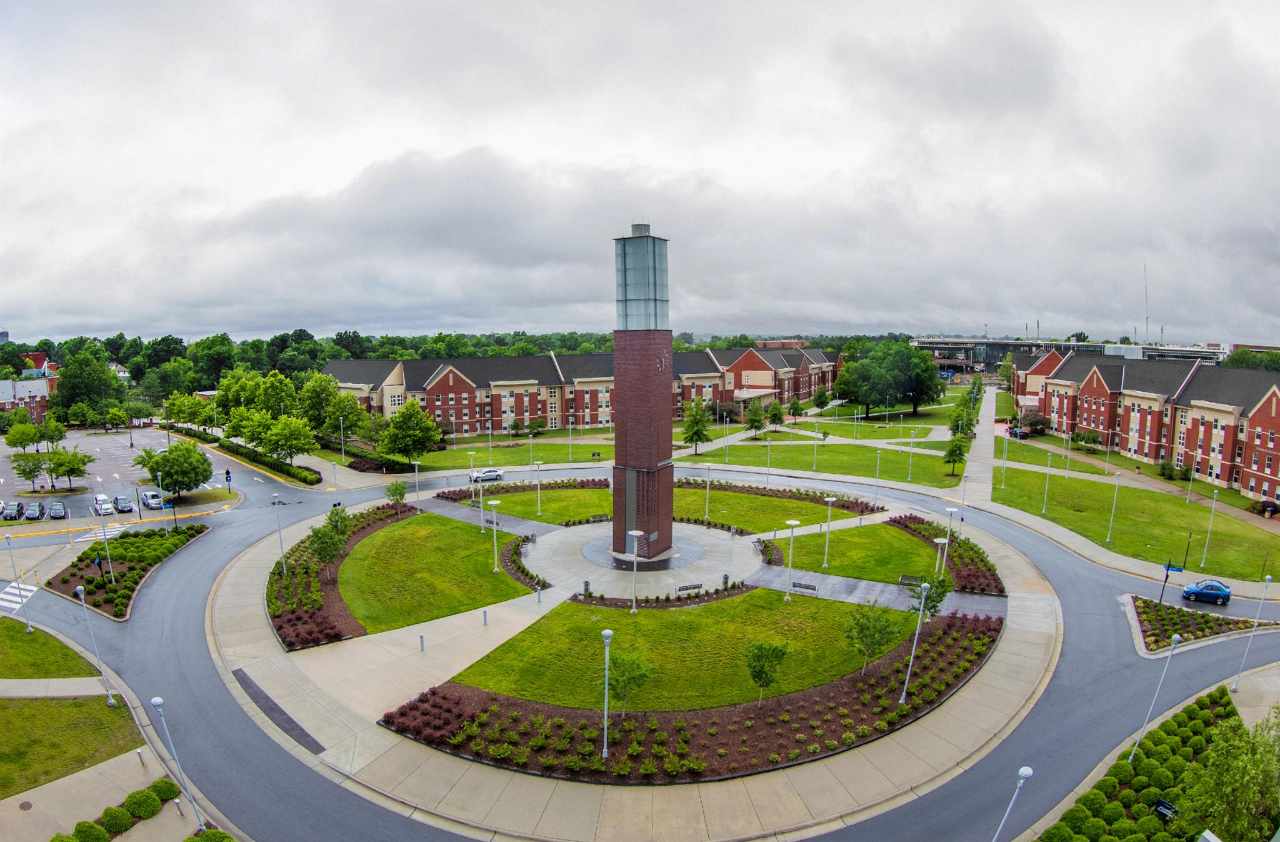
Life on the Greensboro campus is vibrant and deeply communal, centered around a strong sense of Aggie identity. The university offers a wide array of student organizations, a very active Greek life community of fraternities and sororities, and frequent campus events that foster connection. For many students, particularly those from predominantly white educational backgrounds, A&T offers a profoundly welcoming and affirming environment to explore Black culture and identity. Living on campus is promoted as more than just housing—it's framed as an integral part of becoming part of a community where lifelong friendships and leadership skills are forged. The social fabric is woven from athletics, varied clubs, and a palpable school spirit.
NC A&T delivers strong value and social mobility, with earnings that grow substantially after graduation. While the four-year graduation rate has been reported at levels like 36% and 51% in different sources, the six-year graduation rate is a more telling metric for this student population. Earnings data shows promising trajectories: graduates report a median salary of around $36,638 six years after entry, which grows to approximately $49,710 per year five years after graduation. This represents a significant increase from earnings one year out of school, which are around $39,098. The outcomes reflect the university's success in launching graduates, particularly in technical and professional fields, into the workforce with solid earning potential.
NC A&T's standout feature is its remarkable affordability, offering a high-value education at a far below the national average for four-year colleges. Financial aid is available in the form of grants, scholarships, work-study, and low-interest student loans, with the average net price after aid reported around $10,258 per year. The university acknowledges that some students cannot meet the full and offers need-based state grants for North Carolina residents. The provided sources do not indicate that NC A&T has a "no-loan" financial aid policy or a policy of meeting 100% of demonstrated financial need for all admitted students. Its strength lies in providing substantial aid packages that make its quality programs accessible.
North Carolina A&T stands out as a singular institution in American higher education: it's the largest HBCU, a critical producer of Black STEM talent, and a potent engine of economic mobility—all wrapped in an affordable package. Its identity is not niche; it's foundational. The university's land-grant DNA ensures its academics are relentlessly practical and connected to industry needs, particularly in engineering and agriculture. On campus, this translates to a culture of "Aggie Pride" that is both celebratory and determined—a community where students find academic support and cultural affirmation. The result is a university that doesn't just educate students; it propels them, especially Black students from North Carolina and beyond, into high-demand careers with strong earning growth, all without burying them in debt. In an era of soaring college costs, A&T delivers undeniable value and impact.
North Carolina A & T State University seal · sourceExperience North Carolina A and T State University in Virtual Reality. · sourceA&T Campus Named Among “Most Beautiful in the South” by Southern Living | North Carolina A&T State University · sourceNC A&T State University Student Center - Projects - Surface 678 · source