Admit rate has ranged 73%–93% over the last 5 years — notably volatile. Source: IPEDS via Urban Institute.
Acceptance & SAT from Common Data Set / IPEDS; net price, earnings & graduation from the U.S. Dept. of Education College Scorecard. Figures lag ~1–2 years — verify with the school.
Nova Southeastern University (NSU) is a dynamic private university in Fort Lauderdale, Florida, blending rigorous academics with a resort-like campus vibe. Known for its strong health sciences and professional programs, NSU attracts a diverse student body with its accessible admissions (73% acceptance rate) and robust financial aid. The university stands out for its 160+ student clubs, high median graduate earnings ($59K+), and a sun-soaked South Florida lifestyle that feels more like a perpetual vacation than a traditional college grind.
Admission requirements
Test-optional — scores considered if submitted
Required
High school transcript
Grade point average
Letters of recommendation
College-prep program
TOEFL (non-native English)
Considered (not required)
Class rank
Test scores (SAT/ACT)
Demonstrated competencies
Source: IPEDS Admissions survey (2022) via Urban Institute. Covers formal factors only — it does not reflect essays, extracurriculars, or other holistic criteria.
More details
Undergrad enrollment
7,240
In-state tuition
$38,700
Out-of-state tuition
$38,700
Notable Fact
Campus lagoons are stocked with fish for student recreation
Student Clubs
160+
On-Campus Housing
37% of students
6-Year Graduation Rate
64%
Median 10-Year Earnings
$59,209
Outcomes & value
Outcomes & value
Median earnings (10 yr)
$59,209
Value (earnings ÷ net price)
1.9×
Median debt at graduation
$24,250
Graduation rate
63%
First-year retention
76%
Reducing loan balance (3 yr)
48%
Pell (lower-income) share
36%
First-gen share (among federal-aid recipients)
37%
Financial health
3.0 / 3.0Meets the federal financial-responsibility standard
U.S. Dept. of Education Financial Responsibility Composite Score (FY2022-23). Scale −1.0 to 3.0; ≥1.5 meets the standard. Reported for private nonprofit & for-profit institutions only — public universities are state-backed and not scored, so this is a stability signal, not a ranking.
Top-earning majors
Median earnings by field of study (highest credential), ~2 years after completion.
Registered Nursing, Nursing Administration, Nursing Research and Clinical Nursing$65,027
Health Services/Allied Health/Health Sciences, General$54,322
Teacher Education and Professional Development, Specific Levels and Methods$42,235
Business Administration, Management and Operations$41,441
Marketing$38,289
Legal Support Services
Campus & location
Campus safety
On-campus violent crimes (2024)
10
Per 1,000 students
0.48
On-campus criminal offenses classed as violent (murder/non-negligent manslaughter, rape, robbery, aggravated assault) for the most recent reported year. Source: U.S. Dept. of Education Campus Safety and Security (Clery Act). Counts reflect what’s reported to the school, and urban campuses often report more partly due to non-student incidents nearby — read alongside campus size and setting, not as a standalone safety verdict.
Climate
Pleasant days / yr
104
Summer high
88°F
Winter low
61°F
Annual rain
75.3"
Natural-hazard risk
Relatively High
Pleasant days counts days per year with a mean temperature of 55–75°F, a high at or below 90°F, a low at or above 45°F, and little precipitation — a transparent comfort measure, not a weighting we invented. Computed from Open-Meteo ERA5 daily history (2019–2023). Natural-hazard risk is the county’s composite rating from the FEMA National Risk Index.
Deep dive — research, future-scholar output & economic mobility▾
Research output
Institutional h-index
297
Scholarly works
22,833
Institutional research volume and impact from OpenAlex. The h-index reflects large research universities and will be low for teaching-focused liberal-arts colleges — not a measure of undergraduate quality.
Economic mobility
Mobility rate
3.3%
Bottom → top quintile
24%
From bottom quintile
14%
Mobility rate = the share of students who both start in the bottom household-income quintile and reach the top quintile; bottom → top is that chance conditional on starting at the bottom. Source: Opportunity Insights Mobility Report Cards (Chetty, Friedman, Saez, Turner & Yagan). Reflects 1980–82 birth cohorts, so it’s directional, not current.
Quick answers
What is the acceptance rate at Nova Southeastern University?
Nova Southeastern University's acceptance rate is approximately 73% (Fort Lauderdale, FL), based on the most recent figures we compiled from public and primary sources.
What SAT score do you need for Nova Southeastern University?
Admitted students at Nova Southeastern University typically score 1030–1300 on the SAT (the middle-50% range). Scores outside this band are still admitted, especially with strong applications.
How much does Nova Southeastern University cost?
At Nova Southeastern University, the average net price (after aid) is about $30,371 per year. Actual cost varies with financial aid and residency.
How many undergraduates attend Nova Southeastern University?
Nova Southeastern University enrolls approximately 7,240 undergraduate students.
Where is Nova Southeastern University located?
Nova Southeastern University is located in Fort Lauderdale, FL.
Admissions
NSU maintains a 73% acceptance rate, making it accessible to a broad range of students. The middle 50% of admitted freshmen score between 1100-1340 on the SAT or 23-30 on the ACT, with an average weighted high school GPA of A-/B+. International applicants face a slightly lower (53%), and the university reports a yield rate of ~15.6% (students who enroll after admission). NSU does not publish an early decision acceptance rate but offers early action deadlines by November 1. The student body is notably diverse, with fall enrollment data showing significant representation of Black, Hispanic, and other minority students.
Earnings = median of students working ~10 years after entry; debt = median of graduates. Value divides 10-yr earnings by one year’s net price — read it as earnings per dollar of annual cost, not a full lifetime ROI; it favors lower-cost schools. Source: U.S. Dept. of Education College Scorecard. Figures lag ~2 years and reflect all students, not your intended major.
$37,568
Criminal Justice and Corrections$32,391
Psychology, General$27,497
Source: U.S. Dept. of Education College Scorecard (field-of-study earnings). Figures cover graduates who received federal aid and lag ~2 years; not all programs report data.
NSU offers 130+ degree programs, with particular strength in health professions, biological sciences, and business—its three most popular majors. The university touts a 'competitive edge' focus, emphasizing real-world experience and faculty mentorship (per student testimonials). While not ultra-selective, NSU has earned national rankings for program quality, especially in graduate and professional fields like osteopathic medicine and law. The curriculum encourages interdisciplinary exploration, with dedicated advising to help students choose majors aligned with career goals. Notably, NSU spans a rare breadth of education levels, from undergrad to doctoral programs, all on the same sunny campus.
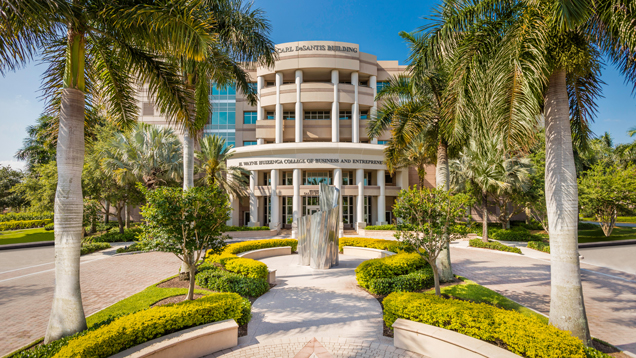
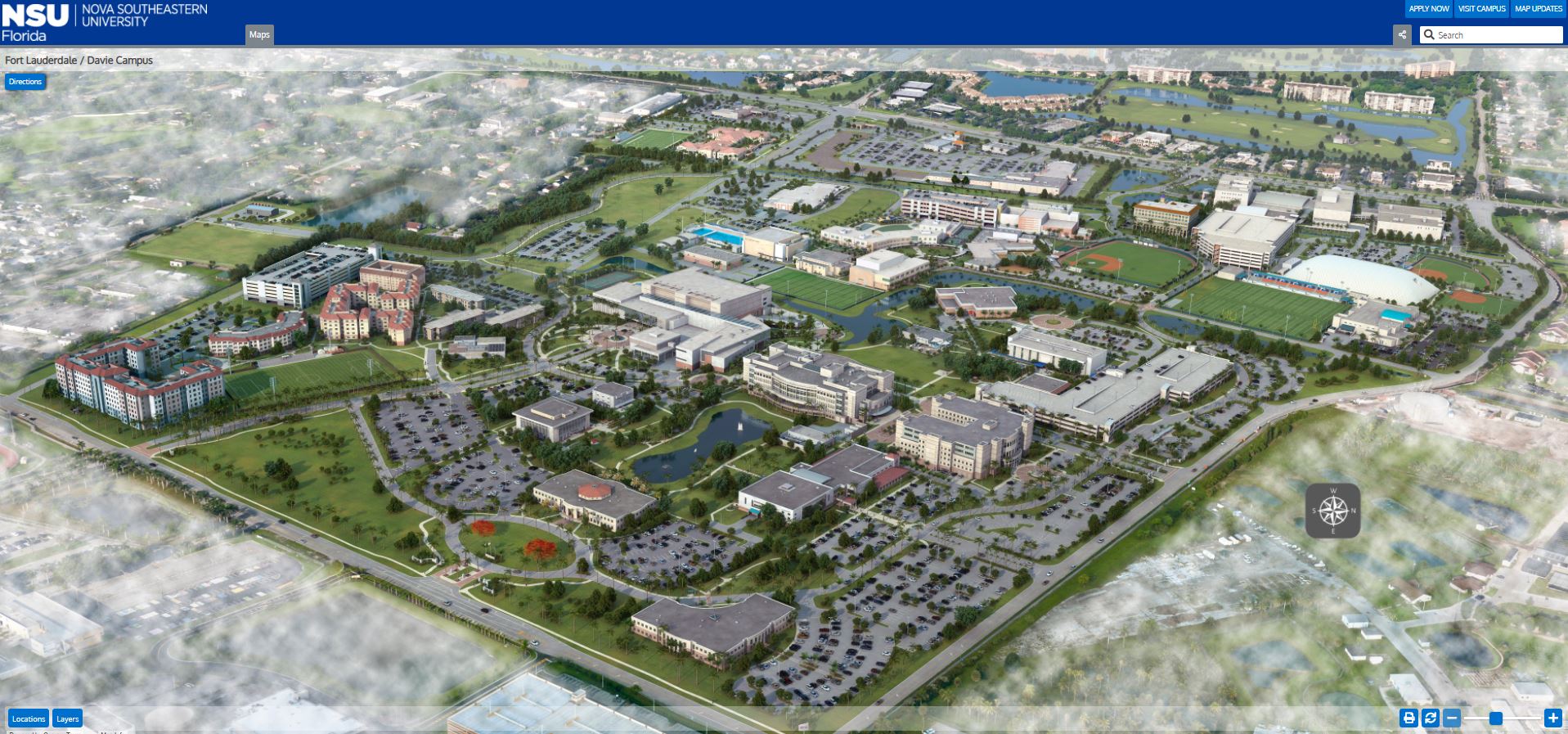
Life at NSU feels like a permanent South Florida vacation—students sunbathe between classes, fish in campus lagoons, and bike to nearby beaches. Only 37% of students live on campus, but the tight-knit community thrives through 160+ clubs (from surfing to pre-med societies) and frequent free-food events. Instagram posts by @nsucampuslife showcase pool parties, diversity festivals, and a Don Taft University Center that serves as the social hub. Reviews highlight the 'resort-like' grounds and abundant wildlife (iguanas included). Greek life exists but isn’t dominant, and the Division II Sharks athletics draw modest school spirit. The vibe? 'Chill but engaged,' with Miami’s nightlife just a 30-minute drive away.
NSU graduates outperform national earnings averages, with median salaries of $59,209 within 10 years (33% above U.S. median). The 6-year graduation rate is 64%, though the 4-year rate drops to 57%—likely reflecting the many part-time or professional-track students. Retention after freshman year is 76%, slightly below national averages for private universities. Notably, a 2017 study found NSU grads earning $45,200 early-career vs. a $33,400 national average. The 'payback period' (time to recoup degree costs) is just 2.42 years, aided by strong salaries in health and business fields. Alumni networks are especially robust in Florida’s booming job markets.
The average net price after aid is $29,043/year, with 65% of students receiving financial assistance. NSU aggressively packages scholarships, discounts (e.g., for employer-sponsored students), and federal aid—though the sticker price remains steep. The calculator suggests many middle-income families qualify for significant aid. Unique options include veterans benefits and low-interest loans for graduate programs. Still, the cost reflects NSU’s private status and prime location; students often offset expenses through South Florida’s ample internship and part-time job opportunities in healthcare, hospitality, and tech.
NSU defies easy categorization: It’s a research powerhouse with a laid-back beach vibe, where pre-med students dissect cadavers by morning and kayak by afternoon. The blend of strong health/science programs (with direct clinical access) and a vacation-worthy campus is unmatched in Florida. Unlike cutthroat peers, NSU fosters collaboration—students describe faculty as 'approachable experts' and classmates as 'ambitious but not cutthroat.' The university’s focus on professional outcomes (evidenced by high earnings) appeals to career-focused undergrads, while the 160+ clubs and 300 days of sunshine/year ensure college doesn’t feel like all work. For students who want rigor without Ivy League stress—and palm trees as their quad—NSU delivers.
Nova Southeastern University logo · sourceCampus Locations | Nova Southeastern University · sourceVisit NSU's Oceanographic Campus | Halmos College of Arts and Sciences | Nova Southeastern University · sourceMaster Plan | Nova Southeastern University · source