Admit rate has ranged 54%–73% over the last 5 years — notably volatile, though the latest figure above (74%) falls outside that window. Source: IPEDS via Urban Institute.
Acceptance & SAT from Common Data Set / IPEDS; net price, earnings & graduation from the U.S. Dept. of Education College Scorecard. Figures lag ~1–2 years — verify with the school.
Ohio Northern University carves out a distinctive niche as a small, private university in rural Ada, Ohio, where a pragmatic, career-focused education meets a tight-knit, tradition-rich campus culture. It’s a place where engineering, business, and health sciences are powerhouse programs, and the proof is in the outcomes: a remarkable 95% of recent graduates landed jobs or advanced degrees within six months. For students seeking a supportive, immersive environment with a clear return on investment, ONU delivers a surprisingly potent package.
Admission requirements
Test-optional — scores considered if submitted
Required
High school transcript
Grade point average
College-prep program
TOEFL (non-native English)
Considered (not required)
Class rank
Letters of recommendation
Test scores (SAT/ACT)
Demonstrated competencies
Source: IPEDS Admissions survey (2022) via Urban Institute. Covers formal factors only — it does not reflect essays, extracurriculars, or other holistic criteria.
More details
Undergrad enrollment
2,489
In-state tuition
$39,800
Out-of-state tuition
$39,800
No-Loan Policy
No
Graduation Rate
75%
Meets Full Need
No
ED Share of Class
Not Stated in Sources
Demonstrated Interest
Considered
Student-Faculty Ratio
Not Stated in Sources
Median Earnings (10yr)
$80,928
First-Year Retention Rate
85%
Outcomes & value
Outcomes & value
Median earnings (10 yr)
$80,928
Value (earnings ÷ net price)
3.3×
Median debt at graduation
$27,000
Graduation rate
75%
First-year retention
84%
Reducing loan balance (3 yr)
85%
Pell (lower-income) share
21%
First-gen share (among federal-aid recipients)
24%
Financial health
3.0 / 3.0Meets the federal financial-responsibility standard
U.S. Dept. of Education Financial Responsibility Composite Score (FY2022-23). Scale −1.0 to 3.0; ≥1.5 meets the standard. Reported for private nonprofit & for-profit institutions only — public universities are state-backed and not scored, so this is a stability signal, not a ranking.
Top-earning majors
Median earnings by field of study (highest credential), ~2 years after completion.
Mechanical Engineering$70,680
Electrical, Electronics, and Communications Engineering$68,219
Civil Engineering$63,005
Industrial Production Technologies/Technicians$63,005
Registered Nursing, Nursing Administration, Nursing Research and Clinical Nursing$60,623
Accounting and Related Services
Campus & location
Campus safety
On-campus violent crimes (2024)
0
Per 1,000 students
0.00
On-campus criminal offenses classed as violent (murder/non-negligent manslaughter, rape, robbery, aggravated assault) for the most recent reported year. Source: U.S. Dept. of Education Campus Safety and Security (Clery Act). Counts reflect what’s reported to the school, and urban campuses often report more partly due to non-student incidents nearby — read alongside campus size and setting, not as a standalone safety verdict.
Climate
Pleasant days / yr
91
Summer high
82°F
Winter low
25°F
Annual rain
38.8"
Annual snow
23"
Natural-hazard risk
Very Low
Pleasant days counts days per year with a mean temperature of 55–75°F, a high at or below 90°F, a low at or above 45°F, and little precipitation — a transparent comfort measure, not a weighting we invented. Computed from Open-Meteo ERA5 daily history (2019–2023). Natural-hazard risk is the county’s composite rating from the FEMA National Risk Index.
Deep dive — research, future-scholar output & economic mobility▾
Research output
Institutional h-index
95
Scholarly works
2,790
Institutional research volume and impact from OpenAlex. The h-index reflects large research universities and will be low for teaching-focused liberal-arts colleges — not a measure of undergraduate quality.
Economic mobility
Mobility rate
1.6%
Bottom → top quintile
52%
From bottom quintile
3%
Mobility rate = the share of students who both start in the bottom household-income quintile and reach the top quintile; bottom → top is that chance conditional on starting at the bottom. Source: Opportunity Insights Mobility Report Cards (Chetty, Friedman, Saez, Turner & Yagan). Reflects 1980–82 birth cohorts, so it’s directional, not current.
Quick answers
What is the acceptance rate at Ohio Northern University?
Ohio Northern University's acceptance rate is approximately 74% (Ada, OH), based on the most recent figures we compiled from public and primary sources.
What SAT score do you need for Ohio Northern University?
Admitted students at Ohio Northern University typically score 1175–1400 on the SAT (the middle-50% range). Scores outside this band are still admitted, especially with strong applications.
How much does Ohio Northern University cost?
At Ohio Northern University, the average net price (after aid) is about $24,478 per year. Actual cost varies with financial aid and residency.
How many undergraduates attend Ohio Northern University?
Ohio Northern University enrolls approximately 2,489 undergraduate students.
Where is Ohio Northern University located?
Ohio Northern University is located in Ada, OH.
Admissions
Getting into Ohio Northern is a straightforward, accessible process for most qualified students. The university maintains a policy and accepts the Common Application, making it easy to apply. While selective, the admissions office is looking for students with strong academic preparation; the average GPA of admitted students is a solid 3.84. The middle 50% of admitted students who submit scores have an ACT Composite between 20 and 28. The rate—the percentage of accepted students who enroll—is described as medium, around 20%. Demonstrated interest is a factor in admissions, as indicated by its consideration in the 's factor importance grid (C7). The process is designed to be transparent, with the Office of Institutional Research serving as 'Data Central' for all university information.
Earnings = median of students working ~10 years after entry; debt = median of graduates. Value divides 10-yr earnings by one year’s net price — read it as earnings per dollar of annual cost, not a full lifetime ROI; it favors lower-cost schools. Source: U.S. Dept. of Education College Scorecard. Figures lag ~2 years and reflect all students, not your intended major.
$53,629
Pharmacy, Pharmaceutical Sciences, and Administration$51,482
Construction Management$50,563
Source: U.S. Dept. of Education College Scorecard (field-of-study earnings). Figures cover graduates who received federal aid and lag ~2 years; not all programs report data.
ONU’s academic identity is built on a foundation of strong professional programs with a notable emphasis on hands-on, practical learning. The university offers a wide range of undergraduate majors across business, engineering, health sciences, arts, and law. Specific programs frequently earn praise: external reviews highlight the accounting program as 'highly ranked' and note that 'the engineering college is great.' The curriculum in fields like the Strength and Conditioning major is grounded in the basic sciences, including physiology, anatomy, kinesiology, biomechanics, and nutrition. This practical focus is supported by a favorable student-faculty ratio and small class sizes, with nearly half of all classes having fewer than 20 students. The academic environment fosters satisfaction, reflected in a strong first-year retention rate of 85%. Students often take advantage of the flexibility to double major, tailoring their education to specific career goals.
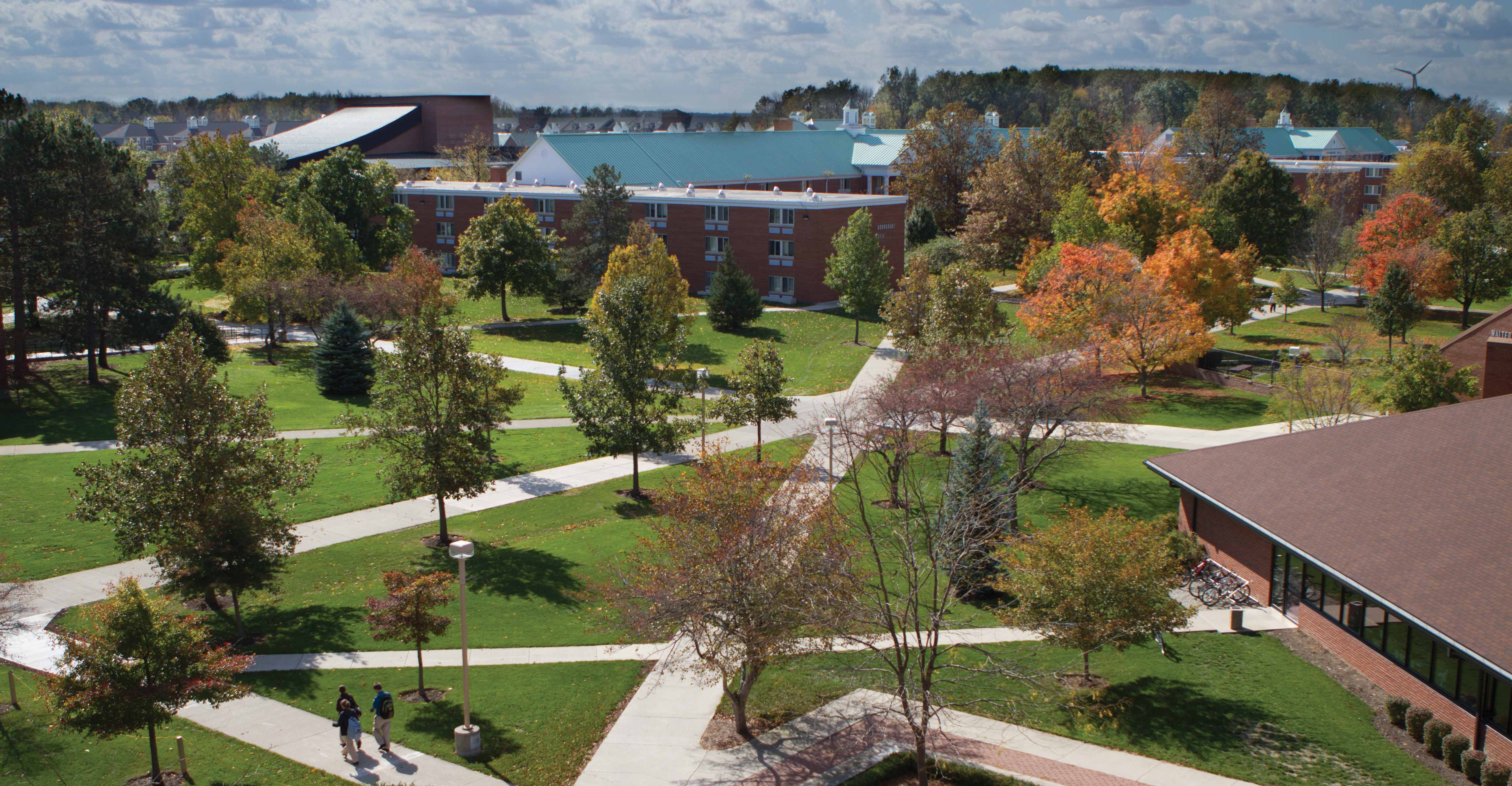
Life at ONU is intensely residential and communal, defined by its location in the small village of Ada. The vast majority of students (75%) live in college-owned, -operated, or -affiliated housing, creating a campus-centric bubble of activity. Described as an 'open frontier for exploration and fun,' campus life revolves around excitement, creativity, and tradition. A key social component is the Greek system, with six social fraternities and sororities providing a structured network for many students. For those seeking connection, the Student Connection and Engagement Center (SCEC) organizes workshops, social events, and guided discussions to help students navigate relationships and campus life. The overall vibe, as noted by an external observer, leans toward 'peace and quiet,' making it a fit for students who prefer a focused, immersive college experience over a bustling urban nightlife. Athletics, clubs, and campus events fill the calendar, fostering a strong sense of Polar Bear pride.
This is where an ONU education pays off, quite literally. The university's career outcomes are exceptionally strong, a point of immense institutional pride. The Class of 2025 achieved a remarkable 95% placement rate in careers or graduate programs within six months of graduation, a figure based on a 97% survey response rate from graduates. This performance is consistent; the Class of 2022 also saw a 96% placement rate. These results underscore the effectiveness of ONU's career-focused curriculum and support services. The strong graduation rate further supports this narrative of student success and completion.
ONU is a private university with a corresponding sticker price, but it aggressively uses institutional aid to make attendance feasible for most students. The average financial support award is nearly $28,000, and a very high percentage of undergraduate students (99%) receive some form of financial aid. According to federal data, 72.83% of students receive financial aid, with an average aid package of $33,842. The university encourages all families to use its online Calculator and Scholarship Calculator to get a personalized estimate of merit scholarships and final cost. It's important to note that while aid is generous, ONU is not described as having a 'no-loan' policy that meets full need with grants alone; a significant majority of students (93%) take out federal loans to finance their education.
Ohio Northern University stands out for its potent combination of high-touch, practical education and demonstrably powerful career results, all delivered within the self-contained, tradition-driven culture of a small residential campus. It’s not a university that trades on national prestige, but on proven value. Its engineering, business, and health sciences programs are not just majors—they are direct pipelines to employment, as evidenced by the consistent 95%+ placement rates that the university loudly and justifiably promotes. The experience is all-in: students live, learn, and socialize together in Ada, creating a cohesive community where everyone knows your name. For a student who wants the attention of a small liberal arts college but the concrete, job-ready skills of a polytechnic institute, ONU is a compelling and often overlooked choice that delivers a significant return on investment.
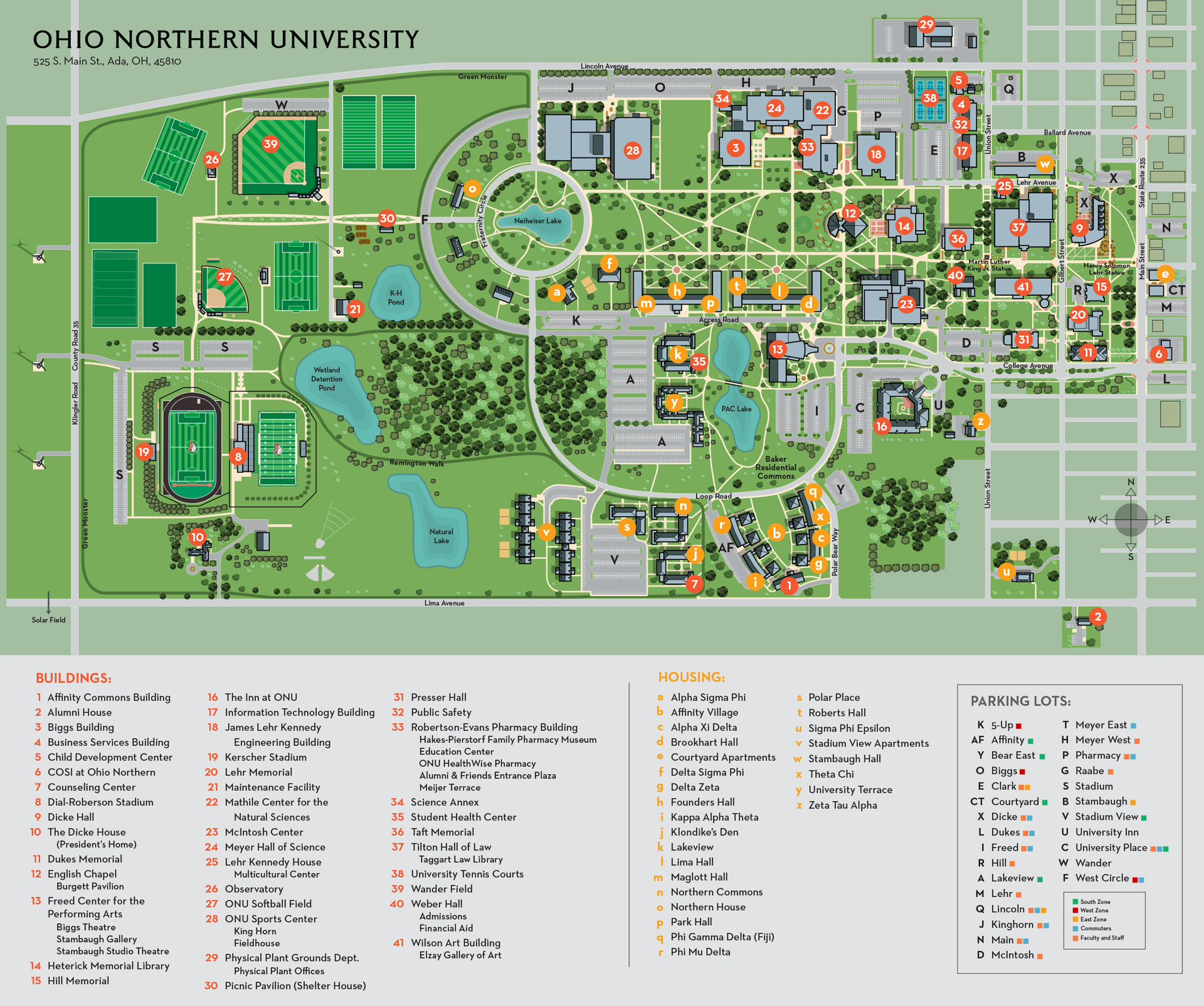
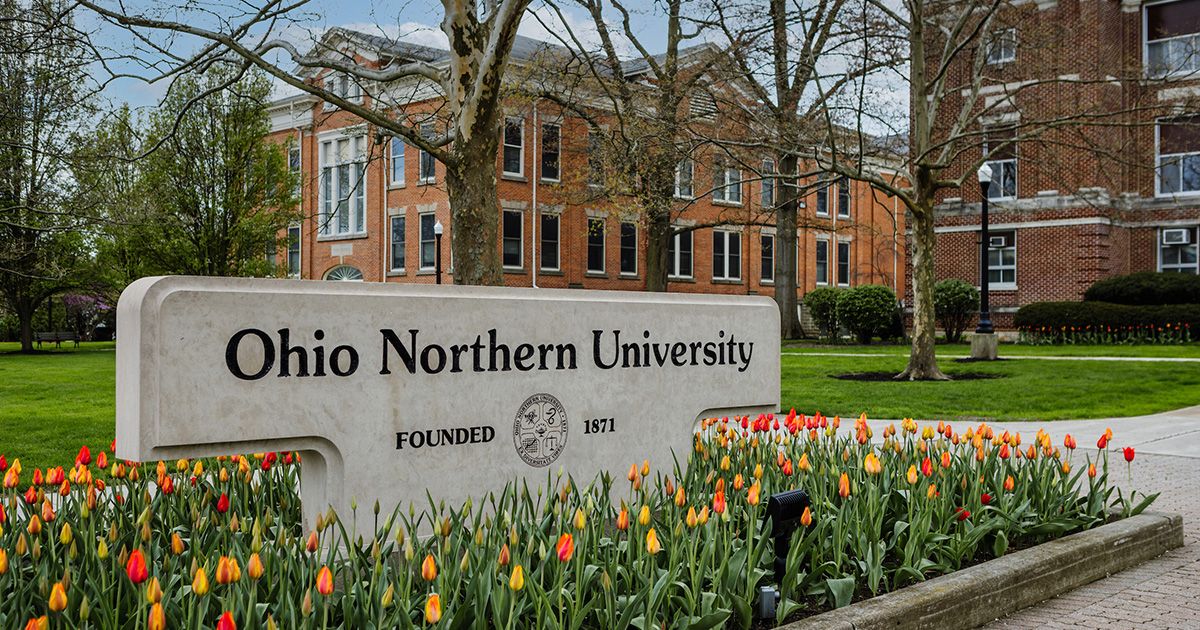
Ohio Northern University seal · sourceCampus Map | Ohio Northern University · sourceStudent Population & Enrollment | ONU At-a-Glance · sourceWSJ Ranks ONU as Ohio's “Best Value” University | Ohio Northern University · source
.jpg?width=1600)