Admit rate has ranged 45%–57% over the last 5 years — notably volatile. Source: IPEDS via Urban Institute.
Acceptance & SAT from Common Data Set / IPEDS; net price, earnings & graduation from the U.S. Dept. of Education College Scorecard. Figures lag ~1–2 years — verify with the school.
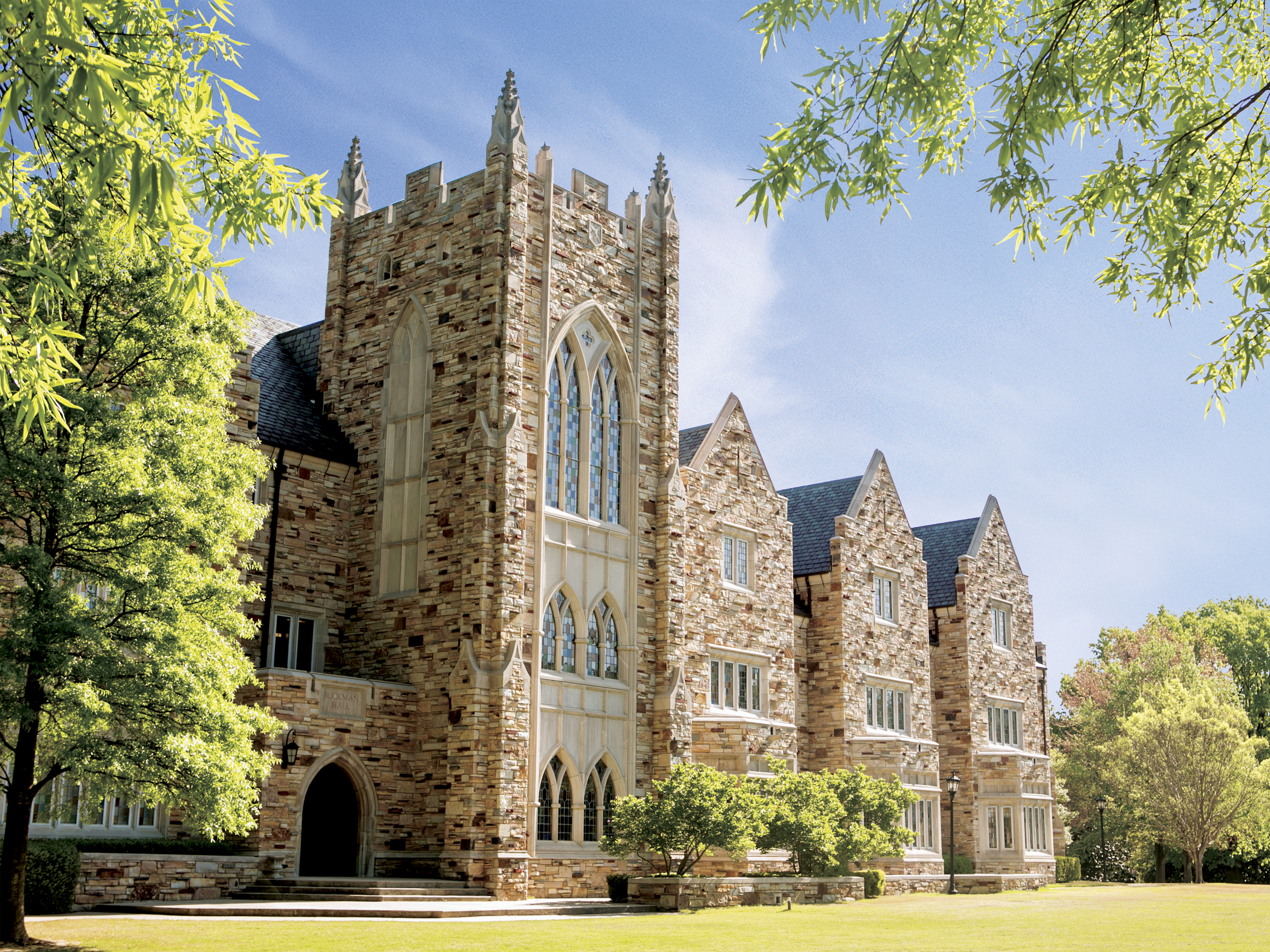
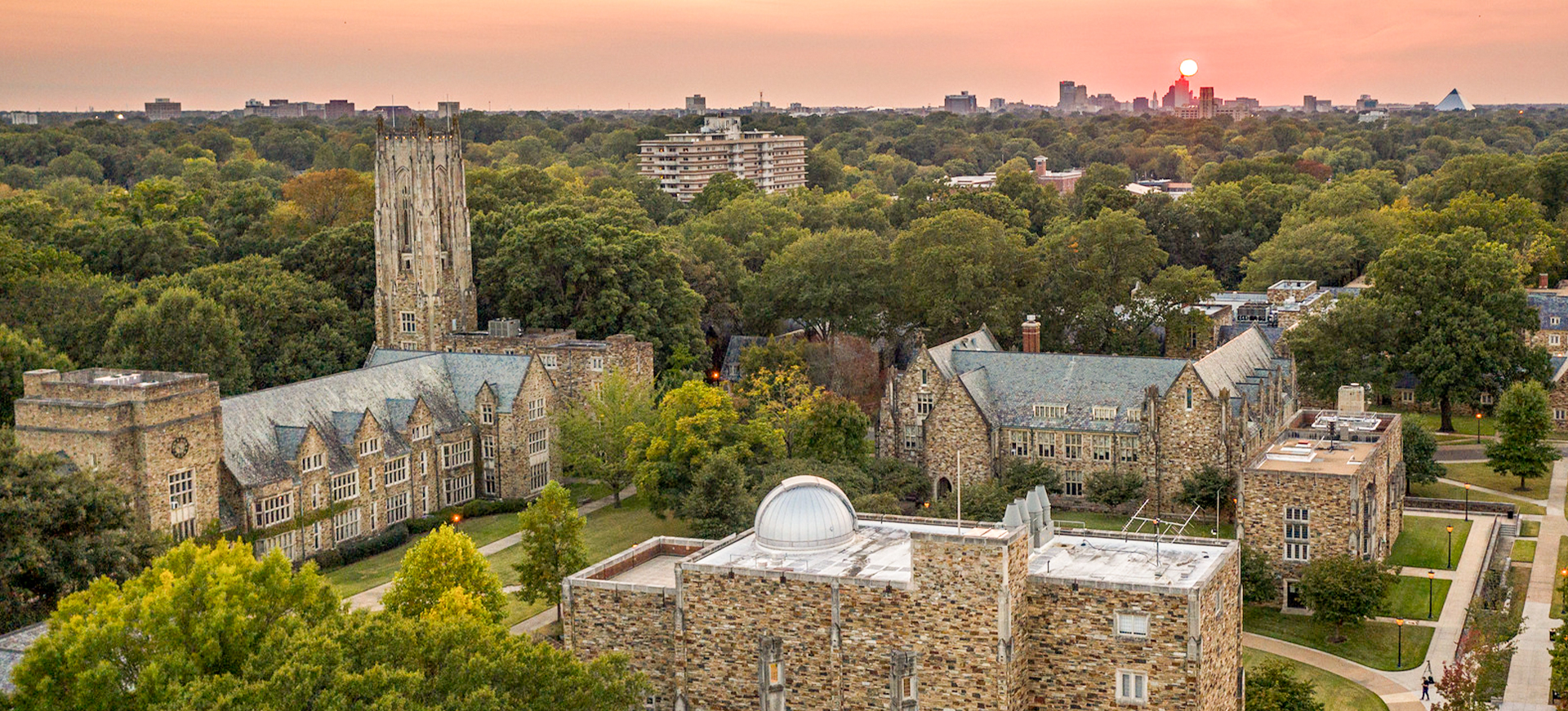
Rhodes College is a distinctive liberal arts institution that marries a rigorous, Gothic-architecture campus in Memphis with a surprisingly pragmatic, career-oriented ethos. It’s a place where fraternity life thrives alongside a nationally recognized commitment to community service, and where business administration is the most popular major—a telling detail for a school that prides itself on blending the reflective liberal arts with real-world preparation. The vibe is Southern, engaged, and unpretentiously ambitious.
Admission requirements
Test-optional — scores considered if submitted
Required
High school transcript
Grade point average
Letters of recommendation
College-prep program
TOEFL (non-native English)
Considered (not required)
Class rank
Test scores (SAT/ACT)
Demonstrated competencies
Source: IPEDS Admissions survey (2022) via Urban Institute. Covers formal factors only — it does not reflect essays, extracurriculars, or other holistic criteria.
More details
Undergrad enrollment
1,836
In-state tuition
$57,110
Out-of-state tuition
$57,110
Graduation Rate
85%
Most Popular Major
Business Administration
Demonstrated Interest
Considered
Median Earnings (10yr)
$66,651
Greek Life Participation
>50% of student body
Regular Decision Deadline
January 15
Outcomes & value
Outcomes & value
Median earnings (10 yr)
$66,651
Value (earnings ÷ net price)
2.3×
Median debt at graduation
$21,761
Graduation rate
85%
First-year retention
92%
Reducing loan balance (3 yr)
84%
Pell (lower-income) share
16%
First-gen share (among federal-aid recipients)
13%
Financial health
2.3 / 3.0Meets the federal financial-responsibility standard
U.S. Dept. of Education Financial Responsibility Composite Score (FY2022-23). Scale −1.0 to 3.0; ≥1.5 meets the standard. Reported for private nonprofit & for-profit institutions only — public universities are state-backed and not scored, so this is a stability signal, not a ranking.
Top-earning majors
Median earnings by field of study (highest credential), ~2 years after completion.
Computer Science$61,516
Business Administration, Management and Operations$48,667
Economics$46,087
Political Science and Government$43,128
Anthropology$37,208
Fine and Studio Arts$33,993
English Language and Literature, General
Campus & location
Campus safety
On-campus violent crimes (2024)
2
Per 1,000 students
1.08
On-campus criminal offenses classed as violent (murder/non-negligent manslaughter, rape, robbery, aggravated assault) for the most recent reported year. Source: U.S. Dept. of Education Campus Safety and Security (Clery Act). Counts reflect what’s reported to the school, and urban campuses often report more partly due to non-student incidents nearby — read alongside campus size and setting, not as a standalone safety verdict.
Climate
Pleasant days / yr
84
Summer high
89°F
Winter low
37°F
Annual rain
55.2"
Annual snow
3.4"
Natural-hazard risk
Relatively High
Pleasant days counts days per year with a mean temperature of 55–75°F, a high at or below 90°F, a low at or above 45°F, and little precipitation — a transparent comfort measure, not a weighting we invented. Computed from Open-Meteo ERA5 daily history (2019–2023). Natural-hazard risk is the county’s composite rating from the FEMA National Risk Index.
Deep dive — research, future-scholar output & economic mobility▾
Research output
Institutional h-index
101
Scholarly works
3,324
Institutional research volume and impact from OpenAlex. The h-index reflects large research universities and will be low for teaching-focused liberal-arts colleges — not a measure of undergraduate quality.
Economic mobility
Mobility rate
1.3%
Bottom → top quintile
58%
From bottom quintile
2%
Mobility rate = the share of students who both start in the bottom household-income quintile and reach the top quintile; bottom → top is that chance conditional on starting at the bottom. Source: Opportunity Insights Mobility Report Cards (Chetty, Friedman, Saez, Turner & Yagan). Reflects 1980–82 birth cohorts, so it’s directional, not current.
Quick answers
What is the acceptance rate at Rhodes College?
Rhodes College's acceptance rate is approximately 50% (Memphis, TN), based on the most recent figures we compiled from public and primary sources.
What SAT score do you need for Rhodes College?
Admitted students at Rhodes College typically score 1300–1486 on the SAT (the middle-50% range). Scores outside this band are still admitted, especially with strong applications.
How much does Rhodes College cost?
At Rhodes College, the average net price (after aid) is about $28,585 per year. Actual cost varies with financial aid and residency.
How many undergraduates attend Rhodes College?
Rhodes College enrolls approximately 1,836 undergraduate students.
Where is Rhodes College located?
Rhodes College is located in Memphis, TN.
Admissions
Rhodes occupies a middle ground in selectivity, where a 50% suggests accessibility but a strong academic profile is still the baseline. The middle 50% SAT range for admitted students is 1300–1486, with the ACT equivalent being 27–32. The incoming class of 2029 profile shows 35% are students of color. The college strongly encourages Early Decision for applicants for whom Rhodes is a first choice, stating it's 'the best way' to apply. While specific Early Decision acceptance rates vary by source—one cites 37% compared to the 50% overall rate, and another suggests it's around 40%—the advantage is clear, and a significant portion of the incoming class is filled through this binding option. Demonstrated interest is a factor admissions officers consider, as indicated by its inclusion in the 's list of admission factors. The regular decision deadline is January 15.
Earnings = median of students working ~10 years after entry; debt = median of graduates. Value divides 10-yr earnings by one year’s net price — read it as earnings per dollar of annual cost, not a full lifetime ROI; it favors lower-cost schools. Source: U.S. Dept. of Education College Scorecard. Figures lag ~2 years and reflect all students, not your intended major.
$30,119
History$29,685
Source: U.S. Dept. of Education College Scorecard (field-of-study earnings). Figures cover graduates who received federal aid and lag ~2 years; not all programs report data.
Rhodes offers a classic, broad-based liberal arts curriculum through 21 academic departments and 13 interdisciplinary programs, encompassing more than 70 majors, interdisciplinary majors, and minors. The academic culture is explicitly interdisciplinary, designed to inspire 'lifelong passions.' However, student choices reveal a pragmatic streak: the most popular majors are Business Administration and Management (12%), Biology/Biological Sciences (9%), Computer Science (8%), and Neuroscience (7%). This blend of traditional liberal arts inquiry with high-demand fields like business and CS defines the Rhodes academic experience. The college has earned external recognition for its engaged student body, ranking 11th nationally for 'Students Most Engaged in Community Service' by The Princeton Review.
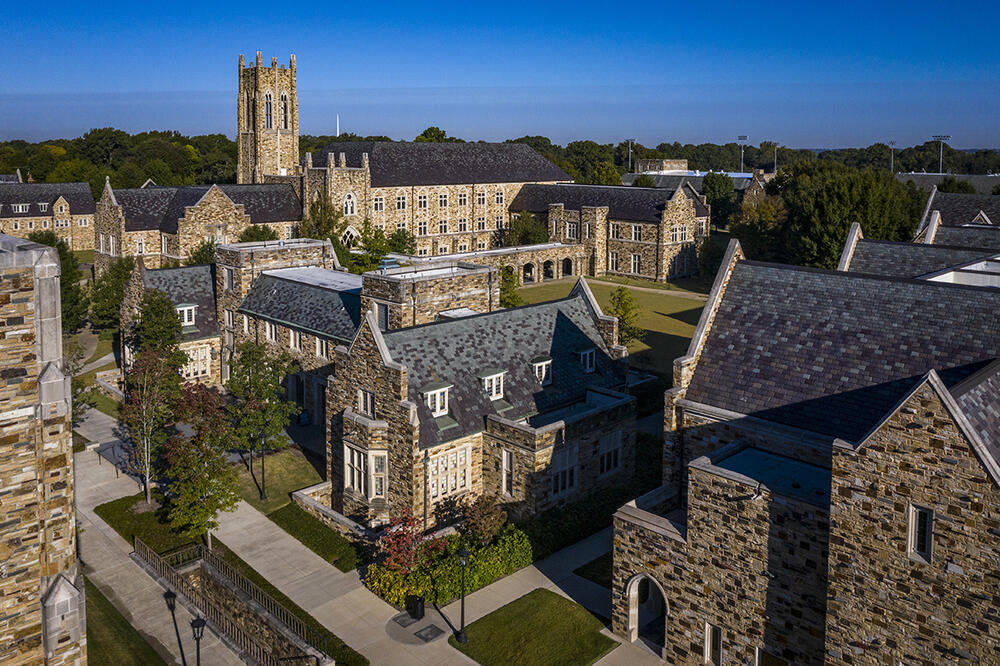
Life on Rhodes' picturesque, Gothic-inspired campus is active and organization-driven, with nearly 200 student groups spanning academics, advocacy, club sports, and recreation. A defining characteristic is a robust Greek life scene; over 50% of the student body participates in fraternities or sororities. This creates a strong social backbone, though students note that 'there is something for everyone' and that it's possible to find a niche outside that system. Campus traditions and events are plentiful, and the library is a noted architectural and academic centerpiece. The college promotes its campus life as a means to equip students with 'resources, skills, and opportunities to grow into lifelong learners.' The location in Memphis provides an urban backdrop distinct from typical secluded liberal arts colleges, offering opportunities for community engagement and off-campus exploration.
Rhodes posts strong graduation outcomes, with a six-year graduation rate that has met an institutional goal of 85% for recent classes. The college notes this rate is 7% higher than its 'ACS peers.' Post-graduate earnings are a clear point of strength. Data shows median earnings five years after graduation are approximately $66,608, which sources indicate is significantly above the national average. This strong return aligns with the popularity of pre-professional majors and suggests the college's blend of liberal arts and career preparation is effective. First-year retention rates are tracked as a key metric of student satisfaction and academic success.
Rhodes is a private institution with a significant price tag, but it counters this with substantial financial aid. The average after aid—what families actually pay—is $28,585. A majority of students (over 50%) receive financial aid, with the average aid package reported as $42,669. The college offers both need-based and merit-based scholarships, which do not require repayment. Need-based financial aid awards can range widely, from about $20,000 to over $72,300, with the median family income of recipients being $31,000. The college utilizes a net price calculator to help families estimate their actual cost. There is no indication in the provided sources that Rhodes has a 'no-loan' policy for meeting full demonstrated need; financial aid packages may include loan components.
Rhodes College stands out for its compelling and somewhat uncommon synthesis. It pairs the intimate, reflective environment of a top-tier liberal arts college—complete with a stunning, cloistered Gothic campus—with the dynamic, pragmatic energy of its Memphis location and its students' career-focused ambitions. You don't often find a school where the most popular major is business administration yet it also ranks 11th nationally for community service engagement. This is not a campus detached from the world; it's one that engages with it directly, whether through internships in the city, a thriving Greek life social scene, or a curriculum that values interdisciplinary problem-solving. It offers the personal attention and strong graduation rates of a selective liberal arts college, but with a post-graduate earnings profile that rivals many universities, making it a particularly shrewd investment for students seeking both a transformative education and a clear pathway to professional success.
Rhodes College seal · sourceOur Campus | Rhodes College · sourceRhodes and Memphis | Rhodes College · sourceRhodes College Rental Spaces | Rhodes College · source