Loading…
← All schools
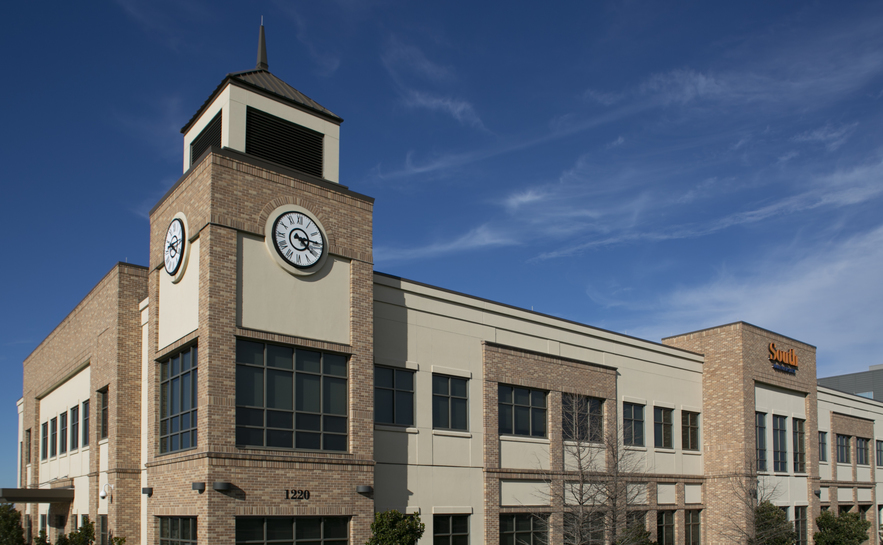
South University-Austin
Round Rock, TXprivate forprofitwww.southuniversity.edu/austin#location=Austin, TX
Avg net price
$25,680
Earnings (10 yr)
$34,421
Graduation rate
—
Acceptance & SAT from Common Data Set / IPEDS; net price, earnings & graduation from the U.S. Dept. of Education College Scorecard. Figures lag ~1–2 years — verify with the school.
South University-Austin is a private, for-profit institution in Round Rock, Texas, that operates on an open admissions model, accepting virtually all applicants. It carves out a distinct niche by offering career-focused, predominantly healthcare-oriented programs designed for working adults and career-changers, with a campus life built around convenience rather than tradition. The data paints a picture of an institution serving a specific, non-traditional student body, with outcomes and retention rates that reflect the challenges and demographics of that population.
More details
- Undergrad enrollment
- 211
- In-state tuition
- $18,145
- Out-of-state tuition
- $18,145
- Popular Majors
- Registered Nursing, Business Administration
- Graduation Rate
- 0%
- First-Year Retention
- 38%
- Median Earnings (10yr)
- $34,421
- Student Body Gender Distribution
- 14.2% male, 85.8% female
- Financial Aid Recipients (Freshmen)
- 100%
- Avg Grant/Scholarship Aid (Freshmen)
- $5,448
Outcomes & value
Outcomes & value
- Median earnings (10 yr)
- $34,421
- Value (earnings ÷ net price)
- 1.3×
- Median debt at graduation
- $26,123
- Graduation rate
- —
- First-year retention
- 38%
- Reducing loan balance (3 yr)
- 25%
- Pell (lower-income) share
- 59%
- First-gen share (among federal-aid recipients)
- 47%
Top-earning majors
Median earnings by field of study (highest credential), ~2 years after completion.
- Registered Nursing, Nursing Administration, Nursing Research and Clinical Nursing$66,883
- Information Science/Studies$44,418
- Business Administration, Management and Operations$39,986
- Criminal Justice and Corrections$34,420
- Health and Medical Administrative Services$33,616
- Psychology, General
Campus & location
Campus safety
- On-campus violent crimes (2024)
- 0
- Per 1,000 students
- 0.00
On-campus criminal offenses classed as violent (murder/non-negligent manslaughter, rape, robbery, aggravated assault) for the most recent reported year. Source: U.S. Dept. of Education Campus Safety and Security (Clery Act). Counts reflect what’s reported to the school, and urban campuses often report more partly due to non-student incidents nearby — read alongside campus size and setting, not as a standalone safety verdict.
Climate
- Pleasant days / yr
- 99
- Summer high
- 95°F
- Winter low
- 44°F
- Annual rain
- 44.3"
- Annual snow
- 1.9"
- Natural-hazard risk
- Relatively Moderate
Pleasant days counts days per year with a mean temperature of 55–75°F, a high at or below 90°F, a low at or above 45°F, and little precipitation — a transparent comfort measure, not a weighting we invented. Computed from Open-Meteo ERA5 daily history (2019–2023). Natural-hazard risk is the county’s composite rating from the FEMA National Risk Index.
Quick answers
- How much does South University-Austin cost?
- At South University-Austin, the average net price (after aid) is about $25,680 per year. Actual cost varies with financial aid and residency.
- How many undergraduates attend South University-Austin?
- South University-Austin enrolls approximately 211 undergraduate students.
- Where is South University-Austin located?
- South University-Austin is located in Round Rock, TX.
Admissions
South University-Austin practices an open admissions policy, with sources describing it as "not selective with an of 100%." This stands in stark contrast to the highly selective public flagship institution in the same metropolitan area, the University of Texas at Austin, which reports acceptance rates around 26-27%. The school's own admissions requirements state that students with a cumulative GPA below 1.49 on a 4.0 scale can still meet requirements by submitting minimum SAT scores, indicating a low barrier to entry designed to provide access. There is no mention of Early Decision or Early Action programs specific to South University-Austin in the provided sources; the early admission data references other institutions. The admissions process appears to be a straightforward evaluation of minimum criteria rather than a holistic, competitive review.
- Acceptance Rate: 100% (open admissions).
- Key Requirement: Minimum CGPA of 1.49, or alternative SAT submission for those below.
Academics
The academic focus at South University-Austin is intensely practical and career-oriented, with programs concentrated in high-demand professional fields. The most popular majors are Registered Nursing/Registered Nurse, Business Administration, and unspecified others, reflecting a healthcare and business core. The institution promotes its programs as "designed to push ambitious students to their potential by combining relevant coursework and applicable experience." A broad-based core curriculum is stated to promote critical thinking and communication skills. Notably, the Austin campus highlights exceptional outcomes for specific health professions, reporting a 100% graduate pass rate for its Physician Assistant and Physical Therapist Assistant programs, alongside a 30% increase in its NCLEX (nursing licensure) pass rate. The catalog describes a curriculum aimed at "skills for life-long" learning, aligning with the profile of students likely balancing education with other responsibilities.
Compare South University-Austin
vs Livingstone Collegevs Huston-Tillotson Universityvs Dillard Universityvs Johnson C Smith University
See colleges similar to South University-Austin →Sources
- Common Data Set Explorer 2026: Compare 100 Colleges
- Common Data Set - Institutional Reporting
- Common Data Set: Home
- Common Data Set Repository
- Common Data Set - Institutional Research, Assessment, and Analytics
- Useful Resource: a Repository of Common Data Set
- South University - Austin Admissions & Acceptance
- University of Texas at Austin Admissions - BigFuture
- Admissions Requirements
- The University of Texas--Austin Admissions Stats