Admit rate has ranged 60%–83% over the last 4 years — notably volatile. Source: IPEDS via Urban Institute.
Acceptance & SAT from Common Data Set / IPEDS; net price, earnings & graduation from the U.S. Dept. of Education College Scorecard. Figures lag ~1–2 years — verify with the school.
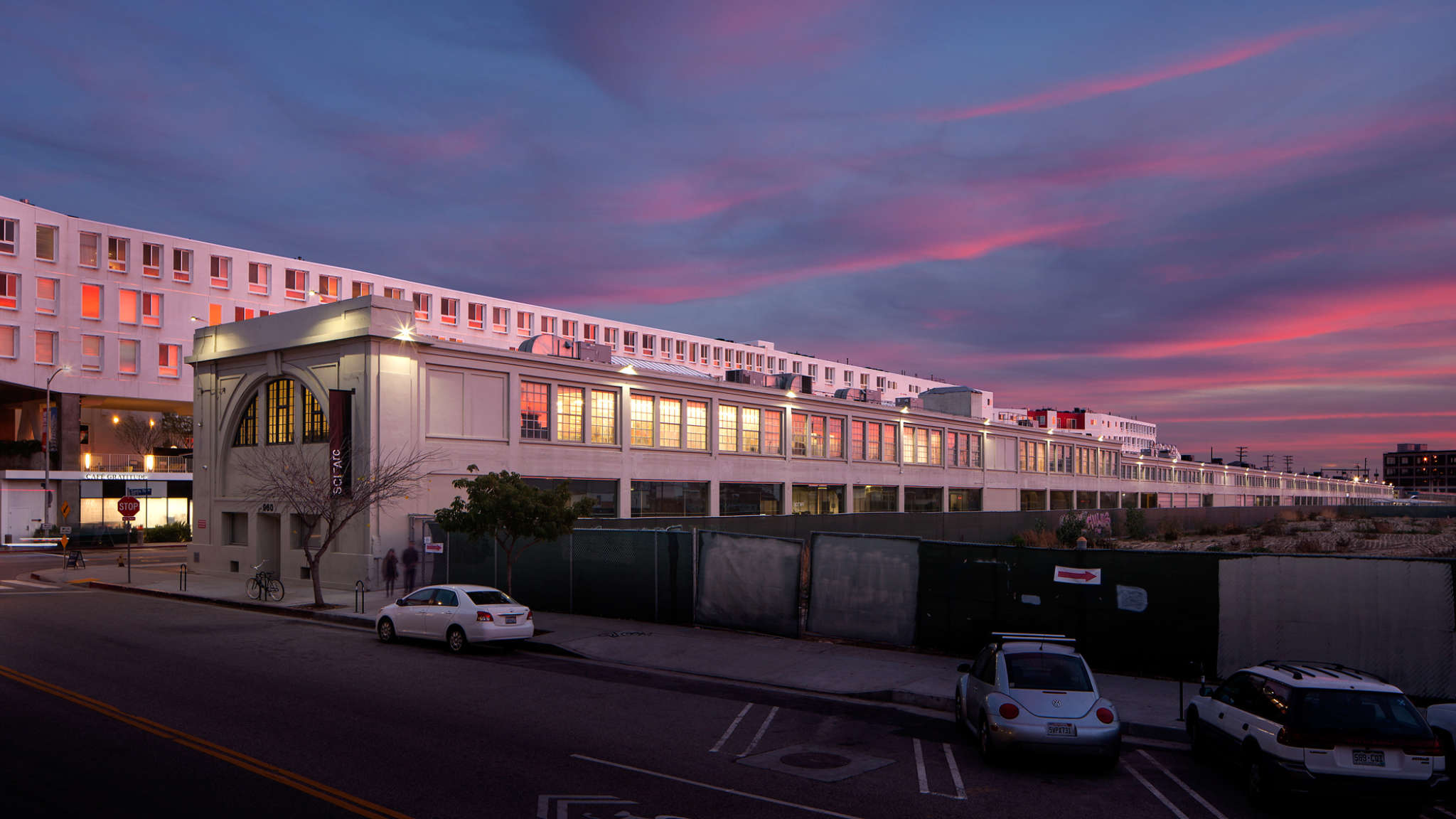
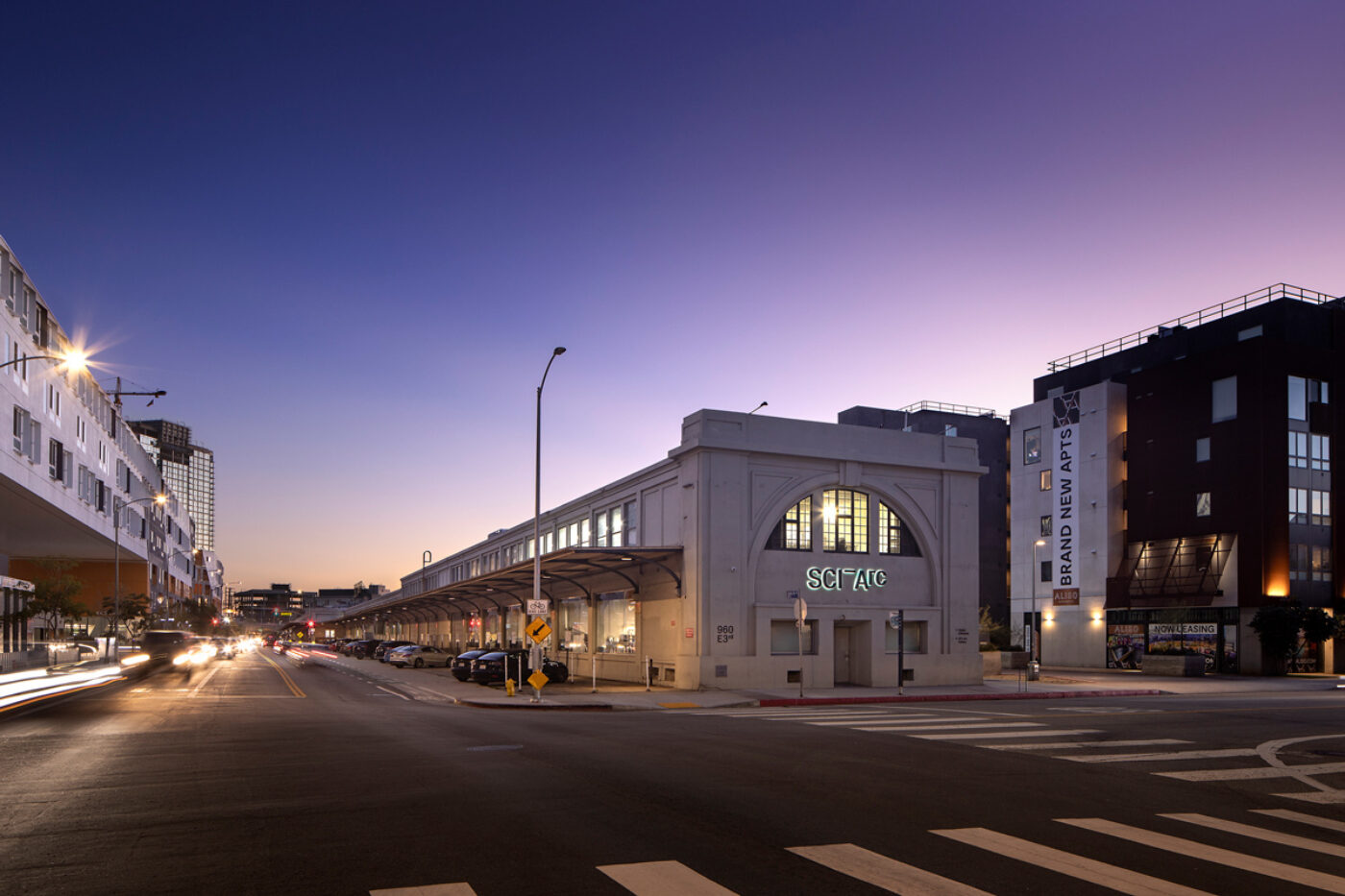
SCI-Arc isn't just an architecture school; it's a full-immersion, avant-garde laboratory housed in a quarter-mile-long former freight depot in the Arts District of Los Angeles. The entire institution revolves around a single, intense pursuit: a NAAB-accredited Bachelor of Architecture degree, delivered through a legendary studio culture that prizes radical experimentation over convention. With an acceptance rate of 77%, it's accessible to passionate applicants, but the five-year program demands a specific kind of student—one ready for a life-defining, all-consuming education that graduates 71% of its students into a field where their median earnings a decade out are a robust $71,909.
Admission requirements
Test-optional — scores considered if submitted
Required
High school transcript
Grade point average
Letters of recommendation
TOEFL (non-native English)
Considered (not required)
Test scores (SAT/ACT)
College-prep program
Demonstrated competencies
Source: IPEDS Admissions survey (2022) via Urban Institute. Covers formal factors only — it does not reflect essays, extracurriculars, or other holistic criteria.
More details
Undergrad enrollment
236
In-state tuition
$56,162
Out-of-state tuition
$56,162
Studio Culture
Central, immersive
Graduation Rate
71%
Application Policy
Rolling
Median Earnings (10yr)
$71,909
First-Year Retention Rate
91%
Outcomes & value
Outcomes & value
Median earnings (10 yr)
$71,909
Value (earnings ÷ net price)
1.6×
Graduation rate
71%
First-year retention
91%
Reducing loan balance (3 yr)
57%
Pell (lower-income) share
21%
Endowment / student
$16,319
Earnings = median of students working ~10 years after entry; debt = median of graduates. Value divides 10-yr earnings by one year’s net price — read it as earnings per dollar of annual cost, not a full lifetime ROI; it favors lower-cost schools. Source: U.S. Dept. of Education College Scorecard. Figures lag ~2 years and reflect all students, not your intended major.
Top-earning majors
Median earnings by field of study (highest credential), ~2 years after completion.
Architecture$46,790
Source: U.S. Dept. of Education College Scorecard (field-of-study earnings). Figures cover graduates who received federal aid and lag ~2 years; not all programs report data.
On-campus criminal offenses classed as violent (murder/non-negligent manslaughter, rape, robbery, aggravated assault) for the most recent reported year. Source: U.S. Dept. of Education Campus Safety and Security (Clery Act). Counts reflect what’s reported to the school, and urban campuses often report more partly due to non-student incidents nearby — read alongside campus size and setting, not as a standalone safety verdict.
Climate
Pleasant days / yr
226
Summer high
86°F
Winter low
46°F
Annual rain
19.4"
Natural-hazard risk
Very High
Pleasant days counts days per year with a mean temperature of 55–75°F, a high at or below 90°F, a low at or above 45°F, and little precipitation — a transparent comfort measure, not a weighting we invented. Computed from Open-Meteo ERA5 daily history (2019–2023). Natural-hazard risk is the county’s composite rating from the FEMA National Risk Index.
Deep dive — research, future-scholar output & economic mobility▾
Research output
Institutional h-index
29
Scholarly works
281
Institutional research volume and impact from OpenAlex. The h-index reflects large research universities and will be low for teaching-focused liberal-arts colleges — not a measure of undergraduate quality.
Quick answers
What is the acceptance rate at Southern California Institute of Architecture?
Southern California Institute of Architecture's acceptance rate is approximately 77% (Los Angeles, CA), based on the most recent figures we compiled from public and primary sources.
How much does Southern California Institute of Architecture cost?
At Southern California Institute of Architecture, the average net price (after aid) is about $43,923 per year. Actual cost varies with financial aid and residency.
How many undergraduates attend Southern California Institute of Architecture?
Southern California Institute of Architecture enrolls approximately 236 undergraduate students.
Where is Southern California Institute of Architecture located?
Southern California Institute of Architecture is located in Los Angeles, CA.
Admissions
SCI-Arc's admissions process is notably direct and focused, reflecting its singular academic mission. The school reports an of 77%, indicating that while the program is specialized, it is accessible to a majority of applicants who demonstrate a serious commitment to architecture. The process operates on a rolling admissions basis, with applications received after the priority deadline considered on a case-by-case basis as space permits. Standardized test scores (SAT/ACT) are not required for admission, aligning with a portfolio-centric review process. The admitted student profile suggests a middle 50% SAT range of approximately 1020–1230 for those who do submit scores. A key indicator of student satisfaction and institutional support is the first-year retention rate, which is a strong 91%. The school does not appear to offer a binding Early Decision option, and no data is available on whether demonstrated interest is a considered factor in admissions decisions.
SCI-Arc offers a rigorously focused, NAAB-accredited five-year Bachelor of Architecture (B.Arch) degree—its sole undergraduate offering. The curriculum is built entirely around the famed studio culture, described as a "vibrant atmosphere" that provides a "uniquely inspiring environment." The faculty are predominantly working architects who emphasize professional excellence, unorthodox investigation, and material exploration. The program is known for its heavy focus on design theory and experimental approaches, a reputation acknowledged even by its own prospective students. Graduate programs, including a three-year professional Master of Architecture (M.Arch 1), extend this ethos, promoting experimentation within a diverse and international student body. The school's location in Los Angeles' Arts District and its global perspective, facilitated by travel studios, are integral to an education that is as much about encountering different cultures and landscapes as it is about drafting plans.
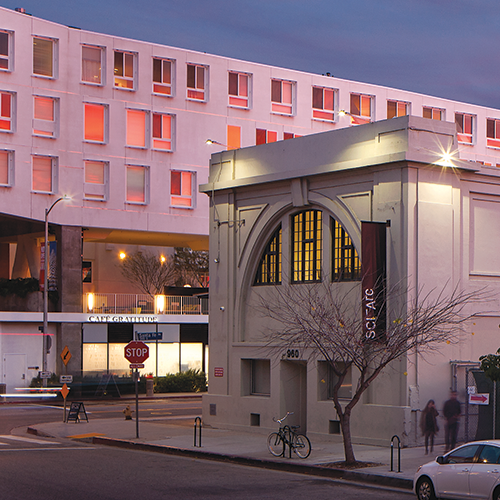
Life at SCI-Arc is an all-encompassing architectural immersion. The school is physically defined by its home in a sprawling, quarter-mile-long former freight depot in the heart of Los Angeles' Arts District, a setting that itself feels like a statement of intent. The studio is not just a classroom; it is the epicenter of student existence, fostering a culture that current students and alumni describe as "radically different from any other school life." This intense, studio-centric environment is supported by a faculty of practicing architects and is geared toward professional excellence and material exploration. The social and intellectual life is inextricably linked to this shared, demanding creative pursuit, with travel studios offering crucial breaks and inspiration by exposing students to different cultures and built environments globally.
SCI-Arc graduates enter the professional world with a distinct and highly specialized credential. The six-year graduation rate is 71%, and those who complete the program see strong financial returns. The median earnings for alumni ten years after entry are $71,909. The school tracks and provides data on student success, including retention, graduation rates, and performance on architecture licensure examinations, underscoring a commitment to professional outcomes. This combination of a solid graduation rate and high median earnings suggests that for students who thrive within its intense model, SCI-Arc delivers a significant return on investment, launching them into the architecture field with a competitive salary trajectory.
Attending SCI-Arc represents a significant financial investment, with an average after aid of $43,923. The total is offset by financial aid packages, with 80% of undergraduate students receiving grant or scholarship aid from all sources, averaging $25,262. Federal Pell Grants are awarded to 21% of undergraduates, with an average award of $5,925. The school provides access to a Net Price Calculator for prospective students to estimate out-of-pocket expenses and directs admitted students to private loan options (with no co-signer required for qualified borrowers) to cover gaps when federal aid falls short. Notably, the available sources do not indicate that SCI-Arc has a policy of meeting 100% of demonstrated financial need or a "no-loan" policy for low-income students; financial aid appears to be a mix of grants, scholarships, and loans.
SCI-Arc stands out as a pure, uncompromising architectural commune. It is not a university with an architecture department; it is an entire institution dedicated solely to the art and discipline of building design. This singularity creates an educational experience that is famously intense and all-consuming, centered on a studio culture that is less a teaching method and more a way of life. Housed in an iconic industrial space in LA's Arts District, the school's very environment rejects the traditional campus model, embedding students in a raw, creative urban landscape. Its reputation is built on avant-garde, theory-forward design, attracting students and faculty who want to challenge conventions rather than follow them. For the right student—one seeking a radical, immersive, and portfolio-defining education—SCI-Arc offers a path unlike any other, with strong earnings outcomes validating its unique professional preparation.
Southern California Institute of Architecture seal · sourceAbout - SCI-Arc · sourceSouthern California Institute of Architecture - Study Architecture | Architecture Schools and Student Information · sourceLiving in Los Angeles - SCI-Arc · source